From Dashnor Kaloçi
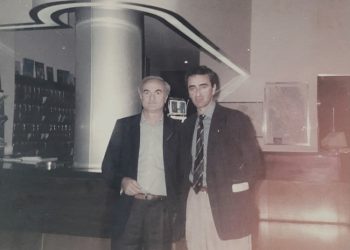
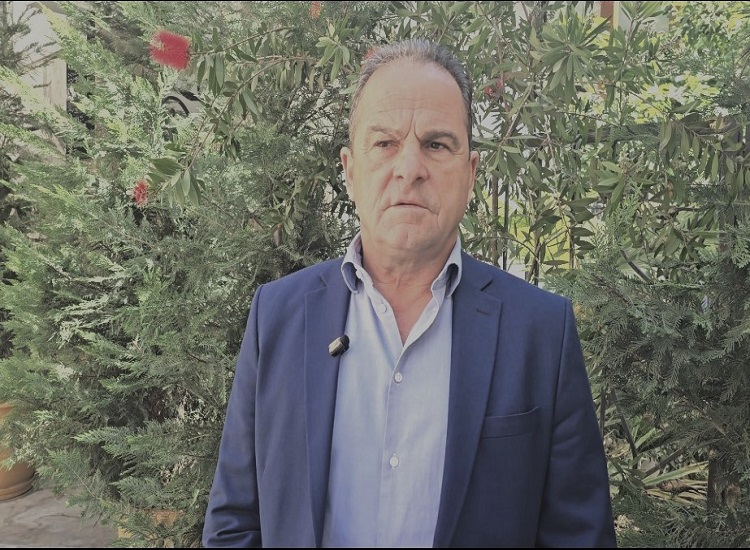
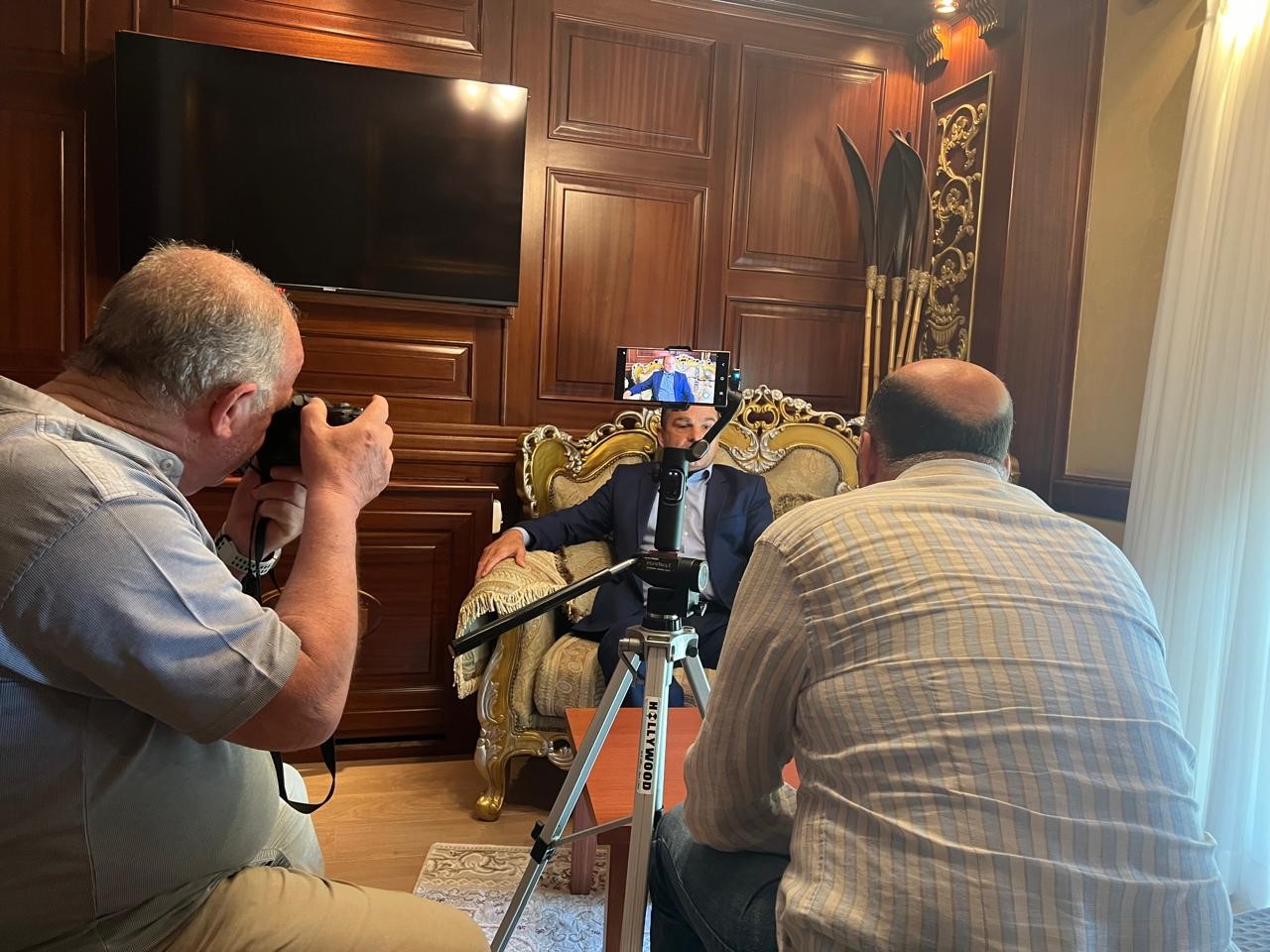
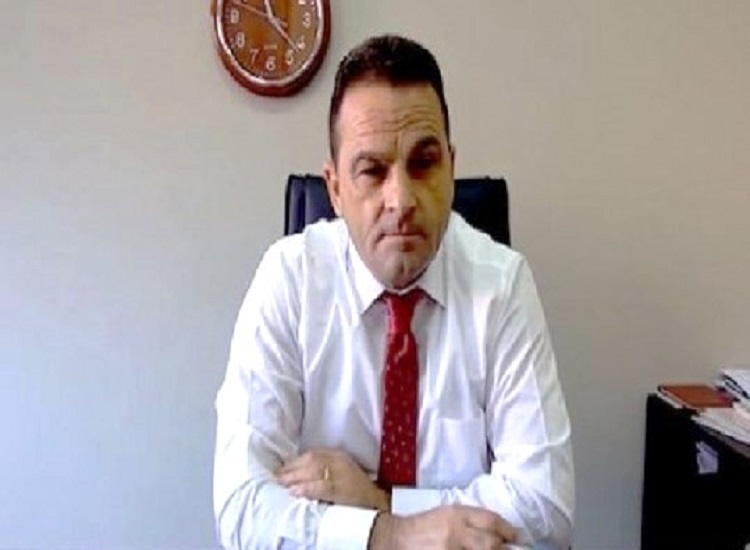
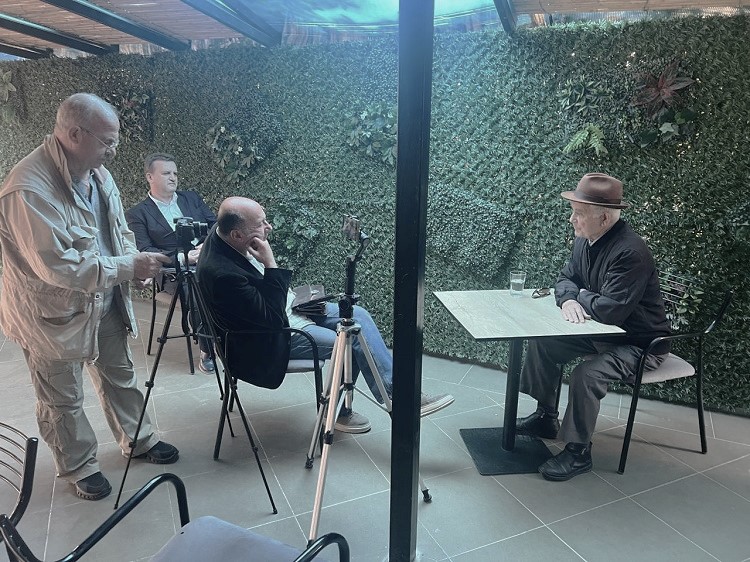
Memorie.al / The renowned jurist and lawyer Skënder Haluca, former chairman of the Vlora Court and later at the Ombudsman institution in Tirana, who passed away unexpectedly yesterday morning (August 13, 2026) while on vacation with his family in his hometown in the Tropoja district, was also a former political prisoner in the camps and prisons of the communist regime of Enver Hoxha and his successor, Ramiz Alia. Moreover, he was initially sentenced to death, having been arrested in 1983 on charges of attempting to assassinate Ramiz Alia during the visit that the then-Chairman of the Presidium of the People’s Assembly had made to the north-east of the country, such as Kukës, Has, Tropoja, etc. Regarding this fact, as well as the period of suffering his sentence in the political camps and prisons of the communist regime, only a few days ago, within the framework of producing the television documentary “Raif Elezi, the legend of Burrel prison,” we conducted an interview with Skënder Haluca, which, as a tribute, we are publishing below in this article (with some abridgements), and we take this opportunity to express our deepest condolences to his family and relatives.
Mr. Haluca, when were you arrested?
I was arrested on November 24, 1983, at the age of 22, and after more than two years of investigation in the Special Investigation unit in Tirana, I was sentenced by the Penal College of the Supreme Court. We were charged with very serious accusations and were tried in the Supreme Court, in original jurisdiction—the same jurisdiction in which Mehmet Shehu, Kadri Hazbiu, and company, those high-ranking officials, were tried.
Initially, together with my cousin, Isuf Haluca, we were sentenced to death by firing squad, but the law at that time stipulated that no death-row prisoner could be executed without passing through the Presidium of the People’s Assembly, which at that time was headed by Ramiz Alia. Despite the fact that at the time we did not appeal the verdict, because we did not want to remain shackled hand and foot for months, as we had been until then.
And Ramiz Alia, the Chairman of the Presidium, by decree, converted our sentence from death by firing squad to 25 years of imprisonment. At the end of 1985, after about a month or so, they distributed us among various prisons. I was sent to serve my sentence in Spaç prison, and my cousin Isuf was sent to Qafa e Barit prison, because they did not want to leave both of us in the same prison.
The 1986 amnesty came, and the labor camps where ordinary and political prisoners worked were left without a workforce. On this occasion, in January 1986, they took about 50–60 of us political prisoners from Spaç prison and took us to the Batërr–Martanesh prison, an ordinary prison, where they created a mini-prison for us, so that they could exploit us in the chrome galleries.
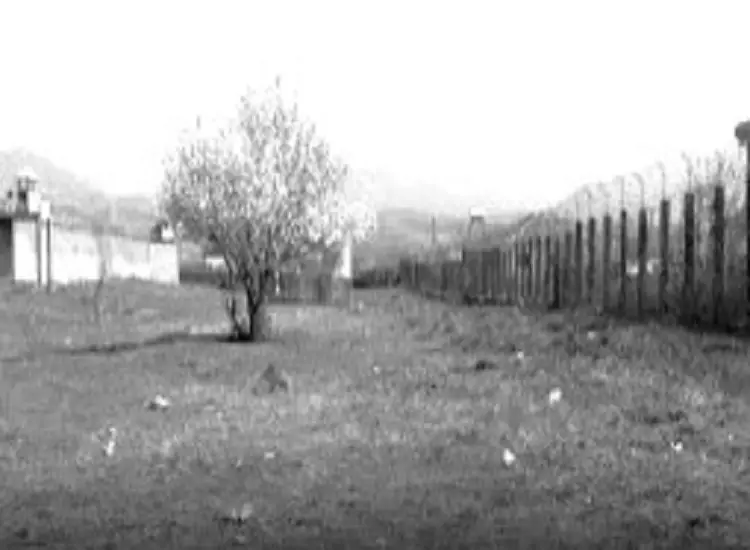
After a month, on February 18, for reasons that even today I do not fully understand and have not written about, they took me from there and sent me to Burrel prison. That is, on February 18, 1986, I continued my sentence in Burrel Prison. At that time, I was the youngest prisoner in Burrel prison. My father had also suffered there and had lost his life in Burrel prison in 1975.
In Burrel prison, there were those whom the regime of that time called the sworn enemies of the system, and in the prison there was a sign that read: “Whoever enters Burrel, does not leave.” I don’t remember this slogan word for word, but something like that was on the prison walls.
In this prison, I got to know many personalities, and the greatest personalities of this prison were the Catholic priests, who were the main and fiercest opponents of the regime. I especially single out the great priest, Dom Simon Jubani, who also held the first mass in Shkodër in November 1990, after the resumption of religious faith in the People’s Socialist Republic of Albania.
He is the first priest; there were other priests, more educated and more renowned, but no one dared to go and hold the first mass at the Shkodër Cemetery. There were also those who were called revisionists, former collaborators of Enver Hoxha, whom he did not execute but locked up in Burrel prison, such as Kiço Ngjela, Fadil Paçrami, Sadik Bekteshi, etc.
There were also their sons, Spartak Ngjela, Fatos Lubonja, Spartak Spahiu, Vladimir Balluku, or Lad Balluku as we called him, the son of Beqir Balluku, etc. But in this prison, the sons of the most famous families of Albania were also serving sentences, especially those from the North of Albania. And it is worth mentioning here a man from Kukës, from Lumë, who was called Raif Elezi.
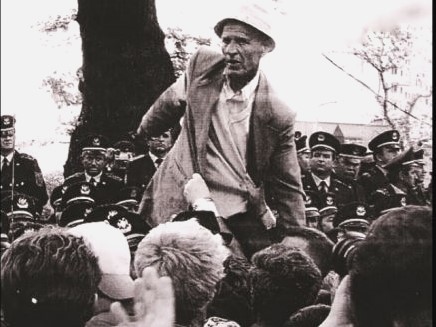
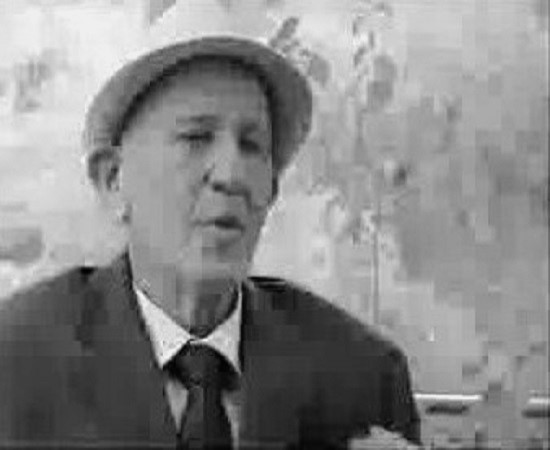
The great Raif Elezi was a scion of a very famous, patriotic nationalist Albanian family from the region of Lumë, opponents of Enver Hoxha’s regime, who during the war, after the war, and throughout the entire period of the communist regime—until its overthrow in ’91—had problems with that regime.
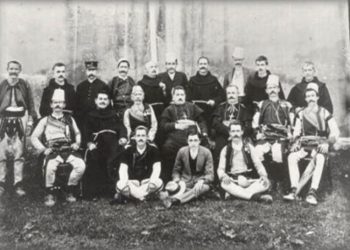
The Elezis of Kukës had historically fought to defend the lands of the homeland and to liberate the homeland from all invaders, from Turkey right up to the last invaders, who were the communists. Raif had an extraordinary temperament; his bravery was unimaginable. Raif was a source of inspiration for us young prisoners.
I was fortunate to begin my sentence in Burrel prison at the age of 22–23. And Raif kept us courageous, because he used to say: “These are the last years, these are the last months, this regime of Enver Hoxha won’t last much longer.” And indeed, Raif’s words became reality, because after four or five years that I stayed in Burrel prison, Enver Hoxha’s Stalinist regime collapsed.
Who did Raif associate with most in prison?
Raif had several people and fellow sufferers with whom he associated more closely; they were from persecuted anti-communist families, from Shkodër, from Mirdita, etc. He maintained a somewhat more distanced stance from those who in prisons were called “revisionists,” and he would say: “We are victims of your politics, of your war that brought communism to power, and we all ended up in prisons and internments.”
I remember that he associated most with a man from Shkodër named Muho Bala. He had many conversations and continuous discussions with Dom Simon Jubani, as well as with other priests who were there in that prison.
It was a beautiful thing, because there were no distinctions between faiths, Catholics or Muslims; there, everyone was called a fellow sufferer, called a brother, called a friend, and they shared the bite of bread with one another, without prejudice. There were even families that had been massacred by Mehmet Shehu, and there were Mehmet Shehu’s children there, and the political prisoners, the enemies of Mehmet Shehu, loved and respected them as if they were of their own families.
Did Raif speak against the regime in prison?
Raif never stopped speaking against the regime; he talked and talked with clear theses, both about politics and economics. And as a result, after I went to prison, Raif was not re-sentenced again, because after ’86, things calmed down a bit and there were no more re-sentencings inside the prison. And as far as I know, Raif was re-sentenced several times for agitation and propaganda inside the prison.
That is, Aranit Çela and his colleagues had invented a new legal trick, saying: “Raif and his friends do not allow the re-education of other enemies, therefore he must be re-sentenced,” and they were re-sentenced several times. The champion for re-sentencing in prison was Dom Simon Jubani, who was re-sentenced nine times. Initially he had been sentenced to 12 years, but he always ended up with 25 years of imprisonment, because he was re-sentenced several times, adding ten years and then another ten years.
I remember once regarding Dom Simon Jubani, a representative of the General Prosecutor’s Office came, with the surname Tutulani – yes, Thoma Tutulani – and after a political debate, he turned to Dom Simon Jubani and said: “Sit down there, enemy.” Dom Simon, whose tongue was quick, replied: “Please – he said – let’s discuss a little who the enemy is here? Is it me, who has been a priest, a footballer, who filled the sports fields with fans, filled the churches with believers, or you, who have killed so many Albanians and brought Albania to this state?”
And they ordered his arrest – let him be arrested. The prison director, who was a man from Mat there, said: “Hey, where are we going to take him further?! Four or five days ago we gave him 25 years?!” In other words, he had 25 years minus four days of prison. It had been four days since he had come from the Internal Affairs Department, where they had re-sentenced him and his sentence was 25 years.
Do you remember the indictment brought against Raif Elezi?
Yes, Raif initially, as far as I remember, the accusation – because he had been convicted for “agitation and propaganda against the people’s power,” as it was called then – “talks about escape, high treason against the homeland in the form of attempted escape,” because escaping from the homeland was a very serious offense and carried the capital punishment.
How do you remember parting with Raif Elezi?
In prison, because the prison was organized after the 1980s, there were over 20 people in one room; when I went, I was several times in the same room with Raif. The last time I was separated from Raif was when they removed him from our room and moved him to another room. These things were done to prevent the prisoners from becoming too familiar with one another, because they calculated that familiarity would lead to revolt or some opposition. And we parted when Raif moved, because he was released before us.
Do you think Raif should be honored, for example, with some title?
I think that the Kukës District, the Kukës Municipality, or the citizens of Kukës, should honor Raif Elezi with some title. That is, I am very convinced that the people of Kukës, the citizens of Kukës, deserve this, because he made them proud, and they should be proud that they had a scion, a man like Raif Elezi from Kukës. And there must certainly be a place where he is commemorated and his name is not forgotten.
You yourself, when were you released from Burrel prison?
I was released in March 1991, among the last political prisoners. But we were removed from Burrel in 1990 when they closed that prison, and they sent us to the prison of Kosova e Lushnjes. / Memorie.al