By Elvi Sidheri
Memorie.al / Following the writings about well-known Albanian settlements beyond our national territories, this time, after the description of the enchanting Arnavutköy on the Bosphorus in Istanbul, we will focus on another major settlement full of noble Albanian history, more precisely in Bulgaria, near the former historical capital of this country, Veliko Tarnovo, the village of Arbanas.
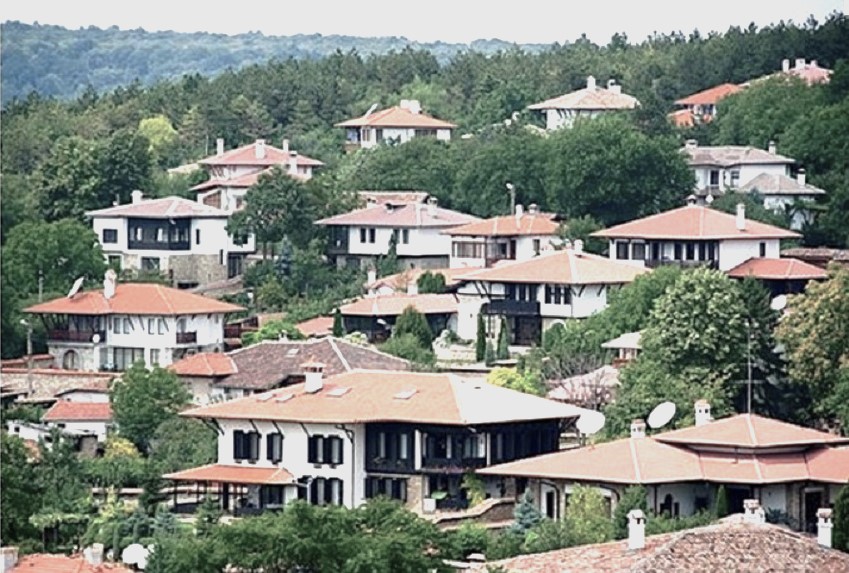
The noble village of Arbanasi is located almost exactly in the center of a group of settlements, consisting of Veliko Tarnovo, Gorna Oriahovica, and Liaskovec, about 4 km from each of them. It is situated on a plateau (which reminds one of another well-known settlement of the medieval Albanian diaspora, Piana degli Albanesi in Sicily, 10 km from Palermo, with a similar location) and offers a magnificent view of the medieval fortresses of Carevec and Trepezica (it is worth noting that even on the current border between Macedonia and Albania, near Shën Naum and Tushemisht on the Albanian side, there is a village with this name, again Trepezicë, in Macedonian Trpejca, which according to old Pogradec locals, was once inhabited by Albanians, where even today, many residents have family ties in Albania).
The village is conjectured to have been founded in the 15th century by Orthodox Albanians coming mainly from Southern Albania, the area of Kostur and Epirus, who dealt in livestock trade, often traveling with their sheep all the way to the Danube and Wallachia, and later would transform this area into their settlement.
With a firman of Sultan Suleiman the Magnificent, the village of Arbanas was gifted to his son-in-law Rustem Pasha, Vizier of the Ottoman Empire, who is equally known for his Albanian origin from historical sources, and soon the Albanian settlement on Bulgarian lands turned into a prominent village with wealthy inhabitants who traded sheep, meat, leather, dairy products, copper, soap, candles, etc., treading every corner of the Empire, but also Wallachia, Hungary, Poland, the Principality of Moscow, going as far as Baghdad, India, and Persia.
In fact, the Orthodox Albanians would settle in several settlements in Northern Bulgaria, but most likely, their first settlement was precisely Arbanasi near Veliko Tarnovo. It is precisely the frescoes and other church inscriptions of Arbanasi that testify that this settlement was founded sometime in the mid-15th century. Meanwhile, in the Ottoman documents of the time, not only Arbanasi, but also the nearby settlements of Gorna Oriahovica, Dolna Oriahovica, and Liaskovec, are collectively called “Arnavud Kariyeleri”, i.e., “Albanian Villages.”
One hypothesis about the founding of the village claims that these villages were established as a result of the military campaigns of Sultan Bayezid in Arbëri in 1492, and the Ottoman sources of the time speak of many Albanian captives taken forcibly during this period.
The autonomy rights of this region, meanwhile, which are also confirmed by a firman of Sultan Mahmud II in July 1810, testify that “The internal governance and administrative affairs of the local villagers are completely independent,” as well as other privileges, where for example, foreigners, regardless of their rank, were forbidden to enter the territories of these “free and independent” villages, and that all disputes would be resolved “according to the rights, customs, religion, and privileges of the local raja population,” approved also by several other sultans. These resemble the treatment that various areas in Southern Albania also had, such as the region of Himara at the beginning of the 18th century.
From medieval data, in 1751 Arbanasi is said to have had 236 Christian Albanian houses and the presence of Albanians is also attested in the other villages of the area, as isolated islands amidst a sea of Bulgarian population. For example, in Sibiu of Wallachia in the 17th–18th centuries, one can encounter merchant names from Gorna Oriahovica, for example, one of them called Gjoka Arbanasul.
Returning to the hypothesis of the population of Arbanasi and the surrounding settlements after the pillaging of Sultan Bayezid II in Arbëri in 1492 (1492 is a historic year, the year of the fall of Granada in Spain, the last Arab foothold on the Iberian Peninsula, and the discovery of the New World, America, by Christopher Columbus, so this migration, even if forced, of the Albanians to the Bulgarian land, aligns with the trend of that historical period), in the Ottoman chronicle of Oruç, the pillaging of Bayezid II in Arbëri is described very faithfully.
And according to Oruç, after the conquest of the fortress of Tepelena, the Ottoman soldiers began to plunder the villages, plateaus, and mountains, and “captured every male and female, burned their villages and houses, destroyed and razed everything.”
Likewise, in a chronicle at the Osogovo Monastery in North Macedonia, it is said that in 1492, Sultan Bayezid II set out from Sofia and plundered the Albanians, called “Kryeleshët.” This name “Kryeleshët” is linked precisely to the Labëria region of Kurvelesh in Southern Albania. In the first Ottoman registries of Arbëria from 1431–1432, this area is called “Kirelash.” From the mid-15th century until 1492, this region had been liberated again before being violently crushed by Bayezid II.
Thus, the explanation that the first inhabitants of Arbanasi, about one hundred and twenty souls, were Albanians, brought by the Ottomans from the end of the 15th century, giving the area the name Arbanasi in Albanian, Arnavutköy in Turkish (exactly like the famous neighborhood in Istanbul), and Arvanitohori in Greek (we recall that Piana degli Albanesi in Sicily has the name Hora e Arbëreshëve in Arbërisht, where Hora means City), becomes more acceptable.
In the mid-19th century, the Frenchman Lezhan would write “Arnavutköy or Arvanitohori, this so inviting example of the colonizing abilities of the Albanians of Epirus.” Even one of the most famous families of this village, known for trade in Wallachia and Transylvania in the 17th century, has the surname Poliçani, just like the present-day small town in Southern Albania. In the Ottoman register of the mid-16th century, in Arbanas, typical Albanian names are encountered such as Leka, Andrea, Gjon, Deda, Skutar (Shkodër?!), etc., but also Zoto and Polo.
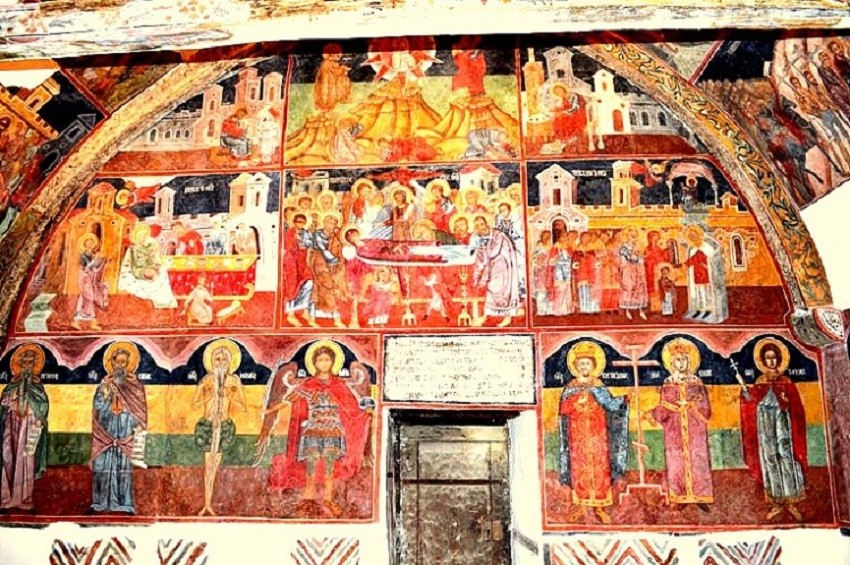
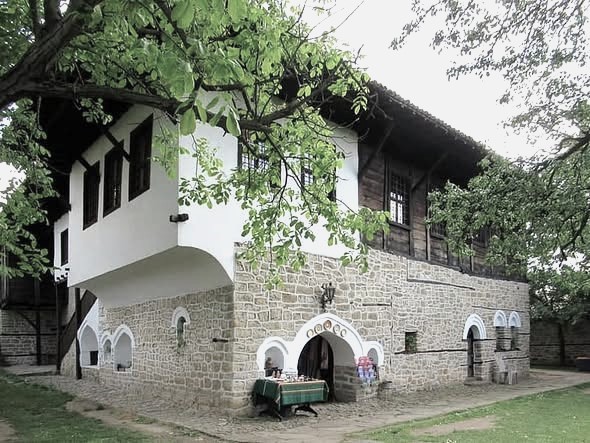
In the first half of the 16th century, Arbanasi develops as a wealthy settlement of livestock breeders, artisans, and merchants. Many churches with magnificent frescoes would be built, entirely unparalleled elsewhere in Bulgaria. Meanwhile, the architecture of Arbanasi itself strongly reminds one of Southern Albania, especially Gjirokastër and Berat, and another important piece of evidence comes from the fact that the first frescoes of the Church of St. George in Arbanasi are the work of the master Nikolla, son of the great Onufri, but also, besides Nikolla, son of Onufri, in the churches of Arbanasi, the name of his assistant, Joan, is also encountered.
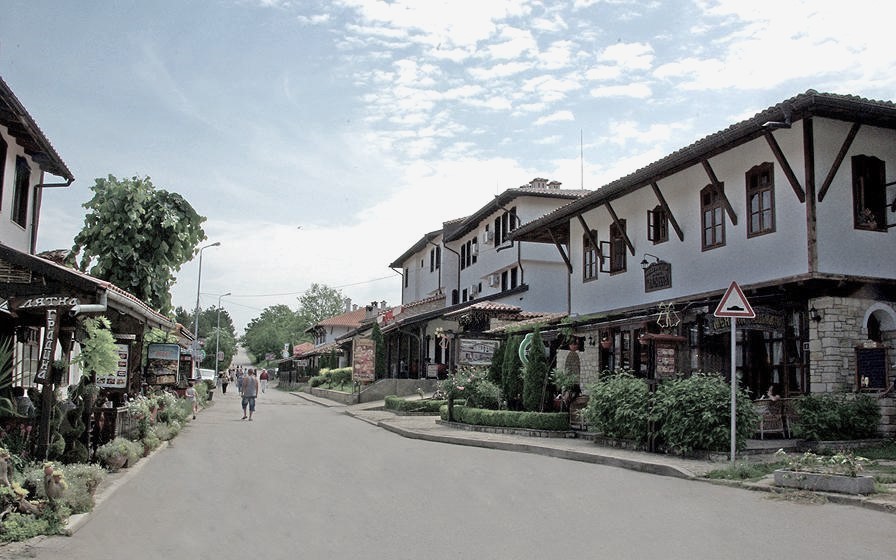
Today Arbanasi is a tourist village in Northern Bulgaria, with 330 inhabitants (whereas at its peak of development, it had reached almost 3000 inhabitants), where wealthy Bulgarians spend their holidays and have their villas, a village where the visitor is amazed by the charm, history, and customs of this unique settlement with such tangible Albanian heritage.
In Bulgaria, as stated also by the Bulgarian historian Boyan Gyuzelev, thanks to whom we have the fortune to know many data regarding the Albanian presence in medieval Bulgaria, Albanian settlements have also existed in Chervena Voda in the Ruse area on the Danube (another interesting parallel, as in Southern Albania we have a small town, Çorovodë, with the same etymology), in Poroishte (again nicknamed Arnavutköy), today a neighborhood of the city of Razgrad, as well as in Dobrina and Devnia, near the city of Varna, from where the Albanians of Ukraine originate. A medieval Albanian diaspora that we must never forget. / Memorie.al