• Rreth Nesh
  • Kontakt
  • Albanian
  • English
Saturday, November 21, 2026
Memorie.al
No Result
View All Result
  • Home
  • Dossier
  • Interview
  • Personage
  • Documentary
  • Photo Gallery
  • Art & Culture
  • Sport
  • Historical calendar
  • Others
  • Home
  • Dossier
  • Interview
  • Personage
  • Documentary
  • Photo Gallery
  • Art & Culture
  • Sport
  • Historical calendar
  • Others
No Result
View All Result
Memorie.al
No Result
View All Result
Home Art & Culture

“Special for ethnographers were their relationships, especially Jacqueline’s with Pashka, Prenk Cali’s wife, who, as soon as the Frenchwoman entered the tower, kissed her…”/ The Albanian adventure of the French couple, in 1938

Historia e Bajraktarit të Hotit, që sfidoi 3 pushtete: UDB-në në Damask, burgjet e Austrisë dhe terrorin komunist: / Im atë, ish-oficer i Zogut…
“Kur Helen Pittard, e pyeti pronarin e Hotel ‘Europa’, Sokrat Shkrelin, se ç’ishte ajo këngë që ata burra e këndonin me aq pasion, ajo u habit kur ai i tha…”/ Aventura shqiptare e çiftit zviceran, në Shkodrën e 1920-ës
“Të veçanta për etnografët, ishin dhe marrëdhëniet e tyre, veçanërisht të Jacqueline-s me Pashkën, gruan e Prenk Calit, e cila, që kur francezja hyri në kullë, e puthi…”/ Aventura shqiptare e çiftit francez, në 1938

By Luan Rama

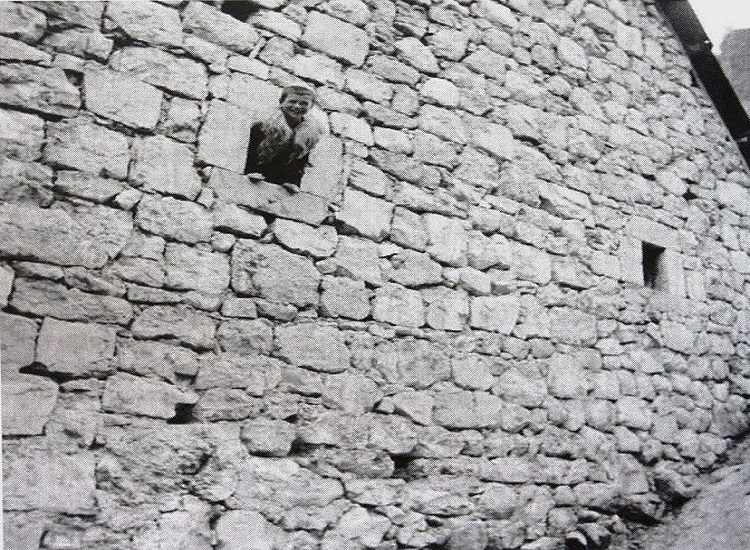
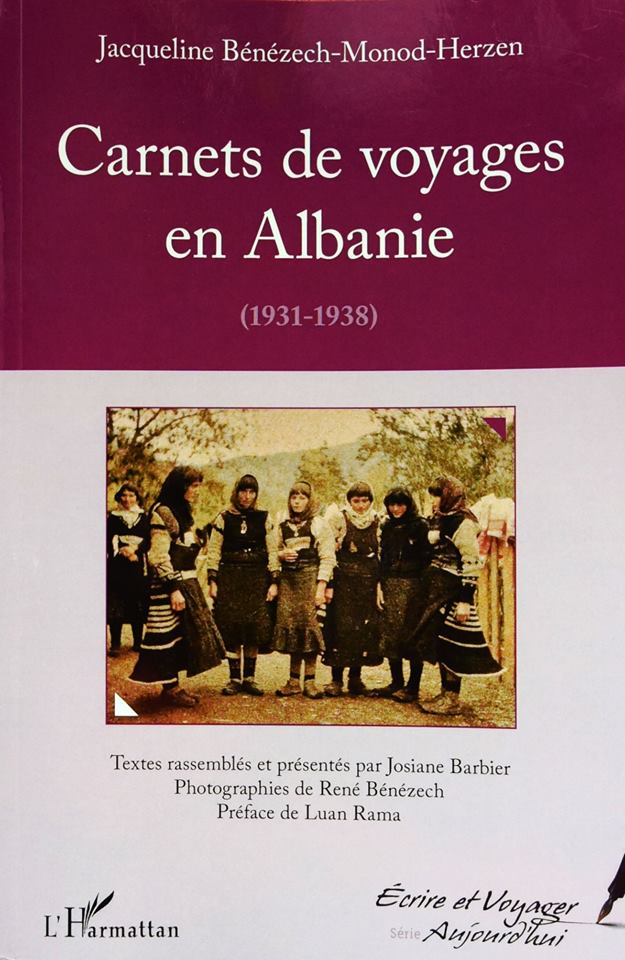
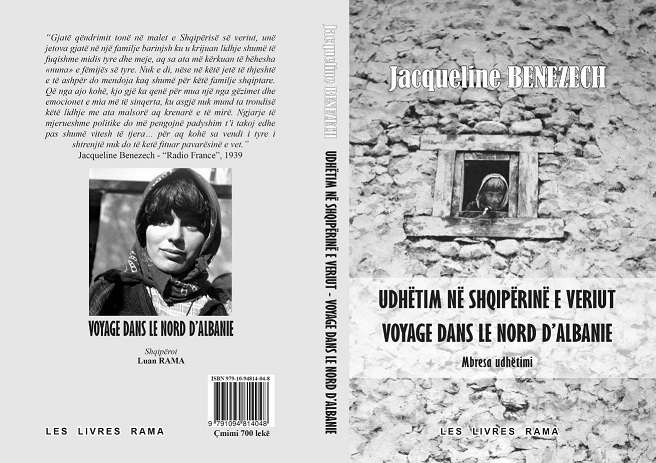
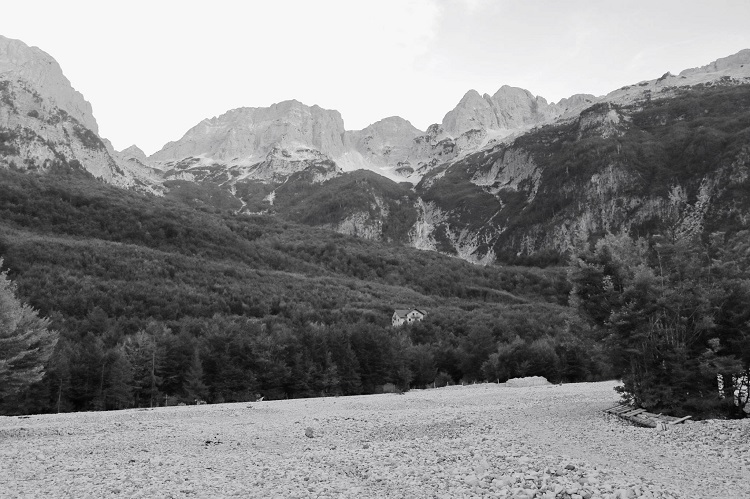
Memorie.al / On October 18, 1938, the Benezech couple had set out for Han i Hotit and then Tamara and Lëpusha, at altitudes above 2,000 meters. They were accompanied by their Shkodran interpreter, B., a man experienced in such journeys and knowledgeable in foreign languages, as well as two mule drivers, Asllani and Ismaili, together with their horses on which the luggage was loaded. Along the way, among the rocks, they came across abandoned structures, since the shepherds had left after summering their livestock, even removing the roofs of the sheepfolds so that they would not be destroyed by the winter storms and downpours. At night, to sleep, they lay down wherever they could on pneumatic mattresses they had brought from Paris, and the next day they continued their journey again.

One night they stopped at the house of a highlander named Kol Petrushi, entering a room where the cloud of smoke hung over people’s heads, since in that room, as in many highland towers, there was no chimney. “Poor, but with generous hospitality,” wrote Jacqueline.

Meanwhile René photographed both Kol Petrushi and their tower, the family members, there in the mountain setting. The next day it was Petrushi’s old mother who, with a stick in hand, through the snow, led the way ahead like a wild goat to show them the road toward Ranza e Shënikut.

Gjithashtu mund të lexoni

“Kosovo became one of the themes that accompanied the creativity and intellectual engagement of the world-famous Albanian writer, Ismail Kadare, because he…”/ Reflections on the exhibition “Kadare’s Kosovo”

“Muntaz Dhrami is a Kadare in his field of art, but his dimensions go beyond the universe…”/ Reflections of the renowned journalist and publicist about the legend of Albanian sculpture

Often the old woman had to stop and wait for the caravan to catch up as it climbed slowly. To the French ethnographer she seemed like “a fairy-tale character,” as she wrote in her diary. Then, after rocks and cataracts, the caravan stopped at another house where 26 people of the same family lived within one large, somewhat partitioned room.

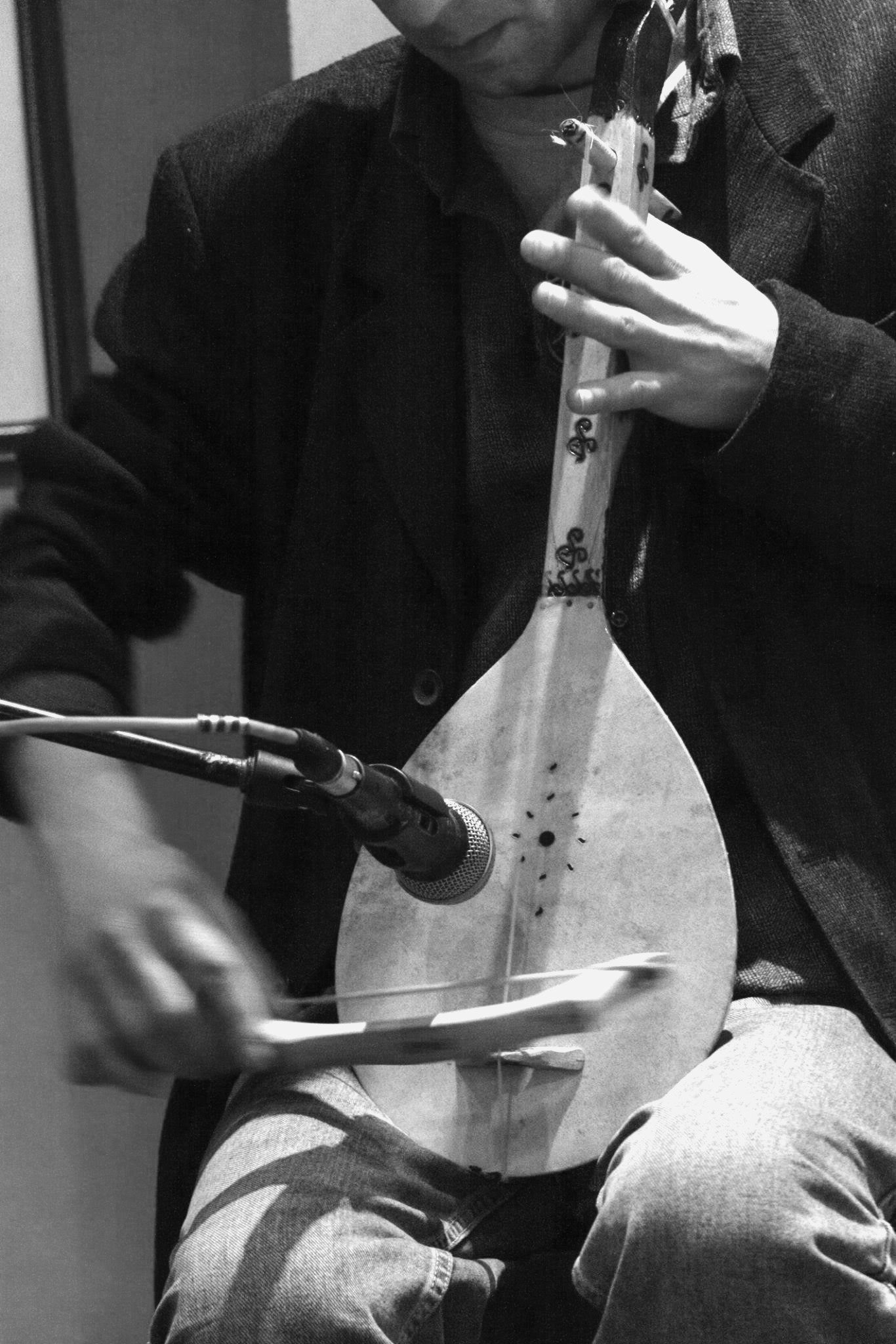
There they roasted potatoes and around the fire, as is the custom, whoever plays the lahuta takes up a long song from the heroic epic, singing to a distant and mythical world, to the heroes of these mountains. Jacqueline thought that everything around that house – the furnishings, the work tools, the costumes, the instruments, the everyday and kitchen objects – everything there was a true ethnographic museum.

And moreover in a place they often compared to Switzerland. It was precisely there, during the night, lying amid the crowd, where some were huddled beside the fire in the middle of the room, during the night, that René felt a strange “animal” creeping behind his ear.

But only in the morning did they notice that it was nothing other than the toes of that old woman lying further off who was in her death agony. Likewise, Jacqueline had been puzzled to sleep during the night with that kind of soft “pillow” that took different shapes, but only in the morning did she realize it was a cow’s spleen.

Their journey continues, the days follow one another, and there they find themselves in a dramatic situation, lost in that wilderness, in the middle of the storm, not knowing where to go, always in search of Qafa e Pejës.

“The situation was becoming tragic,” writes Jacqueline, “until finally exhaustion would force us to abandon our lives to God’s will.” And behold, two young men, fortunately as if fallen from the sky, found them there and invited them to their hearth, leading the way ahead. But undoubtedly, on this journey the French couple has a special impression during their stay in the tower of Preng Cali, whose figure seems to attract them in a particular way.

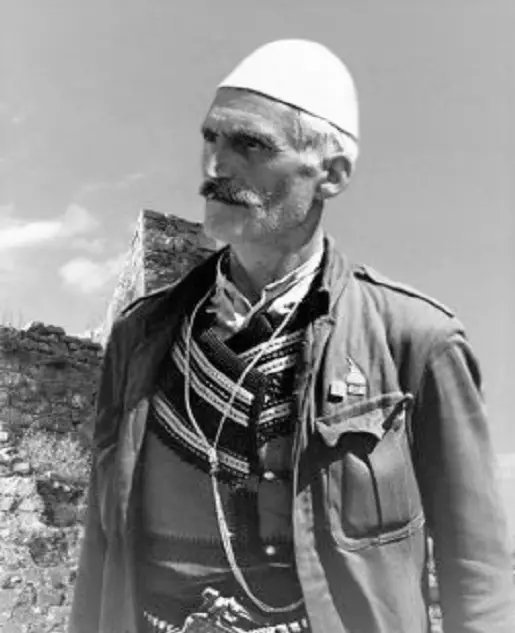
“Preng Cali,” noted Jacqueline in her diary “came toward us extending his hands, with an energetic face and a wonderful smile. At first sight he was very likable. A true giant. He was at least 2 meters tall. He was dressed very cleanly, in the costume of Malësia e Madhe, a costume of particular elegance. His hair was white and his mustache short, standing out on his tall and slender figure.

Naturally, his belt was adorned with a large revolver, another with an ivory or bone handle, a model like those the King gave to those he wished to reward and honor…” Preng Cali, just like Fran Zefi afterward, the two ethnographers see as a character that comes closer to myth than to the everyday reality of life in these mountains.

This highlander, who would give even his life for the defense of the borders, had at first been angry with the King because he was ready to abandon the northern borders, and had even interned him in the castle of Gjirokastër, but later, the King himself had freed him and had even gifted him a pistol decorated in silver, since the kingdom needed the leaders and bajraktars of the north.

But special for the ethnographers were also their relations, especially Jacqueline’s with Pashka, Prenga’s wife, who, as soon as the Frenchwoman entered their tower, kissed her straight on the mouth. Surprising for a woman who came from Paris among these mountains. Would this Frenchwoman ever learn the later history of this family after the war, when Prenga would be surrounded in a cave, captured and hanged?

Would she learn the fate of Pashka, that good woman who followed after her trying to please her and who often struck her with her hand on the back to express her love? Pashka would experience a Calvary of her own in her life after Prenga’s murder, where some family members cared for her until she died in 1967. No, no one would tell the Frenchwoman what had happened to Prenga’s wife…! Nevertheless René had not forgotten to photograph the two of them, as we see them today in some photographs in front of Preng Cali’s tower:

Prenga tall dressed in shajak and Pashka small in her costume of Malësia e Kelmendit. A strange couple, but with a big heart! After nearly a month through the mountains and generous hearths of the north, the caravan with the two French ethnologists returned to Shkodër. Their last stay had been with the friar of the church of Theth, Father Antonio.

Fran Zefi’s people accompany them until they come out onto the main road. Finally they can set off toward Koplik and descend down toward Shkodër. But the highland youth asks them to notify him in advance when they come next time, since he will wait for them at the border and there is no need for government papers because they will be in their hands, in the generous hospitality of the Albanian highlanders.

When the caravan arrived in Shkodër, as Jacqueline Benezech writes, “people looked at us in amazement, while Asllani told them: ‘They are French!’… at the hotel, the chambermaid did not manage to recognize us. We understood this when we looked at ourselves in the mirror. The gardens we saw around us were full of flowers and the sky was blue. Monday, November 7, 1938. It has been three months since we left Paris…”!/ Memorie.al

*A fragment from the preface
ShareTweetPinSendShareSend
Previous Post

"Khrushchev has started plans to sell the German Democratic Republic, he is a born traitor, he should be hanged from telephone poles..."/ Enver Hoxha's conversation with the North Korean delegation, May '64

Next Post

"Radio-Ianina broadcasts an hour-long program with the Northern Epirote Silogjes and the fugitives, with anti-Albanian propaganda, Sebastiano and Micotaqis..."/ Letter to the Saranda Party Committee for Ramiz Alina, November 17, '90

Artikuj të ngjashëm

“Kosovo became one of the themes that accompanied the creativity and intellectual engagement of the world-famous Albanian writer, Ismail Kadare, because he…”/ Reflections on the exhibition “Kadare’s Kosovo”
Art & Culture

“Kosovo became one of the themes that accompanied the creativity and intellectual engagement of the world-famous Albanian writer, Ismail Kadare, because he…”/ Reflections on the exhibition “Kadare’s Kosovo”

November 17, 2026
“Muntaz Dhrami is a Kadare in his field of art, but his dimensions go beyond the universe…”/ Reflections of the renowned journalist and publicist about the legend of Albanian sculpture
Art & Culture

“Muntaz Dhrami is a Kadare in his field of art, but his dimensions go beyond the universe…”/ Reflections of the renowned journalist and publicist about the legend of Albanian sculpture

November 16, 2026
Skifter Këlliçi’s rare testimony: “What did Ramiz Alia tell me about the odyssey of the film ‘Pas injrëve’ and the reason for his order in 1986, that I no longer provide the ‘Sports Column’ on RTSH”?
Art & Culture

Skifter Këlliçi’s rare testimony: “What did Ramiz Alia tell me about the odyssey of the film ‘Pas injrëve’ and the reason for his order in 1986, that I no longer provide the ‘Sports Column’ on RTSH”?

November 11, 2026
“Before parting from life, Martini burned all the correspondence he had with the college and with Father Zef Valentini, since…” / The testimony of the author of the documentary “Martin Camaj, the Irreplaceable”!
Art & Culture

“In October ’81, when I was invited to the Frankfurt Book Fair, a tall, handsome man approached me and, with some hesitation, spoke to me: my name is Martin Camaj, can I…”/ Kadare’s rare confession

November 8, 2026
Meeting of ’61: “Mark Gurakuqi attacked Kadare in the press with the language of Enver Hoxha, analyzing his poem ‘Laçi’…” / Testimony of the famous writer, Skifter Këlliçi
Art & Culture

“Within a day, 30,000 copies of ‘winter…’ were sold, Kadare was locked inside the cubist palace, the Grand Boulevard was dusking without the attractive Kadare couple, and the Security wanted his head…”/ Reflections of the famous writer

November 1, 2026
“As Hariton was being led to his execution, he quietly marked the page of the book he was reading and followed the officers… / The tragic story of the Bezhani family, founders of Vlore’s first bank in 1850.”
Art & Culture

“In the New Year 1936, on the occasion of the reception organized at the Royal Palace, the guests were asked to come in Western-style clothing, as…” Reflections of the renowned scholar on the Zog Monarchy

October 26, 2026
Next Post
“Here is the truth about the figure of 6 thousand missing from the communist regime, whose remains are said to have not yet been found…”/ Reflections of the former head of the Archives of the Ministry of Internal Affairs

"Radio-Ianina broadcasts an hour-long program with the Northern Epirote Silogjes and the fugitives, with anti-Albanian propaganda, Sebastiano and Micotaqis..."/ Letter to the Saranda Party Committee for Ramiz Alina, November 17, '90

“Historia është versioni i ngjarjeve të kaluara për të cilat njerëzit kanë vendosur të bien dakord”
Napoleon Bonaparti

Publikimi ose shpërndarja e përmbajtjes së artikujve nga burime të tjera është e ndaluar reptësisht pa pëlqimin paraprak me shkrim nga Portali MEMORIE. Për të marrë dhe publikuar materialet e Portalit MEMORIE, dërgoni kërkesën tuaj tek [email protected]
NIPT: L92013011M

Na ndiqni

  • Rreth Nesh
  • Privacy

© Memorie.al 2024 • Ndalohet riprodhimi i paautorizuar i përmbajtjes së kësaj faqeje.

No Result
View All Result
  • Albanian
  • English
  • Home
  • Dossier
  • Interview
  • Personage
  • Documentary
  • Photo Gallery
  • Art & Culture
  • Sport
  • Historical calendar
  • Others