
Memorie.al / Regarding the development of education in Lumë, and particularly for the school of Ploshtan, the following have written: Prof. Shefqet Hoxha, ‘Merited Teacher’ Isa Halilaj, members of the Albanian-American Academy of Sciences, Xhavit Lashi, Fatos Daci, historian Xhemal Domi, Dr. Shefqet Domi, Dr. Fejzullah Gjabri, Muharrem Mezini, Jahe Delia, Mevlan Lushi, etc. In a special and detailed manner, mainly the long-time scientific collaborator Beqir Shehu and veteran teacher Metush Skeja have written.
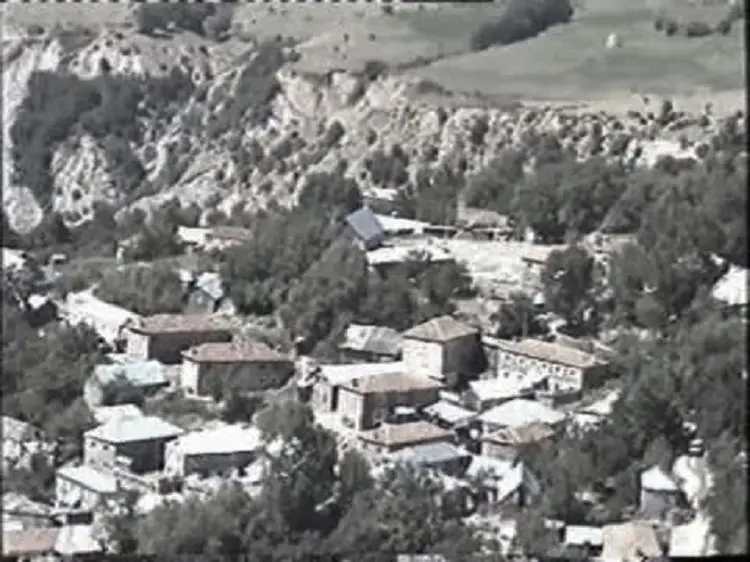
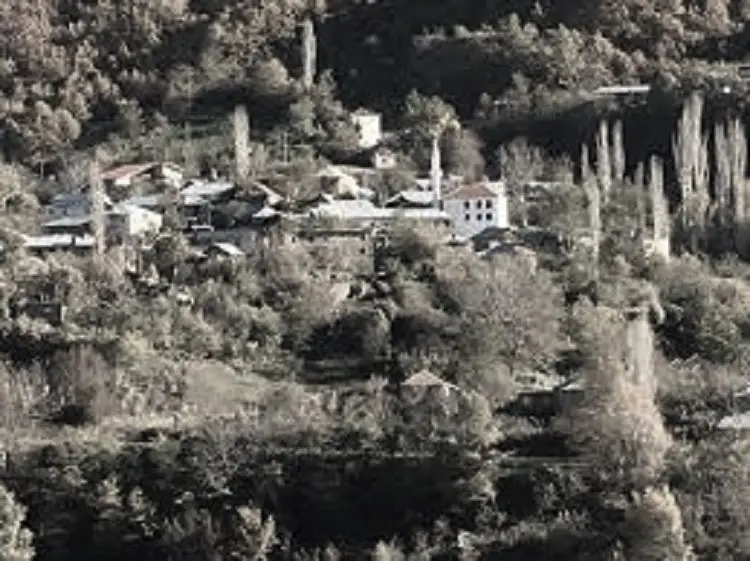
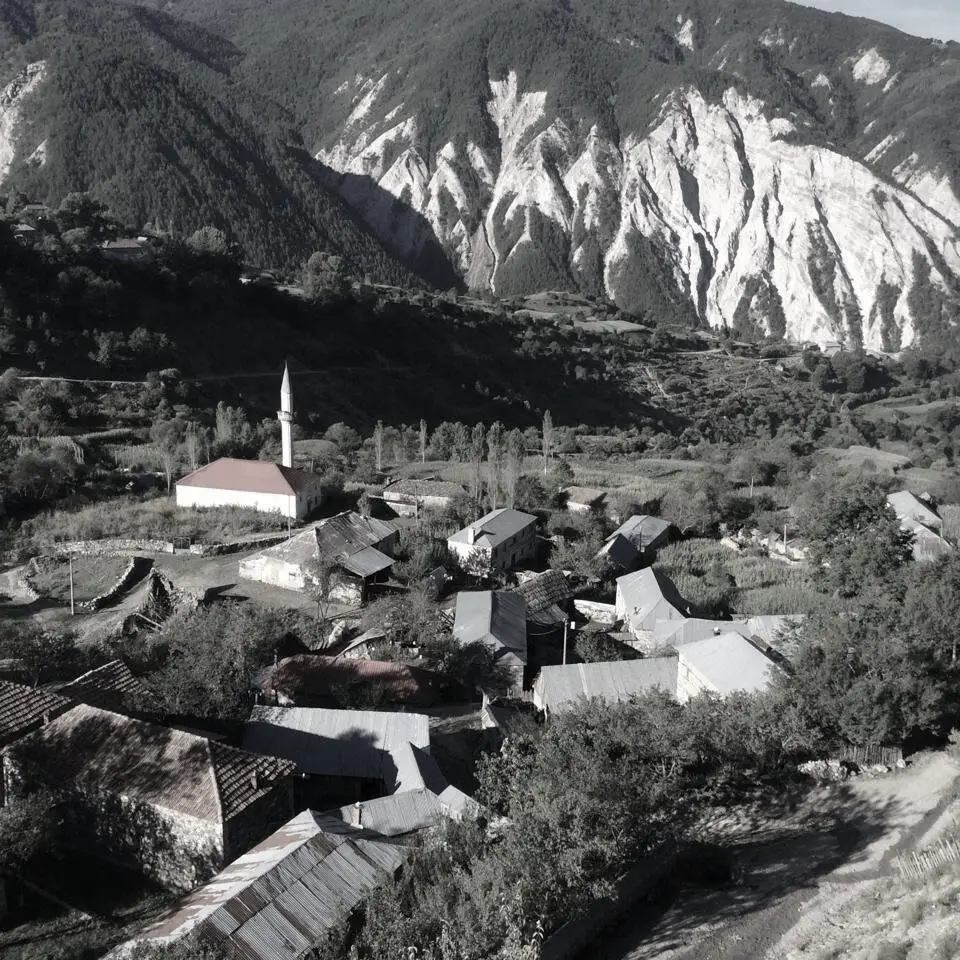
I, as a son of this village, without great pretensions, in this writing am trying to provide a historical account of it, presenting some facts, conclusions, and arguments without prejudice, regarding the development of education in Ploshtan, spanning from before 1900 to the present day. Ploshtan is the oldest village in the valley of the Black Drin, with economic, social-cultural development, ancient urbanism, and ancient Illyrian culture. This is found in the archaeological discoveries of imported goods from Roman times. Near the ruins of the Church of Ploshtan, on the road leading to Caren, there are graves that, according to teacher Shehat Palushi, belong to the pre-Christian period.
Archaeological discoveries from the Illyrian period in the village of Ploshtan!
In the Dode neighborhood, at a place called Llakace, ceramic vessels have been found which, according to teacher Sulejman Istrefi, belong to the Illyrian period. In the Church of Tallamaz, glass mosaics have been found that belong to the Illyrian period. In Fushë-Dardhë of the Dode neighborhood, while working with a tractor in 1968, a large ceramic jar used for storing wheat was discovered. In Fushë-Dardhë, as well as in the surrounding wall of the graves of Ploshtan village, pieces of tiles and bricks have been found that have letters and signs belonging to the time of Illyria…! According to historian Iljaz Kaca, in Fushë-Dode there was a road station used by merchants moving through the valley of the Black Drin. According to researcher Adem Bunguri, these findings represent only some aspects of the rural life of the Illyrian urban period in Ploshtan.
These findings show that there was good economic-social development, both in the field of production and in the culture of living. In Ploshtan, we find writings on cult objects, on epitaphs and verses on tombstone, on sheep brand marks, on rosettes carved on the stones of courtyard gates. Thus, the lack of written sources from the ancient period is complemented by the archaeological discoveries that have been uncovered in this ancient prehistoric village. From the perspective of socio-economic conditions, we say that education (traditional family upbringing) developed first, and then schooling. The people of Ploshtan did not leave their children outside of upbringing; they kept them close, taught them the craft of tilling the land, taught them how to tend to livestock and breed them, taught them how to keep accounts, taught them the annual and religious calendars, cultivated in them love for parents, for the elderly, for relatives, for the homeland, language, and culture. They placed importance on cultivating in children traits such as honor, manliness, dignity, trust, and loyalty. All conquerors destroyed everything in Ploshtan, but they did not destroy the language, culture, traditions, customs, and harmony.
The Turks left us nothing written about the development of education and culture. We find that in the people who served in the commune as mudir, bimbashi, mufti, miftar, qadi, chief of guards, merchants, craftsmen, military personnel, etc., where my fellow villagers have served. We find it among the imams, hodjas, muezzins who had religious culture and knowledge, who served in the mosque of Ploshtan village, but also as itinerant preachers in the surrounding area.
Ploshtan, a Kazah Center until 1884!
Ploshtan was a Kazah Center until 1884, a regional center of nahiye, a commune center and locality. The employees of this administration who served in the surrounding area had a religious character, but they were the only institutions where the village youth were educated and a base for going to study at religious schools in Prizren, Skopje, Istanbul, Damascus, and even Saudi Arabia. When the Turks came to Ploshtan, they set up the administration, the residences where soldiers and officers stayed for defense, built the mosque, built the mektep, built the public kitchen where the administration, army, students, the poor, and travelers would eat. In the mosque of Ploshtan, there was a library until 1920, when it was burned by Serbian chauvinists, and the few books that remained were taken into safekeeping by the village imam, Molla Tofik Gjorllaku. Some of these books are still in the library of the village imam, Mevlan Gjorllaku, today.
According to historian Xhemal Domi, in Ploshtan and the surrounding area there were Turkish schools, such as: Mejtep, Sebjan Mektep, Ruzhdije School, which were financed by the Turkish state, by the village waqf controlled by the elders and local councils.
There, hodjas who had completed schools in Prizren, Prishtina, Skopje, Istanbul, Thessaloniki, Damascus, etc., taught. On special occasions, teachers were brought from Skopje and Prishtina, but mostly they were locals. In these schools, mathematics, history, geography, religious knowledge, philosophy, and the Turkish, Persian, and Arabic languages were taught. Importance was given to knowing how to read the Quran and its verses. The interpretation and commentary of the Quran, prayers, rituals, practice of rites, and moral advice were done in the Albanian language. Girls also attended the mejteps and sebjans. A special contribution to the development of education, knowledge, and culture has been made by people from Ploshtan who worked as military personnel, qadis, bimbashis, commune heads, in Prizren, Tetovo, Skopje, Istanbul, Bucharest, Yenisehir, Izmir, Thessaloniki, etc.
Sulejman Laçi from Bardhoc i Kukësit opened a school in Ploshtan-Radomorë in 1902
A great contribution was also made by the ‘Bashkimi’ association, which, through Maliq Beg Bilali, brought the Latin-script primer to Ploshtan, as well as by the “Bashkimi Club” that was created in Ploshtan after the Congress of Manastir. A special contribution was also made by the education advisor in the Prefecture of Prizren, Sulejman Laçi from Bardhoc i Kukësit, who from 1902 to 1912 opened a school in Ploshtan and Radomir. In Ploshtan, Molla Gafurr Brika, Molla Tafik Gjorllaku, and Molla Sadik Potja taught. According to Qamil Hoxha, the religious school in Ploshtan was kept open from 1912 to 1920 by Molla Gafurr Brika with his own financial means. So above that, we cannot say that ignorance existed, that there was no literacy, because the unit of measurement was the “Rabusha”, where in Ploshtan trade was carried out, selling and buying not only goods for goods, but with the lira and dinars of the time.
Several high-ranking military personnel and cadres have come out of Ploshtan
From Ploshtan, there have been high-ranking military personnel such as: Hysen Gjorllaku, who served in Thessaloniki from 1830; Ismail Skeja, also before 1850; Ali Gjorllaku, after 1900; Hisni Flisa, military in Edirne in 1912-1940; Isak Male Çupi (Sert Baruti), 1910-1945; Idriz Vehap Brika, 1935-1952; Metali Skeja, Military Doctor in Bursa. From Ploshtan, 8 people have graduated from the Madrasa and qualification schools for hodjas, administration, and law, such as: Molla Tafik Gjorllaku, Molla Gafurr Brika, Molla Miftar Flisa, Afuz Vehxhi Skeja, Afuz Elmaz Skeja, Afuz Mustaf Gjorllaku, Haxhi Hasan Perzhilla, Haxhi Daut Flisa. For law, Abdulla Perzhilla and Bajram Gjorllaku have graduated. A good part of the above-mentioned carried out their activities outside Ploshtan.
In Ploshtan, besides these schools that the Turks opened, in 1917 the Austro-Hungarians also opened a school, where German was taught, and Albanian as a second language. The teacher at this school was Ferit Nimani from Kosovo, a Normal school graduate. Alongside other subjects, for the first time priority was given to physical and sports activity. School was compulsory for children from age 7. Likewise, November 28, Albania’s Independence Day, was allowed to be celebrated. Friday was left as a day off, and religious rites were allowed to be performed. According to Arif Zholi, who was a student together with Rrahim Skeja and Hysen Izeti: “At the end of November, the Austro-Hungarian commander, who had his center in Zhur, came and was magnificently received by soldiers and civilians, as well as by the school students, where we recited and performed gymnastic exercises. The high military officer was asked not to levy taxes because there had been no production, but he not only refused, but interned some fellow villagers.”
In October 1922, Hasan Prishtina came to Ploshtan to open the school!
In the summer of 1922, the National Education Congress held its work, where it was decided that in every commune a compulsory primary school should be opened for all children aged 7, both boys and girls, and that importance should be given to teaching the Albanian language. Ploshtan was a second-category commune center for 16 villages and depended on the Bicaj sub-prefecture, the Prefecture of Kosovo. At the end of October 1922, Hasan Prishtina came to Ploshtan to open schools in this Commune. He stayed two nights at Osman Lita’s, one night at Sheh Hajra’s, and one night at Rufat Maliki’s. He met with the commune administration, the elders of Ploshtan village, and some who held religious titles such as Mullah, Haxhi, Afuz, Muezzin, and others. He did this because in some villages these people had been opposed, saying, “We have our own schools, the mejteps.” He told them that the teacher would be brought by us, that you will have a religious teacher at school, and that the school would be financed by the state. These requests found the support of all the village notables, the commune administration, and the ulema of Ploshtan village.
At the end of November, the school opened in the houses of Daut Leza, with teachers Besim Dalliu and Molla Gafurr Brika. After 6 months, the school was moved to the mosque, because there was space there to conduct lessons in the village mektep, inside the mosque premises. In the spring of 1923, work began on building a school on the plot of the Zholi houses. Construction was completed in record time; the school equipment, benches, tables, blackboard, etc., were obtained from Bicë, made by the teacher from Shkodra, Ndrekë Cukala. Great help was also given by teacher Kolë Vila from Shkodra, who was also responsible for education in the sub-prefecture. On the first floor, a classroom was made for students, and on the second floor, a room for teachers.
Food was provided by the teachers themselves, but the villagers also contributed. In 1925, teacher Besim Dalliu was transferred, and Gjon Kabashi, Riza Riza, and Ibrahim Riza came, serving there in 1926-1927. After them came: Zeqir Zeka, Mahmut Josufi, Tef Kuqani, Ali Dika, who served until 1932-1934. Later, Ali Neza and Riza Rama also taught. From 1922 until 1939, the theology subject teacher at this school was Molla Gafurr Brika, and the school closed with the Italian occupation of Albania. After 1939, until 1944, only the Mejtep functioned in Ploshtan. All these teachers were honored and respected by the residents of Ploshtan for their contribution to the education of the children of Ploshtan and the surrounding area.
In 1944, the school of Ploshtan reopened in the houses of Emin Perzhilla
Immediately after the end of the War, in 1944, the school of Ploshtan reopened in the houses of Emin Perzhilla, because the school building built in 1923 had been sold to Abaz Palushi. Lessons in this house were conducted under wartime conditions, with all the dedication of teachers Qazim Kuqashi and Rufat Domi. At the school, some girls from Ploshtan also attended by force. The chairman of the Anti-Fascist National Liberation Council, Mahmut Hasani, and the secretary, Rrahman Brika, contributed to the smooth running of the school. At this time, the Communist Party organization and the Anti-Fascist Youth organization were created, with Secretary Asllan Iljaz Ferati. Seeing the poor conditions of the school, brothers Rufat, Mislim, and Sadik Maliki donated to the school a guesthouse with 8 rooms and 2 hectares of land for sports and physical activities. At that time, the teachers serving there were: Qamil Hoxha, Mustafa Braha, Angjelina Kastrati, and Dogjan Bulica.
In 1946, the education reform decision was issued, which, among other things, stipulated that all young people under the age of 40 would learn to read and write in the Albanian language. In these courses, a valuable contribution was made by teachers: Rufat Domi, Qamil Hoxha, Angjelina Kastrati, Ramadan Gjorllaku, Xhemal Cala, and others. In 1948, the fifth grade opened with 14 students from the villages: Çaj-Matraxhi, Kalisi, Bushtrica, Careni, and Ploshtan. But in 1949, there was no fifth grade because there were not enough students to open a class.
It opened in 1950 with 24 students. For the first time, the 7-year (unified) school was completed in 1952 by the students: Qerim Lame, Ramadan Gjorllaku, Xhemal Cala, Axhem Sufa, Ali Kovaçi, Halim Lita, Abdurrahman Tota, Ilmi Palushi, Xhafer Koka, Nezir Jata, Nuri Skeja, and 6 girls from Ploshtan and Litet. On this occasion, the students themselves organized a lunch that remained as a tradition, where at the end of the school year a lunch was held with the teachers and the students of the class. On that occasion, a recital concert was given, as well as songs and dances in Kiavec, in which the people of Ploshtan also participated. This tradition continued until later, and in 1968, when I completed the 8-year school, we had a lunch in Kjavec.
In 1956, the 7-year school was transferred to Caren and returned to Ploshtan in 1965!
I also attended the first grade in 1961 at the school in the hotel of Rufat Maliki, with teacher Bajram Çekiçi. In 1956, the 7-year school was transferred to Caren, to help Radomira and Caren, after a 7-year school opened in Bushtrica. The school returned to Ploshtan in 1965, after the 7-year school of Radomira opened in the village of Derbaç. At that time, students from Çernjeva and Caren also came to Ploshtan, because there was no 6th grade in Radomira. In 1967, compulsory education was extended from 7 to 8 grades, and this system also caught me. From this school have come teachers: Ramadan Gjorllaku, Xhemal Domi, Xhemal Cala, Servet Ferati, Ali Lita, Shaqir Kovaçi, Iljaz Palushi, Shehat Palushi, Sulejman Istrefi, Ramazan Ferati, Shpetim Brika, etc.
As throughout the country, in the school of Ploshtan, literary, folklore, oral tradition, linguistics, archaeology, history, and sports circles were established. These enlivened life in the school and in the villages. Competitions in mathematics, artistic concerts, sports activities, marches, and excursions to historical places began to be organized – thus giving life and vitality to the school and the surrounding area. A special contribution in this direction has been made by Ramadan Gjorllaku, Servet Ferati, Xhemal Cala, Beqir Shehu, Iljaz Palushi, Jahe Delia, Rasim Deda, Sulejman Istrefi, and many others.
Principals of the school of Ploshtan from 1965 to 2015
From 1965 to 2015, the school of Ploshtan has been led by Miftar Halili, Xhemal Cala, Beqir Shehu, Jahe Delia, Nezim Deda, Abaz Daci, Sulejman Istrefi, Rasim Deda, Shaqir Kovaçi, Shpetim Brika, Isa Lita, Rushit Mena. It is regrettable that now the school is heading toward closure due to lack of students, where from its benches, from Ploshtan alone, 40 people have completed higher education, 72 have completed secondary education, and about 1,380 have completed the 8-year education.
In October 2022, we will celebrate the 100th anniversary of the Albanian School of Ploshtan. This will be a legitimate pride for Ploshtan and all the villages of Kala Doda, for all the generations that were educated and raised at the benches of this school. It would be good for intellectuals, researchers, historians, etc., to engage in collecting memories and illuminating the history of the school of Ploshtan, as the first Albanian school in the nahiye of Ana e Epër. Altogether, let us engage and contribute to celebrating this jubilee, the 100th anniversary of the school of Ploshtan, as festively, dignifiedly, and inclusively as possible./Memorie.al