By Dashnor Kaloçi
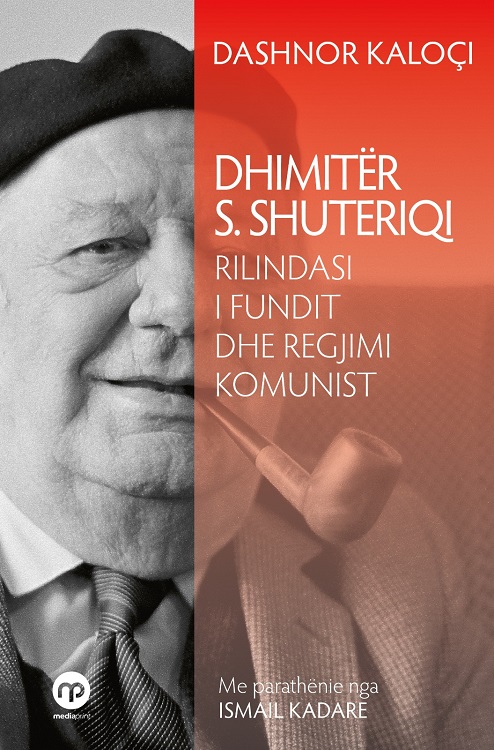
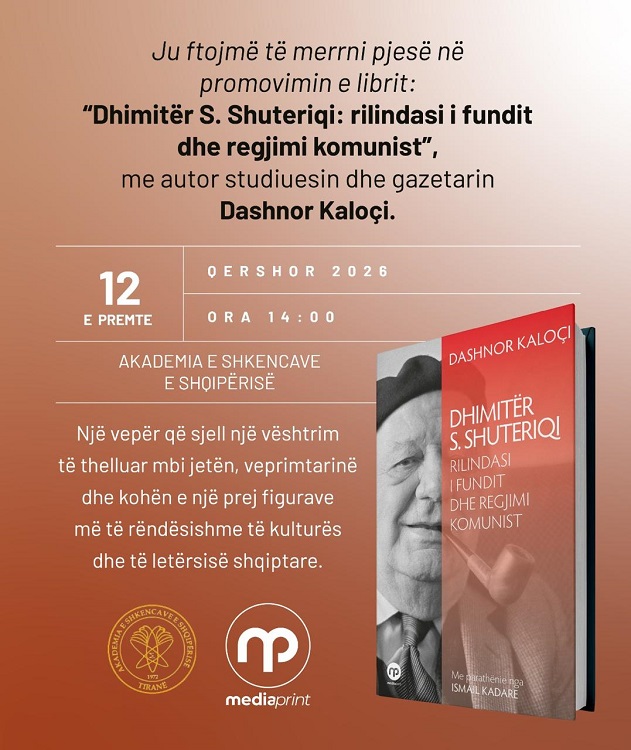
Memorie.al / The name, figure, personality, character, fame, and everything else connected to the figure of Dhimitër Shuteriqi, in all its complexity, we think would still be incomplete and quite truncated if the pages of this book were to remain limited to the publication of archival documents, which span a time period of nearly sixty years of his activity and work, such as: student of the Korçë Lyceum, student in France, professor at the “Normal” school of Elbasan, illegal and partisan during the country’s occupation, director of the Higher Pedagogical Institute, secretary and chairman of the League of Writers and Artists of Albania, freelance writer by profession, deputy in the People’s Assembly, and member of the Academy of Sciences of Albania, chairman of the Albanian Committee for Balkan Understanding, etc.
In this context, in the fourth part of this book, we have also reflected some of the memories of his former friends, colleagues, comrades, contemporaries, and family members. Convinced that we would contribute even more to the full reflection and illumination of Shuteriqi’s figure, we have brought him forth from their memories, because in the official and human relations he had with them, his humanism also stands out, which, it must be said, was a very important part of his character as a parent, spouse, intellectual, creator, poet, writer, chairman of the Writers’ League, academician, etc.
These memories, which we have included in this part of the book, span a period of nearly sixty years of Shuteriqi’s life and work, dating from the early 1950s, with Mitrush Kuteli, and ending in 2003, when he passed away. As we noted a little above, always referring to these memories and not only (here we also consider the archival documents), the human side in Shuteriqi’s relations with friends, comrades, colleagues, young creative intellectuals, writers and artists, his family members, etc., was an essential part of his character.
Thus, considering that throughout his life, from the post-war period until the end of the 1980s, when he was a freelance writer, he had immense engagements in all the functions and duties he performed, nonetheless, he found time to write to young writers and creators, maintaining a regular correspondence with them and encouraging them in their work. Shuteriqi found time to receive in his office, as well as in his home, all those people who sought to meet him, known and unknown, friends, comrades, colleagues, writers and artists, poets and prose writers, travelers, troubled souls, etc. Not only did he never close the door to anyone, on the contrary, he followed and took an interest in their problems, both by mail and by going himself to various districts of the country where they were.
Thus, although he was in an unfavorable, indeed very difficult period at the beginning of the 1970s, when the high leadership of the PPSH, with its respective structures, had begun criticisms, accusations, and attacks against him “for the liberal spirit” he had allowed in literature, arts, and culture, Shuteriqi undertook a journey to several districts in Southern Albania, stopping first in Patos, where a well-known composer had been sent as a kind of semi-internee (Shuteriqi’s going there saved him from arrest), and then to Gjirokastër, going to the District Party Committee to inquire about two minority writers who had become the target of attacks by the party structures of that district.
Precisely during this very difficult period for him, Shuteriqi remembered to send a typewriter to a young village teacher in one of the deepest areas of the Kukës district, who had just had his first two or three poems published in the literary press of the time and, appreciating him for his talent and his future as a writer, would immediately accept him as a member of the League of Writers and Artists of Albania, even though he had not yet published his first book.
Likewise, precisely during that period, Shuteriqi would find time to write an article in the literary press of the time, about the first book of a young lad from Narta, Vlora, an article that would later change his life and make him a not insignificant name in Albanian literature as a novelist. In such events, he appears with the benevolence and humanism that characterized him, standing by and supporting, encouraging, and helping all those who were in need, who number in the dozens and would require entire pages of a book to mention.
These events cited above, as well as other occurrences that we will see later in this part of the book, are recounted in the first person by real characters (well-known names from various fields of art, culture, literature, music, history, folklore, and politics, before and after the 1990s), who felt Shuteriqi’s warm hand and his unstinting help on their shoulders, such as: Ismail Kadare, Ksenofon Dilo, Maks Velo, Zija Çela, Faslli Haliti, Zhani Ciko, Natasha Lako, Mihallaq Qilleri, Prof. Dr. Aleksandër Meksi, Prof. Dr. Luan Malltezi, Lefter Çipa, Ylljet Aliçka, and Dr. Aleksandër Çipa. I take this opportunity to thank them all for their benevolence and willingness to write and bring their memories exclusively for this book.
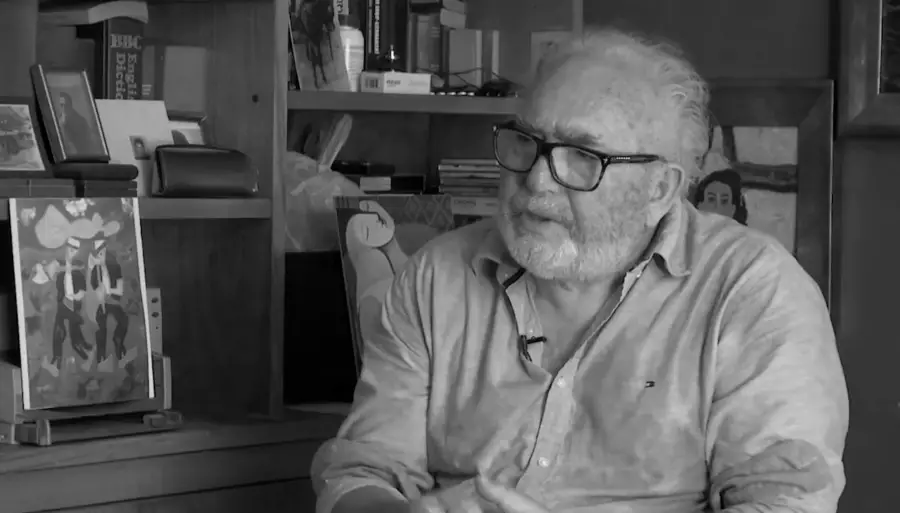
Maks Velo: “Shuteriqi embodied humanism and human love, and without him, the Writers’ League would have turned into a Branch of Internal Affairs, with Agolli and Kujtim Buza at the helm”!
In the landscape of Tirana in the 1960s, the League of Writers and Artists was a kind of mysterious island. It seemed that being a member of it was a privilege that ensured dignity, adoration, and undisputed glory. It seemed that ART was an attribute given by the League, and if you became its member, you were automatically charged with poetry, painting, and song. Lucky you! The League’s Club near the People’s Theater (and later on Kavaja Street) was the dreamed-of and inaccessible temple for students coming from the districts and for ordinary people. And especially the New Year’s Eve balls competed with Hotel Dajti.
The Party seemed to say: “Rejoice, rejoice, because I know. I have you in my hand, you’ll see where you end up…?!” The State Security was there. Artists were the Party’s darlings and a happy life lay ahead of them. They were the first to receive houses, television sets, studios, creative leave. Thus, all the half-baked artists from the districts poured into the League. There was a provincial air that they brought with them, with their poverty and lack of a full culture. Then there were those who returned from studies in the Soviet Union and the People’s Democracies. The League was like a customs house, where all Eastern cultures were poured in. Western cultures were excluded. The few who had survived were afraid to expose themselves. Dhimitër Shuteriqi was one of the few who represented France, and he did so openly and fearlessly.
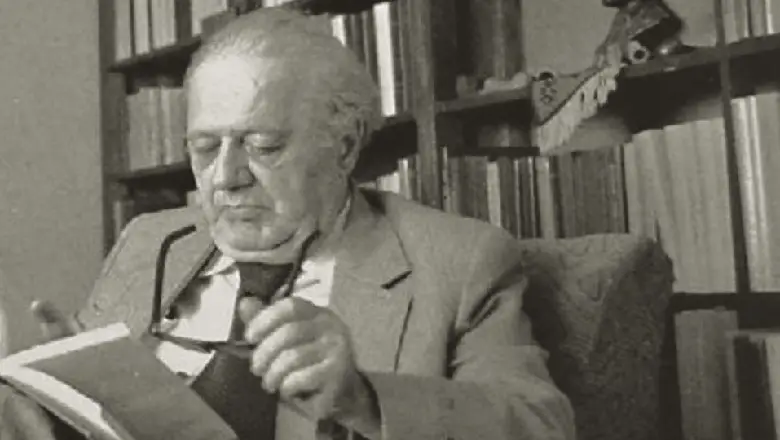
He embodied humanism and human love. He was like a French writer with his pipe, which he never took out of his mouth, and a maroon beret, which he put on his head every time he went out. He had been steeped in French culture, and this was very evident. I could see that he found it difficult to maintain a balance between what he desired and reality, which was becoming increasingly harsher. From him, I started smoking a pipe. A pipe, not a chibouk. Because they are very different. He explained to me how to treat market-bought tobacco to make it milder, sweeter, and aged. “You will take an earthenware pot,” he told me, “and you will coat the inside with honey, and after you put the tobacco in, you will cover it with a napkin. Tie it and let it age, then use it.”
And I did it, and it was a different tobacco. Undoubtedly, he was the most encyclopedic writer who led the League of Writers and Artists for 15 years. If you add to all his knowledge the Elbasan style of politeness and gentleness with which he built relationships, it made Dhimitri the central man in that League, without which it would have turned into a Branch of Internal Affairs with Dritëro Agolli and Kujtim Buza at the helm. All those who had led the League before him, Shefqet Musaraj, Foto Stamo, did not have Shuteriqi’s intellectual stature. Dhimitri, by his very presence, gave a European dimension to the League of Writers and Artists. He gave all of us, who had some kind of unidentifiable fear, a sense of security. He was a creator and a scholar, and this gave him an academic superiority compared to other creators who did not have a similar preparation.
Dhimitri was benevolent to everyone, and this was felt in the air that circulated. Shuteriqi’s departure closed an era. After it came the glacier of the IV Plenum. On July 24 and 25, 1973, the Plenum of the League of Writers and Artists was held. Dhimitër Shuteriqi was relieved of his duties as chairman; Dritëro Agolli was appointed in his place; likewise, Vilson Kilica, Ksenofon Dilo, and Hamide Stringa were removed. Xhemal Dini, Kujtim Buza, and Anastas Kondo were installed. The darkest period of the League began. In his first report as chairman, Dritëro called art ideology and found serious errors in the creativity of artists and in the leadership activity of the League. Among the painters, three were mentioned: Edison Gjergo, Ali Oseku, and Maks Velo. I was mentioned for the landscape “The Willows” in the Spring Exhibition, as “a distorter and blackener of reality.” It is interesting that all three of us were arrested exactly in this order. The first was Gjergo, the second Oseku, and the third me.
On November 13, at the Party activist meeting of the Tirana district, Manush Myftiu, the First Secretary, delivered a report where he had 13 lines about me and characterized me as: blackening and deforming reality, being against tradition and national identity. There, Mehmet Shehu shouted hysterically, that: “those who make abstractionist paintings in their own homes are hypocrites and cowards, candidates for political lightning rods, throw them mercilessly as spokespersons of the class enemy. Long live the dictatorship of the proletariat!” The Party Organization at the Executive Committee where I worked reviewed my case and requested clarification on the significance of my involvement in these errors. I thought of going to the chairman of the League, Dritëro Agolli. As I was climbing the stairs, I moved my right hand, leaning on the railing.
It was very difficult for me to go with complaints or requests to government offices, and the most unbearable part was climbing the stairs. With great effort, I lifted my legs to climb each step and hesitated whenever I met someone coming down from above. On his face, you could immediately tell whether he had solved the problem or was returning empty-handed! I continued climbing in silence, an inexplicable humiliation overwhelmed me. This is not an artists’ organization, it’s a military unit, it’s a Branch of Internal Affairs. That warm atmosphere created by Dhimitri, Vilsoni, Ksenofoni, Hamideja was being extinguished. Although Dhimitër Shuteriqi was older, he knew how to show love and understanding for artists; he also liked painting very much, and even dabbled in it himself. He had invited me to his home to see his drawings.
Dritëro immediately stiffened the atmosphere. It seemed to me as if he was afraid, but he didn’t show it, and he behaved with the artists like a party secretary from Devoll. Dritëro received me in his office, behind the desk. I presented my problem and asked him to talk with the Party secretary. “I am not a professional painter,” I told him. “The League has never given me creative leave, or prizes, or titles. The League has not given me a studio. True, I engage in painting, but my creativity is not among those that have occupied a significant place in national exhibitions. I have not graduated from the Institute of Arts, and officially I have another profession, so your criticism seems a bit excessive to me. I do work, indeed, but I have no intention of creating problems, therefore I would ask you to speak with the Party secretary of the Committee; otherwise, they will take measures.”
He listened to me and suddenly asked: “Up there in my apartment, can the wall be opened to join the two rooms, to make it like Kadare’s?” – “No, down there in Kadare’s studio, I made the beam already in the project. But in your case, everything is already built; it’s too late now. The one who would take on the job, Llambi Ziçishti, didn’t ask for this.” – “Is that soooo? Okay, I’ll think about it, I’ll try to speak…”! Dritëro never spoke with the Party secretary. They made the decision to remove me. After a long meeting in the collective of the Design Bureau where I worked, led by Sokrat Mosko, they transferred me to the agricultural cooperative of Ndroq. Thus, my work as an architect would also come to an end. From Spaç prison, I followed the League’s activity attentively…!
Starting from 1970, a general economic decline began, which culminated in the collapse at the end of the 1980s. The communist state, and especially the dictator Enver Hoxha, realizing this, powerfully activated the arts and literature to create another illusion of reality. Films, dramas, ballet, painting, sculpture, novels, poems, songs, and cantatas created another perception. A colossal production that went to waste. Contrary to the economy, which was on a dead-end road, art and literature could have produced works that would stand the test of time. Apart from Kadare, who listened to no directive except his own artistic conscience, the others completely submitted. That harsh discussion by Dritëro Agolli against “The Palace of Dreams” in February 1982 served this purpose. Here lies the great help that the League of Writers and Artists gave to the dictatorship and the great damage that Dritëro Agolli inflicted on Albanian art.
He militarized Albanian art. Once the trials were over, the League carefully followed every step of the artists, every work, and every performance. Dritëro Agolli reached the apogee of command power. The Agolli-Buza duo will remain in Albanian art as the most successful of artistic crime. In the history of the League, two particularly hot periods of crime stand out. The first is the period 1945–1955, when anti-communist writers, journalists, translators, and artists were executed and imprisoned. The second period is that of 1973–1990. Of course, both had their reasons. The first interrupted the influx of literature and art with a European mindset, while the second was more artistic than political. Western influence was revived in art, and this was not to be allowed.
Those who remained longest in the leadership of the League were Dhimitër Shuteriqi, Foto Stamo, Dritëro Agolli, and Kujtim Buza — two writers and two painters, all four communists. The longest-lived was Dritëro Agolli. The most repressive period of the League is associated with him. But Agolli was not only a professional writer; he was also a professional politician…! He was a member of the Central Committee during the period when the Party of Labor carried out the executions of the Art, Army, Industry, and Internal Affairs groups. His speeches in the Central Committee were merciless. The complete opposite was Dhimitër Shuteriqi. I have always been impressed that he and all the distinguished Elbasan intellectuals of science, art, and literature shared a common characteristic: politeness and an indirect approach to power.
No one was arrogant or exclusionary. Xhuvani, Popat, Buda, Paparistot — all stood out as hardworking, pro-Western, and quiet, but who did nothing for positions and glory. No Elbasan from these families was a member of the Politburo. They were the core of the Academy of Sciences. They had an aura of work, wisdom, and a desire to help that surrounded them. Shuteriqi and Kadare shared a mutual respect. Shuteriqi was among the first to recognize Kadare’s genius. And Kadare considered him the prototype of intellectuals who had studied in the West. Kadare admired France, among all European literary states, not knowing that one day he too would become like a true Francophone.
I, of course, looked at Shuteriqi with admiration, because I carefully tracked wherever there was a bit of France. I was born there, and I felt as if I had a special Euro-French mission to bring Albanian art forth. Shuteriqi recognized and appreciated my wide artistic interests and ability in several fields: painting, architecture, studies. He liked that I was creating a series of works based on folk masters in small sculptures, and he encouraged me in this. He was an admirer of Byzantine art, and we often talked, especially about the frescoes of Elbasan’s churches, which he knew well. He encouraged me to draw folk types and the architecture of cities. Shuteriqi remained for me a great writer and academician. / Memorie.al