Memorie.al / Continuously, at various times, we have heard about visits of foreign ladies who, without any particular reason, came to a country as distant and unknown as Albania. It was always said that they came for study reasons, but nothing concrete, except for their notes that were discovered here with us many years later, writes Panorama. The most famous among them is Edith Durham, but her friends who came later were no less known in high society circles. The researcher and translator Afrim Karagjozi (a good connoisseur of the English language), before passing away, had brought together the stories of many English women who had visited Albania.
The stories are collected in a book published a few days ago. “English Ladies in Albania”, published by “Skanderbeg Books”, essentially follows the same itineraries, centered on Shkodra, but ultimately, no concrete reason for their “study” visits. In some cases, accusations of espionage were made openly; in other cases the events are less sensational. We have excerpted from the book fragments from the story of each woman to better acquaint ourselves with an unknown past of Albania and its visitors.
Excerpts from the book “English Ladies in Albania”
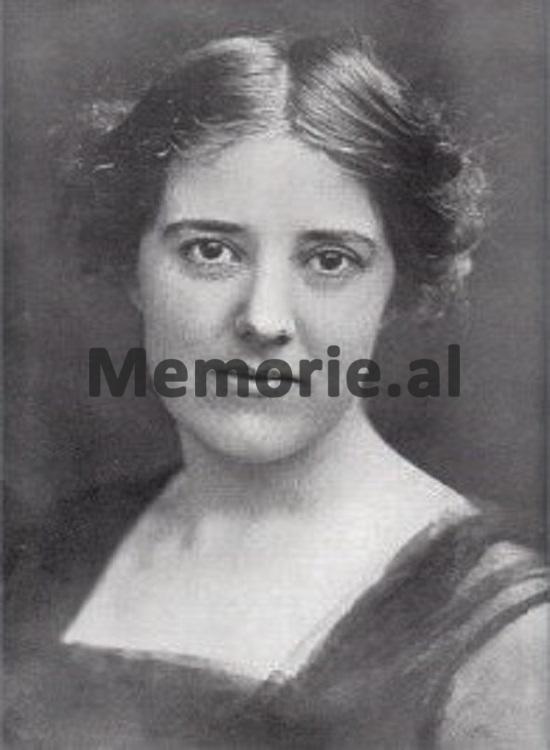
MARGARET HASLUCK (1885-1948)
Many Albanians who know Margaret Hasluck have a mistaken notion: she has been labeled as a British agent in Albania. The truth is that Hasluck was not an agent, but a researcher. She began her activity in the British secret services after leaving occupied Albania in 1939. Unjustly she was called an “enemy of the Albanian people”, when in fact she was a friendly and benevolent friend.
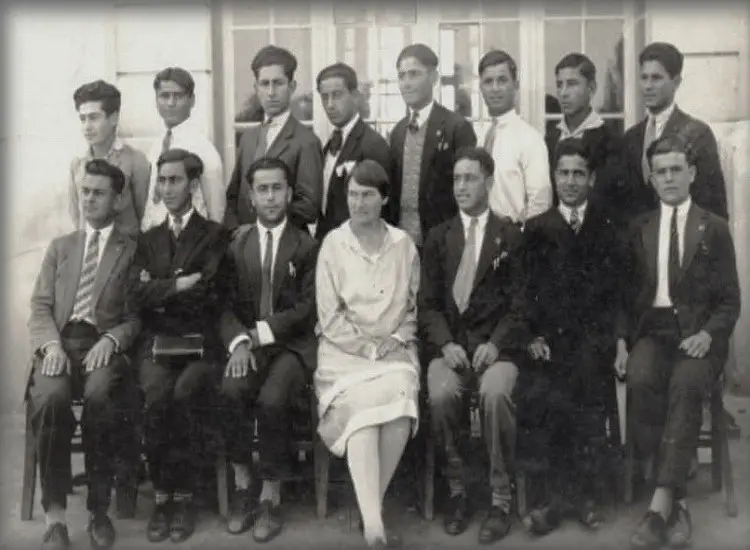
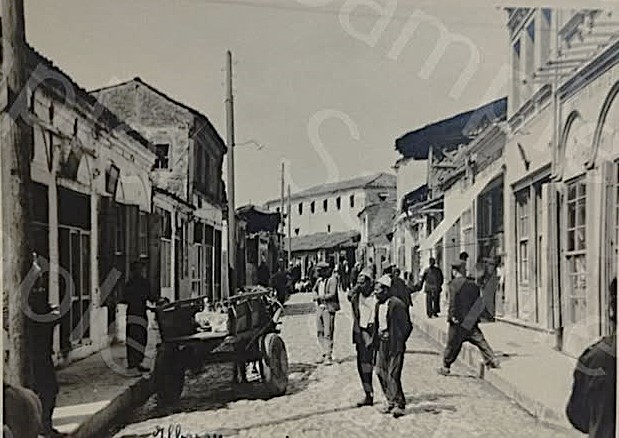
Margaret, 35 years old, decided to dedicate herself to publishing her husband’s writings, which she accomplished successfully. Meanwhile, she won a fellowship from Wilson Fellowships, and later from the Leverhulme Trust, to conduct folklore studies in the Balkans and mainly in Albania. Around the mid-1920s, Margaret settled in Elbasan, where she stayed until 1939, when the Italians expelled her as a British agent. She returned to Athens, but the arrival of the Germans there forced her to go to Cairo.
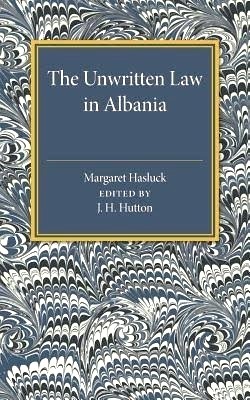
In Cairo, her knowledge of Albania, Albanians, and their language proved extremely useful in British secret activities against communism. From there, Margaret connected with exiled Albanians and, through them, with anti-communists in Albania. But with her health deteriorating, she went to Cyprus and from there to Dublin, to write the book “The Unwritten Law in Albania”.
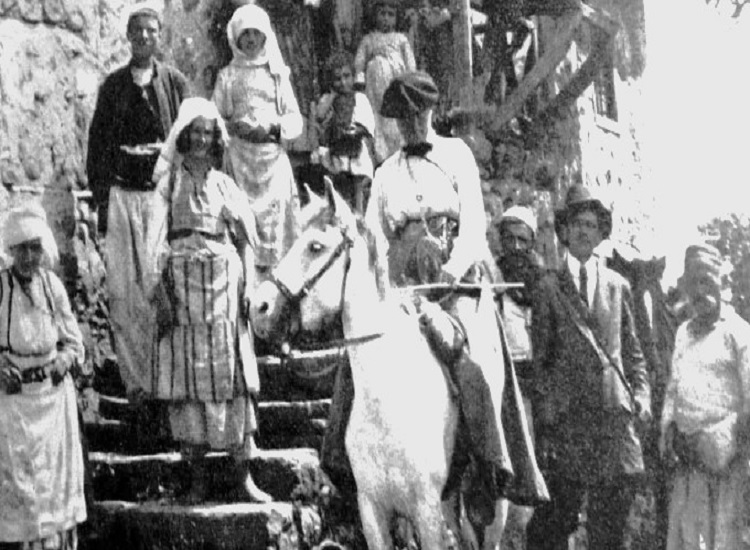
On October 18, 1948, Margaret Hasluck died of leukemia. In 1939, she was forced to leave Albania reluctantly, because she was spiritually attached to it, and especially to the city where she lived for many years, Elbasan. From there she set off on distant and difficult visits to mountains and villages, just like Mary Edith Durham some years earlier. Those were not tourist walks.
She collected the raw material for the book and her descriptions, most of which were published posthumously. Far from Albania, forced by circumstances, she completely changed the nature of her work, although what she did was related to Albania, but this time it was political. Margaret Hasluck left indelible impressions and memories everywhere she went in Albania.
But there are also contemporaries and compatriots who knew her closely and appreciated her, just as they felt her influence on them. It doesn’t matter that those expressing opinions and impressions are unknown to us, but what we read in the chapter “Hippolyta of the Albanians” in The Times, a week after Margaret’s death, is valuable. The article concludes: “This is the true summary of a story that strikes me as thrilling.”
G.R. Cowiu has left a longer biographical note, part of which is included in the same book. He emphasizes: “Her knowledge was deep and intimate. She had traveled on foot or on horseback, crisscrossing the country. She knew a great number of people throughout Albania, from minor officials to tribal chiefs. Her personal friends were also very distinguished. But she also knew the independent and proud peasantry; their generosity and hospitality, despite poverty and illiteracy.
She was devoted to Albania body and soul, and when she spoke, her voice was convincing and enthusiastic. In Dibra, in northeastern Albania, the stories were written down by a young man in the Dibran dialect, but this is not felt at all in the English translation, says Margaret. The funds of the Ministry of Education had been collected by order for all school directors throughout the country. But their contents did not constitute any local value.
All these were summarized and published in a book in 1932. Margaret Hasluck herself wrote the preface in Albanian and a somewhat longer, more detailed one in English. She emphasizes that the book aims to help learn Albanian or English, for Albanian emigrants in the USA and for those now interested in independent Albania. Margaret notes that she uses Albanian with Latin letters, according to the standard established at the Congress of Monastir – 1908.
According to her, the best way to learn the language is through fairy tales and folk narratives. She expresses her gratitude for the editing done to the book by the Elbasan intellectual, Lef Nosi. This book was published years later, under the care of her friends in England. Many notes have also been written by British officers who collaborated with Margaret in Istanbul and Cairo, against communism in Albania.
They describe another portrait of her, completely different from that of a researcher. With the invasion of Albania by Italy, suspected as a spy, she was expelled from Elbasan, throwing her into the field of British secret services, mainly as an expert on Albania. She was not involved in espionage or counter-espionage, but as an adviser for preparing a revolt against communism. But David Smiley in his book “Albanian Assignment”, 1984, devotes more notes to his collaborator, Margaret Hasluck, which describe her in several profiles.
He explains that at Churchill’s instigation, the MO (Special Operations Executive) was formed, the eastern branch, aiming to strengthen resistance to the Germans in occupied countries and start movements that would serve as a “fifth column”. That eastern branch was divided into sections for each country. Then, in 1943, the Albanian section consisted only of Margaret, who was completely devoted to her beloved Albania.
After being expelled by the Italians in 1939, she was recruited by British Intelligence. She was convinced that Albanians would expel the Italians.
RUTH PENNINGTON (1884-1970)
THE ASSISTANT TO BRITISH OFFICERS FOR THE GENDARMERIE
Ruth accepted a contract for four months’ work in a country she did not know at all, as she had no information or any opportunity to learn about it. Upon assignment, she became acquainted with Edith Durham’s writings and formed an idea. Ruth Pennington traveled from Brindisi to Vlorë. The arrival was not dramatic, and Ruth herself was not surprised.
That same day she left for Durrës, where the consul’s wife awaited her and took her to the British Legation to spend her first night in Albania, in 1924. There in Durrës, Ruth met Lady Carnarvon for the first time, and together they began the preparatory work that awaited Ruth in Kavajë. Meanwhile, she was assisting the “American Mission”, as well as British officers for the gendarmerie.
When they returned to Durrës, Ruth also received an invitation to go with the legation staff for tea on the Italian ship “Andruce”, which had just arrived. That was Ruth’s celebration; she returned to Kavajë where she found her friends, while the officials had been replaced. Even the mayor was new. The year was also about to change. For the first time, Ruth experienced New Year’s Eve in Albania, which was a popular celebration.
Ruth had to pay courtesy visits. She noticed that everywhere she passed or stopped, the residents cleared the path for her or made room for her to sit. At the end of February 1925, Lady Carnarvon made a visit and was surprised by Ruth’s achievements within a short time. She was accompanied by deputies and the new prefect of Durrës.
They returned to the same residence in Durrës, located in a place with a beautiful sea view, warm in winter but scorching in summer. Her work, behavior and attitude, activity, and strong character created an authoritative, leading, and much-loved figure. If Albanians called Edith Durham the “Queen of the Albanians”, they called Ruth the “Lady”.
GEORGINA MUIR MACKENZIE (1833-1874) AND ADELINE PAULINA IRBY (1831-1911)
THE TWO TRAVELING FRIENDS WHO WERE ACCUSED OF ESPIONAGE
They were two British friends who traveled together through Europe and together published the book “The Turks, the Greeks and the Slavons”. Until 1859, they had traveled extensively, mainly for health reasons. But the Austrian authorities did not take this cause into account; on the contrary, during their walks in the Carpathian Mountains, they increased suspicions and in 1858 they were arrested for “Slavic leanings”.
They were placed under police surveillance (due to suspicion aroused by a compass left in a hotel); they were even not believed to be English because they communicated in French. The day after arriving in Schmocks, two gendarmes escorted them to their chief who accused them of being spies with Pan-Slavic leanings. But the intervention of English diplomacy forced the Austrians to release them and even apologize.
About Albanians, after they came to our country, they wrote: “Albanians were Europeans who had lost not only their freedom but also their faith. Once they were all Christians! But they had not lost their characteristics, traditions, history.” Although they did not dwell long on elaborating these elements of Albanian identity, here and there even with a single expression or line, they revealed a truth of more or less value and importance.
Their journey continued from Prizren to Shkodra. They liked Shkodra; it had a European breeze. The British consul welcomed them and gave them the help they needed. From Shkodra they went to Tivar, and spent that year’s Christmas, 1863, in Montenegro.
WINIFRED GORDON (1872-1937)
THE ENGLISH WRITER OF HIGH OTTOMAN CIRCLES
Why did Winifred Gordon come to this lost country? She herself tells us that, due to poor health, she was not a suitable participant for work. Of course, this truth was doubly serious for her: ill and unable to work. In those times it was said that men were for the front while women were for work. And the war began in the Balkans, so the attention of Europeans turned there.
The first signs of a great war were given there, but people, including Winifred, hoped that the first signs of peace would also be given there. The Balkans seemed interesting, and Albania a bit more so. “Albania! What a strange and harsh country to go to!” However, English curiosity is stronger than any unknown, so the aristocrat “dared” to come.
In Istanbul, the English aristocrat, privileged to meet anyone in high Ottoman circles, had the opportunity to also meet a famous Albanian, about whom she wrote: “Ferid Pasha was a pure Albanian, a very handsome and distinguished man: tall and well-built, with his eyes under thick eyebrows. His dignified bearing gave him the atmosphere of a noble race, which was part of his natural heritage. He was Governor in Konica, before becoming the Sultan’s Grand Vizier, a post he held several times.
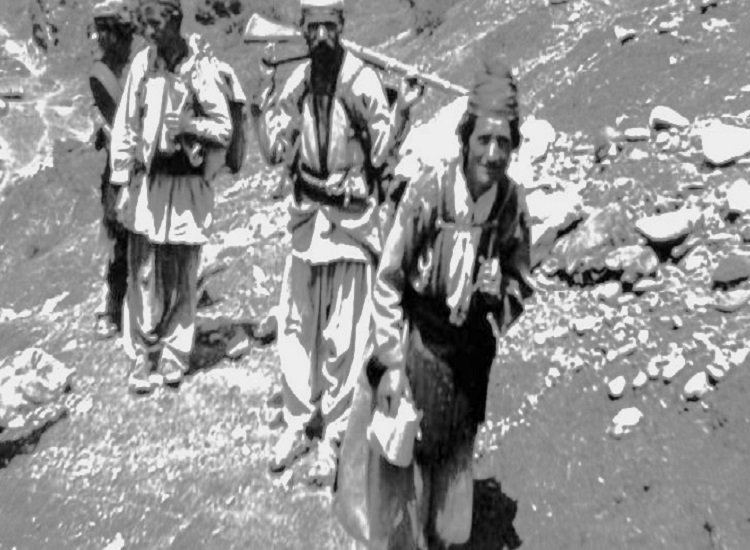
He was a man of great ability and tact and was extremely liked by the ambassadors.” Winifred made an almost complete portrayal of the highlanders, whom she saw in the streets and shops of Shkodra and described as “splendid figures”: “They are outstanding men, those sons of the mountains, wonderfully well-built, who preserve a majestic dignity… tall, well-proportioned, agile in those white, fitted tirks…
All had threatening weapons in their belts, while a rifle hung on every man’s shoulder. The tallest of the group – six feet – had a pair of beautiful pistols from Prizren…! Often their weapons are of great value and extremely prized by them. The race of Shkypetars [Albanians] has sharp features, grey-blue eyes, and straw-brown mustaches”… Gordon described.
MARY DOLLING SANDERS (LADY O’MOLLI), 1891-1974
THE ENGLISH WOMAN WHO TOURED SHKODRA IN A “CADILLAC”
With a “Cadillac” car, which her friend Mr. Waren Langdon had ordered, she set off from Podgorica to Shkodra. Bad weather and night caught her on the road, and she seemed hesitant, regretful, but Nils Larsen had assured her that life in Albania was as described in the Old Testament and had much beauty and strength. It seemed completely different from anything she had seen, so different, but very exciting.
Thus she continued her journey to Shkodra, amidst darkness and the contours of the surrounding views, and occasionally near the silhouettes of passersby. This whole scene made her think that “…she had never in her life seen anything as dramatic as that Albanian night.” She arrived in Shkodra and was received by Colonel Robinson. The next day she went out into the city, where rumors circulated that Anthony Eden’s cousin had arrived that same night.
The city seemed less Balkan to her, quite modern and beautiful, full of those inhabitants with those costumes that “filled the streets like flowers with butterflies.” In the church, a celebration was taking place, and she was able to see the beauty of handmade costumes, full of colors and embroidery. Our surprised traveler saw that over the name of the street of the greatest friend of the Albanians, Aubrey Herbert, the name of General Graziani had been daubed with a brush.
It was understood that Italy was spreading into Albania, and just as Zogu replaced British military with Italian ones, so also “Aubrey Herbert” street in Shkodra was renamed “General Graziani” street. But this change had not diminished the city’s beauty. The friend with the “Cadillac” had told her: “I terribly like Albanians. They are a great people. They are extremely intelligent, much more than they may appear. They have, among these Slavs, a very distinctive quality.”
THEODORA BENSON
THE “GRAND HOTEL” DISHES THAT THE ENGLISH PAID FOR IN GOLD
The “Grand” Hotel in Shkodra was “perfect”, and the restaurant was also very good, though a bit expensive, as it was paid for in gold. The waiters were polite and provided special service to the two English ladies. The next day, one of them gave them each a bunch of flowers, which left a very good impression. Their Shkodra guide took them around the city and quickly befriended them.
He took them all the way up to the castle, from where an impressive panorama opened. On the way back, they visited a school where girls and boys studied together. Then, the festivities at a Shkodra wedding drew their attention, and they, always accompanied, joined the wedding party. They were welcomed kindly and feasted according to tradition, laughing and cheerful all the time. The Shkodra bazaar impressed them.
To them it was “amazing”, full of craftsmen offering all sorts of different works. After lunch, their guide invited them for a walk outside the city, since it was beautiful. He said it was something special to accompany two “Mademoiselles”, since with Shkodra girls it was completely impossible…! / Memorie.al