By Alda Bardhyli
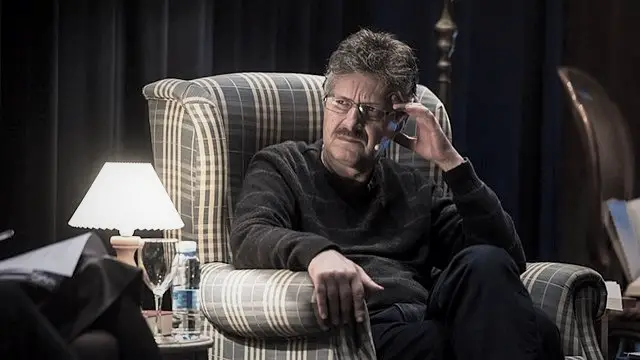
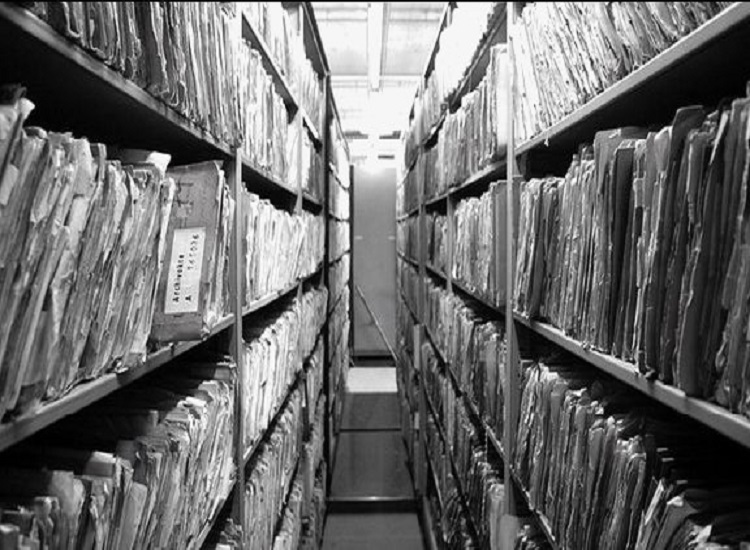
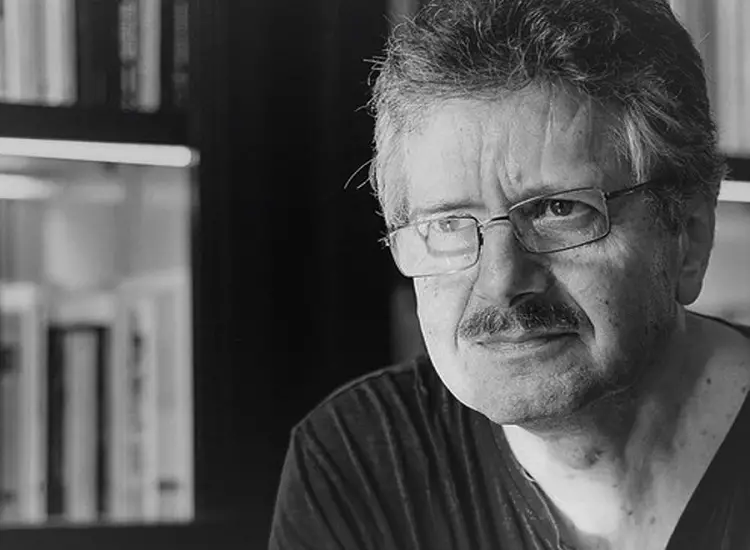
Memorie.al / The well-known writer and translator, Bashkim Shehu, a former political prisoner under Enver Hoxha’s communist regime, gave an interview some time ago, in which he speaks mainly about his novel “An Instructive Dictionary for the Mystery of the Files”. The author’s comments are interesting, as he has a role in the book as a “high-level witness”.
Mr. Shehu, your work “An Instructive Dictionary for the Mystery of the Files” – it seems the past continues to summon your literature. Do you remember the time when you started writing this novel?
Yes. I started it in the first days of July 2013. I had not written for almost a year, and suddenly I began to feel a kind of void, and it wasn’t long before the idea for this novel came to me.
How does the process of writing a novel happen for you? Do you set the finishing time from the very beginning? Do you have rules that are your own?
The experience of writing has already taught me that I cannot plan the time it takes to finish a novel.
What happened with this novel…? When did you write the last sentence?
In November 2014. But I don’t remember the exact date. I had thought I would finish it much sooner, however, the more I immersed myself in it, the more complex it became. And strangely, or perhaps not strangely at all, the more pleasure it gave me. And perhaps this pleasure unconsciously made me slow down the work’s progress.
It seems that from the title itself, you warn about what this novel deals with – the past… How does a title come to you?
First, a clarification: the title does not warn only about the past, but also about the present, or more precisely the post-communist period – at least that’s how it seems to me, and that is what I intended. As for how a title comes about – meaning the ways it comes about, because they are varied – I am unable to explain it.
Finding the title is one of those things that a writer knows how to do, but does not know how to explain. On the other hand, for me, the title is one of the key elements, one of the elements that guide the writing. Usually, I find the title at the beginning, as with this novel, or near the beginning, as with some other books. As long as I haven’t found it, I am not at ease.
You have chosen to confront the former dictator as a character in this book. A confrontation that is not easy. You have turned him into a character… What is your relationship with Enver Hoxha as a character?
It is the same relationship I have with any other character, or rather with any other interesting character. Regarding the handling of this particular character, I think humor helps me as well.
Almost the majority of your books center on stories from communism… Are there still stories between you and the past that you will put into a book?
I don’t know, because they are not ready-made stories, and I cannot predict what my imagination might bring me. Meanwhile, the book I am currently writing does not focus on that period.
Kundera calls literature simply imagination, yet reality, life experiences, seem to be inherent to writing. Which of these two states is stronger in you?
They are the same thing. In literature, reality becomes imagination and vice versa. The only things untouchable by imagination are a few basic historical truths, which are few, but which form the foundation or the armature of the poetic knowledge of what we might call “reality”.
Your personal history in relation to communism, your father – are they a reason why you continue to write about communism?
There are such reasons, certainly, and I do not think the main one lies with my father. It lays, here and there, more in the entire lived knowledge of that reality and in the nature of that reality – a nature that makes it very suitable for literature, especially for literature that aims to grasp the absurd dimensions of life and that also aims for those boundaries where reality meets imagination, or even madness.
The source of the raw material for the art of the novel is memory – I do not mean memories of specific events, but a world or an atmosphere deposited in memory, and where imagination feels itself in its own habitat, functions naturally within it, so that gradually and by itself it brings it back transformed according to its inexplicable whims.
And the greatest part of my life in which memory as a world, objectified memory that I can observe externally because of temporal distance, was formed in me – that is the communist past of Albania. Therefore, it is natural that this appears in a good part of my books, but certainly in a considerable part of them, other things are being talked about.
What is the influence of your father on your literature?
It seems to me you are confusing me with Ben Blushi: he has a writer father, not me.
You have been engaged not only as a writer but also as a curator for the museum project of the former State Security. Allow me to ask you a question that the writer Bernardo Atxaga asks you in the most recent book of correspondence you published together: is it very much you who is interested in memory?
It seems to me that I have answered this question fully in the letter you asked me to publish. In addition to that, I would add that the project team has cooperated with civil society organizations, such as the Institute for the Study of Crimes and Consequences of Communism, the Albanian Rehabilitation Centre for Torture and Trauma Victims, the Albanian Project for Human Rights, and has also been supported by suggestions from the chairman of the Formerly Persecuted Association, Mr. Bilal Kola.
Meanwhile, I am no longer the curator of the project; I have left that position. And, naturally, if there are significant changes to the script I have already written for this museum, it should by no means be presented as my script.
Also, since you insisted on the fact that a good part of my books deal with Albania’s communist past, I can say that during the time I worked on the museum project, having more contact with Albania, I saw and understood that this past continues to weigh on the present more than I used to think. / Memorie.al