

By Prof. Dr. Luan Malltezi
Part Two
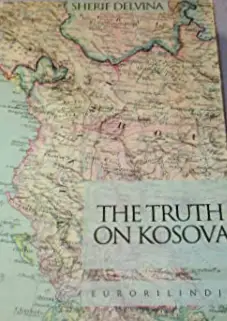
Memorie.al / “I first came to know the ‘People’s Teacher’, the historian, publicist and renowned scholar, my esteemed friend Sherif Delvina, when I was Director General of the State Archives, in the years 1992‑1997. My friend, the well‑known historian Prof. Ferit Duka, had spoken to me about him for the first time: ‘Sherifi has read many books on Albanian history and culture; he is like a walking library, a real historian.’
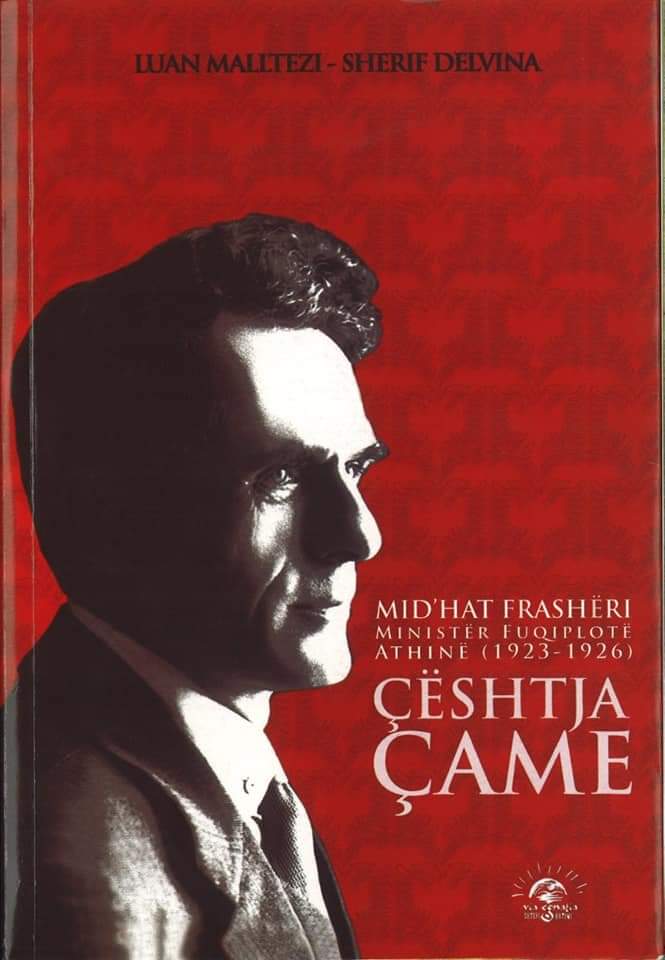
In 1994, Sherifi asked me for a meeting in my office; he requested not to be hindered in his scientific research at the Archives. I felt sorry for this request, because until then I had never hindered any researcher at the Archives. After the meeting, I called the head of the reading room and instructed him not to obstruct this scholar. After 1997, I became friends with Sherifi; together we published four books on Mit’hat Frashëri.
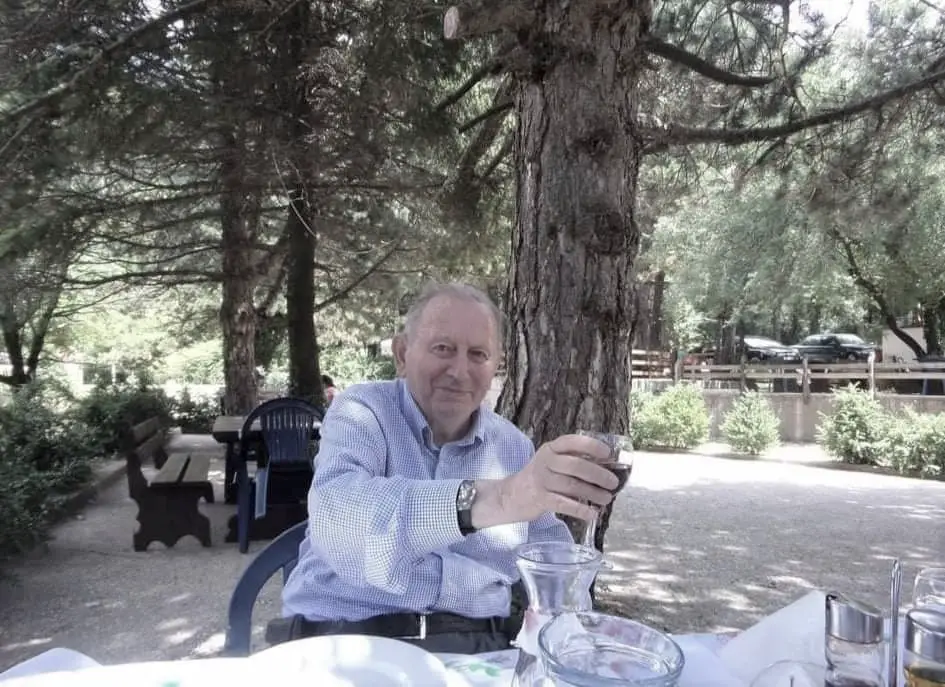
Our conversations were mostly about history, about Prof. Buda, Prof. Pollo, who had guided our historians at the Institute of History. On occasion, Sherifi would also talk about his own ancestors – a large, old patriotic family…! I began to record some of his memories using the mobile phones that appeared in recent years. I am publishing these recordings in this article, in memory of his name, for his many friends and loved ones…!
Continued from the previous issue
The Memoirs of Sherif Delvina:
‘After the 1990s, I took part in many scientific activities; one important scientific activity I carried out with Prof. Ferit Duka at Bilkent University in Turkey – a university town 30 minutes from Istanbul. The Turks received us magnificently; at this meeting the issue of minorities was discussed; the Albanian ambassador also attended. I spoke about the spread of Albanians in the south of the country in the ancient period, based on data from old Greek authors, Homer. The meeting was tense; Greek scholars claimed their ethnic border as far as the Shkumbin River.
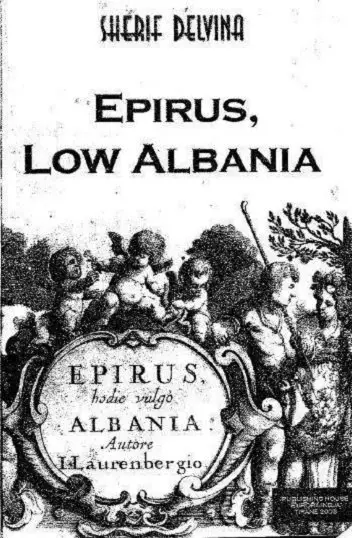
I clashed with a well‑known Greek scholar who had completed her studies at Harvard. She was later invited to Albania as well; I was not invited, but I went to the meeting held at the Palace of Congresses; I was sitting near Professor Kristaq Prifti; the hall was full; after the Greek scholar spoke, I asked for the floor; she recognised me; “Please,” she said, “only French will be spoken here”; so I answered her back in French; finally I said to her: “Honoured professor, you are completely unprepared, so I am giving you a publication of mine on Epirus in English,” and I offered her the book. She became furious; “Why don’t you put your name and signature on this book you are giving me?” she said angrily. “Because the police would put you in jail,” I cut her off immediately.
I followed with interest the research carried out by Albanian archaeologists in Albania; I was interested in the large Illyrian burial sites; in the Illyrian tumuli there were skeletons buried according to ancient Illyrian traditions; during those years I became very close to Aleksandër Dhima, the Albanian anthropologist; the Chairman of the Academy of Sciences, Professor Aleks Buda, had sent him to China for specialisation as an anthropologist; his task was to study the skeletons from Illyrian burial sites in order to determine their Illyrian type; I spent a good time with Aleksandër Dhima, measuring the skeletons; he had a complete grounding in the specialised literature he had followed for studying the data on Illyrian skeletons. The Albanian archaeologists carrying out research in Albania had no anthropological training and threw away the skeletons without studying them.
I raised my voice when the Albanian archaeologists did not bring the discovered skeletons to the Archaeological Centre. At that time I had the opportunity to get to know closely the head of the Archaeological Centre, Prof. Selim Islami. I debated a lot with him; he was an honest man, he had studied in the former Soviet Union; I informed him about the data given by the old Greek authors concerning the borders of ancient Greece, about the value of studying the old skeletons discovered in archaeological excavations in Albania, about defending the national ethnic character, etc. I became very good friends with him and I mentioned the great Greek historians, their works that are held in the collections of the National Library. “I am sorry, Sherif,” he told me after many discussions, “that I did not know you earlier!”
After the democratic processes, I published articles on minorities in Albania. Facing the open attack launched by the Greeks against the Albanians, I published a scientific study in English on the spread of the ancient Greeks as far as the Gulf of Arta; I have also written articles on the efforts made by Albanians against the Greek Orthodox Church, the struggle for opening Albanian schools by the Albanian National Renaissance figures, and writings on the national character of Korça and Gjirokastra, which the Greeks claimed as their own cities.’
With my close friend, Professor Sherif Delvina, the conversations were interesting; he had read many books, had an excellent memory, knew the National Library and its collections well; he knew how to work in the collections of the National Library and the Central State Archives; to indicate how deep his knowledge was, it is enough to say that even the director of the National Library consulted him about the location of certain writings and particular articles in the Library’s holdings.
Professor Delvina used to say that “he had arranged things well with those in the Library service who formally took delivery of the books arriving at the Library; he did this, he said, ‘to be informed’ about the books entering the Library.” As far as I understood, he would take the incoming books from this service, skim through them, and then return them to the section downstairs, where they were registered and passed into the appropriate collections.
Among Professor Sherif’s friends, friends who consulted him about books and specific scientific articles, were Prof. Pëllumb Xhufi and Prof. Aurel Plasari. Another friend of his was Fotaq Andrea, a student of Jusuf Vrioni, author of many books on Albania and Albanians. Delvina had a close collaboration with him in 2014; Delvina gave him explanations about a girl named “Lejla”; Fotaq Andrea had come across this name in a French book, which he thought might have been written by Konica; Sherifi told him: “Lejla was Faik Konica’s daughter”; Mr Andrea’s surprise when he heard this was great; Sherifi later brought him a photograph of “Lejla” that he kept at home, as a photograph of a close family member. The information for Mr Andrea was extremely important; through this information he managed to discover and publish two unknown novels by Konica, which he promoted very successfully with the “Vatra” association in the USA.
Professor Sherifi had as a friend the distinguished Italian Albanologist Lucia Nadin; Professor Nadin had carried out classical studies in Italy; she was from Venice and had a daughter there, to whom she was much attached; Latin and Italian writings in the Venice Archives were no problem for the lady. The lady became known in Albania after she discovered the old medieval Statutes of the city of Shkodra. This discovery is of extraordinary value in Albanian history and culture in the pre‑Ottoman middle Ages; such a discovery was not expected after the extensive research carried out in Venice by well‑known historians and specialists of that archive. The Municipality of Shkodra appreciated this important scientific discovery; it awarded the lady the title “Honorary Citizen of the City of Shkodra” at a meeting organised specially for her at the Shkodra Library.
The lady found this Statute in the “Correr Museum” of Venice. Father Valentini spent his entire life conducting intensive research in the Venice archives, but he could not discover this statute; Father Valentini published about 24 volumes of Venetian documents on Albania from the 13th‑15th centuries, but he could not discover this statute. The Statutes of Shkodra testify to the level that the city of Shkodra had reached in economic and cultural development in the middle Ages. This monumental statute was translated into Albanian by a deep connoisseur of the Italian language, Prof. Pëllumb Xhufi. Mr Delvina had a great friendship with this cultured Venetian lady; he knew Italian well and this gave him the opportunity to be in constant contact with her, to follow the research she carried out on Albanians who emigrated to Venice after the fall of Shkodra in 1481; on the discoveries she had made at the “Albanian School” in Venice, on Marin Barleti, etc.
Mrs Nadin has come to Albania several times, and on every occasion it was Mr Delvina who accompanied her in scientific conversations. Mrs Nadin has an extraordinary desire to help Albania, but no one in Albania seems to know about her; the Ministry of Culture never wanted to know about this fate that had knocked on Albania’s door; this Ministry did not understand her role (Mrs Nadin) as an excellent connoisseur of Venetian Latin. The Ministry of Culture, the Academy of Sciences, could have engaged Mrs Nadin earlier to carry out research in the Venetian archives for the discovery of documents on our National Hero, Gjergj Kastrioti Skanderbeg.
These documents had been undertaken to be published in the 1960s by the renowned scholar Father Zef Valentini. The funding for carrying out this extraordinarily important work had been taken up at that time by several European universities; Valentini published 24 volumes of Venetian documents for the 14th‑15th centuries, thus marking an extraordinary success for scholarship in bringing to light documents of Albanian history from the 15th century, but Valentini died in the middle of the work; he carried out research up to around the year 1464.
A little more work is needed to successfully conclude this enterprise that honours Albania and its hero. This work can be successfully completed by Mrs Luciana Nadin. I have tried several times to tell the lady to engage in this work because she is from Venice and she knew the writings of this archive as well as she knew Italian, but she had no one to speak to – “the historians had their own work; the Academy was dealing with other problems, and the Ministry of Culture did not understand this extraordinarily important task.”
Her only friend in Albania remained Mr Delvina; he would invite her to cheap hotels and restaurants in Tirana, where he could find a place with little money, where he could have a farewell lunch, a lunch with a friend who had no power, but was full of brilliance from knowledge and culture. And to conclude this talk about the close collaboration and friendship that Prof. Sherifi had with Lucia Nadin, I want to remind the reader that they spoke Italian together like two true Italians.
Mr Delvina also had old family ties with the late writer Sabri Godo; because his wife came from the Delvina family. Professor Delvina had extraordinary respect for this lady. At that time Godo was Director of the “Fruit and Vegetables of Tirana” Enterprise; but he maintained close ties with Prof. Stefanaq Pollo, Prof. Luan Omari and other distinguished intellectuals of the time, etc. These ties existed because Godo was interested in literature and history; he had written novels about old Butka, about Skanderbeg, and about Ali Pasha Tepelena, etc. For the publication of the latter, Godo relied also on the judgements of Mr Delvina, because the latter knew the old European authors (English, French, German, Italian, etc.) who had written books about Ali Pasha. Mr Delvina had read all these books, and not by chance; the Pasha of Ioannina had been in conflict with his own powerful tribe in Delvina.
Knowing Professor Delvina’s background, Godo gave him his manuscript on Ali Pasha; the professor made many remarks to the author regarding the conception of Ali Pasha Tepelena as a figure of historical character. Later the book was published very successfully by Godo; after publication he addressed the professor with these words: “Sherif, I have published the book and I want to take this opportunity to thank you for your help: my thanks are this: you would do well not to write!”
From this remark, the professor understood that his remarks on Ali Pasha had been worthless. After the democratic processes in Albania, directors of publishing houses turned to Professor Sherif to recommend books of a historical character for readers. The professor gave them all the old books that had been written about Ali Pasha by European authors of the time. The books began to appear one after another. All these books had to do with the “politicised history” of Godo’s book on Ali Pasha; “Sherif,” Godo said to him at the National Library, “why do you fight me with these publications?”
Another close friend of the professor was Petro Zheji. Zheji had worked as a translator, but had also made important linguistic publications. Delvina had great respect for him. Towards the end of his life, when he was ill, Zheji lived under the care of his son, who had also placed people to look after him 24 hours a day. Zheji was a polyglot; he knew English, German, Russian, French, Italian; he knew Hindi and at the end he tried to learn Chinese as well. Zheji spent his time studying; he had made four “interesting publications”, as my friend (Sherifi) said, in the field of linguistics. They had known each other as young men; Zheji was older. After the 1990s, Zheji asked his friend to go to America; there he hoped to find books he had not been able to find in Albania. Zheji spent his whole life “among books”, my friend Sherifi told me one day.
With Zheji, my friend Sherif Delvina, before the 1990s, had made many tourist walks in Albania; with him he had gone three times on foot “for a walk” from Tirana to Burrel; just as many times they had gone from Tirana to Elbasan, while from Tirana to Durrës they had gone many times. (As Sherifi told me, Zheji made those long “walks” as a sign of protest against the communist regime, and he found the opportunity to travel when, on those roads, the “Benz” cars of the leadership passed on the occasion of some holiday, or when “Comrade Enver” went on holiday to Pogradec, accompanied by a dozen vehicles). Once Zheji said to me in a conversation: “Look, you’re spoiling it for me, I’ll hold a grudge; let’s go to Mount Dajt to celebrate the New Year, like in the time of ‘primitive communism’.” I thought my friend had not accepted, but no, that was not the case. “No, no,” he said, “Zheji insisted that we go and I didn’t refuse; we took necessary food, a portable radio, beer, found a hollow and there we celebrated the New Year, talking and singing.”
“One day Zheji asked me to set off on foot from Tirana to Korça, walking through the mountains, but I refused because it seemed too far to me,” my friend Prof. Sherifi told me. Petro Zheji was from Zagoria; he was close to Professor Sherif’s family, his mother, his sister; he had gone to their place for lunch several times. “Zheji,” my friend would say, “was an extraordinary linguist, a great talent.” He would talk with him for hours on end about his field of research; “to my nephews,” Delvina told me, “Zheji taught Italian and English.” Zheji had also taught English too many young people of the time. “What did you talk about regarding politics?” I once asked my friend. “Nothing,” he answered; “they didn’t deal with politics at all; it didn’t interest us; our interest was books.”
A childhood friend of Professor Delvina was also the first chairman of the Greek minority in Albania, the late Mr Vasil Melo. After the 1990s, Professor Delvina began to write writings against His Grace Archbishop Janullatos and the Greek Church in general. The late Melo would promise his friend “many privileges”, as long as he did not write against Janullatos, but at this point it seems he did not know him well; the struggle against the Greeks he had inherited from his ancestors, like the ‘People’s Hero’, Alo Beu, against the Greek Church in Albania. “In his opposition to His Grace Janullatos, as Archbishop of the Albanian Autocephalous Church, my friend Sherifi had gone very far; he knew the unacceptable stance of His Grace Janullatos towards Muslims and their leader Muhammad; the author had expressed this stance in an article published in a serious journal.
My friend had this article in his bag. On this matter my friend also had a direct confrontation with Janullatos at a meeting organised at the Albanian Academy of Sciences. Contrary to what he had written in his article, Janullatos spoke of “understanding between religious faiths in Albania”; after his speech, Delvina stood up and reminded him that: in one of his writings, he had expressed a different opinion about Muslims and their leader Muhammad. After this direct accusation against him, the hall was shaken, but His Grace Janullatos took the floor and said: “The gentleman is right; it is true that I wrote that, but at that time I was young.” Since he continued to write against His Grace Janullatos, people from the Church threatened Sherif Delvina with death, but these stances did not frighten him.
One day, they called him on the phone and told him: ‘you are condemned to death’, but at this point my friend did not bat an eyelid; he answered them calmly: “You are lying; you wrote that a long time ago, but you have done nothing. What are you waiting for?” The people of Bashkim Gazideda’s SHIK (Secret Service), who seem to have been engaged against Janullatos, tried to get the professor on their side, but they were not the ones pushing him against Janullatos and the Greek Church; the impulse against His Grace Janullatos and the Greek Church came from his ancestors. Later, the professor also had connections with Fatos Klosi’s SHIK, which seems to have followed the same line as Gazideda when it came to His Grace Janullatos and the Albanian Autocephalous Church, which was being led illegally by him.
My friend Sherif Delvina remained vigilant against the Greek Church and His Grace Janullatos until the end of his life. I recall here one day in January 2018, when he gave me a copy of the Church’s newspaper, which dealt with a matter that my friend knew differently. My friend checked every issue of this newspaper all his life. I was impressed that he did not hesitate to go himself to the Autocephalous Church, take the newspaper he was interested in, and check all the newspaper’s publications in the library of that institution. Delvina constantly told me that he had writings ready against Janullatos, in case he should be declared a ‘Martyr of the Church…’!
For a long time I valued Sherif simply as a scholar, a historian; one day, as we were returning from the Library, he told me he had published a drama; he had the drama with him and gave it to me to read. The drama had content from the Illyrian period and bore the title “Gentius”, the name of the ruler of the Ardiaeans.
The conversation about the drama reminded me of an old friend, an actor at the “Aleksandër Moisiu” Theatre in Durrës. He was passionate about dramaturgy; he spoke to me about drama schools, about well‑known Albanian directors who had been his teachers. From conversations with him I had formed the opinion that drama is a difficult literary genre; writers wrote dramas, but none managed to have the dramaturgical value required by dramaturges, directors, actors.
With this opinion I took the drama my friend gave me. Out of politeness I said I would “skim through it” in the evening before going to sleep, but the drama kept me awake all night; while reading it, the author had produced an extraordinary work for Albanian dramaturgy. The drama had won first place in a competition organised by the Ministry of Culture; and the author had also received a prize of $20,000, but the drama itself has not yet been staged by the Albanian theatre! This of course made quite an impression on me; personally, I am convinced that no writer in the future will be able to write such a drama.
I say this not because the author knows classical dramaturgy deeply, Shakespeare and other authors, but because the author knows well the history, ethnography and ancient culture of his country, its folklore, myths and legends, fairies and elves; the author has lived with these legends his entire life and has known how to express them artistically as a dramaturge. The drama will be an eternal value for all future generations of Albanians, because it contains the history and survival of our ancestors as a people before the Roman conquest.
Recently the author published another drama of his, on the 15th century, of value for Albanian culture. The author had been thinking about this for years; he wrote it in these last months, considering every detail of it before publication. /Memorie.al