


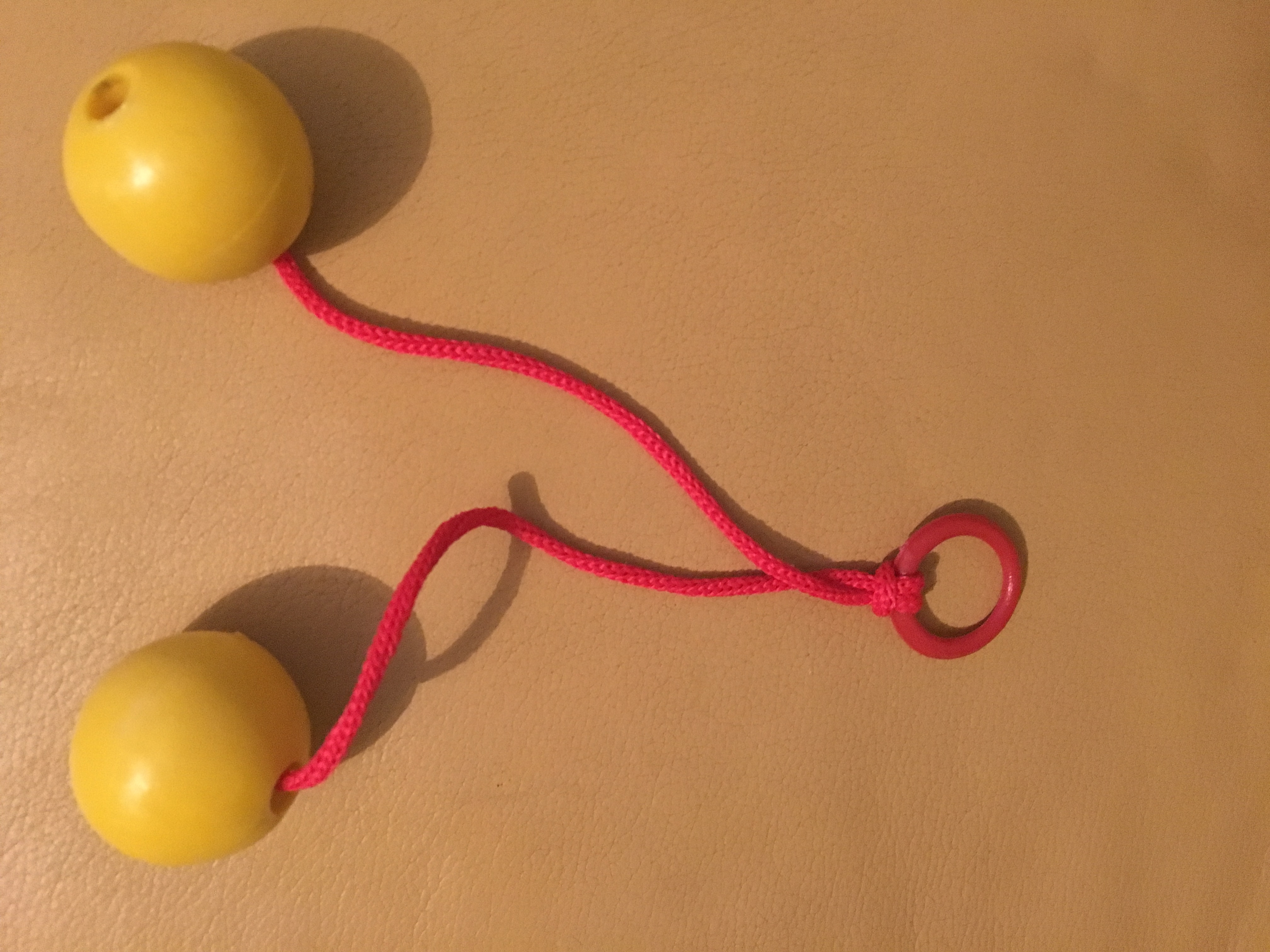
By Uvil Zajmi
Memorie.al – They appeared quite suddenly in Europe and the world, and their spread and use were extremely rapid, with great frequency among citizens, young people, boys and girls. Even in Albania, the impact of them was similar, as one of the pleasures of Albanian youth in the 1970s and 1980s. Entertainment was quite limited. From Monday to Saturday, the week was spent working. The day of rest was reduced to only Sunday. Among the classic forms of entertainment were the cinema, theatre, the Estrada (variety show), artistic performances at the Opera and Ballet Theatre, those of the Ensemble of Folk Songs and Dances, the Song Festivals on Radio-Television, weekend matches in stadiums or sports halls, an occasional chess hall, the few international meetings, etc.
Sunday football matches on the dark pitches, trips with schools and universities to Mount Dajt, preparations for parades, the May 1st and November 28–29 demonstrations, and New Year’s celebrations, which also served as entertainment. Hanging out in groups by the curbs of shops, or by the flowerbed at “Skënderbeu” Square, Saturday dances at the Palace of Culture (until 1973, when they were banned), going out for a stroll, or “Broduei” (the promenade), and the lake was infrequently visited, more so family picnics organized on Sunday mornings. No private vehicles, only line buses and the train as means of transport.
No swimming pools, but swimming was forbidden in the artificial lake or in reservoirs, only 15 days of annual winter or summer leave, and a one-day trip to the beach. Television, TVSH (Albanian state television), a few programs, or TV series such as “Izaura,” “Captain Klos,” etc. Following, with minimal opportunity, the Sanremo Festivals, or those of Italian TV channels, or the Yugoslav RTB channel, with “Dynasty,” etc. Interest was also shown in the concerts of Greek singer Marinella in 1977, in Tirana, with her beautiful songs, which were well-liked.
She was the only singer from a Western country who gave performances in Albania during that period. Another form of entertainment for young people was following on Radio-Tirana, on Sunday afternoons, the Italian Serie A football matches. Among them, two were the ones that gripped Albanians of that period: the clacking balls and the magic cube.
THE CLACKING BALLS
It was 1972 when they appeared for the first time in Tirana. Moreover, in a short time, with an extremely rapid, almost unstoppable reaction, and with great frequency. Such are remembered, and they have remained, as a tool and form of entertainment for Albanians of that period: the clacking balls! A different, special type of entertainment, although not traditional. Known as “clackers” (in English), or “palline clic-clac” (in Italian), they were a popular toy of the 1960s and 1970s, consisting of two heavy plastic or glass balls attached to a string with a ring in the middle, which were clacked together rhythmically, producing a loud noise.
Liked and used massively in Europe in the early 1970s, in public places, beaches, everywhere, without restriction or location limits, despite the disturbance they caused. Even in Albania, the clacking balls found rapid application, immediately after their arrival from abroad, brought in by individuals, and in this case too, athletes were the protagonists. They were never sold in shops; moreover, during the communist period, this game was banned by the police, due to the noise and the risk of injury from shattering when the two hard plastic spheres were clacked together.
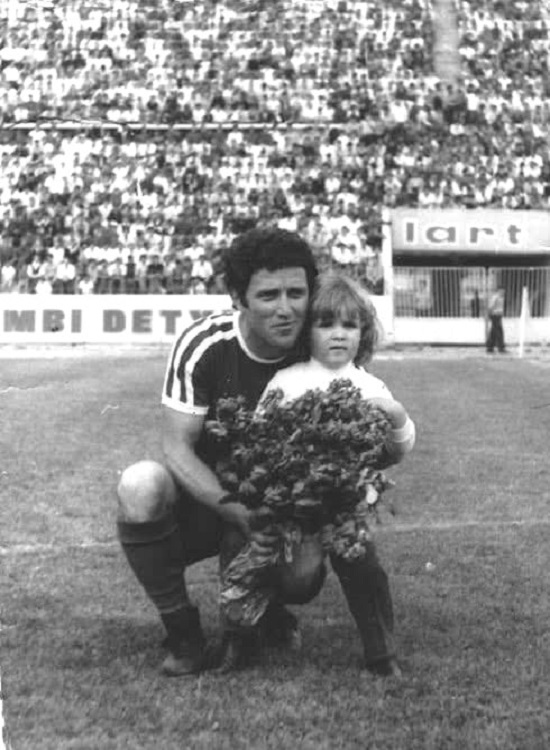
Faruk Sejdini: “I brought them for the first time, along with Përnaska.”
This is an indisputable fact. The two well-known footballers of the national team and “Dinamo,” absolute figures on the field, now also in bringing the clacking balls to Albania. A story that Sejdini himself remembers quite well: “Coming by train from Hungary, we bought them in Budapest.”
Mr. Sejdini, what is the story of the balls that came for the first time to Albania? It is said that you brought them?
It was June 1972. We were coming from a match played in Finland, with the national team led by Loro Boriçi, which we lost 1-0. On the return, we traveled by plane to Vienna, then Vienna-Budapest by train.
You see a game that surprises you?
On the train, there was a group of young people, mostly girls. At one point, one of them took out two balls and started clacking them rhythmically, even though they made a lot of noise. Until we arrived, they didn’t stop having fun with them.
What was it, how did that mechanism work?
For me and Ilir (Përnaska), it was the first time we had seen it. At one moment, Ilir and I asked them to let us try them too, but it was impossible, as it required some practice time to get used to using them. Two balls, 2 or 4 cm each, required speed to find the right moment for the clack, up and down, of the two balls tied with a not-too-thick string, about 20 cm long.
How well known were they in our country?
I don’t know, but in any case, they caught our attention. We didn’t know that their fame had spread, that this game or these balls were very popular among European youth. When we got off at the first stop of the train station, without telling anyone, we bought them too. I recall they cost one dollar and a half. In Hungary, they were in fashion. At customs, they didn’t pay much attention; we passed them without any problem. In Albania, they were unknown.
What was the impact, the reaction?
When we showed them to friends and comrades, they were first surprised, then they liked them, and they spread quickly. But they became a problem: who brought them? Word got around that Përnaska and Sejdini had. “What have you done, what are these modern things you bring?” they told us at the club. Përnaska and I received reprimands. But by then, they had already started to spread; there was no turning back. People didn’t bring them from abroad because few traveled in those years, and in Albania, they were not sold in shops.
But how were they made?
Initially, by taking the plastic heads of milling machines, lathes, or vehicle gears. They would remove them from metal-cutting machines, and then they would be secretly cast somewhere, in factories or at the State Agricultural Enterprise.
Was there a widespread use of them?
With the initial euphoria, the clackers could be seen in the hands of young people. Even in the stadium, in sports halls. Imagine the noise they created. But due to constant use, they would get damaged, break, their paint would come off. In many cases, they would hurt fingers or wrists.
Mr. Sejdini, how and when did the plastic clackers come to an end?
Over time, the clackers became monotonous and gradually lost their appeal, disappearing from circulation. But for the years around 1975, they were more than just entertainment for Albanians.
THE MAGIC CUBE
Do you remember the magic cube? For us Albanians in the late 1980s, it was another form, a way of entertainment. But somewhat different from the clackers, due to its specificity, it also represented a story. For me and my generation, the emotion and nostalgia still remain when we saw it, held it for the first time, the long days, hours, weeks, and nights inseparable from it. Even more so today, on its 50th anniversary, half a century since its creation.
The brainchild of a Hungarian architect
The magic cube was invented by Hungarian architecture professor and sculptor Ernő Rubik in 1974, when he was only 30 years old, precisely during the Cold War. Initially called the “Magic Cube” by him, or “Rubik’s Cube,” it has been and remains a combined puzzle, a famous mystery even today.
Engaged in the Department of Interior Design at the Academy of Applied Arts and Crafts in Budapest, the cube was built by Rubik as a teaching tool to help his students understand 3D objects. The first samples of the “Magic Cube” were produced in 1977 and distributed to toy stores in Budapest by “Politechnika,” a toy manufacturer.
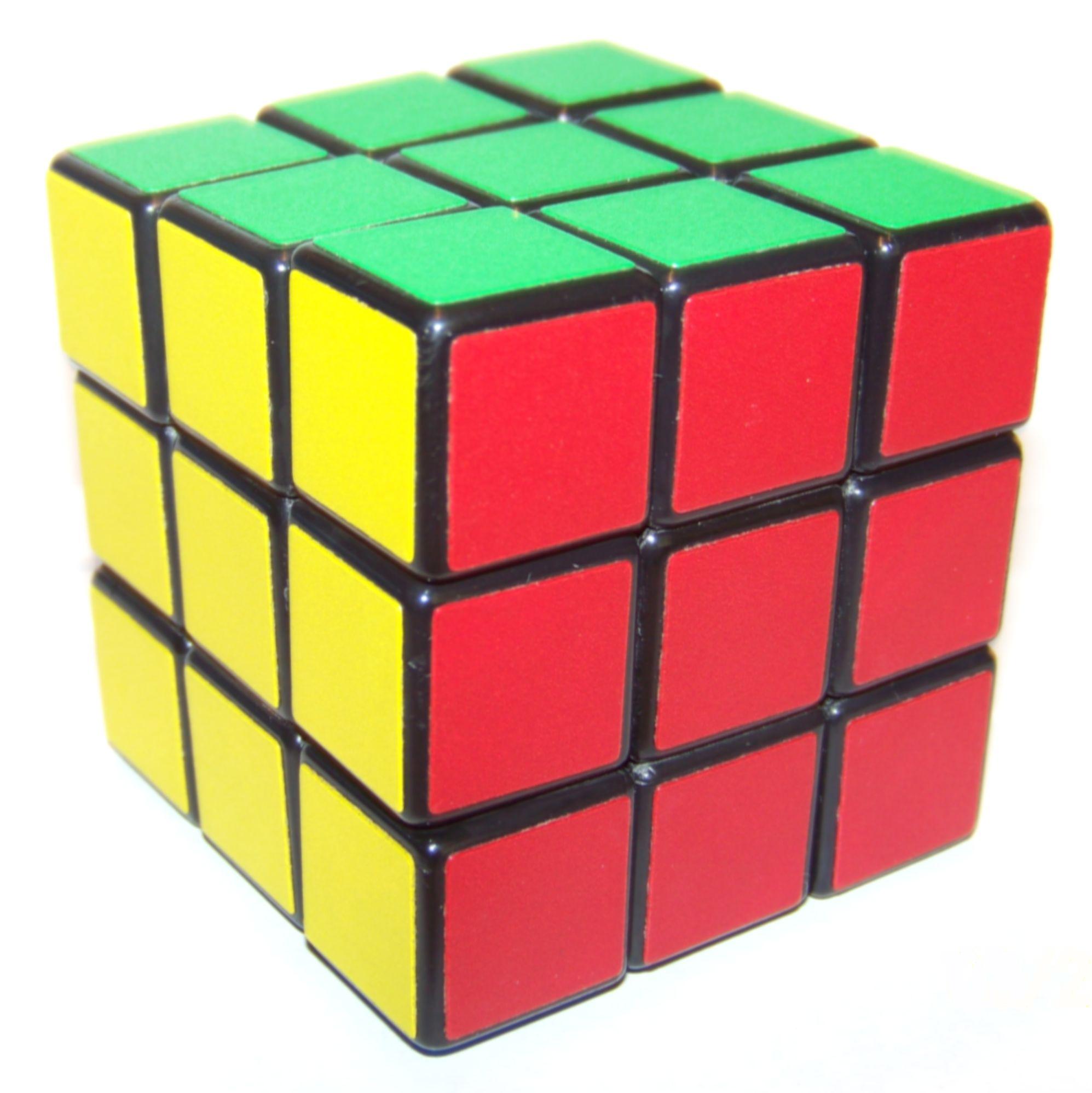
The Rubik’s Cube, the classic one, with six faces, with nine stickers, each of them having a specific color: white, yellow, red, green, blue, and orange. With Ernő Rubik’s permission, businessman Tibor Laczi brought one of the cubes to the toy fair in Nuremberg, Germany, in February 1979, in an attempt to popularize it. Making Rubik’s Cube the best-selling puzzle in the world. He would later become the founder of the Seven Towns game company, and together they signed a contract with Ideal Toy in September 1979 to sell the cube worldwide. Following this agreement, in 1980, the Rubik’s puzzle gave fame to its inventor.
The cube made its international debut at toy fairs in London, Paris, Nuremberg, and New York. It is considered by many to be the best-selling toy in the world. For its realization, there are over 43 quintillion combinations. From 1980 to 1983, the cube reached up to 200 million sold, 100 million in 1982 alone, and Ernő Rubik became the wealthiest citizen of his country. Many books were published for solving it, such as “Magic Cube” Rubik (1980) by David Singmaster, or “Cube” by Patrick Bossert as the first guide to solving it, selling over one and a half million copies.
In 1981, three of the top ten bestsellers in the US were books about the “Rubik’s Cube,” among them the best-selling was “The Simple Solution to Rubik’s Cube” by James G. Nourse, which sold over six million copies. The Washington Post itself would declare that Rubik’s Cube was “a puzzle that had captured the attention of children aged 7 to 70, worldwide.” In June 1982, the first Rubik’s Cube championship was held in Budapest, which remained the only one recognized as official.
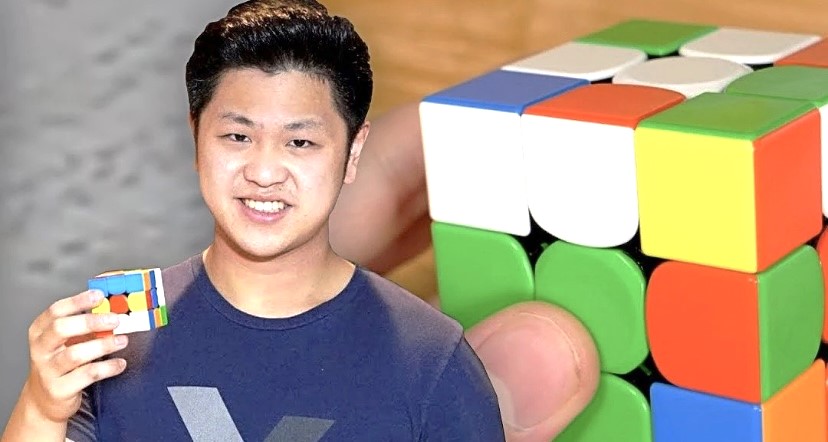
The record holder is Max Park, an American of Korean origin, among the best “speedcubers” of all time, the current world champion, with 13 seconds for the 3x3x3 cube. Along with him is Australian Feliks Zemdegs, the two most famous “speed” solvers in the 3x3x3, 4x4x4, 5x5x5, 6x6x6, and 7x7x7 variants.
The 1980s, even in Albania, the cube was the fashion of the time
The whole world was engaged with the cube. Newspapers, television channels, the Italian RAI, reporting on its spread, competitions, with unimaginable records, who could complete the combination the fastest. Even jugglers with their fantasy creations.
It was very popular, used by the generation of that time even in Albania, when it came and appeared very quickly, immediately after its creation, discovery, and spread. Among the first to bring it were those who traveled abroad, athletes, artists, transport drivers with TIR trucks, and also sailors. But also foreigners who worked, lived, or personnel of embassies, mostly from Western countries, but also from Eastern ones, especially from Hungary, Yugoslavia.
And in those early days, it was given as a gift for friendship, but also as a toy for small children, who did not yet know how to use it, but as something entertaining. From the very first moment, there was no governmental reaction from the authorities, from its people, and for this reason, it was not banned, since no one understood what that mechanism was, that cube with colors, which with a movement of the hands changed the colors.
What it represented, how it worked, its purpose, its history, its inventor. It was enough to have it in your hand. Often, it was even borrowed to practice at home during the night. It was never seen for sale in shops, never traded, because the cube was not part of the system, exchanges, or purchases of goods with other countries.
Even for those who carried it, there were no problems at customs, where everything was declared, checked, verified. There was a rapid, widespread use mainly in Tirana, where more officials, artists, athletes who traveled abroad lived and worked, and they brought them for friends, comrades, relatives, for students, university staff, and also for professors.
In a short time, “cube mania” would break out en masse, with great curiosity, in search of achieving the combination of single-colored faces. It was carried openly, everywhere, in universities, ministries, workplaces, schools, in youth hangouts and gatherings, on beaches, in families. Moreover, whenever someone traveled abroad, the order of the time was to bring a cube, so small, it took up no space.
The engineer who attempted to solve it
The cube was seen and valued as an intelligent tool for the time by the Albanian state. At the Fierza Hydroelectric Plant, engineer Foti is remembered, who locked himself in his room for three days, in an attempt to solve the Rubik’s Cube puzzle. With many studies and sketches prepared in time, he managed to solve it. Even today, he is remembered by his friends and colleagues as “the engineer of Fierza who solved the Rubik’s Cube.” /Memorie.al