Part One
– Article from “The Times”, 1985, by journalist David Binder, its correspondent in the Balkans –
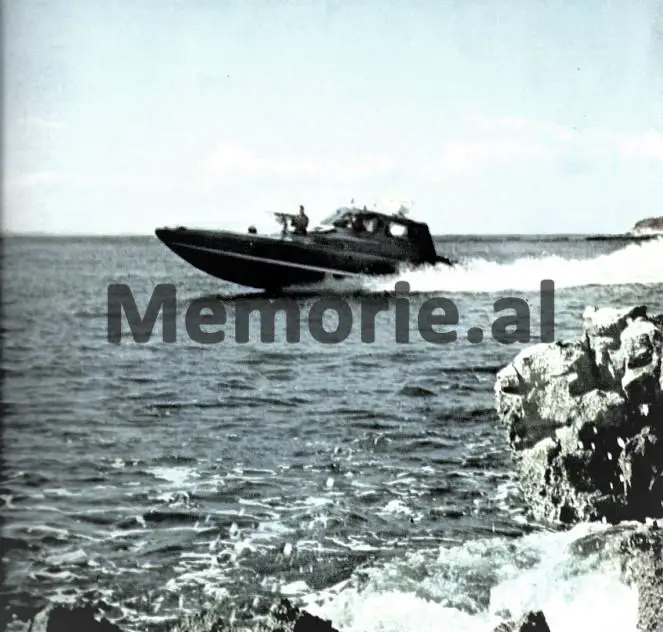
Memorie.al / On June 18, 1984, Albanian soldiers shot in broad daylight three French divers from the “Club Mediterranee,” killing one of them. On September 16, other border guards killed a Greek forester on the border. Such news reports about Albania do not seem at all ordinary – with pill boxes and concrete bunkers scattered through villages, a harsh foreign policy, a national anthem that includes the line “with pickaxe and rifle,” and a history of internal repression. What is surprising is that, despite such incidents, Albania – a lonely country that until recently was always the client of a major communist power – appears to be gradually emerging from an isolationist shell and seeking new relationships in both West and East.
Even more surprising is the fact that this is happening while Enver Hoxha, the Albanian communist leader for the past 43 years, is still alive. He is widely considered brutal and paranoid. Thus, the Albanian enigma arises again: Is this enigmatic country, with its old communist leadership, on the verge of another surprising change?
Few would deny that Albania is a riddle, as it has been for the last four decades one of the least accessible countries in the world, turning politically hostile toward its successive patrons during that period: Yugoslavia, the Soviet Union, and China.
Albanians are descendants of one of the oldest known peoples of Europe, the Illyrians, and yet their nation-state, formed by the orders of the great powers in 1912, is one of the youngest in Europe. It is a relatively small, mostly mountainous country, slightly larger than the state of Maryland, with a population the size of metropolitan Boston – about 3 million. It is certainly the poorest country in Europe.
Its boast of being a bastion of Stalinist communism, uninterested in developing relations with major Western countries, has discouraged contacts, and its record of executing people considered rivals within the leadership has been abhorrent. But its location, its peculiar politics, and its disputes over ethnic problems with its close neighbors – Greece and Yugoslavia – make it critical to the delicate political balance in the Balkan Peninsula.
There is now a new dynamic in Albania as a result of rapid population growth. (Demographic studies show a birth rate approximately three to four times higher than that of the rest of Europe. The average age of the population is 26.) Authorities in Tirana, the capital of Albania, estimate that the population will reach four million in 15 years. This has an irredentist nationalist flavor, because Mr. Hoxha declared in 1981 that “We are six million” – a figure that included Albanians living in Yugoslavia, Turkey, and Greece.
During the past year, Albania has cautiously reopened some of its long-closed gates toward the West. At the same time, a change of the old “Guard” seems to be taking place in Tirana, with people who entered the communist leadership 40 years ago as wartime revolutionaries gradually being replaced by younger cadres, men and women. These tendencies, combined with Mr. Hoxha’s rare public appearances and his apparently failing health, have increased interest in Albanian developments.
For nearly three decades, Albania has not allowed American journalists to enter the country. Twenty-one years ago, I began applying for a visa to visit Albania from Yugoslavia. The Albanian consul in Belgrade was cordial, but he was determined to refuse the request. Letters sent to Tirana over the years remained unanswered, although my name was eventually placed on the official mailing list for Albanian propaganda. Recently, a telephone request to the Albanian Mission to the United Nations for a meeting with a diplomatic representative brought this response: “You cannot speak to anyone, at any time.”
So what follows is a summary of what is known and unknown about Albania, from official reports of the Tirana government, from reports of some academics and Western correspondents who have visited Albania, and from Albanians who have fled in recent years. Mr. Hoxha, the head of the Communist Party, who turned 76 on October 16, is reported to be so ill that at his most recent public appearance, at a sports rally in Tirana on October 20, he walked supported by his assistants.
He has apparently not spoken in public since the beginning of the year. Often, he has had to be absent from important activities and events and has sent only “greeting messages.” Therefore, questions are arising about what might happen in Albania after Mr. Hoxha’s death. When the Albanian Communist Party was formed in Tirana in 1941, with two Yugoslav communist emissaries serving as assistants to Mr. Hoxha (a former schoolteacher), he was elected its first secretary. He has held that position ever since – a unique record in European communism.
In Yugoslavia, there is almost palpable nervousness that a post-Hoxha Albania might somehow slide into the orbit of the Soviet Union, which played a dominant role in Albanian affairs from 1948 to 1961. The Yugoslavs see as a harbinger any move in Tirana to improve relations with Soviet allies such as Hungary or Bulgaria.
Yet for years, Hoxha’s leadership has criticized the Soviet Union and the United States equally as “imperialist” superpowers whose policies threaten world peace in general and the aspirations of smaller nations directly. The most remarkable change in Tirana’s foreign policies in nearly a decade has been Albania’s recent opening toward the West – mainly toward Italy, which invaded Albania during World War II. A new, broader trade agreement was concluded in March of that period in Tirana by Nicola Capria, the Italian Minister of Foreign Trade, and Shane Korbeci, his Albanian counterpart.
Also, the two governments signed a cultural agreement that calls for the establishment of a chair for the Italian language at the University of Tirana and the teaching of Italian in Albanian secondary schools. At the same time, a cooperation agreement was signed between ATSH (Albanian Telegraphic Agency) and ANSA, the Italian news agency; on that occasion, ANSA was granted a rare high-level interview by Deputy Prime Minister Manush Myftiu.
In November of that year, Albania opened a commercial ferry service between the port of Durrës and Trieste. A ferry service across the Strait of Otranto to Brindisi is also planned. Albanians also expressed interest in Italian concerns building a new telecommunications plant, a hydroelectric project, and entire factories in exchange for Albanian goods.
However, there are great obstacles to furthering such contacts, including Tirana’s refusal in recent years to accept foreign loans, credits, or financial aid in any form, and its insistence on contracts with a maximum duration of one year. As a result, most of its foreign trade has taken the form of barter, where Albanians offer their trading partners chrome and oil in exchange for processed goods. Few Western countries are accustomed to doing business this way, and the Italians are very skeptical about larger, long-term projects in Albania.
Albania’s policy was only rumored to be at the center of a deepening rift between Mr. Hoxha and his close associate, the late former Prime Minister Mehmet Shehu, who was either killed or committed suicide during a session of the Central Committee of the Party of Labour of Albania in December 1981. The death of the 73-year-old prime minister was followed by the fourth major purge in the narrow leadership circle since 1948.
Associates and relatives of Mr. Shehu were immediately arrested as “enemies of the people.” At least four of them, including the Ministers of Defense, Interior, and Health, as well as the chief of the secret police of the city of Vlorë, were executed in September 1983 by firing squad, according to Albanians who fled to the West.
Mr. Shehu’s successor as Prime Minister, Adil Çarçani, is 62 years old. At age 59, Ramiz Alia, the head of state and presumed successor to Mr. Hoxha’s party leadership, is 11 years younger than his predecessor. (He can be counted among the wartime revolutionaries, as he joined the Seventh Assault Brigade when he was 19. Mr. Alia has also served as party ideologist.)
The change of the old “Guard” is more visible at the lower levels of party and government leaders, with recent arrivals such as Lenka Çuko, a member of the Political Bureau; Deputy Prime Minister Besnik Bekteshi; and Vangjel Çerrava, secretary of the Party Central Committee. All are in their 40s.
Nikolaos A. Stavrou, a professor of political science at Harvard University, who wrote his master’s thesis on the power elite in Albania, says his research shows that the Central Committee of the Party of Labour of Albania has the youngest average age of any communist party and the highest percentage of women in high positions. Besides Lenka Çuko, member of the Political Bureau, are Minister of Agriculture Themie Thomai, Minister of Education and Culture Tefta Cami, and Minister of Light and Food Industry Vito Kapo.
Mr. Hoxha’s wife, Nexhmije, has for years held key posts, including heading the Institute of Marxism-Leninism – the Higher Party School. Although it is almost impossible to learn anything about the inner workings of the leadership, it is also difficult to obtain direct information about daily life in Albania.
Tourists – about 3,000 per year – see only carefully controlled fragments. Visitors who call on relatives are sworn to silence. Stories from escapees cannot be easily verified. The broken Dinaric Mountains dominate Albania, with fully two-thirds of the country lying above 3,000 km? (Likely meant 3,000 feet? But keeping as is). Only about 13 percent of the land is cultivated, although more is gradually being reclaimed from the marshy – and formerly malarial – edges of the coastal plains. In the highlands, oak, walnut, beech, pine, and fir trees are abundant, while figs, olives, and citrus fruits are cultivated in the lowland areas blessed with a mild climate.
Life is hard, as it has been for most Albanians for centuries. The compulsory work week is 48 hours. Privately owned automobiles do not exist. The number of television sets (45,000 were counted in 1981) is gradually increasing. But for a country that had only two radio transmitters in 1945, improvements in communication are essential. The powerful shortwave transmissions of Radio Tirana’s English-language program are clearly audible in this country.
A recent issue of the Albanian government’s English-language magazine, “New Albania,” shows a group of nicely dressed female students in dresses and blouses with flower prints and knee-length skirts at the entrance to the University of Tirana. Their younger sisters appear in other photographs dressed in tied lace collars, black aprons, white socks, and red-strapped sandals.
Younger girls appear in white dresses with large red stars at a gathering of war veterans. Hartmut Albert, a German scholar who recently spent four weeks in Albania, wrote in an essay: “The style of dress for women is relatively modest, simple, without fashionable accessories. The length of skirts is determined by a fairly strict norm.”
Unlike in the past, men do not wear beards. Long-haired male visitors from the West are likely to be subjected to the barber upon arrival at the border or at Rinas Airport near Tirana. Despite the stringent measures, what is one to make of the “puppy” published in March by Dritero Agolli, chairman of the League of Writers and Artists of Albania, in the periodical “Drita”! The piece titled “Little Anti-Bourgeois” cries out:
“Nihilistic lamentations, like me
despise them!
Lamentation: Ah! Why not
they make frilly underpants
with silk lace;
Lamentation: Ah! Our backs
are bent from saving,
saving and more saving;
Lamentation: Ah! For a duck
roasted in a microwave oven.”
Mr. Agolli continues talking about travel abroad; “no matter where,” seaside villas and cosmetics, and then denounces the hedonists who long for them as “cretinous creatures.” Apparently, there exists a new small class of bureaucrats who have managed to achieve relative luxury. Memorie.al