From Sabina Darova
-ABAZ KUPI, BETWEEN MEMORY, HISTORY, AND TRUTH –
“If democracy is to be continued by those who made the dictatorship, the baby is stillborn!”
Kasëm Trebeshina
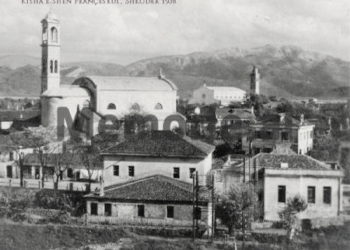
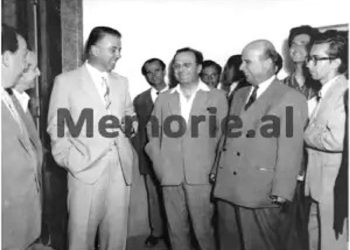
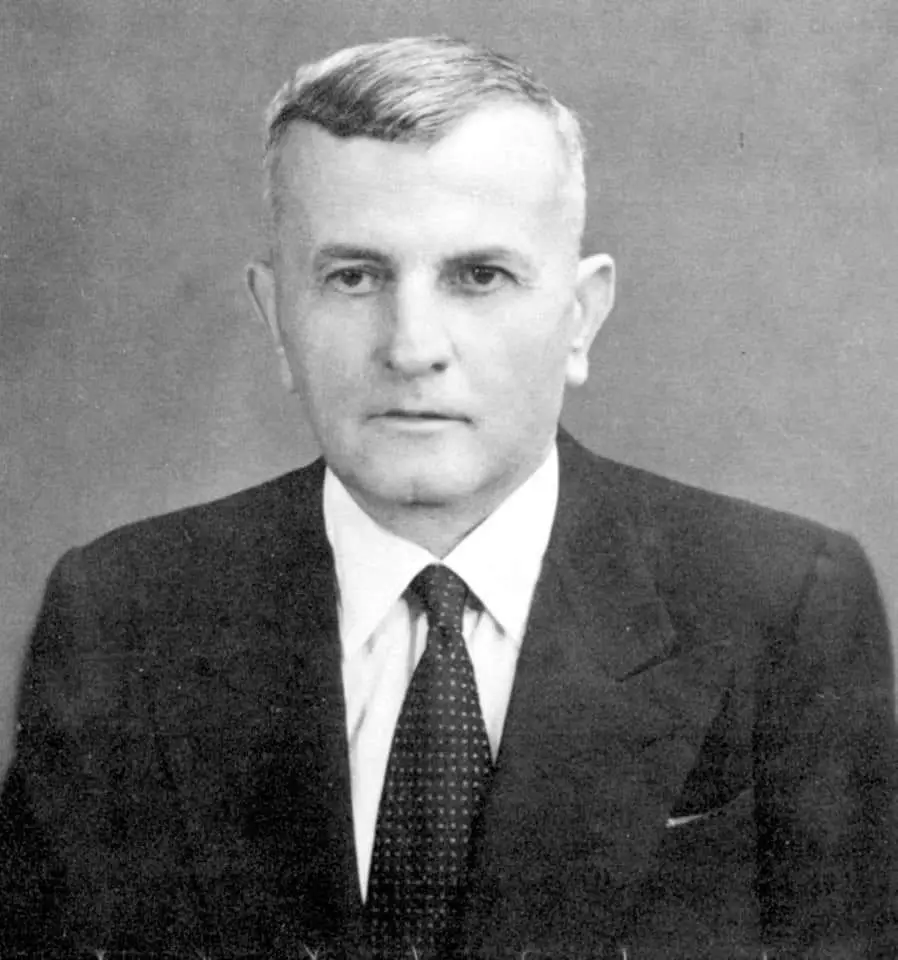
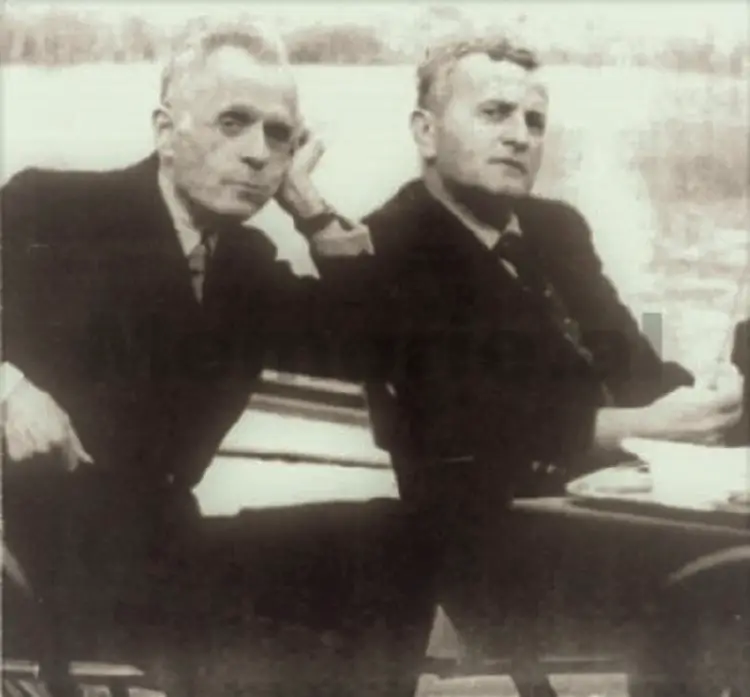
Memorie.al / Two days ago, the Krujë branch of the Democratic Party organized a commemorative ceremony on the occasion of the birthday of one of the most emblematic figures of Krujë’s political and patriotic history, Major Abaz Kupi. This was one of the most important ceremonies held in Krujë in his honor. The first, of particular significance, took place in 2012, when the Mayor was Mr. Shkëlzen Hoxha. During that period, by decision of the Municipal Council, Abaz Kupi was honored with the title “Honorary Citizen,” while the square in front of the Municipality was named after him.
It took another 14 years for another commemorative ceremony to be held in Krujë, this time on the initiative of the Krujë PD and thanks to the care of its chairman, Mr. Aulon Kalaja. The ceremony was attended by prominent political figures and other personalities, while the activity took place near Abaz Kupi’s house. But beyond ceremonies, decorations, speeches, and anniversaries, a much more important question arises:
What has concretely been done to date to appreciate, document, and place Abaz Kupi in the place he deserves in Albanian history?
Has it been considered that his house and that of his family be turned into a house-museum?
A museum that would not simply be a space with photographs, but a place where the life and activity of this patriot would be shown, as well as the calvary his family endured for about four decades: imprisonments, internments, exiles, humiliations, and treatment as “enemies” and “traitors” of the country.
Has it been considered to document the testimonies and experiences of family members? To collect documents, letters, photographs, and historical testimonies?
To study Abaz Kupi’s activity and his collaborations with important figures of the Albanian national cause after his departure from Albania, all the way to the United States of America?
Here I also want to stop at a reaction from the Deputy Mayor of Krujë Municipality, Mrs. Yllka Sheta, who, in a Facebook post, writes: “Abaz Kupi is one of those personalities who belong to all Albanians, beyond political convictions and beyond the calendar.
His contribution is not measured by a ceremony or an anniversary, but by the place he occupies in our national history. As the Municipality of Krujë, we have honored and will continue to honor the figures that have left their mark on the country’s history, because respect for them is respect for our identity and memory.”
These are beautiful words. And, in essence, true. But one phrase made me stop: “Beyond political convictions and beyond the calendar.”
What does this concretely mean; “beyond political convictions”? Does it mean that Abaz Kupi should be remembered only as a patriotic figure, but without confronting the political and historical conflicts of his time? Can his figure be separated from the history of that time?
If we seek to place Abaz Kupi in the place he deserves in national history, then we must have the courage to show the entire history, not just the part that is more suitable for a ceremony.
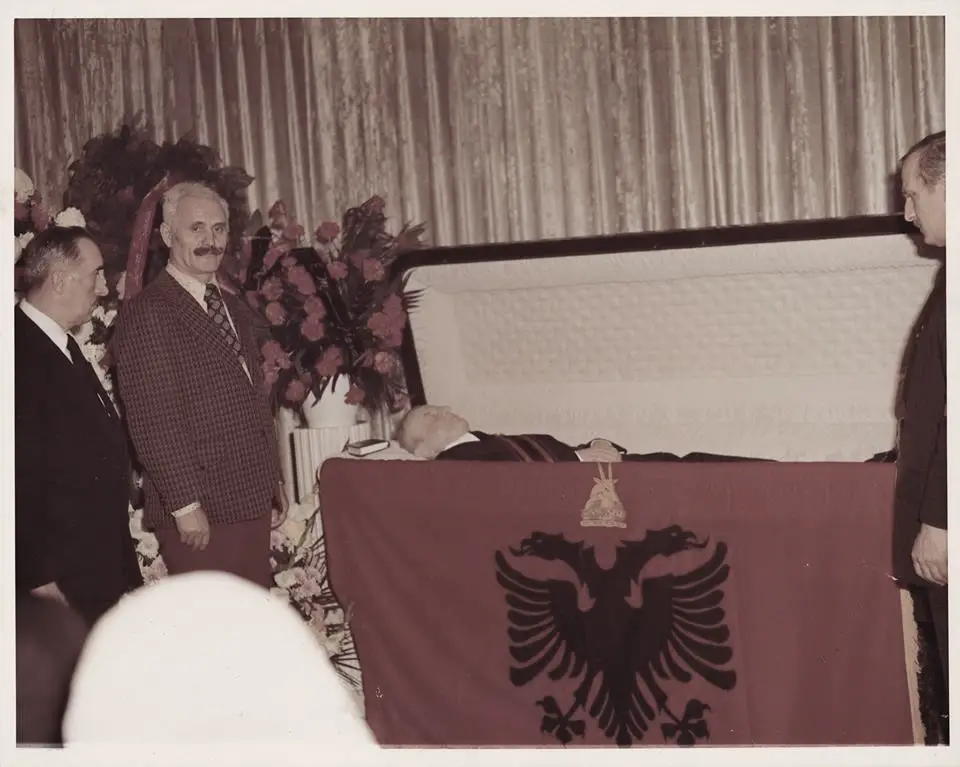
In the same post, Mrs. Sheta also publishes a greeting letter sent by the Municipality of Krujë to New York, on the occasion of the ceremony held there for the 50th anniversary of Abaz Kupi’s passing.
In the letter, after mentioning the popular resistance against fascist occupation and his military activity against the Italian-German occupiers, it states: “After the war, Abaz Kupi was forced to live in exile, but he never severed his ties with his homeland and with the Albanian cause.”
This sentence seems quite mild to me. Almost like a jelly candy. But history cannot be written with candies, and several questions come to my mind immediately for the Municipality of Krujë:
– After which war did Abaz Kupi leave?
– By whom was he forced to leave?
– Why did he never return to Albania?
– What happened to his family after his departure?
– Why was he declared an “enemy” and a “traitor”?
– Why was he excluded for decades from the official narrative of history?
– Why was his contribution to the resistance against fascist occupation silenced?
These are not questions to reopen the wounds of the past for the sake of political conflict. They are questions to understand the past.
And if Albanian history still has chapters that require correction, then should we have the courage to correct them?
Why does the same way of telling history continue even today?
Why is it not clearly stated in history textbooks what happened to the people and families who were declared enemies by the communist regime?
And, above all, can there be a democratic future without an honest confrontation with the past?
More than 30 years have passed since the fall of communism. Some say: “Enough with partisans and ballists. Life has changed.”
Yes, life has changed. But what has changed in our memory?
Has anything changed for the families that were interned?
For those who lost their freedom?
For those who were expelled from their homeland?
For children who grew up with the stamp of a “bad biography”?
For the Kupi family and for other families that bore the consequences of a policy of class warfare for decades?
The wounds of a regime do not disappear just because years pass.
But neither are they healed by using them for a new political war. The truth is not the property of the left, or of the right. Memory has no party. History should not be afraid of facts.
Therefore, perhaps today we do not only need another ceremony.
We need a house-museum.
An archive.
Collected and studied documents.
Testimonies from family members.
A serious historical study.
A place where younger generations can walk in and ask:
What happened?
And there, they should not be given a political answer. They should be given the truth.
Because a society does not become stronger by forgetting the past, but by having the courage to look it in the eye.
Perhaps this is also the deeper meaning of a figure like Abaz Kupi: not to serve as a flag to divide today’s Albanians into old camps, but as a reason to unite them around the truth.
And perhaps that is precisely where hope begins: not when we forget what happened, but when we finally have the courage to tell it all, so that our children do not inherit hatred, but the truth. / Memorie.al