Part Five
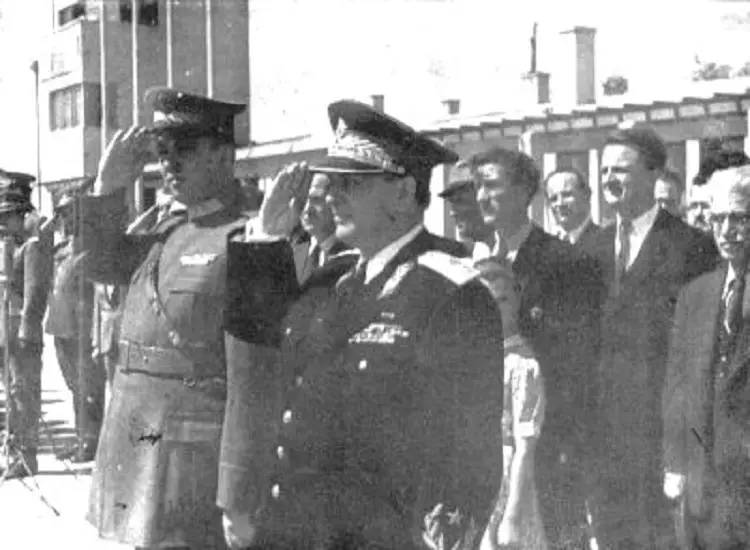
Memorie.al / The CIA have published other documents regarding developments in communist Albania. According to it, in 1949 Yugoslavia took almost the entire Albanian state into its hands, and this through manipulations. But on the other hand, the situation within the party is also shown. In a document from 1952, it is shown how the war against the kulaks was waged and the discontent of the party in the cities.
Continues from the previous issue
June 1949
Albania’s weaknesses, the Tito-USSR conflict
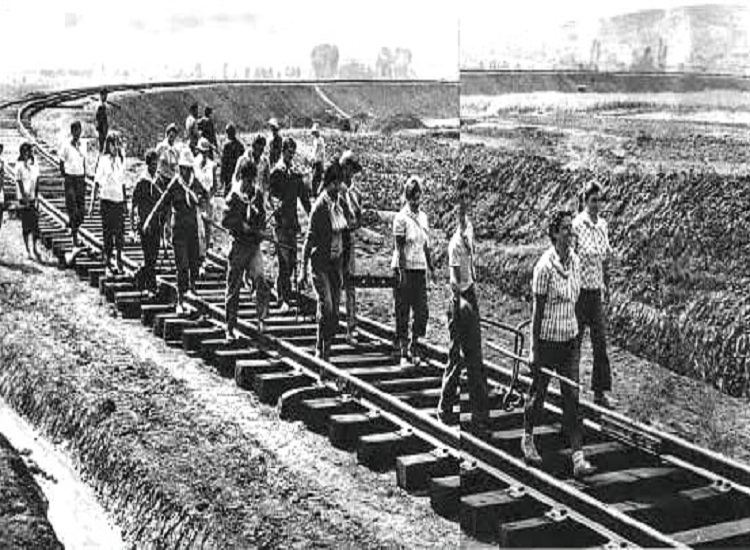
In Albania, Soviet manipulators have taken direct control of the entire Hoxha administration and are concentrating their efforts on stabilizing the regime, facilitating internal transport. During 1949, Soviet railway technicians helped open the line between Tirana and the port of Durrës. Despite the presence, efforts and activities of Soviet representatives to keep Albania as an isolated outpost of their communist camp, Hoxha remains pessimistic both about his own future and that of the country.
His pessimism is based on facts such as the great poverty of Albanians and the lack of economic self-sufficiency. On the other hand, Albania has remained isolated from the rest of the Soviet Bloc after the break with Tito, and the Albanian people have a widespread antipathy toward Soviet cadres, because of their much better living conditions. Meanwhile, the confrontation between Tito and Stalin has expanded, moving to the level of state propaganda.
The intensification of Soviet efforts against Yugoslavia is justified by the Kremlin’s campaign against nationalist-deviationist satellite countries, according to which Tito’s challenge strikes at the essence of the Stalinist concept of expanding the communist camp, and is an incentive for other communist countries with nationalist tendencies.
The campaign is reflected in the frequency of accusatory diplomatic exchanges between Albania and Hungary toward Yugoslavia, as well as in the frequency of border incidents. The Kremlin has also launched an economic blockade against Tito, but this is unlikely to cause a blockade of the Yugoslav economy, since Tito will receive support from the West, and any interruption of Yugoslavia’s ties with Western Europe would put it in a better position for trade with the West.
March 1951
People’s Councils, “Bashkimi”, “Zëri i Popullit”
The people’s councils function according to the legislation of the People’s Assembly, following the model of the soviets in the Soviet Union. The councils have the task of electing the executive body that directs their activity. The people’s councils are the bodies that resolve the most important local problems and direct agricultural, economic and political life approve the local budget and mobilize workers for the fulfillment of assigned tasks. But unfortunately there are defects in their functioning, such as the issue of directives.
The people’s councils have the task of issuing directives, but in many cases this task is underestimated. In Vlora, Peshkopi, Berat and some other places there have been oversteppings of competences between city and local councils, appointing all officials or moving the personnel of village councils. To encourage initiative among the working masses and broad participation, the law specifies that permanent committees and other bodies submit periodic reports.
But in practice the necessary reports are not prepared or are done incorrectly. Some executive committees, such as those in Lushnja and Skrapar, have made flagrant violations of the law, removing from office members of local village and city councils. Both members and officials of the councils must make more efforts to know the law better so that the above mistakes are avoided. A few days ago, at the meeting of the Democratic Front in Korça, the quality of work was examined.
The report presented by Naum Gadeshi and the discussions of the members made it clear that the Korça Front had carried out assistance in the spring plantings and autumn harvests. The Front’s members, citing personal examples, spoke about material assistance to production campaigns and in mobilizing the labor force. From time to time the Front had organized groups of volunteers who helped in the construction of the “8 Nëntori” sugar combine and other important projects.
But although the results of the party organizations were relatively good, the leaders of the Korça Front did not properly fulfill their obligations. Many times the number of 14 leaders was not present at the regular meetings. Sili Kasnaqi, deputy chairman of Korça, and Miço Simo, a Front official, have continuously been absent from meetings and have shown little interest in the Front’s affairs.
The work of the leaders was especially weak in November 1951. At a meeting where the five-year plan was to be discussed with the working masses, a number of leaders were not present, so much so that the meeting was cancelled. The leaders failed to keep records of the specific programs and neglected the organization of meetings for discussing problems. To blame for this is the secretary of the front, who had sent his deputy to replace him.
During 1951, great progress was made by the party bodies in the field of educating the masses. But again insufficient work has been done in the use of party materials in general and newspapers in particular. Shortcomings in the distribution of newspapers in many urban and rural centers have meant that the lessons do not reach the readers.
In some villages the newspapers have arrived only once every two weeks, as has happened in Malishovë and in other villages of Përmet and Gjirokastra. The party committees must create better control over the apparatus for distributing newspapers and other printed materials, and must not lose attention to the fact that the press is the most powerful weapon of the class struggle. The irregular reading of the press means that party members have shortcomings in the experiences of others and as a result do not set the proper example.
April 1952
Criticisms, defects in the party’s work
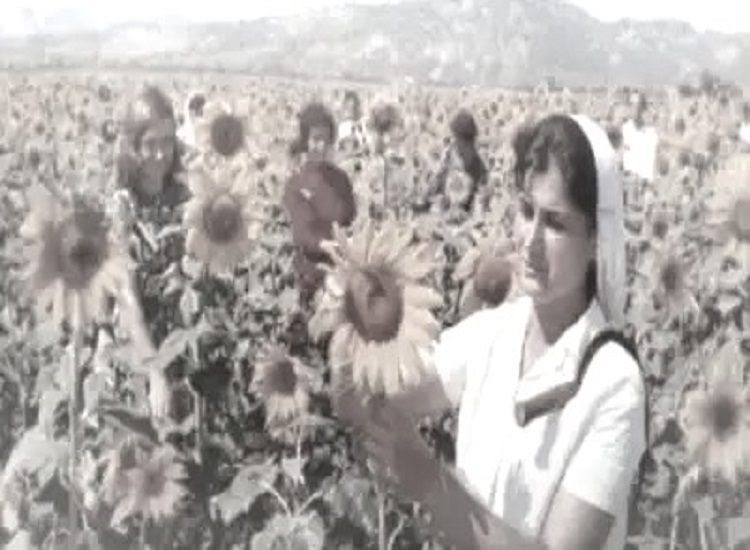
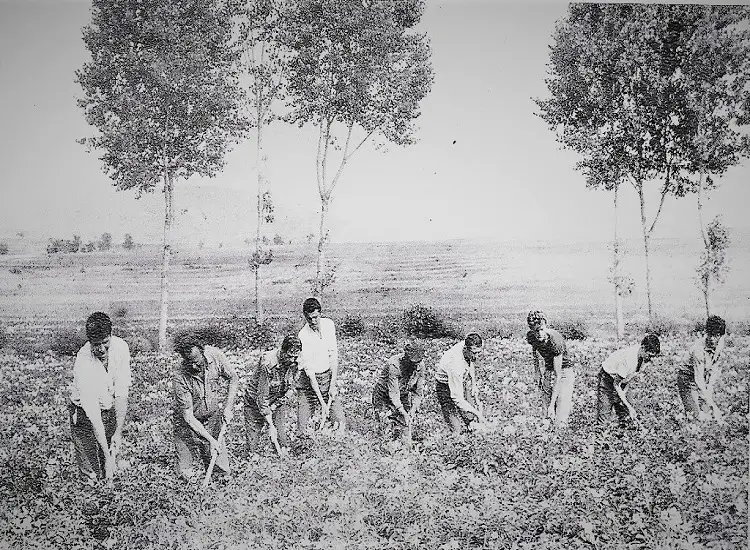
At the third party conference in Durrës, defects in the party’s work were highlighted, particularly in the Ishm area. The conference instructed the party committee to take measures to improve the situation. Therefore the party committee sent a group of seven people, led by Nonda Baka, to the Ishm farm. The farmers of Ishm generously helped the group in their work, raising criticisms against some individuals, members of the executive committee, who with their methods had distanced the masses from the party and the government.
For example, when poor or middle peasants came to the Executive Committee to discuss their problems and concerns, Veli Hoxha, Mehdi Kërtusha and others pushed them away with accusations that they were kulaks or enemies of the people. Some members of the Committee are also guilty of extreme measures against kulaks, violating the policies of isolating them through gradual campaigning. While others have dragged out the measures during the war against the kulaks and have hindered the taking of appropriate measures. The party organization in Ishëm has failed to adapt measures to the situation.
It has not kept records properly and has not shown a spirit of self-criticism. Communists such as Ahmet Shehi, Shaban Qarri and Muharrem Gallata not only failed to implement the party’s instructions, but also missed five meetings of the party in a row. These shortcomings explain why the Durrës district has been continuously behind in fulfilling the national plan of the districts. It is strange that although party representatives come and go in this district, none has taken steps to improve the situation.
For example, Kadri Qejvani, as party organizer, knew the above defects, but took no measures himself and did not report to the party officials of Durrës. The example of the communists of the Ishm cooperative is necessary for the unceasing effort to preserve internal democracy in the party organizations and to resolve problems in the spirit of self-criticism. We must bring the masses closer to one another and strike hard at violations of procedures.
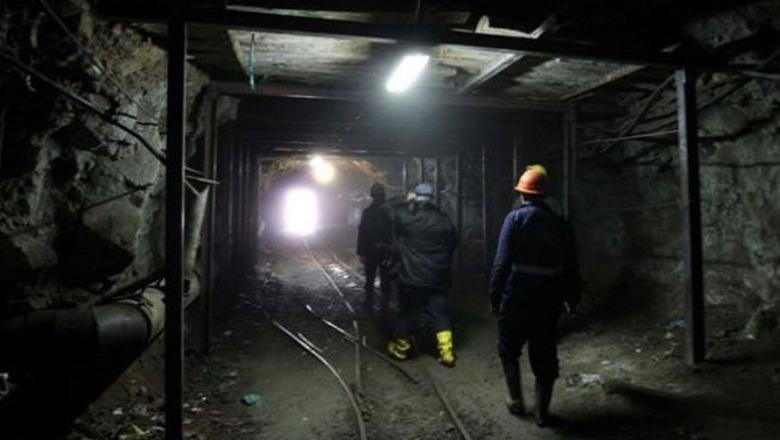
Modernization in the mines
The 10th plenum of the party for the mining sector has called for the acceleration of mechanization and the use of modern methods, for increasing production. Mining machinery continues to arrive from the Soviet Union, but continuous training is necessary to familiarize the miners with them. Special attention must be paid to the issue of work organization, the fight against bureaucracy, record-keeping and the principle of individual responsibility for assigned tasks and functions. The spirit of socialist competition has not been developed sufficiently in the mining sector. The professional committees have not properly made the link between the masses and the party through meetings and lectures.
The use of newspapers by agitators
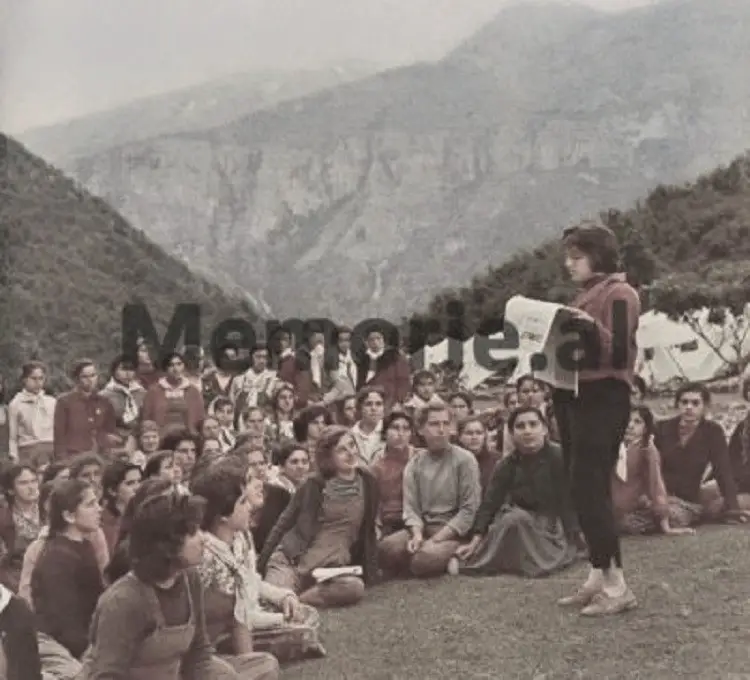
Party workers in Pogradec are increasingly using newspapers in their meetings with the working masses. Demir Nasholli of the village of Lin has organized group meetings every three days for reading and discussing newspapers. In Perrenjas, agitators have done group readings of the article of “Berija” published in “Zëri i Popullit” on 8 November 1951. In the border village with Yugoslavia, Reshtan, special attention is paid to reading articles concerning the Titoists and Trotskyists, so that the population is kept abreast of revolutionary vigilance against Yugoslav enemies.
The political work carried out by the agitators in the village of Skënderbej is an example of achievements. There, political news is read and discussed in seminars and conferences, and this has helped the village fulfill the production plan and preserve the spirit of vigilance. Thanks to the work of the agitators on the Albanian-Yugoslav border, revolutionary vigilance against the enemy of the nation has been kept at a high level.
February 1966
Albania seeks friends
Albania may be putting an end to its regime of self-isolation, seeking more friendly relations with some of the countries of the Soviet Bloc and with Western countries. Enver Hoxha’s regime may think that this makes lobbying more effective in favor of its ally and benefactor, communist China. On the other hand, the regime may think that by showing care not to risk its position, it can expand its current ties with other countries, so as not to be entirely dependent on Peking.
Since the break with Moscow in 1961, Tirana has relied entirely on Peking for its industrialization program and international policy. But this has brought tension in relations with the communist countries of Eastern Europe, increasing Albania’s isolation. But in recent months, Tirana seems to be showing it more ready to improve ties with certain communist countries. For example, it has responded positively to Romania’s offer of support and has renewed the contract of diplomatic relations at ambassador level with Poland.
Albania had always left the door of this possibility open, since it had never withdrawn its ambassador from Warsaw. Albania has taken a somewhat friendlier stance toward the West as well, as in a recent interview the Albanian Foreign Minister Shtylla declared to a Turkish journalist that there are no problems between Turkey and Albania, and stressed that the two countries’ different political systems should not stop their friendship. He also encouraged the advancement of cultural and trade agreements. An Albania-France cultural program recently carried out an exchange of professors and appointed a French delegation at the University of Tirana.
Italy and Albania have also signed a cultural agreement in March, and there are plans to open an Albanian commercial trade office in Trieste. Albania and Austria plan to increase their trade ties for 1966. Tirana still maintains full solidarity with Peking and there have been no signals of deterioration in ties for the near future. But there are nevertheless rumors that Albania is somewhat dissatisfied with the measure and quality of Peking’s aid.
The protracted Albanian-Chinese negotiations last autumn over Chinese credits for Tirana’s 1966-1970 economic plans suggest that Peking is being hesitant in fulfilling all Albanian requests. Also, in an unprecedented move, the Albanian parliament at the end of December debated but did not approve either the national budget for 1966 or that for the five-year plan. The parliament’s delays may have come as a result of difficulties in negotiations with Peking.
Yugoslav interests
Serbia opposed in principle the independence of Albania from 1912 to 1918. After the First World War, the Yugoslavs occupied Albania until 1921, while in 1926; Yugoslavia accepted the Albanian border defined in 1913. Until the outbreak of the Second World War, Italian domination prevented Yugoslavia from exercising influence. But the situation changed greatly during the Second World War, when Tito’s regime, through the Albanian communists, took control of the National Liberation Movement.
Tito exercised control through his emissaries in the Albanian Liberation Army, and from 1944 until 1948, Albania was a puppet of Yugoslavia. In 1948, Hoxha separated the country from dependence on Yugoslavia, after the conflict between Tito’s regime and the Cominform (Communist Countries’ International Information Bureau). Since 1948, Tito defended the principle of an independent and sovereign Albania, condemning Greek claims for the partition of Albania between Greece and Yugoslavia.
Yugoslavia fears most the restoration of Italian influence in Albania. In recent months, Yugoslav propaganda means have accused Italy of encouraging Albanian ethnic plans to include Kosovo and Metohija in an independent Albania, through groups of Albanian emigrants there. Tito’s aim seems to be the creation of an anti-Soviet regime in Albania and the return of its status of the years 1944-’48.
Apparently for this purpose, in May 1951 the League of Albanian Political Refugees in Yugoslavia was created in Yugoslavia. The League claims to represent around 5000 Albanians in Yugoslavia and is controlled by communists who left Albania after 1948. It was created by Belgrade as an instrument of Yugoslav policies and has as its declared objective a “free, independent, indivisible, democratic and republican” Albania.
The League has carried out several espionage, smuggling and propaganda operations, and possesses potential for broader operations. But it is perhaps Yugoslavia’s currently exposed position after the split with the USSR that has prevented Tito from using the League at full power. Yugoslav officials have said that serious efforts to overthrow Hoxha’s regime could become a pretext for the Soviet Union for military action against Yugoslavia. / Memorie.al
Continues in the next issue