Memorie.al / Americans have shed light on the developments of 1990, which preceded the fall of the communist regime. The “New York Times” newspaper has shown how Ramiz Alia, already in that year, was giving signals that the dictatorship was coming to an end. They have listed some of the developments he brought about.
Albania begins the era of change
June 20, 1988
A few years ago, the leaders in Albania, the most isolated country in Europe, stopped the practice of requiring foreigners to be disinfected before entering the country, which was not much of a first signal, but at least it, was a beginning.
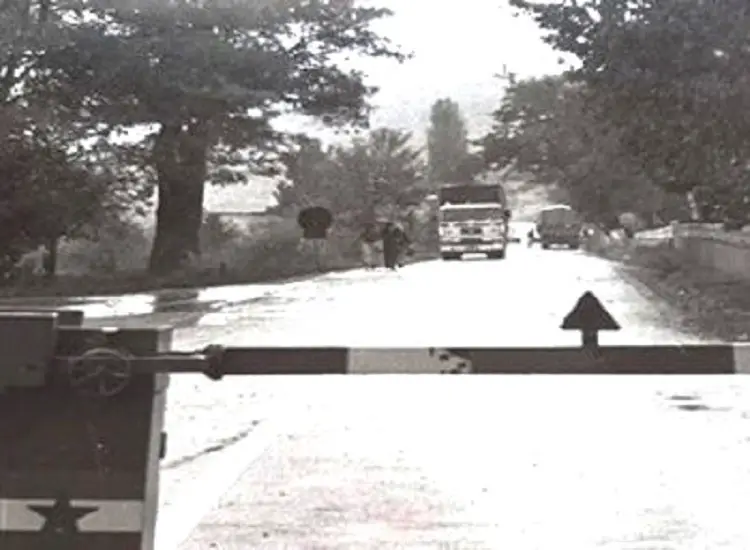
The vat of disinfectant at the border with Yugoslavia had been set up to protect against diseases, but diplomats say it was a message of contempt toward the outside world, from Moscow to Washington to Beijing.
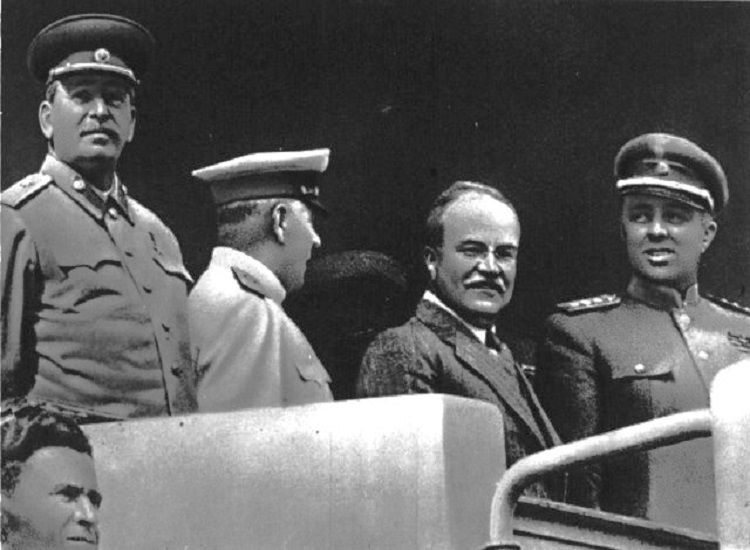
Now the signals have changed somewhat. Albania remains the only atheist country in the world, and Stalin’s statues still dominate the country’s cities, as does the Secret Police, which keeps a tight rein on dissent.
Nevertheless, the leadership in Tirana has begun openings by establishing relations with Spain, West Germany, and Canada. Later this year, Greek Prime Minister Andreas Papandreou will become the first Western leader to visit the communist country since the communist partisans of Enver Hoxha took power.
According to British specialist Geoffrey Stern, there are also modest signs of a relaxation of economic control within the country. Stern said in a telephone interview that unlike other communist countries, a certain new transparency in Albania does not fully conform to the principle of “glasnost” championed by Soviet leader Mikhail S. Gorbachev.
Tirana broke with the Soviet Union in 1961 and has had nothing more to do with Moscow. Stalin is now condemned as a dictator in the USSR, while in Albania he is still part of household decorations. “The beginning of the reform process could be seen in Albania even before Gorbachev’s arrival,” says Stern. According to him, one of the reasons is the rupture of relations with China and the cessation of its economic aid.
Stern says that when the Chinese technicians left, they took with them the plans of the industrial projects they were building, which is why Albania is looking elsewhere for technology to complete them. When Hoxha died in 1985, he was replaced by Ramiz Alia, the party ideologue who is now seeking change.
“We have a series of moves toward decentralization, toward changing wages between professions, starting professional incentives, even if in the early stages,” says Stern. There is consensus among scholars of Albania that, like Gorbachev, Alia faces resistance from conservative figures of the establishment, who have gathered around Hoxha’s widow. “Alia is encountering resistance to the moves,” said a Western diplomat.
The country of 3 million inhabitants still retains its communist traditions; the practice of religion is banned, as are private automobiles, as well as the marking of graves of the Christian minority with crosses. And to prevent the penetration of foreigners, the Albanian Constitution prohibits loans from foreign countries. It is the poorest country in Europe, and in the market there are shortages of basic products, such as milk.
Tourists are allowed only in accompanied groups, while those who have beards must visit the barber at the border point for a forced shave. Historically, Italy has been Albania’s window to the West through its television, and recently a ferry line has opened across the Adriatic.
But Greece too in recent years has begun to compete as a friend of Tirana in its careful opening to the outside world. Greek officials, for example, take credit for persuading Albania to participate in the Balkan Conference in Belgrade in February.
Greece has a particular interest in Albania because of its minority there, which according to Greece numbers 200,000 in the south. Prime Minister Papandreou has tried to woo Tirana in recent years, with what his opponents say are unnecessary concessions, without receiving guarantees for the rights of the Greek-speaking minority.
Greece has now renounced territorial claims to southern Albania. In the same period, Greek visitors to Albania increased from 1,265 in 1985 to about 6,000 last year. The number of Greek Albanians allowed to visit Greece increased from 42 in 1983 to more than 500 in 1987.
Albania rushes toward what it calls ‘democratization’
March 22, 1990
Without much noise, Albania has begun a long-term program of what the country’s leadership calls “democratization” of the country’s social and economic institutions. Features of this program include an electoral process for the directors of industrial and agricultural enterprises in the countryside, public debates on changes in education, and decentralization in the harsh system of economic planning, to give more power to local authorities.
After 45 years of Stalinist policies, President Ramiz Alia, head of the Communist Party, has begun to expand the country’s relations with the West and the East, as well as to soften domestic policies.
Advocates for the accused
Officials say changes are also taking place in Albania’s justice system. For a long time, there had been no Ministry of Justice in the Albanian government. Suspects were simply arrested, charged, and brought before courts or state prosecutors.
But soon the Ministry of Justice will be created, and defense lawyers will be allowed to represent the accused from the moment of arrest. In addition, according to officials, the number of crimes punishable by death will be reduced, as the parliament is working on a new Penal Code.
Other changes were announced by President Alia in a speech on January 22 at the party’s Central Committee, where he spoke with sympathy for the changes taking place in Eastern Europe last year, which brought the fall of communism in Poland, Hungary, East Germany, Czechoslovakia, Bulgaria, and Romania.
Alia said in January that his government would follow the path of “democratization,” preserving the essence of socialism in order to “avoid the sufferings and the fate of other nations of Eastern Europe.” It is still early to judge how true these claims are, and in Albania information cannot be obtained easily.
But what Alia has in mind for his country is a kind of gradual revolution, to prevent the country from falling behind developments in Eastern Europe. One official said about the developments in Albania: “It is in fact the moment to make changes. We are not copying the Eastern Europeans, we have our own way, but we do not forget the international environment.”
“We do not want to eliminate socialism. We have taken many measures to prevent what happened in Eastern Europe; we are trying to find original solutions because in these cases you cannot use theory.”
Asked whether there was opposition to the changes in Albania, the official repeated Alia’s ideas, saying that: “obstacles are created by the bureaucracy, who is deeply entrenched in the state.” The bureaucracy seems to be code for the old Stalinists of the apparatus, who are used to doing things according to the model of Enver Hoxha, the old communist leader who died in 1985.
The young population
These are some of the changes that have been applied or are expected to be carried out soon in Albania:
- Elections by secret ballot in municipal councils, enterprises, farms, Parliament, and in mass organizations.
- A 10-year limit on mandates in government posts, with a performance review after five years and the possibility of dismissal by colleagues. The mandate of party officials is limited to 5 years, while that of members of parliament to 12 years.
- Transfer of authority from ministries to local officials or individual enterprises.
- Introduction of production incentives in industry and agriculture, allowing price movements for some consumer goods.
Alia’s leadership seems to be basing its reforms on Albania’s youth, also seeing that the average age in the country is 27. In a meeting with pupils and students this month broadcast on television, Alia said: “Young people are a revolutionary force. The life of young people must be lived, and revolutionary debate must be developed, in order to avoid the suppression of young people by manifestations of bureaucracy and formalization.”
April 20, 1990
The government of Albania, one of the most radical communist regimes in the world, signaled today that it wants to have relations with the United States and the Soviet Union. The change in the public policy of hostility toward Moscow and Washington took about three decades, as President Ramiz Alia said that as a result of international developments, “the issue of re-establishing relations with the US and the Soviet Union has re-entered the agenda.”
In a long speech on Tuesday at the party’s Central Committee, which was published today by the Albanian Telegraphic Agency, President Alia mentioned the “wide gap” that separated his country from the two superpowers and added that friendship would be met with friendship.
An offer since 1974
“If now the United States of America and the Soviet Union, as they claim, wish to change their stance toward Albania, we have no reason not to welcome it,” said Alia, the party’s First Secretary for five years.
According to State Department officials, there have been no direct discussions between officials of the two countries on diplomatic relations, even though the United States has made continuous offers for opening with Albania since 1974.
The most recent was on November 28, Albania’s National Day, when the Albanian service of “Voice of America” broadcast a statement by the director of Eastern European affairs at the US State Department, James W. Swihart, who said that “of course we see no obstacles” to establishing diplomatic relations with Tirana, and added that “the administration is always ready for dialogue.” / Memorie.al.