
From Uvil Zajmi
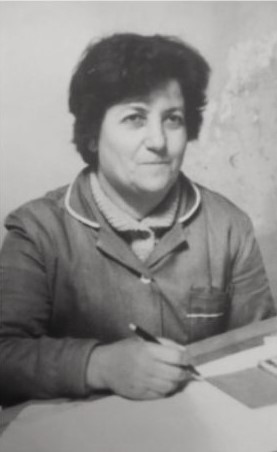
Memorie.al / Before the 1990s, not only food was sold with ration coupons, but also paints for painters. At that time, there were no shops where you could go whenever you wanted and buy as much as you wanted. Everything was centralized. In a way, it was the state that decided how much you would create. Although at an advanced age, but well-preserved and with a brilliant memory, Milika Nini, the well-known saleswoman of the Art Salon in Tirana, a noble and courteous woman even today, preserves and remembers everything from the years when she worked in the famous shop where works of art were sold. She even recounts in detail the way she supplied artists with paints, holding a list in her hand. “From the People’s Painters, the Merited Artists, to the younger ones, renowned sculptors, they all received their materials from me, which came from Italy, France, etc. Once a year, mainly before exhibitions, according to a distribution list drawn up by the Writers’ Union.
It seems like an absurd form today, but that’s how it functioned in those years, when they were notified that the paints had arrived at ‘Milika’s Shop’ (as that art salon was better known).
A simple exit invoice, his signature, was enough to receive the ‘materials on credit,’ from paints, canvas, oils, to the specific brushes designated for each one. There were painters who remained in debt,” Mrs. Milika told us some time ago. She recounts the period of crisis, which also reached Enver Hoxha’s ears, who immediately sought a solution.
Mrs. Milika, do you remember how you started working in that art shop?
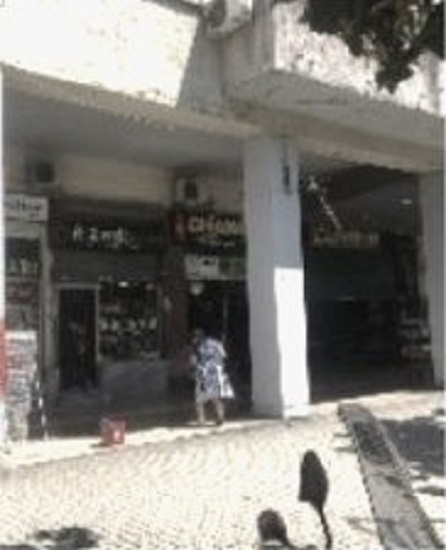
It was the end of the 1960s; I wasn’t even 30 years old. It was Zyra Kepi, a former finance employee, who proposed that job to me, since a female employee was needed to serve as a saleswoman in that shop-atelier-art. Around the 1950s–60s, the Works of Art shop was located next to the “Tirana” café. I worked there along with the shop manager, Llazar Myzeqari, a painter from Berat. When the buildings were demolished, the shop was relocated to the “Palace with Columns,” on the former “Post Street.” The first shop was on the ground floor, above it was the Directorate of the Fruit-Vegetable Enterprise. It remained there for a short time, then closed, to be moved behind the Museum and then to the Bronze Foundry Enterprise, near the Technological School.
What was sold in that shop, only basic materials or also works of art?
Such a shop existed only in Tirana. The shop-salon housed and sold works of art only by Albanian authors and was under the Teaching Aids Department, later under the QRVA (Center for Reproduction of Works of Art), which had its own warehouses. The works of art for sale came there from a commission composed of well-known painters, who selected the paintings realized by various painters, which they sent to be exhibited and sold in the shop. Later, such a commission functioned under the Executive Committee of Tirana. But, not only paintings, sculptures, graphics, ceramics, etc. were also sold there. Only there, because as I told you, in other cities there was no such place for figurative arts. That shop also served as a source of work materials for painters and sculptors.
Where did the painters find or how did they get their paints?
As long as relations with the Russians were good, materials, such as paints, canvas, came from Russia, or were produced in countries of the People’s Democracies, as they were called then, East Germany, Czechoslovakia, etc. Not from the West, because they were in foreign currency, they were expensive. They were of high quality, with which the paintings of that period were also realized. After the split with them, there was a crisis and a marked shortage, there were difficulties in finding them. At Mapo, Chinese paints and brushes were sold. Likewise, in an Art-Culture shop, where along with musical instruments, materials for painters were traded, but not of good quality. As canvas, painters used sacks, which they tore apart, then tied them, stretched them, sewed them, that are how they prepared them. They painted two or three times on that fabric. Frames were also a problem, which painters made themselves or ordered from various carpenters. This whole situation had turned into a problem, a concern.
How was this problem solved?
This situation reached Enver Hoxha’s ears. After an exhibition in the hall of the Writers’ and Artists’ Union Club, next to the People’s Theater, where national exhibitions were usually held in that period, in a small, quick, sporadic meeting with a group of painters, after appreciating some paintings, Enver asked Foto Stamo, then Secretary of the Writers’ Union, “How are you with paints?”
And what was the answer?
Foto showed courage, “We don’t have paints – he told him. Trade brings them from abroad through clearing, mainly from the people’s democracies. We can’t from the West, they cost, even Skënderbeu of Krujë we cast in bronze in Hungary,” Stamo told him.
How did Hoxha react?
“We must provide the painters with paints and they must be of good quality, so that this art they create endures, lives as long as possible, does not get damaged,” Enver Hoxha replied. And he tasked two officials, artists of figurative art of the time, Kujtim Buza and Foto Stamo, to leave for Italy and resolve the situation.
Did the paints come from Italy?
As far as I am informed, they went to Milan, to some well-known paint firms for painters, but without buying them, they only identified them. I recall that the paints and materials did not arrive immediately. After they returned, they spoke at the ministry, the state intervened, communication with the firm began, the well-known financier H. Sinoimeri went to Italy, also approving the financial value needed, which was required by the Planning Directorate in the Ministry. Afterwards, orders were placed directly from Tirana and they arrived with the “Al Italia” airplane.
What quality were they?
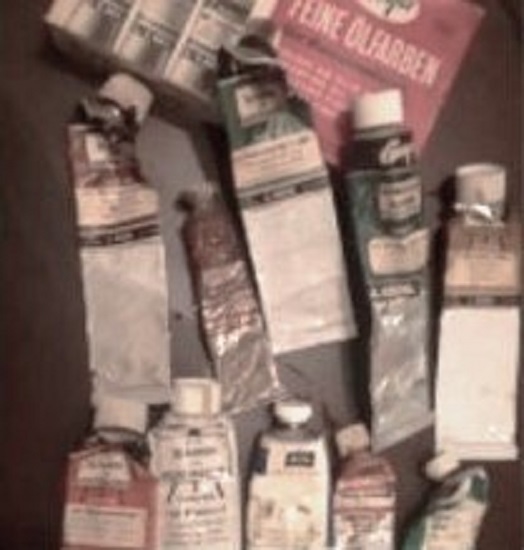
At first, those of quality C came, for schools and amateur painters. But, it was the Italians who recommended quality paints and after the 1970s they were of the very well-known and famous brand, “Maimeri.” The quality was good, as they were produced in the firm’s professional specialized laboratories. I recall that they were of “Grade A” quality, from paints, brushes, as well as canvas, along with various oils such as varnish, linseed oil, diluent, etc. In the 1980s, French paints “Le Franc” began to arrive, and then “Goya,” “Pelican,” “Winsor,” these were of English brands and were cheaper.
Did they come directly to the shop or were they stored?
The paints were deposited in the wholesale base in Durrës and from there they were brought and unloaded in the shop. Everyone was engaged, I recall the directors S. Glina, after him S. Turku, of the Works of Art Enterprise. I would take the supply, prepare it two to three weeks in advance, and then notify the painters. I kept them in the shop’s warehouse, arranged them in cardboard boxes, so they would be ready when they came. After they took them, they left, placing them in a bag, or on a bicycle, according to their possibilities. I would roll the canvas around a tube for them. I did the same for painters coming from other cities who traveled by train or line buses. A ration, like a campaign, was that process for me and for them.
You said, ‘as if it were a ration,’ how should we understand that?
Once a year, at the end or the beginning of it, it was planned only for the painters, before important exhibitions, or in cases of exhibitions on jubilee anniversaries. It was a list that came to me drawn up by the Writers’ Union in cooperation with the Ministry of Education and Culture. The list included painters from all over Albania, who had to be members of the Union and who would prepare paintings for the exhibition. There were many requests, as there were about 2,000 painters in circulation, including those who graduated each year from the “Jordan Misja” Artistic High School, the night school, along with the students of the Higher Institute of Arts. The list that came to me was reduced from 100 to 200 painters.
How was it done to receive ‘materials on credit’?
I had the list and with an invoice form I made the transactions. “Materials on credit,” that’s what they were called, certainly not with cash; only with a signature that the painter put on the exit block, confirming that he had withdrawn the material. The same procedure was followed for everyone; the series of colors were predetermined. I recall that white was the first, most preferred color. They were large tubes, zinc and titanium. Along with them, 2 meters of canvas, 2.2 m wide, which I would cut in the shop. Slightly different with the names, authority, personality of the painter and his commitment. Those who were in a free profession were given one to two more series of paints. This also for painters who would realize large paintings, there was a differentiation in paints and canvas.
How did the painters liquidate the paints, or were they free for them?
It seemed as if they were given for free, but no one gave anything for free. After the exhibition closed, the works, paintings were sold to institutions, various enterprises, etc., at prices determined by an exhibition evaluation commission. That’s what it was called and that’s how it functioned, always based on the regulations determined by the CM Decision (Council of Ministers Decision), for author’s rights. I would receive the list of sold works and the prices next to them. I attached the invoice with the financial value of the materials he had taken, sent it to the finance office in the ministry. They deducted it from the evaluation amount of the painting.
And for those painters whose work was not sold, how was it done?
It happened that many painters did not participate in the exhibition, due to the selection made of the paintings before its opening and his work was not accepted. Or when it was not later valued by the commission to be sold, or they set a price that did not reach the financial value of the materials he had taken from the shop. I had the list and he remained a painter in debt. I felt sorry, but that’s how it was done and he had to wait for the next activity to settle the financial obligation with the shop.
Were the colors liked, their quality?
Certainly, the painters were satisfied, I heard them when they took them, I talked with them. By then I had also become a specialist. According to them, they expanded the range of colors, they were among the best and very high quality. The state paid 70%, while the painters only 30%. Also for sculptors, some materials came from abroad, such as clay, plasteline, chisels, work tools, etc.
Were there any claims from painters?
I remember when two or three of them who were not from Tirana had claims when they came and took the paints, they demanded more than what they were entitled to base on the accompanying list of “materials on credit.” “Milika treats the painters of Tirana better than those from other cities,” they said. Moreover, this claim raised by them became a problem all the way to the ministry, when the minister called me. But, everything was clarified, as nothing stood, because the distribution did not depend on me. I valued and respected everyone equally.
Milika, what about those who were not members of the Union, did they have no right to receive any materials?
The remaining, less preferred colors, or when I had the opportunity, I tried to secure, set aside some tubes to help young painters, amateurs, non-Union members, who were not on the list, to whom I distributed them “secretly.” Simply to minimally fulfill their requests, their desire. A bit of canvas, some tubes, panels, oils. The Artistic High School, the Higher Institute of Arts received paints for painting students through planning. There were also some additions for Kosovar painters.
Who brought works to sell in the shop?
Every artist had the right to bring work to the shop, even the most well-known ones, as long as you were a member of the Union. Certainly, more paintings, fewer sculptures, along with drawings, watercolors, graphics. I forwarded them to the Evaluation Commission, which decided whether to exhibit them or not, accompanied also by the price. The author no longer took that painting. The paintings remained hanging on the wall for a while, then they were taken down, I put them in the warehouse, later they were put up again, so they circulated. Any citizen could buy a work of art in the shop with cash, accompanied by a sales invoice.
How much did a painting cost in the Works of Art shop?
Landscapes, still lifes, had reasonable prices, different with compositions, which cost more; I recall those of Sali Shijaku, Kel Kodheli, etc. Many foreigners came, mainly embassy personnel, or foreigners who lived, worked in Albania, especially those in Tirana. But also foreign officials who were on business, as well as French diplomats, former personnel of the Yugoslav embassy, etc. The Italians were the ones who frequented the salon the most. An original work reached a value from 3,000 to 6,000 old lekë, a good monthly salary. Tourists, or foreign visitors, when they entered the shop, stayed long, were curious, tried to photograph them, while I tried not to allow them. From the fear and idea that they might copy them.
When a foreigner wanted to buy a painting, how was it done?
They bought them only through the “Dajti” Hotel. I made an exit invoice for them, which I forwarded to the hotel’s finance office. I wrote the painting, the price, they converted it into dollars and kept the lekë in the personal account, before he left. While I packaged it, set it aside until he came to pick it up, after it was settled with the hotel. The same was done for embassy personnel. The shop did not sell for cash to foreigners.
How were your relationships with the artists?
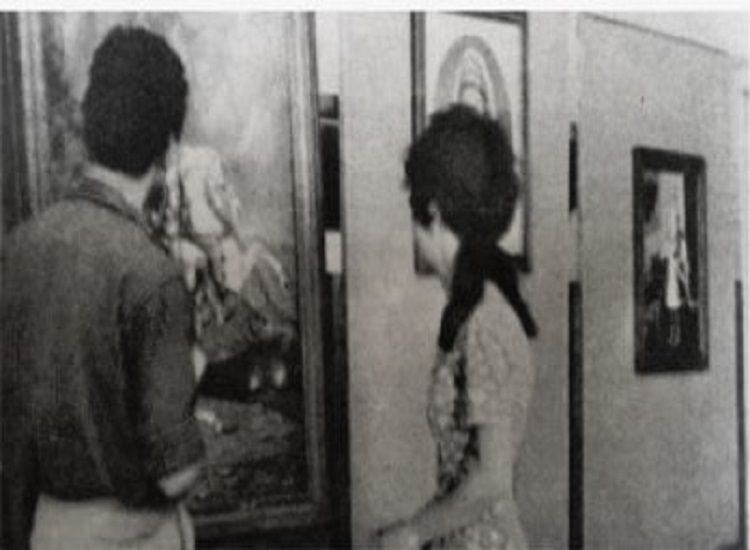
In the beginning I had difficulties because I didn’t know them. Over the years I became friends, I was and remained careful in my relationships with the artists, never exchanging words with them. It happened that they waited at the door when I opened and closed the shop. They came not only for paints, but also as a spiritual communication, since the environment had space, with neon lights, large glass windows, plenty of light, purposely to see the works of art exhibited there well. They looked at the paintings hanging on the wall, commented, discussed with each other about the artistic realization.
Do you remember who came there most often?
Being in the center, I recall it was frequented by everyone, from Abdurrahim Buza, Odhise Paskali, Andrea Mano, Janaq Paço, Guri Madhi, Kel Kodheli, Sadik Kaceli, Foto Stamo, Hysen Devolli, Nexhmedin Zajmi, Sali Shijaku, Janaq Kilica, Danish Jukniu, Ismail Lulani, Nestor Jonuzi, Trebicka, Zef Shoshi, and many others, I find it hard to remember them all. Many of them also exhibited their works there. But also from other cities. Or even well-known writers, from Dhimitër Shuteriqi, Dritëro Agolli, Petro Marko, singers, actors, composers, or other professions, well-known personalities of science, academics, architects, doctors, professors, passed by, stayed there. There were cases when they even bought.
What memories do you have from those years?
For the painters, sculptors, artists of those years, I sacrificed my home, my family. Twice a day I opened and closed the shop, it was my home. I spent more time there than at home. My first daughter raised the two sons who were born after her. I still preserve today the friendships with the painters’ families, their children, who have not forgotten me. They accompanied their parents when they came to me. I have some paintings that were given to me as gifts; I keep them as precious memories from Guri Madhi, Foto Stamo, Dhimitraq Trebicka, etc.
Until when did you work in that shop?
Over 20 years I worked there. Twenty years felt like twenty days to me. September of 1991 was when I handed over the shop, I retired. On September 1st of this year I turn 85 years old and it is a full 30 years since I parted with that art salon, very special for the time, the artistic life of Tirana mainly, but also for those who came from other cities. I still feel the smell of paints and I feel as if I still communicate with those painters and their generation. / Memorie.al