Memorie.al / Every time I pass that street, mainly in recent years, I see with regret the demolition of that building. Some people selling used items with several tents in its yard, buyers coming and going, and a few family members living there, in those not at all suitable environments. It always comes to my mind, the beautiful building, when I was young, a teenager, then growing up, always with the stories, the history, the functions it performed, along with the people who worked there. Everything was attractive, when every time we passed that street, “this was Radio-Tirana”, we would say. With a location behind the Ministry of Education, near the Writers’ League, creating a beautiful education-culture triangle. That’s how I remember it, even more so when I see photos of the time. Not only me but also my generation of that area, neighborhood, including “Rrugë e Kavajës”, “Rrugë e Durrës”.
Then, that four-story building, opposite it, with family members on the upper floors and the Dry Cleaners on the first and the beautiful one-story villa next to it. From that time, only the arched building at the top of the street, the former Radio Tirana, and that four-story building remain. Meanwhile, few may know that once, half a century ago, Radio Tirana and TVSH coexisted for several years’ right there, this in its early stages. In fact, they were opposite, separated only by a road that connects Kavaja Street with Likajve Square, known because the film “Debatik” was shot there, the dramatic episode when Coli is killed, with the coachman, actor Besim Levonja, who takes him in his arms.
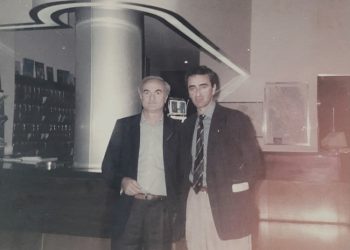
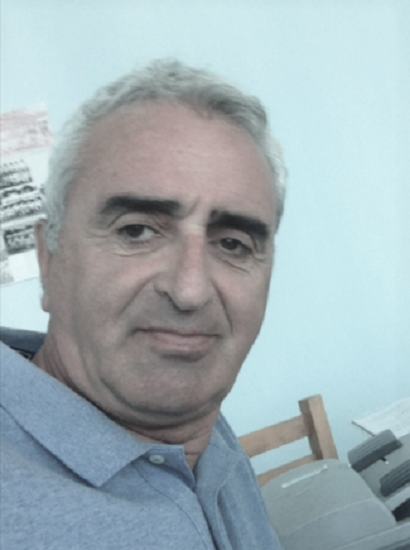
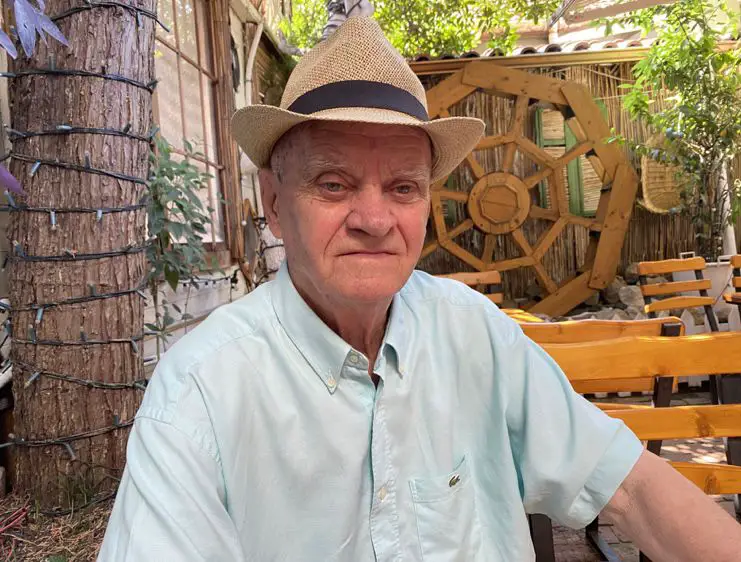
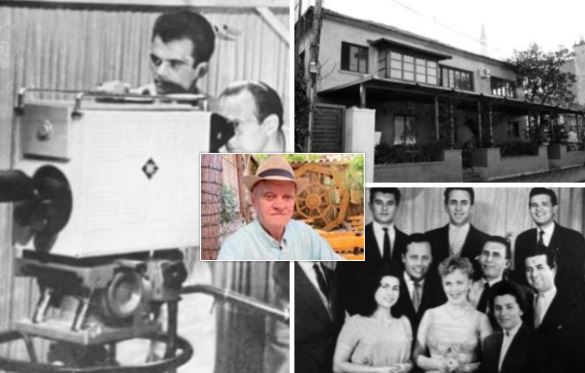
To bring back once again what has been forgotten about the history of those buildings, I met with an acquaintance, a family friend, a name, a public figure, Beqir Dërhemi, the former first historical cameraman of that television, of that coexistence that began in 1960, of the last century. How that coexistence functioned, what was the first administration, the leaders, the announcers, the staff, the people, the contributions, the stories, the first announcers and Dërhemi’s experience at the Albanian Radio-Television, but also at RAI, where he was trained in those difficult years. Although 86 years old, but who does not show his age at all, thanks to his health and memory, Beqiri recounts that period, how they ran from the stairs of the former Radio, to go to the villa opposite it, a connection with the newly born name, Albanian Radio Television.
“I lived through both periods of that Radio-Television coexistence, as if they were close to ‘Rruga e Kavajës’ even when they came and joined again to the current building”, says Dërhemi at the beginning of our conversation with him.
Mr. Dërhemi, what were your first contacts with the world of film, cameras, tripods?
I worked at the “Shqipëria e Re” Film Studio, as an assistant operator. At that time, there was a reduction in employees there that also affected me. In the spring of 1960, I met Jani Nano, with whom I had worked a little while before on the film “Fortuna”, as an assistant, I held the tripods, cameras, etc., together with several Albanian and Soviet operators, a group of over 15 people, where I learned a lot, especially from the Russians. Jani, had just started as an operator on the television that was to be opened, an orientation given by the Central Committee of the Albanian People’s Party that Albania, together with Radio Tirana, should have a television, centered in the capital. I don’t know how he found out that I was unemployed; he met me and told me that he was preparing to open the Albanian television channel, which of course was experimental at that time. At the same time, he encouraged me to go together to the directorate, which at that time was at Radio Tirana, a building at that time with a special structure, which had once served as Radio Tirana, and which still performed that function. At that time, the radio directorate also covered television, of course being very close.
Who did you meet when you went there and what did they tell you?
We go, climb the stairs, ask to meet a manager, they take us to the second floor, to the deputy director Ymer Minxhozi who, as soon as he was informed that I was a semi-specialist, immediately went down to the director, Petro Kito, a very kind man. We entered the office, after talking to him about the problem, he showed himself willing, ordered me to start working, saying; “we need it”. It was April 29, 1960, and everyone was busy working on assembling the equipment, because that day at dinner at 5:00 or 7:00 p.m., I don’t remember exactly, they were going to do a test and we broadcast the image with live sound for the first time, along with the Albanian Television logo, a hammer and sickle. I wasn’t even 22 years old. To assemble those equipment and then two more times, two more specialists came, with them a woman director from East Germany.
How do you remember the first day that broadcasts began on that television?
Everything in the one-story building opposite the radio station, that’s where Albanian television originated. On May 1, 1960, the inauguration took place. Initially, three times a week, alternating days, only Sunday was fixed. It was the radio employees who provided experience, helped, serving in those difficult, uncertain and unknown beginnings for television and for technicians and operators. After the opening slogan, the announcer would announce the usual phrase: “Dear viewers, we are starting the broadcast of programs on Albanian television”. The first was Stoli Beli, who was also an editor on the radio. It was followed by a fairy tale, a children’s film, and then a scientific documentary that we received from the Kinostudio, or a feature film, until the end of the program. Of course, the news program too.
You have experienced both buildings, when they were opposite each other.
It was the former Radio building that was to be restructured, an initiative that was worth congratulating a lot, and opposite it, a one-story villa, extremely beautiful, but which does not exist today, parallel, a wall separated us from the four-story one. That villa served for several years as the building of the first Albanian television, in its experimental beginnings. With a front entrance, with a few stairs, a veranda, a living room, which joined the four rooms? One became the news studio, where the cameras were, the other was used for sound with the relevant equipment, two tape recorders; the kitchen was for the speakers, for broadcasting, with various equipment, for slides, subtitles, etc. A room also served for improvising shows, with a piano in the middle of it that accompanied when singers from the Opera Theater were invited to sing folk songs, lyrical songs, etc. The Puppet Theater was also improvised here. A room where the camera control was, the director’s desk with the director, the broadcasting equipment for all television production.
What was the equipment that was initially installed on that television like was they purchased new, or was it aid from Eastern European countries?
In the radio building, along with the television equipment, the equipment was half-expired; we know how we worked with them. It was the chief engineer Emil Plumbi, who as chief technician, dealt with them, very old German, Russian and Czech equipment, which had been given as a kind of aid, things that were used up, not bought, and with problems, constant defects. It was a used East German camera with a mechanical system, which in one or two hours, the lamps would heat up, and we were forced to stop working. It meant staying one or two days without broadcasting, until it was fixed. The problem was the transmission of sound and image simultaneously and directly. I remember the presence of a 35 mm film camera. Liri Çeli, Ilia Capo and Vezir Hoxha worked there. While Jani Nano commanded a Soviet apparatus that connected the transmission equipment to an antenna installed on the terrace of the radio building where it is today, from where the signal was distributed. Only for Tirana, even at a close distance of a few kilometers. There was no question of other cities.
An administration for both institutions, like today?
Of course, if we were to draw a parallel, fixed like today. Since they were opposite and next to each other, both institutions, as an administration, were together, but television was considered a job of complaint, without much interest, like an orphan child. Liri Çeli was in charge, editor-in-chief on Radio, as well as on Television, mainly for youth and culture shows. Stoli Beli, as I said, performed the role of announcer on TV, and at the same time editor on Radio, for the children’s show. In addition to Stoli Beli, there were three or four other announcers, who alternated.
How often were the daily news broadcasts and who were the first speakers?
The news was given only once a day. They were those of the radio, by Vera Zheji, Polivaq Lino, then Kiço Fotjadhi, these were the first to appear on the screen, as speakers of the news show. The edition was no more than 20 minutes long, without filming, but with photographs, mainly of ATSH. There were attempts to bring in other foreign announcers, such as Loredan Bubani, the son of the former first director of the former Radio Tirana, Gjegj Bubani.
Television, work, but also higher education for you?
I was working and continuing my university studies, because I had free time on television three times a week. The reason for me to start higher education was the director Petro Kita, when one day he called me and said: “Beqir, what high school did you go to”? – “Artistic Lyceum”, – I said. – “Why don’t you continue higher education” – he said to me? – “Yes, I want to start” – I replied. It was September and three or four weeks had passed. “Which branch do you want to go to” – he asked me? – “In Language and Literature” – I said. He called Thoma Deliana, Minister of Education, and the next day I registered at the faculty.
As far as I know, have you experienced a special story, that of the son of the former director of the former Radio before 1944?
Indeed, when he started as a television announcer. It was a coincidence, a coincidence of course and kindness on my part. Loredan Bubani was his name, we were together at the Faculty of Language and Literature, I knew him well and I knew whose son he was. We became very friendly, I knew his abilities, and he had a clean diction in his speech, perfect for television. Seeing the need for announcers, one day I suggested he come there. He came, did a test and they liked him, they agreed, but without knowing his biography. He appeared on the air several times on the news show. When after a while, the director, a good man, a gentleman, although a party member, suddenly calls me and says: “Beqir, you have brought here a very good announcer, do you know whose son Loreadan Bubani is”? – “Yes,” I answer, “the son of the former first director of the Radio”, – whom I knew that the communist government had unjustly imprisoned, but without telling anyone about this past of Loredan’s father, when I introduced him, I brought him there. As soon as they were informed, they removed him, they immediately removed him. The year was 1962.
What did you broadcast on experimental television at that time, spectacles, sports, or…?
I remember that we made an attempt, for the first time, to broadcast the Second Song Festival on Radio Television, in 1962, when it was held at the Higher Institute of Arts. So we are still at the villa, imagine what difficulties, but desire, passion pushed us, although the conditions, the equipment were extremely primitive. We transported the cameras, along with the mobile tripod, extremely heavy, several quintals, so nothing was easy. But we failed to broadcast it because we were unable to connect to the antennas, so, only for technical issues. While we also provided the weather, “Koha sot dhe meghedë”, which also originated in experimental television, was made by Petrit Leka, a well-known name, who later continued it in the new TVSH.
What about the set painters or other artists who worked or were active there, who do you, remember?
We had some because they were very important, because they illustrated with figures, drawings prepared before the show started, or were accompanied by drawings directly from the painters, on a white paper placed on a board. I remember the painters Namik Prizreni, Bardhyl Fico, Dhimitër Vesho, Orhan Bega, etc.
And from the singers, who do you remember?
In those small and modest studio rooms, Mentor Xhemali, Marie Kraja, Stavri Rafael, Avni and Nina Mula, Gjoni Athanas, Gaqo Çako, Ibrahim Tukiçi, Vaçe Zela, Luçie Miloti, Hafsa Zyberi, Fitnete Rexha, Anita Take, etc. sang. With them also the pianists Lola Gjoka, Maria Rafael, Boris Plumbi, Lili Tafaj, Isuf Kazazi.
And from the actors of that time, who was first active on Television?
From the actors of the Puppet Theater, to that of the National Theater, the State Stage, that of the Soldier, with reduced sketches, recitations, by Naim Frashëri, Margarita Xhepa, Pjetër Gjoka, Liza Vorfi, Loro Kovaçi, Viktor Gjoka, Drita Pelingu, Lazër Filipi, Mihal Popi, Skënder Sallaku, Mepomeni Çobani, Myftar Armiri, Dario Llukaçi, Lin Noka, etc.
After you failed in your first attempt to broadcast live an event such as the Second Song Festival on Radio-Television, did you ever try for such a thing, in any other activity of that size?
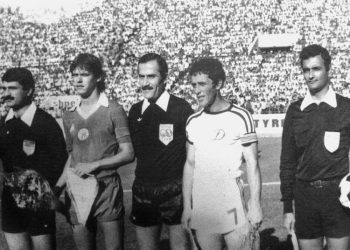
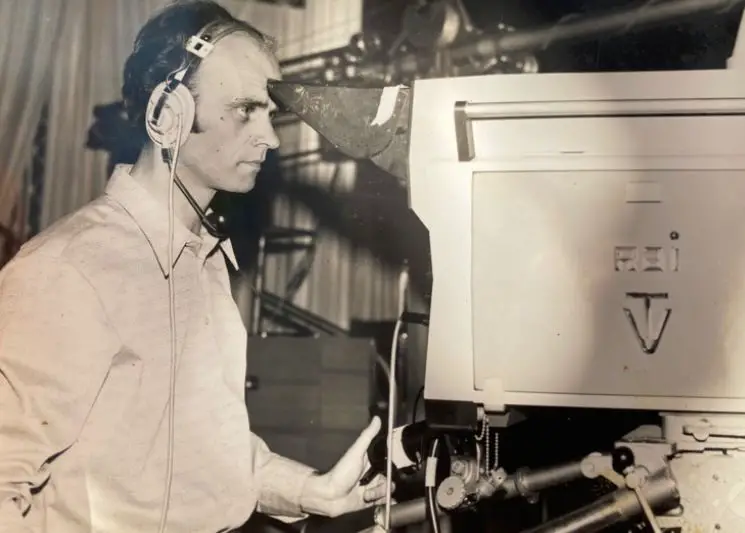
The next attempt was for a football match. This first one was also in 1962, at the National Stadium “Qemal Stafa”, a national championship match. We set up the heavy tripod, and usually either the whole match or half of the match was broadcast, depending on the camera. There was a period when a couple of three matches were broadcast. We used an old camera, which they allowed us to place on the stairs where they came out, there was a rest area, and in one of these meetings, halfway through the first half, the camera caught fire. Between a switch, I managed to turn it off and with headphones I told the director to close the broadcast, telling him the reason.
Ramiz Alia was also there. I go down to the track to watch the match, the first half is over, when Gani Kodra comes and says to me: “Beqir, come, friend Ramiz is looking for you”. I went immediately and; “What happened”, he asked me. I explained, saying; “an old thing, it happens”. Surprised, he asked me; “how much does a new one like that cost”? I didn’t even know what it was worth, but; “1 thousand dollars” – I told him. –“Why are we bad for 1 thousand dollars”, he replied before I could finish my sentence! From that moment, the need became urgent, so a camera was ordered from Thomson Hutson. The company’s chief engineer came from France, we made the contract and without delay the new one arrived, which cost more than ten thousand dollars. An advanced camera for the time, semi-mechanical, with three lenses, one of them variable with a kind of uniform mobility. After it, a portable “Philips” camera, with which we recorded the Gjirokastra Folklore Festival.
Let’s go back to the experimental television studios, to the one-story villa, how did the work continue, were there any other problems with the equipment installed there?
We had problems again, since it was not impossible for the equipment to go out for filming outside the studio. So, not even the parades for May 1, November 28-29, were filmed by television, only those attempts for the festival, the sport that I told you about. We invited them to come there, for example, Gani Luzi’s company, it was the most systematic. They demonstrated made instruments, small things, ornaments. The deputy director would come, his name was Nasi, who would explain and talk and we would exhibit them. Likewise, the porcelain company, the artistic one “Migjeni”, etc.
How did it work, what was the process regarding the cameras, the cameramen?
There was no other cameraman on the old television, only I, sometimes Refik Veseli replaced me. The musical theme was found to be “Scythe and Hammer”. At that time in Tirana, there were no more than 200 black and white televisions in circulation, of which the families of the leadership had the most. There were some Russian brands such as “Rekord”, “Temp”, Hungarian “Orion”, with small screens.
During the time you worked on television, did you have any occasions to go out on business trips or visit abroad?
The first time I went abroad was in Kosovo in 1971, and I accompanied the troupe of the People’s Theater, who was performing there the play “Cuca e Maleve”. A magnificent reception, I was left speechless, out of love for us. We returned, I did the report, Thanas Nano, the General Director, saw it, he liked it, removing a few parts. Then in RAI in 1973, a big surprise, a pleasure, something rare, when they sent me to specialize in Italy, together with the painter Edi Hila. We stayed for three months, where I was lucky enough to assist, an employee at the RAI studios, and to benefit by gaining valuable experience. When we arrived, I brought a television, some clothes, but there was noise, as it happened, many comments, rumors, a difficult situation was created: “where did you find the money, who gave it to you”, etc., questions like these, as if we were in an investigator.
And for the matches of our sports teams, or the football team, did they send you abroad?
Before we went to Kosovo, in June 1971, in Karlsruhe, the Germany-Albania football match was going to be held and as it happened, the word came up, and the television assigned me and Ismet Bellova. To film the match, not to broadcast it. It was a time when television, in addition to electronic cameras, also received “Bolex” film cameras from Switzerland, then “Ariflex”, film cameras, etc. We prepared, but neither Ismet nor I went. They fired us, it was their job, I still don’t know the motive. A few months later, the deputy director Klimi Misja called me to the office and said: “Beqir, get ready tomorrow because you’re leaving for Kosovo”. As a young man, I reacted without thinking long: “Director, from Germany to Kosovo? I don’t have a suit” – I said. “But for Germany, did you have a suit”, he asked me with a little humor? But after 15 years of work, I was fired from Television
How did it happen and why were you fired?
I don’t even know today the reasons why we were fired. I was sent to work on the train, Edin to the poultry farm. They only sent us for 6 months, but no, it lasted more than a year. In the meantime, I started trying to find another job. I tried to get a job on television, but they had closed the door, then on Kinostudio, but they said to me; “Why doesn’t television accept you?” From a Party Committee to the Executive, to the Region, everyone rejected me; no one intervened to help me, as it seemed impossible.
Do you remember the other television employees, the one in the villa on “Rruga e Kavajës”?
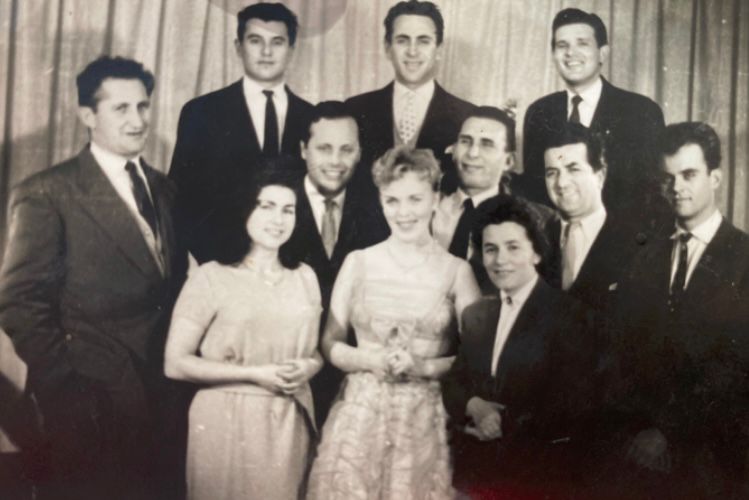
In two and a half years, almost three, at that villa, and the Radio building opposite, where we worked together, I remember colleagues and employees such as; Liri Çeli, Stoli Beli, Katerina Gaxho, Heroina Deliu, Margarita Jançe, Luiza, (whose last name I don’t remember). Then Emil Plumbi, Sali Mensori, Spiro Qirko, Jani Nano, Ilia Capo, Vezir Hoxha, Pipi Naçe, Refik Veseli, Kadri Metohu, Lulzim Topçiu, Gaqo Konomi, Riza Hasimi, Petrit Qylafku, Kostandin Leka, etc. The transfer of television from that charming villa, to the new building, was in 1964, on its first floor, in some warehouse-type environments, not suitable. Later, Western equipment also began to arrive. Until the current modern headquarters of Television was built. Memorie.al