-Testimony and international legal documents-
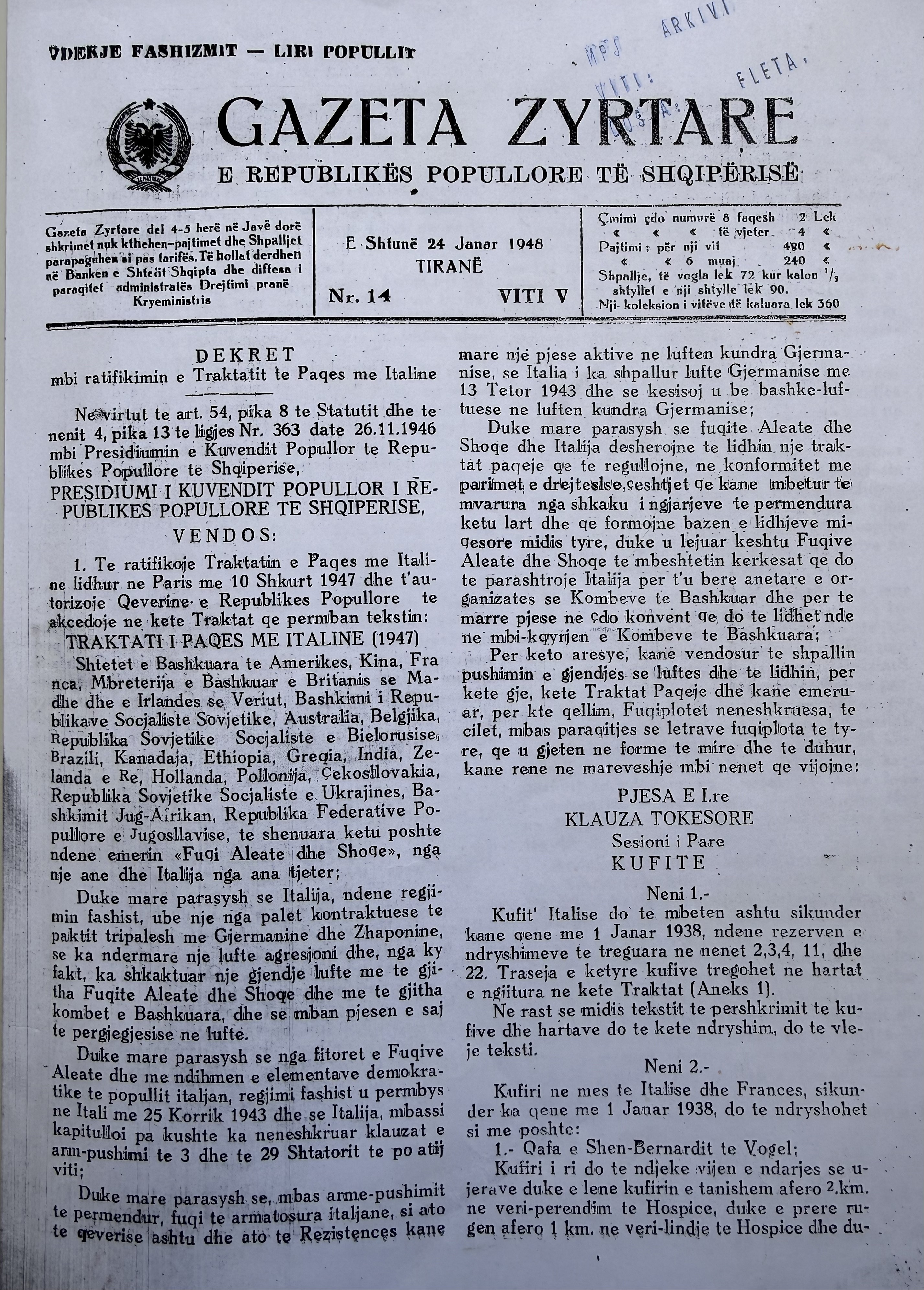
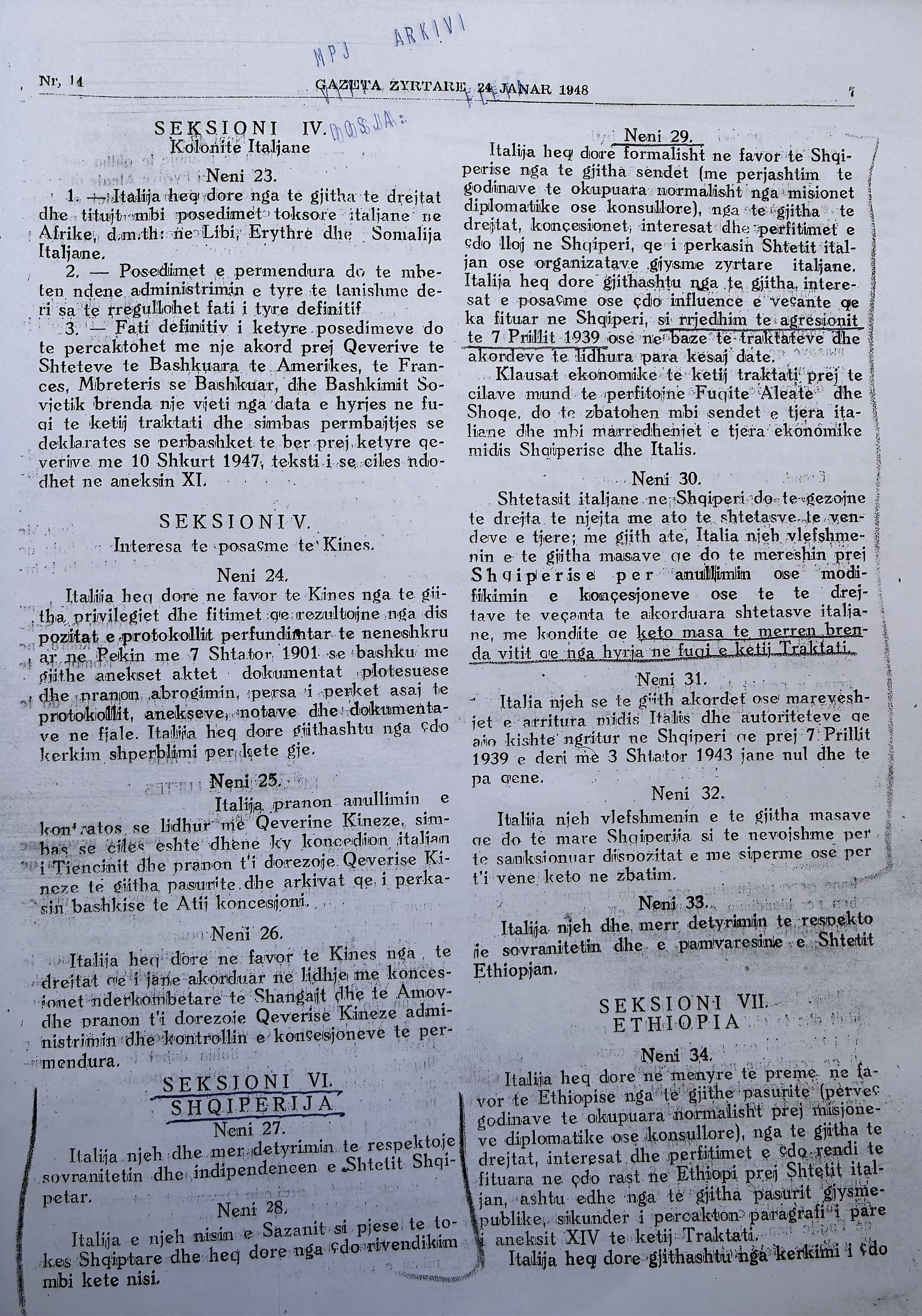
Memorie.al / In the Peace Treaty with Italy, concluded in Paris on February 10, 1947, written in black and white and signed by the 20 allied and Associated Powers of that War on one side, and Italy on the other: “Italy committed military aggression against Albania on April 7, 1939”! Even today, after three-quarters of a century, the history of Albania in relation to World War II is written either on ideological alibis or on historians’ conjectures, but not on the basis of international legal evidence. In the Central State Archive, there is the document whereby the Presidium of the People’s Assembly of the People’s Republic of Albania, by Decree No. 480, dated October 9, 1947, decided the ratification of the Peace Treaty with Italy, signed in Paris on February 10, 1947, and authorized the Government of the People’s Republic to accede to (accept, become a party to) this Treaty, in which it is determined that: “Italy formally (officially) renounces in favor of Albania, from all assets (with the exception of buildings normally occupied by diplomatic and consular missions), from all rights, concessions, interests, and benefits of any kind in Albania belonging to the Italian State or to Italian semi-official organizations.
Italy also renounces all special interests or any particular influence it has gained in Albania, as a result of the aggression of April 7, 1939, or on the basis of treaties and agreements concluded before that date (Part I, Section VI, Article 29).
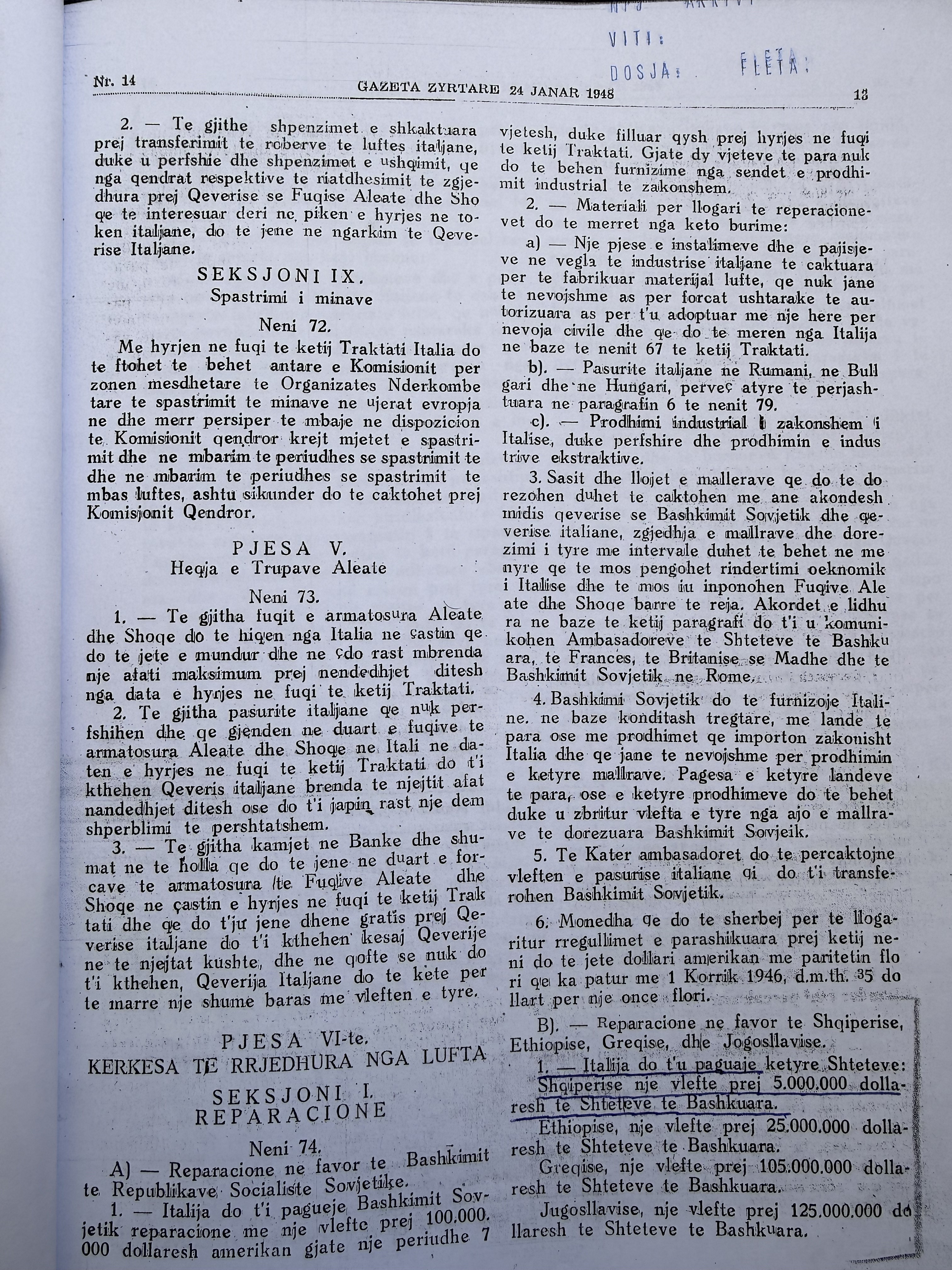
In the Peace Treaty with Italy, written in black and white and signed by the 20 allied and Associated Powers of that War on one side, and Italy on the other: “Italy committed military aggression against Albania on April 7, 1939”! In support of the above, the Peace Treaty with Italy obliged “Reparations in favor of Albania… to the value of 5,000,000 United States dollars (minimum 67,500,000 dollars today)” (Part VI, War Claims Arising from the War, Section I, Article 74, point B/1).
Thus, the fact of aggression is also supported by the punishment imposed on Italy through the payment of reparations, while no one has accounted for where this amount was collected. Simply put, why has this Treaty not been mentioned until today? Who was interested in not mentioning it in official documents and historiography?
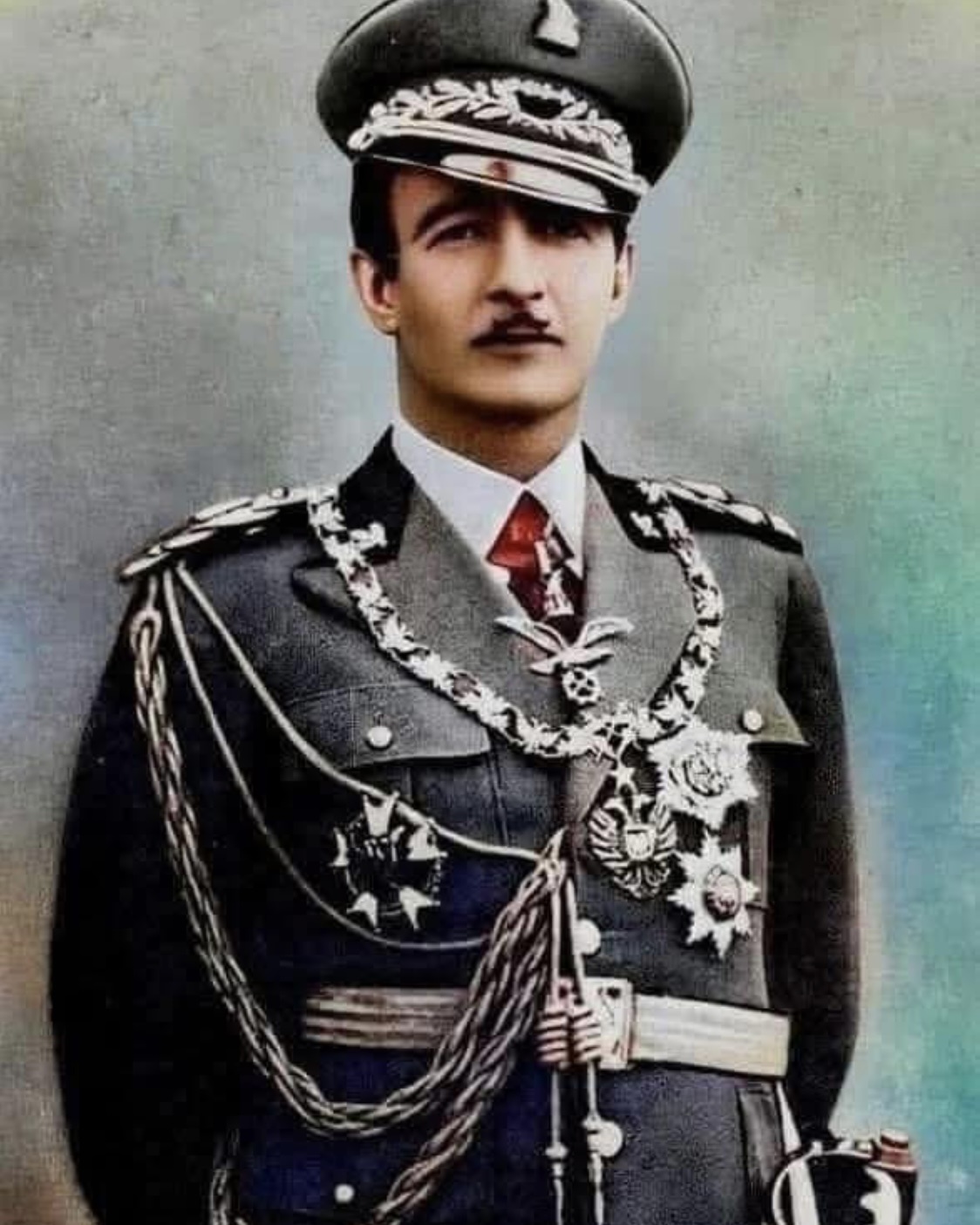
Communist historiography, contrary to this inalienable international legal evidence, fabricated alibis about the relationship of King Zog I with Italy, as if he sold Albania. But if King Zog had “sold” Albania, then Italy would have come to Albania with tourist yachts!
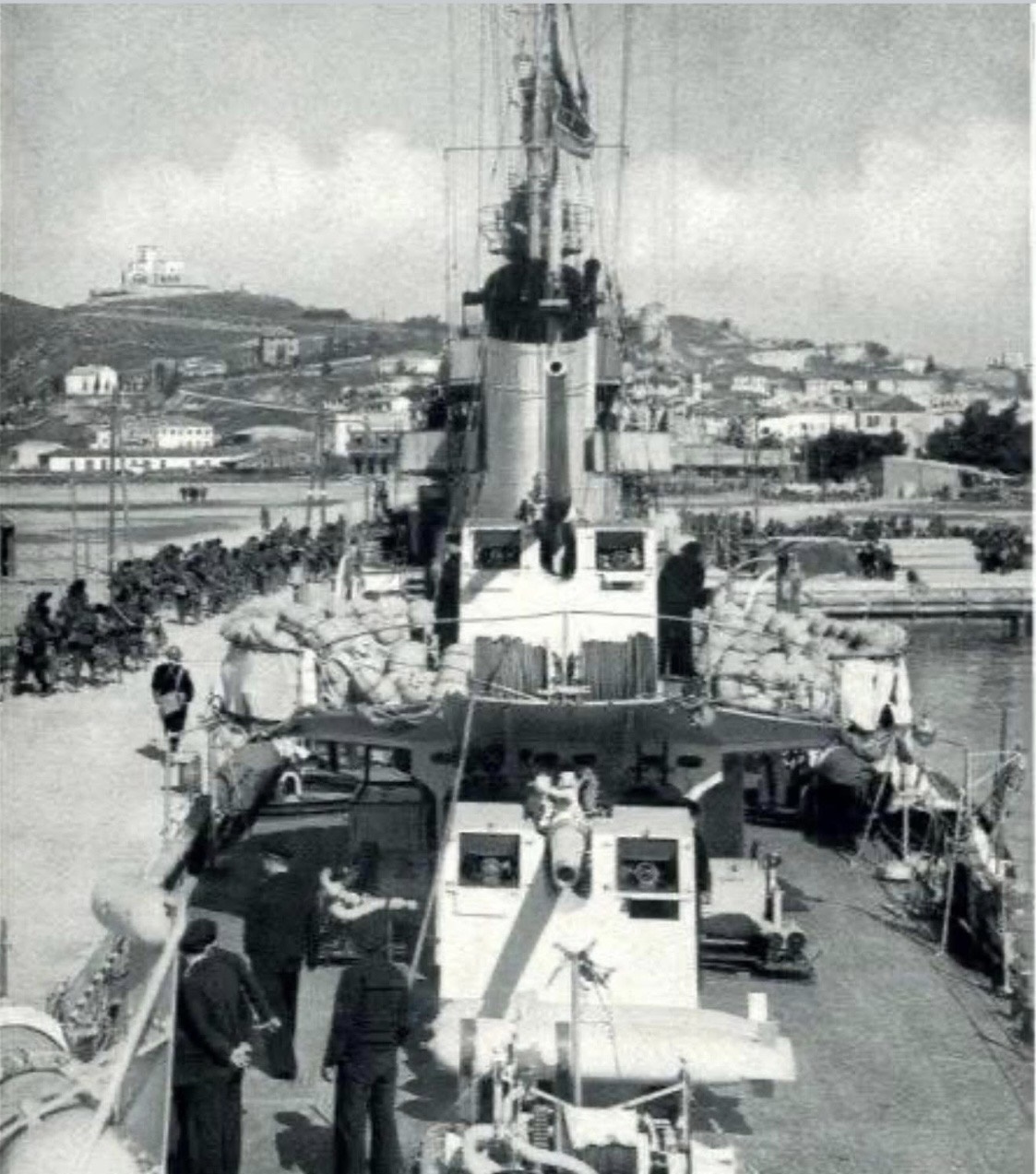
But it is universally known that Italy invaded Albania with a militarily well-studied plan, through a genuine military operation, even elaborated in the General Staff of the Italian Army under the official code name; “Oltre Mare Tirana” (Beyond the Sea Tirana), where the forces of large operational units were engaged, with over 25,000 soldiers, hundreds of warplanes, dozens of warships, etc.
On the other hand, the dignified resistance of the Albanian army and gendarmerie under the leadership of Major Abaz Kupi, one of Zog’s loyal military officers, is officially proven. So, we are dealing with two completely opposite political-juridical-historical determinations: “Sale of Albania” or “Aggression against Albania”? Because two concepts and determinations that exclude each other cannot coexist.
If we were to accept the communist thesis that Zog “sold” Albania, then we would also have to accept the thesis that he, quite naturally, would go to settle in some villa in Italy, where they would greet him with flowers. But, as clear as sunlight, Zog did not set foot in Italy. On the contrary, he chose to stay and work for the anti-fascist war precisely in Britain, the state that led the war against fascism and Nazism.
From there, the Albanian King exercised his anti-fascist and anti-Nazi commitment, through active diplomacy and the activation of Legalist forces within Albania, in support and backing of the Great Anti-Fascist Alliance. Meanwhile, the loyal forces of the Albanian King in this war, led by Abaz Kupi, continued the anti-fascist resistance, precisely during the period when no other political force had started this war.
Abaz Kupi preserved the legacy and loyalty to the King, continuing the anti-fascist resistance even further and, at the same time, agreeing to cooperate with the other anti-fascist military forces of the country, even as an equal member of the Anti-Fascist General Staff.
Thus, impartial history, documented history, even with authentic international and national documents – i.e., not fabricated history – has all the evidence and political, legal, and military reasoning that Italy committed military aggression against Albania on April 7, 1939, and that the Albanian Kingdom was the promoter of resistance against this aggression and, further, of the Anti-Fascist War.
It is a historical fact that, when King Zog ascertained that Italy had far-reaching expansionist aims against Albania, he did not accept the Italian fascist invitations, demands, ultimatums, or pressures to tie Albania perpetually to the so-called “joint defense treaties”, which were political instruments preceding military invasion, a “strangling embrace of Italy”, as one researcher would characterize it.
Italy perhaps prejudged King Zog as a statesman who might “give in under Italian pressure against his will or his own interests.” Within this prejudice, the Italian side had thought that financial threat could be used as pressure to accept the renewal of the Treaty and that “the policy of tightening the screws, cutting off aid, i.e., suspending the disbursement of the loan installment… would be the Archimedean lever that would break the King.” But these pressures, as has been proven in many documents, did not succeed in shaking his irreversible stance.
It is also proven by authentic documents that “from mid-February 1939, Albanian-Italian relations took a turn for further deterioration, when the King of the Albanians began to play with open cards” and that in the face of King Zog’s efforts to denounce Italian subversive activity, the Italian side sought to asphyxiate him through its efforts, even to eliminate King Zog, as the main obstacle to the invasion plans.
Communist historiography, and even later historiography, has anathematized King Zog’s departure from Albania, as if this departure constituted “abandonment of the anti-fascist war.” But with sound reasoning, not blind reasoning, we find that Haakon VII of Norway, who refused to submit to German pressure in World War II that asked him to abdicate, inspired the resistance of the army, went into exile in England, and returned from exile to Norway in June 1945, thus enjoying the respect of the Norwegian people.
Approximately the same ordeal was undergone by Queen Wilhelmina of the Netherlands. Likewise, King Leopold III of Belgium remained in the country but, due to German military supremacy, was forced to perform an act of surrender, which cost him a long, painful, and humiliating political ordeal until his abdication from the throne. Whereas King Christian X of Denmark remained in his capital throughout the German occupation of Denmark, accepted by the Germans, but inspiring a silent popular resistance.
Then, sound reasoning in Albanian historiography should also write in large letters that Zog’s departure from Albania was an expression of non-acceptance of aggression, not an expression of its acceptance. By this act, he saved the prestige of the Albanian State as a legal subject in international law and of the country, as well as of the King himself, the highest head of this state, from humiliation by the fascist or Nazi invaders, which would have been, in fact, a humiliation for the entire Albanian nation.
The Peace Treaty with Italy obliges that; “Italy recognizes that all accords or agreements reached between Italy and the authorities it had set up in Albania from April 7, 1939, until September 3, 1943, are null and void.” (Part I, Section VI, Albania, Article 31). This means that, if the Great Powers had not decided otherwise in Yalta, the legitimate constitutional and legal order from before World War II would have been restored in Albania.
Therefore, it is the duty of the relevant state institutions and official historiography to interpret the history of Albania in relation to World War II on the basis of international legal evidence, not on the basis of ideological alibis. History is not made with alibis or ideological justifications. / Memorie.al