By Bashkim Trenova
Part Ten
NAZIBOLSHEVISM – LITERATURE AND THE ARTS
PREFACE
Memorie.al / Historians, political philosophers, intellectuals of different schools or different positions have devoted thousands and thousands of pages, entire volumes, studies and articles to the comparison between Nazism and Communism. Generally, their publications and studies focus on the police control of society by these dictatorships, the role of the dictatorial state hierarchy and the head of state as suppressors of free thought, the omnipresent place of official propaganda in society, the mass massacres and the network of concentration camps, the activity of the police, the NKVD in the USSR (later the KGB) and the Gestapo in the Third Reich. In his book “Le Passé d’une illusion” (The Past of an Illusion), François Furet notes that Nazism and Communism share the same opposition to liberal democracy and to what they call “capitalist bourgeoisie”. Both ideologies claim to be socialist and use the image of socialism. Communist countries called themselves “socialist”. “Nazism” is an abbreviation of National Socialism.
Continued from the previous issue
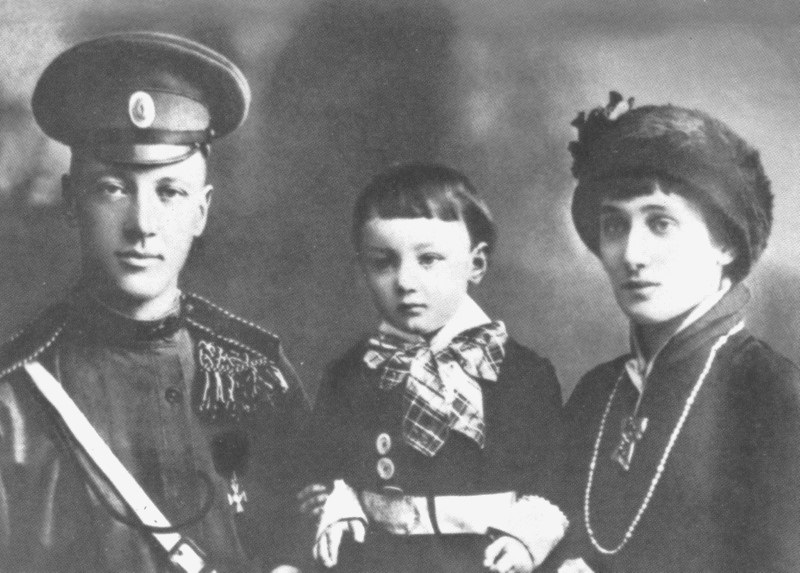
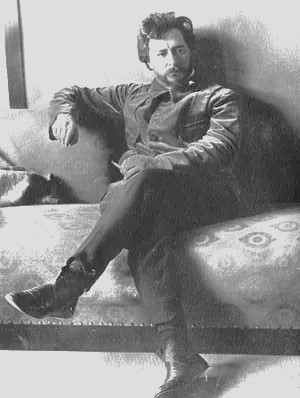
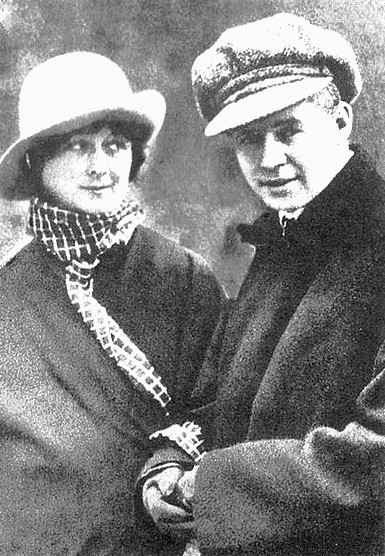
In 1919, the writer and photographer Leonid Nikolaevich Andreev committed suicide. In 1921, the poet Nikolai Gumilyov, husband of the poetess Anna Akhmatova, was shot. Boris Viktorovich Savinkov was killed by GPU agents in 1925. The poet Sergei Yesenin also suffered a sad fate. In the wave of an antisemitic campaign, Yesenin was threatened with a trial. After suffering a nervous crisis, at the end of 1925 he was admitted to a psychiatric clinic, from which he obtained a certificate confirming that due to his health, he could not be interrogated in court. Immediately after that, he left, went to Leningrad, where he hanged himself at the Angleterre Hotel on December 28, 1925.
Yesenin’s death did not prevent the state authorities from restarting a campaign against him. He was accused of corrupting youth. The communist authorities, who viewed Yesenin’s poetry, “hooliganism” and individualism with suspicion, condemned the author’s creative work. They declared Yesenin’s poetry to be in opposition to the doctrine of Socialist Realism and banned his publications. Regarding the end of Sergei Yesenin, besides the official version, there exists another version, supported by many experts, according to which the poet was killed by the Soviet authorities.
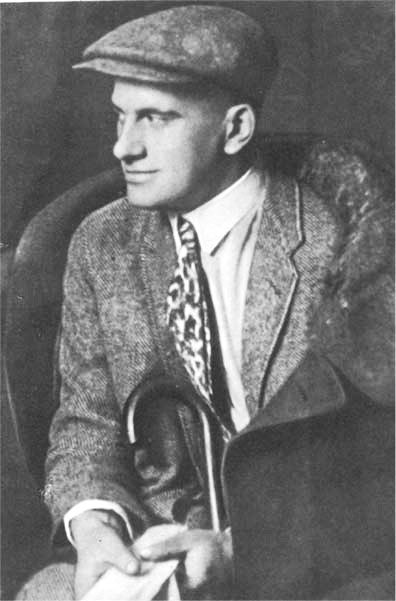
Another poet, also known as the “poet of the revolution”, Vladimir Mayakovsky, exhausted, at the age of 37, shot himself in the heart on April 14, 1930. He wrote his epitaph two days before his death: “The boat of love has crashed against life. As they say, the case is closed. You and I are quits. Blame no one for my death. The deceased hated gossip. To hell with pains, sorrows and mutual mistakes! Be happy! …this is not the way (I do not recommend it to anyone), but for me there is no other possible way.”
Evgenia Iaroslavskaia-Markon was shot in 1931 in a gulag on the Solovki Islands. Yuri Dombrovski, starting from 1932, was arrested five times. He spent 25 years of his life in prisons and as a persecuted man. In 1933, Anatoli Rybakov was arrested and sentenced to 3 years of exile, without the right to return to Moscow; otherwise he risked a second arrest. In May 1934, Osip Mandelstam was arrested, ending up in a concentration camp near Vladivostok, where he died broken and hungry. According to another variant, he was shot. The fact is that his body, thrown into a mass grave with other victims of the regime, has not been found to this day.
The writer Boris Savinkov, after being arrested by the Cheka in August 1934, according to the official version, committed suicide in the Lubyanka prison in Moscow. In 1937, Evgenia Ginzburg was arrested, ending up in the Soviet gulags. The same year, Kataev Ivan Ivanovich was arrested, as well as the poet Nikolai Oleinkov, who was shot on November 24, 1937. The year 1937 did not spare Varlam Shalamov, writer, poet, journalist either. After being arrested on February 19, 1929, and after being sent for three years to a labor camp in Vishera, in the Central Urals, January 12, 1937 returned him to the Gulag, in Kolyma, a region in the Far East of the USSR, above the Arctic Circle, known as; “the place of white death”!
Poor Shalamov, weakened, ill, dies in a psychiatric hospital in Moscow. Arrested in 1930, Isak Ilich Rubin was shot by the GPU in 1937 in the Aktiubinsk prison. In the same year, on October 28, 1937, Boris Pilnyak was arrested. He was shot on April 21, 1938. Nikolai Alekseevich Zabolotsky, writer and poet, was sentenced in 1938 and sent to the Gulag in Siberia. He was temporarily released in 1944. In 1953, Zabolotsky was interned again. On August 31, 1941, in exile in the Republic of Tatarstan, alone, unemployed, the famous Russian poetess Marina Tsvetaeva also hanged herself. Her grave remains unknown to this day.
In the land of the Soviets, no one, even the most loyal, could feel safe, untouchable, unhumiliated. After a deep disappointment, on May 13, 1956, three months after the 20th Congress, the chairman of the Union of Soviet Writers, Alexander Fadeyev, would end his life by suicide with a firearm at his home in Peredelkino. Fadeyev’s farewell letter, addressed to the Central Committee of the Communist Party of the Soviet Union, confiscated by the KGB, was not published until 1997.
In this letter he writes: “I see no possibility to continue living, because the work to which I devoted my life has been destroyed by the ignorance and arrogance of the party and can no longer be corrected. […] My life as a writer loses its meaning, and I, with great joy, escape from this disgusting existence, where vileness, lies and slander fall upon you. My last hope was to be heard by the men who govern our state, but in the last three years, despite my requests, there has been no one to receive me. […] I ask to be buried next to my mother”!
As a parenthesis, we may add that besides many writers and poets, millions of Soviet citizens and peasants have passed through and left their bones in the prisons or gulags of communism. This reality, of course, cannot be found in the literature of Socialist Realism. This does not mean that it has not been treated. It has been done, but always respecting the chains of communist happiness, of the new life and of the unspecified, utopian, deceptive bright future. We find this, for example, in the novel “Наказание без преступления” (“Punishment without Crime”) by Alexander Advyenko.
On its pages, speaking about life in the concentration camps or prisons of the Bolshevik dictatorship, the author writes: “The barracks have been carefully whitened. The passages are covered with yellow or white sand and are surrounded by grass and flowers…! Everywhere you see benches painted white, where healthy and cheerful people are sitting. In the barracks you see bunk beds with thick mattresses, sheets and blankets, clean pillows. The table is set with a clean tablecloth. There is also a wall newspaper. The prisoners, with a cheerful and lively appearance, answer all questions without hesitation. Yes, they have stolen, they have looted, and they are convicted. They have become strong workers, they build terraces, cut trees, do concrete work, build dams.”
Let us continue with the facts arranged chronologically that testify to the constant persecution, imprisonments, internments, exiles of many writers by the Bolshevik dictatorship. Alexander Vvedensky, poet, expelled from the Union of Writers in 1931, was arrested as a suspect on September 27, 1941 and was executed by his escorts at a station in a remote village. Another poet, Danil Kharms, after being interned in Kursk in 1931, was arrested in 1941 for “defeatism” and ended up in a psychiatric hospital, where he died on February 2, 1942 at the age of 36.
After World War II, the Soviet Union of Writers became directly involved in the denigration and arrest of writers, especially in 1946 during the campaign against “apolitical” literature, and from 1948 against those who showed themselves “servile before the West”, against “unpatriotic critics” and against “cosmopolitans”. Consequently, the list of those expelled from the Union of Writers and the exiled, the convicted, will continue to grow. In 1946, this list would include the best authors, such as Anna Akhmatova and Mikhail Zoshchenko. As a result of the antisemitic campaign begun in 1949 by Stalin against intellectuals of Jewish origin, after the dismissal of several hundred of them, on August 12, 1952, 24 Yiddish‑language Jewish writers were shot “for conspiracy against the Soviet people”.
In 1953, the poets Zabolotsky, Smelyakov and Martynov would also be expelled from the Union of Writers. The Russian poet Vadim Kozovoi was exiled to the gulag from 1957 until 1963. In 1958, the Soviet authorities, considering Pasternak, author of “Доктор Живаго” (“Doctor Zhivago”), as an “agent of the capitalist, anti‑communist and unpatriotic West”, expelled him as well from the Union of Writers. Vladimir Semichastny, the future head of the KGB, in a speech delivered on this occasion at the Central Committee of the Communist Youth, accused Pasternak of having, according to him, “spat in people’s faces” and of being lower than a pig, which “never defecates where it eats.”
The list of those expelled from the Union of Writers would continue to grow in the following years. In 1968, Andrei Sinyavsky and Yuli Daniel were expelled from it, in 1969, Alexander Solzhenitsyn, who would spend 8 years of his life in the gulag and then immigrate to France. Further, the list may continue with Alexander Galich in 1971, Vladimir Maksimov in 1973, Lidia Chukovskaya and Vladimir Voinovich in 1974, Vladimir Kornilov and Lev Kopelev in 1975, Raisa Orlova and Felix Svetov in 1980, and others. As Alexander Solzhenitsyn expressed it: “Hundreds of other authors, absolutely innocent, were arrested and the Union of Writers obediently abandoned them to their fate as prisoners and internees.”
We may add here, for example, Bulgakov, Platonov, Grossman, Nekrasov Viktor Platonovich, Andrei Sinyavsky, Ginzburg, Galanskov, Lakhkova, etc. In 1977, the dissident writer Georgi Vladimov, after leaving the Union of Writers, in an open letter, would accuse it of being a “police apparatus”, which persecutes, threatens and punishes authors. In this letter, among other things, Vladimov writes: “Do what serves you and for which you are devoted: suppress, persecute and do not allow. But without me.” They, emphasizes the writer Lidia Chukovskaya, referring to the state authorities and the Union of Writers, “want to frighten…! They want people to deny themselves, to repent, to slander each other.”
In the Union of Writers, as well as in other censorship and control bodies and mechanisms, the KGB with its agents occupied a dominant space. As Vladimir Voinovich would write, the Union of Writers would have “as many colonels and generals as the General Staff, and for the most part, they came from the KGB.” “According to the archives of Lubyanka (seat of the Cheka, OGPU, NKVD, KGB and today’s FSB), about 2,000 writers were arrested, 1,500 of them died in camps or were shot.” For every writer, as well as for every journalist, a file was opened by the control and censorship services, practically by the secret police organs.
The file contained not only all the works and all the public statements of the writers, but also all the assessments, all the criticisms or praises that might have been made about them inside the Soviet Union or abroad, in the press, on radio or television. This voluminous material served the authorities to keep writers under surveillance, to decide on the publication or non‑publication of a work, on granting or not granting a visa for travel abroad, etc.
Even in the post‑Stalinist period, the persecution of writers not accepted by the Kremlin continues in Russia. Thus, for example, the poet Joseph Brodsky, future winner of the Nobel Prize for Literature, was sentenced in 1963 to five years of forced labor under the accusation of “social parasitism”, a branding similar to others used sparingly in the Soviet Union such as: “lustful snake, disgusting mouse, dirty pig, rabid dog”, etc. In January 1968, the Soviet authorities concocted a farcical trial for the intellectuals Yuri Galanskov, Alexander Ginzburg, Alexei Dobrovolsky and Vera Lakhkova. They were found “guilty” because they had published their works not in state enterprises. All four were convicted and dispatched to Soviet gulags or psychiatric hospitals. Another writer, Brodsky, continuously harassed, was expelled from the USSR in June 1972. After a short stay in Vienna, he settled in the United States. Two other writers, Andrei Sinyavsky, a survivor of the Soviet Gulag (former prisoner of Perm), and Yuli Markovich Daniel, also a former Gulag survivor, were arrested in September 1965. Daniel was released in 1970. Sinyavsky was released in 1972. He was expelled from the country and settled in Fontenay‑aux‑Roses (France) with his wife Maria Rozanova. In 1974, he was appointed professor of Russian literature and civilization at the Sorbonne. In 1976, Sasha Sokolov settled in the USA, where he published the novels ‘Школа дураков’ (‘School for Fools’) and ‘Между собакой и волком’ (‘Between Dog and Wolf’).
Another writer, Sergei Dovlatov, would also immigrate to the USA in 1979. Vladimir Voinovich is known for his novel ‘Жизнь и необычайные приключения солдата Ивана Чонкина’ (‘The Life and Extraordinary Adventures of Soldier Ivan Chonkin’) published in 1969 and ‘Антисоветский Советский Союз’ (‘The Anti‑Soviet Soviet Union’) published in 1985. In 1974, after publishing a letter in defense of the dissident writer Alexander Solzhenitsyn, he was expelled from the Union of Soviet Writers, which meant he could no longer publish. In 1980, Voinovich settled in West Germany. In 1981, his Soviet citizenship was revoked. In the following years, on December 20, 2023, at 19:14, in a climate of increasing repression against Kremlin critics, the Russian authorities placed the author Boris Akunin, in exile in London since 2014, on the list of “terrorist and extremist” personalities. He is accused of “terrorism and spreading fake news about the army”. Akunin is a historian, translator, essayist and playwright, author of more than 70 titles, translated into more than 30 languages. He is one of the most famous Russian writers of the last two decades.
“Still, on August 3, 1984, the head of Glavlit asked the Central Committee for authorization to withdraw several books from libraries and from sale: those of Vasily Aksyonov, Georgi Vladimov, Vladimir Voinovich, Alexander Zinoviev or Lev Kopelev, whose citizenship had been revoked as a result of their ‘anti‑Soviet activities’.” In the yesterday’s Soviet Union and in today’s Russia, which dreams of restoring the Soviet empire, no writer has felt or feels safe. The words of Ilya Ehrenburg remain relevant: “If in the Soviet Union writers are still alive, it is because they are the greatest acrobats in the world.”
Notwithstanding the above, it must be said that in the Soviet Union another kind of literature was also cultivated, different from the official or propagandistic one, a secret literature that realistically describes the life of the gulags. It, of course, does not belong to Socialist Realism. There are several authors who, while locked up in the Bolshevik gulags, wrote and subsequently published a series of literary works of various genres, which reflect the hell and horror of these camps.
World‑renowned is Alexander Solzhenitsyn with ‘Один день Ивана Денисовича’ (‘One Day in the Life of Ivan Denisovich’) and ‘Архипелаг ГУЛАГ’ (‘The Gulag Archipelago’), as well as several poems and dramatic pieces in verse. “The Gulag Archipelago” is regarded as one of the major works of the 20th century on the concentration camp system. It was written on small pieces of paper, which were buried in the gardens of the author’s friends. One copy was sent by them to the West. The publication of the work occurred after Elizabeth Voronianskaya, one of his assistants, was found hanged on August 23, 1973. After five days of questioning and torture at KGB offices, she revealed the secret place where a copy of the work was kept. Among the authors of “gulag literature”, we can also list Andrei Sinyavsky, Varlam Shalamov, Yuri Veinert, Yakov Kharoni, Robert Stilmark, Danil Andreev, Pavel Florensky, etc. Another type of clandestine literature is associated with what is known as “samizdat”, i.e., self‑published books and magazines, which were spread by word of mouth in cultural circles and largely escaped official censorship. The first novel of this literature is known as Doctor Zhivago, written by Boris Pasternak in 1957. In this way, many magazines were published and distributed, mainly literary journals, such as ‘Синтаксис’ (‘Syntax’) of 1959, founded by Alexander Ginzburg, and ‘Бумеранг’ (‘Boomerang’) of 1960, founded by Vladimir Osipov. Here we may also mention ‘Хроника Текущих Событий’ (‘Chronicle of Current Events’) of 1968, founded by the poetess Natalia Gorbanevskaya, the writer Ilia Gabai and the physicist Pavel Litvinov. / Memorie.al