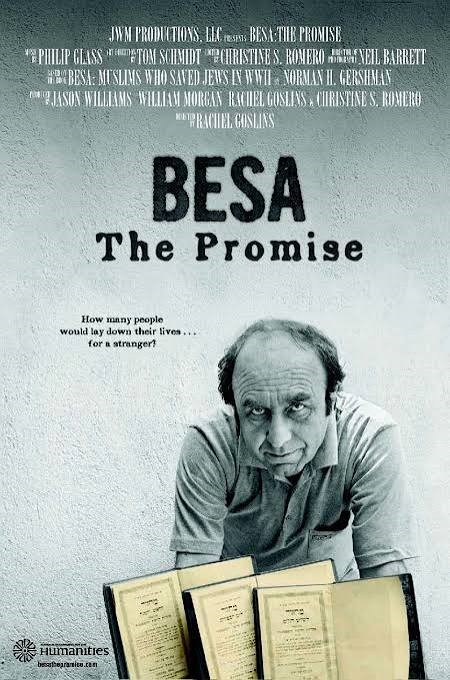
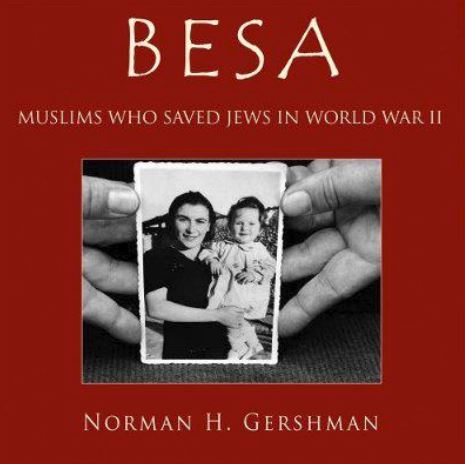
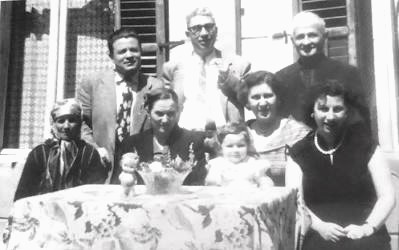
Memorie.al – Rarely has Albania been so prominently present in foreign media for a specific issue as it has been for the rescue of Jews during World War II. The CNN network prepared an article several years ago with the question of why Albanians saved the Jews during the Holocaust. Naturally, one wonders why exactly now this matter is being discussed so much. Because many well-known Israeli producers are massively addressing this issue. Thus, a documentary film titled “Besa: The Promise” is being shown across America, and not only there. CNN states that this issue has not been extensively covered because Albanians fell under the communist regime. The television network interviewed a Jewish photographer, Norman Gershman, who spent a decade dealing with this issue.
He has delved into the reason why Albanians saved the Jews. The country, CNN writes, surprisingly had more Jews at the end of the World War than it had at the beginning (200). The reason lies in besa. Gershman says that many Albanians are even surprised as to why so much attention should be paid to this matter. For them, sacrifice for others when they give their word (besa) is normal. “Gershman recalls a person whose parents were involved in saving Jews. He told him: So what? In Albania, anyone would have done this. We haven’t done anything special. It is besa.
The concept means that a person places the safety of a friend above their own and that of their family. An Albanian told Gershman: Better to kill my son than to break my besa. Gershman says: Anyone in need, if they knock on your door, you have the absolute obligation to save them, to take care of them, it doesn’t matter if they are friend or foe,” writes CNN.
MOSHE LANDSMAN: ALBANIAN BESA SAVED THE JEWS
“The main reason that enabled the rescue of Jews in Albania was the so-called ‘besa’ – the Albanian code of honor. The majority were saved because of this. In other words, people sheltered and hid refugees – very often they were people they did not know, but they did this because the people were in danger and because they wanted to do it,” said professor of psychology from Israel – also a lecturer at the University of Pristina, Rabbi Moshe Landsman, in an interview for Radio Free Europe.
RADIO FREE EUROPE: Professor Landsman, January 27 marks the 65th anniversary of the victims of the Holocaust. Could you go back a bit in history to give us the information you have on the lives of Jews in Albania and Kosovo at that time?
MOSHE LANDSMAN: It was not easy to live anywhere, neither as a Jew nor as a non-Jew. The occupation was very bad. There were, of course, underground partisans in the Kosovo area. Most of the connections were with Tito and, in Albania, with Enver Hoxha.
The Nazis aimed to win Albania’s support by taking Kosovo from Serbia and giving it to Albania. Even though Kosovo was not part of Albania, but rather a kind of annex to it, the conditions for Jews in Albania differed greatly from those of Jews in Kosovo. As you probably know, the Jews who were in Albania were saved one hundred percent.
There were many Jews who were hidden by Albanians at that time – perhaps many more than we have been able to document. Albania was the only country in Europe where there were more Jews at the end of the war than at the beginning. At the start of the war, there were about 150, while at the end of the war there were about 750, which means that Albanians also sheltered and hid Jewish refugees.
I think the main difference between what happened in Albania and what happened in Kosovo was that the Albanian government refused to give the Nazis the list of names of Jews living in Albania, while in Kosovo they had such a list. As for the fate of the Jews in that area, Albania was initially occupied by Italy and was only occupied by Germany in the final years.
The majority of Jews in Kosovo – but not all – were saved. As you know, there were several families here known for saving Jewish families. One of these was that of Pasha Rezniqi, whom I have met several times; I know his family and his great-granddaughter was my student. She completed her master’s studies in psychology not long ago. Rezniqi started by saving a friend of his, and when he saw how the situation was, he established a shelter for Jews, through which he enabled their transfer to Albania where there was more safety.
The main reason that enabled the rescue of Jews in Albania was the so-called “besa” – the Albanian code of honor. There is a story about a village in eastern Albania that was led by partisans during the war; all the Jews hiding there came out of their hiding places and everyone knew they were hiding.
After a few days, the Nazis attacked the village, but no one surrendered to the Nazis. This was because of the idea that when a person is a guest in Albania, the Kanun requires that the guest be protected, even at the cost of one’s life. Although some people say that the Kanun is not respected much today, during the war it was a powerful feature of the values of the Albanian nation.
RADIO FREE EUROPE: So, do you think that the Albanians’ *besa* saved the lives of the Jews?
MOSHE LANDSMAN: Apparently, yes. The majority were saved because of this. In other words, people sheltered and hid refugees – very often they were people they did not know, but they did this because the people were in danger and because they wanted to do it.
Many people, of course, hid their friends. This also speaks to the condition of Jews in Albania: they were very well integrated into the Albanian community, spoke Albanian, and had very strong business and personal ties with other Albanians.
RADIO FREE EUROPE: How much knowledge do you have of the current situation of the Jewish community in these two states?
MOSHE LANDSMAN: In 1991, I believe, the leader of the Jewish community in Albania repatriated almost all the Jews to Israel – there were about 200 who left Albania and moved to Israel. This community still lives in two or three places in Israel. There are still a few Jews living here and there in Albania, but they are few, and most of them are married to Albanians. I met one when I was in Presheva – a woman from Tirana, who was doing her doctorate.
The Jews from Kosovo – most of them from Pristina, Deçan, and from the north spoke Serbian and left during the war in 1999. There is a group of about 45 families living in Prizren who still live as a community. However, there are many marriages; some of my colleagues have students who are married to members of this community. So, they still exist today.
RADIO FREE EUROPE:Nevertheless, professor, Israel still does not recognize Kosovo’s independence. If we take into account the relations between Albanians and Jews, which you recount, how do you assess this issue?
MOSHE LANDSMAN: I have the impression that there is sympathy for the Kosovo issue in Israel. I think the government has made a wrong decision, just as it has made many other decisions – so this is not the only one where they have erred. They are afraid of being accused of double standards – on one hand, supporting Kosovo’s secession from Serbia, and on the other, and holding onto specific territories while denying Palestinians their state. I think it is one of those dazed political traps and idiocies into which they sometimes place themselves. I think it is a shame for Israel not to recognize Kosovo. / Memorie.al