By Dilaver Xhelili
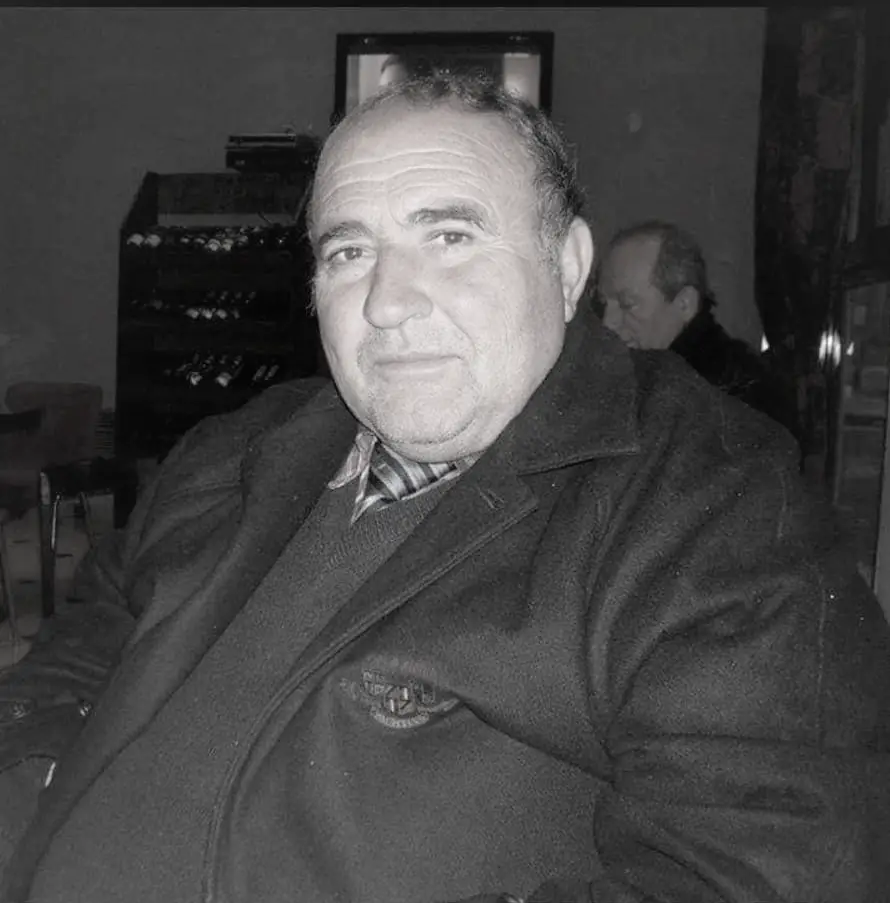
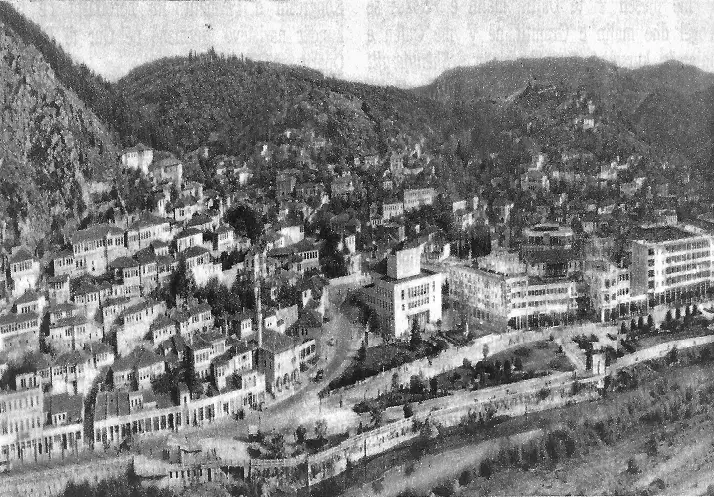
Memorie.al / Yzedin Haznedari were again sentenced to 20 years in prison in 1951 by the then communist regime. But the sister, Duduja, sacrificed everything. How he swore in front of his mother’s grave never to marry, how he sold his dowry and household furniture to survive and serve Yzedini. The long journeys to the Burrel prison 15 years in a row, the tap built in the yard that looks like the tears of the Berata girl are flowing, and the separation from life before the brother was released from the cell…! Yzedin Haznedari was born in Berat in 1919, in a well-known and well-known family in that city. But his life during the communist regime of Enver Hoxha, went through sufferings and hardships, just like the life of his sister, Dude, who served her brother until her death, swearing never to marry.
He sacrificed his love for the prison of his brother, who for years served his sentence in the terrible prison of Burrell. But he could not see him free. When Yzedini reached the 15th year of his sentence, Dude Haznedari passed away without being able to meet him.
Yzedini, after finishing high school in the city of Shkodra in 1940, began higher university studies in Florence, Italy for Economics. At the end of 1942, like many other students, he returned to his homeland to help and contribute to the Anti-Fascist War.
With the formation of the Provisional Democratic Government headed by Enver Hoxha in October 1944 in Berat, Yzedini was appointed economist in the Finance section of the Executive Committee of that city. A few months later, in April 1945, he was elected a delegate of the communist youth of the city of Berat, in the second Congress of the Albanian Anti-Fascist Youth Union (BRASH). This is where the tragedy of his life begins.
In December 1947, he was arrested and sentenced to 20 years in political prison, on the charge of “enemy of the people”. But after a year he is arrested again, (perhaps he was not grateful to serve the party, as a reward for reducing the sentence), and in 1951 (after two or three years of investigation) he is sentenced again, for serving the previous sentence. Yzedini passed away in July 1992, just a short time after the communist regime collapsed. He began his life as an anti-fascist patriot and ended it as a staunch anti-communist.
The testimony of his cousin, Etmir Berati:
“Duduja sacrificed himself in the name of love for his brother”, says Etmir Berati, a relative of the family. “Over every pleasure, desire, dream of her life in the name of love for her brother, she chose self-denial. She fulfilled an oath to herself until the end, convinced that in this way she would alleviate the suffering of her brother, who was sentenced twice, in the prisons of the communist dictatorship of Enver Hoxha.
Her rare beauty, her gentle speech and spirit embodied the virtuous girl, Duden. During the fifteen years in prison, which her brother suffered, he changed her forever into a silent heroine. She refused several times to become a wife, create a family and be happy, becoming a mother.
He dreamed of being happy many times, when from the mouth of his grandchildren, he would first hear the word aunt. She felt and life had proven that, becoming a mother before, when her brother was in prison, she would lose something, more or less, maybe even everything, from the love and devotion to her brother, since she would also have obligations and other preoccupations towards the family he would create.
That December night, after that ominous day, the seal of indelible despair had appeared in her eyes. When brother Yzedini was imprisoned for the second time in 1951, Duduja swore on the grave of her mother, Bules, that she would be a worthy sister, but also a great mother. She, who had once been promised the keys to “Paradise” by life, for years now, would hold the keys to “Hell”, but with dignity.
One of her co-sufferers and co-travellers to the Burrel prison says: “After we got off the truck that was going to continue the road to Bulqiza, we took the uphill to the center of the city of Burrel. Before going to the prison to we registered the names, we decided to have lunch, in one of the few restaurants of that city, or as they were called at that time, “Gjelltore” after a while”. She never returned to the restaurant.
We hurried, ate quickly and went out and met Duden again. In addition to the bags of food she had brought from home for her brother, she was holding a paper bag of apples in her hand. When he saw us, he asked us: – “How much did you pay for lunch?” – “Out of forty ALL, I answer them unanimously.” – “While I paid fifteen ALL at the cashier and with the twenty-five ALL that was left over, I also bought an apple for Yzedini. Who won more, me or you?”
For every twelve months of the year, she traveled hundreds of kilometers round trip from Berat to Durrës and from Durrës to Burrel, and to every camp where political prisoners were held by that regime. Dudja and some of her friends would leave before dawn, to their imprisoned brothers, they would ride in the bodies of trucks, or in any case when there was a kind-hearted driver, he would take them in the cab, but this happened rarely, as the family members of convicts were generally recognized by the trunks they carried in their hands, and drivers were afraid to take them into the cab.
Duduja went with the hope that from the niche of that cursed gate, or across the barbed-wire fences of the concentration camp, he would see his brother’s face from afar. She was happy where, through that niche or those wires, she would absorb the bitter smile of her dear brother. But, he could not meet him free.
Mother Zelies’ mansion in Burrel, shelter for prison visitors
At the entrance to the city of Burrel, there lived an old woman named Zelie, who occasionally helped distant travelers. She had transformed her house into a guest house for the prison’s visitors, who came there from all over the country. Once, in the house of mother Zelies, many hosts had gathered. That night, there were no places for everyone to sleep, and no blankets either. Then Dudja, (even though it was dark), addressed the people present in the guest house: “This time it’s my turn to go up to Burrel, to the hotel to sleep”, and went out. In fact, Sister Diana said, she had stayed up all night outside, collecting kruspul under the shelter of the roof, because she had no money to sleep in a hotel.
The sister who sells the dowry for the brother…!
For years, Duduja went to the bazaar every Saturday, where after covering her head with a buruluk, she sold household items, carpets, blankets, rugs, tapestries, hair and household furniture. Then it was her dowry’s turn. She had now gathered her mind, her hair remained, and her whole being was permeated with love and devotion to her brother’s future.
The meaning of her life was summed up in a single word, Yzedin. Duduja worked all day with a sewing machine to ensure the expenses needed to cover her brother’s prison. He knew no rest, only when his arms were broken and his legs were numb, the sound of the sewing machine stopped.
“The tap that flows my tears”!
On one of these days, when his brother, Yzedini, was still in prison, Duduja called Lemani, his cousin, and begged her. “To build a tap in the yard. Every time you open it, remember me. The water that will flow from it is my tears that I shed for my brother.”
This was Dudu’s last bequest. She left this world before her brother turned his back on the prison door. She failed to realize her dream, to see her brother happy in his family hearth and to be happy herself when they called her aunt. She, melting in the flame of love for her brother, took with her the pain of those fifteen years, thousands of days of loneliness and nights of tears. Memorie.al