Part Twenty-Two
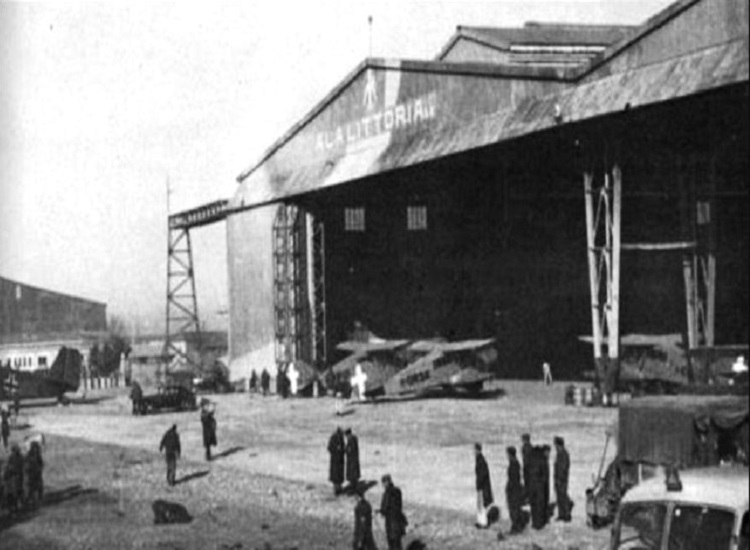
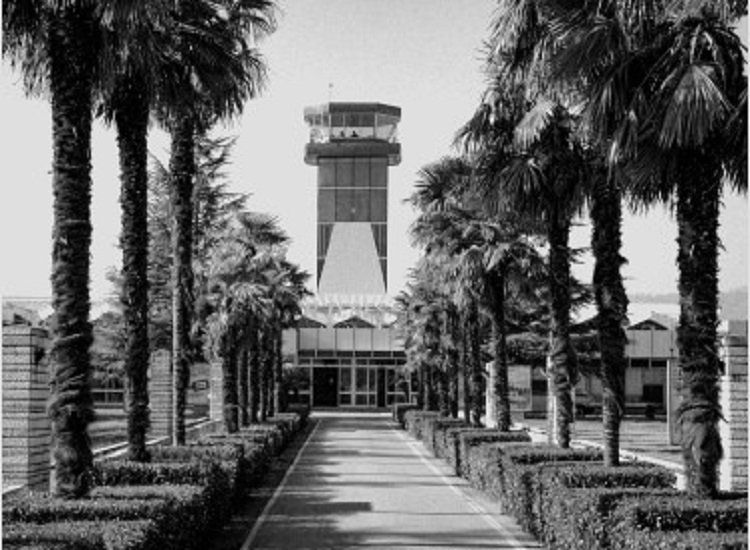
Memorie.al / The CIA have shown the great role that the Soviet Union played in communist Albania. In several “Top Secret” documents, declassified years ago, it is shown that the USSR built several important military bases, especially in the South of the country. There, the submarines that Moscow had on the island of Sazan and in the Bay of Vlora is shown in detail, as well as the air bases, such as those of Rinas, Kuçova, etc. Afterwards, a panorama of political developments is given, where the dismissal of Defense Minister Beqir Balluku in the summer of 1974 from all functions in the army and party is mentioned. Likewise, a special place in the documents that the CIA has declassified are also those that speak of Albanian political emigrants in Yugoslavia, who are included in the Committee of Prizren, initially headed by Apostol Tanefi and under the pressures of the UDB, which recruits them with coercive measures, such as return to Albania, etc.
Continues from the previous issue
January 1951
Geopolitics Albania – Yugoslavia
The Soviet Union seems to be increasingly concerned about the strategic geographic isolation of Albania in relation to the countries of the Soviet orbit, which has recently been emphasized by the improvement of relations between Greece and Yugoslavia. Soviet propaganda regarding the possible attack on Albania by the Greece-Yugoslavia alliance with US support is most likely a warning that the USSR will defend Hoxha’s regime. Soviet uncertainty about maintaining influence in Albania has become more visible after the recent rapprochement between the Greek and Yugoslav governments.
The Soviet propaganda machinery is working hard to present this development as a Greco-Yugoslav plan for immediate aggression against Albania, with US support. They are also accused of conspiring to dismember Albania between them. The geographic distance of Albania from the rest of the countries of the Soviet orbit was recently highlighted by the closure of the Albanian legation in Belgrade, which complicates the circulation of air traffic to Tirana from Yugoslavia, since transit visas are now required.
The USSR has recently requested “urgent permission” from the Italian government for flights over Italian territory, for the transport of officials on Liberation Day in Tirana. Several semi-covert flights have been carried out from Soviet countries to Albania along the Greco-Yugoslav border, and with the improvement of relations between Greece and Yugoslavia, these flights will become even more dangerous. The obstruction of flights to Albania by Yugoslavia has not yet affected the ties between Tirana and the Soviet orbit, while statistics show that the frequency of economic, industrial, and military goods transfers has not declined.
The current propaganda of the USSR regarding Albania seems to aim at warning Belgrade that Moscow is in full support of the regime in Albania. The campaign shows Soviet uncertainty about the isolated geographic location of Albania.
Stalin’s Successor to Power
Another issue for the Soviet Union is the selection of the new leader who will succeed Stalin. As long as he remains alive, Stalin will not transfer powers to anyone else; therefore any agreement for solving the problem must wait until the leader’s death. After death, one of the alternatives would be the transfer of power to a single individual to continue the authoritarian dictatorship, or otherwise the division of powers among several current members of the Politburo.
The continuation of one man’s dictatorship has strong historical precedents in the USSR, a country that has seen tsarist and Soviet regimes, therefore the simple people do not know democratic regimes or other forms of governance. The experience of the Stalinist regime shows that the structure of the USSR can be administered better by a single man. This is reinforced by the fact that previous dictatorships have also resisted reforms and wars; therefore Stalin is believed to follow the same principle.
March 1951
Italian Theory on Recent Incidents
Sources in Italy report that the bomb explosion at the Soviet embassy in Tirana on February 19 may be a fabrication by the Soviets, to justify harsh repressive measures and to strengthen their control over the country’s departments. The people killed and wounded by the bomb were themselves secondary officials. This theory about the need to justify the imposition of harsh measures by the Soviets and not simply arbitrary imposition may indicate that their control is not very secure, as it has been in the past.
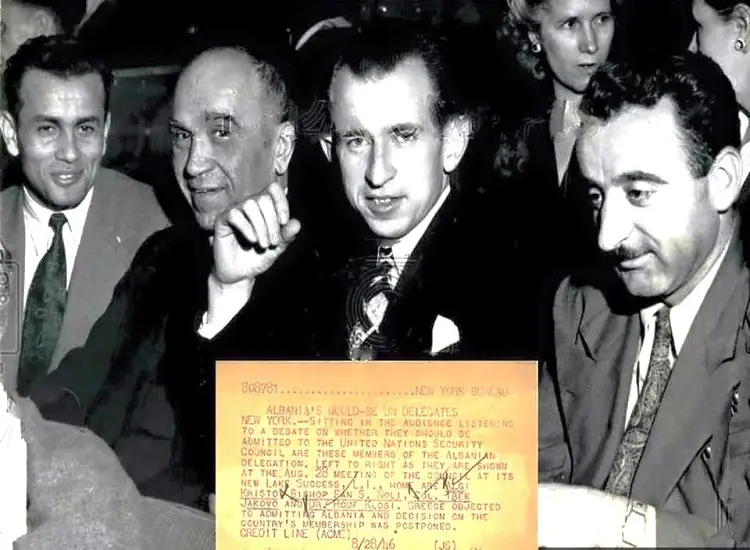
The movement can also be considered as a kind of success for the clandestine anti-communist resistance movement. According to recent rumors, the polemics between Prime Minister Enver Hoxha and Deputy Prime Minister Tuk Jakova have ended with the arrest of the latter. It is not known whether Tuk Jakova’s arrest around March 12 is related to the attempt against the lives of Soviet embassy officials. By April 5, all representatives of party centers had been summoned to discuss the situation created by the bomb at the Soviet legation and Jakova’s subsequent arrest.
Our informant believes that Hoxha, Jakova, and public opinion showed antipathy toward the harsh Soviet measures and their control. On March 29, Jakova visited the port of Durrës to receive a grain shipment from the Soviet Union. If Jakova has indeed suffered from the embassy bomb event, then Interior Minister Mehmet Shehu will deal with him directly, who heads the secret police and is the chief Soviet agent in Albania. Therefore, he will also lead the campaign against deviationists.
Meanwhile, during this period, an unusual calm has been reported regarding border incidents with Yugoslavia. Yugoslav sources say that the satellite countries have not carried out any more provocations since the meeting of deputy ministers in Paris on March 5. The Yugoslavs believe that the calm in border incidents is a temporary move seeking to strengthen the Soviet position in the Paris talks, to refute Western accusations that the USSR is illegally arming the satellite countries.
The Yugoslavs say that the calm at the border may also be related to recent events in Albania. The Yugoslavs fear that the USSR may blame them for the unrest in Albania and the embassy bomb incident, or use this as a pretext for military intervention. The accuracy of Yugoslav claims cannot be verified since they have not regularly reported the incidents. But during the month of March, Hungary and Bulgaria sent protest notes to Yugoslavia regarding border incidents. The Yugoslav version of the relaxation of pressure may reflect a fear of Western intervention in Albania.
August 1951
Food and Sugar Industry, “Bashkimi” Newspaper
Work has begun for the construction of the sugar factory in Maliq on May 14, 1949, where about 600 simple workers and 230 specialists have been employed. It is estimated that the factory will start production in September 1951, while the installation of machinery has just begun. Currently, 16 of 60 installations have been completed.
What was previously a swamp is now turning into a small industrial town of about 250,000 square meters. So far, 90,000 cubic meters have been removed, and about 16,000 cubic meters of stone and 3,800 cubic meters of reinforced concrete have been built. The government has spent about 126,000 lekë, while most of the materials expected at the port of Durrës come from the Soviet Union.
March 1952
Arrests, Economic Situation
In the Leskovik region, about 60 people were recently arrested on charges of aiding “reactionary” persons seeking to escape from the country to Greece. Among the most important people among those arrested were: Koço Mili and Koço Talani from Postenani, Vasil Vidhe and Jorgji Premto from Carshkova, Mane Rakipi from Vrepcka, Vangjel Anastasi, pharmacist from Melani, and Thoma Titko from Leskovik. Other shepherds in the more southern areas have been arrested en masse on charges of aiding escapees. Their livestock have been confiscated and their families have been interned in labor camps.
In prisons and concentration camps, daily bread rations are 500 gr. corn and potato soup. The prisons are so overcrowded that people sleep on top of each other. The food sent to them by families arrives four days late. Many people have died of hunger and it is said that all suffer from tuberculosis. Food is found with difficulty since this year’s crops have been bad. Although cooperatives sell one kg. of corn for 3 lekë, only 5 kg. of corn per month are given per person. In state stores, one kg. of corn has been sold occasionally and for 180 lekë.
Beans are sold in cooperatives for 24 lekë per kg., while in state stores their price reaches 200 lekë per kg. In the market there is no sugar, rice, or pasta that can be bought with food coupons. In state stores, one kg. of poor-quality sugar is sold for 250 lekë per kg., while one kg. of butter is sold for 500 lekë. The oil ration with coupons is 250 ml. per month, but nevertheless the supply has been interrupted for 7 months. State stores have oil, which is sold for 400 lekë per kg.
Shoes are sold in cooperatives for 650 lekë, while in state stores they are sold for 1,300 lekë. The quality of the shoes is somewhat bad, so that they break within 20 days. The daily wage of workers is somewhere between 70 and 75 lekë per day, while clerks are paid 2,700 lekë per month. Recently, the official exchange rate of the American dollar has fallen from 50 to 37 lekë. A considerable number of desertions in the army have alarmed the authorities and Russian officials who are present in every battalion.
April 1952
“Zëri i Popullit”: Criticism of the Factory and Party Groups
The organizational work at the rice factory in Shkodër has not gone well for a long time. There have been abuses, damage to state property, and breaches of discipline. At a recent meeting, a ridiculous plan was presented with complicated problems that the organization was not capable of solving. Thus the time and efforts of the organization were wasted and nothing was achieved. Despite all this, no member of the groups was criticized.
Criticism of Teachers
Some communists with responsible positions at the “Qemal Stafa” high school are not fulfilling their duties properly. Mihal Kuka, Xhoxhi Andoni, and Ferit Kozeli have lost the trust of the majority of students. This is also true for Andrea Caci, secretary of the party organization of the institution. Caci has retained his position due to the fact that he was a partisan and a volunteer worker after liberation. But he is exploiting the facts of the past too much. He has not helped weak students, but only tells them to study more. Caci has also refused to accept criticism from students or other colleagues. These mistakes of his have made the school organization seek his removal.
May 1952
Party Method (“Zëri i Popullit”): Improvement of Agitation Techniques Sought
Bolshevik agitation is a very important instrument for the political-ideological education of the masses. Its purpose is to explain their role and duties in implementing the decisions of the party and government, with the aim of mobilizing the masses. In many cases, the political work carried out among the masses by party organizations does not reach the proper standards. A common mistake among agitators is the deficiency in treating issues in a convincing, concrete, and aggressive manner. Very often they speak to workers and peasants in the wrong phraseology, without referring to their ideals and aspirations.
Albanian agitators should imitate their Soviet counterparts who have learned to speak to workers and peasants in the language they understand, and who do not forget to mention how their efforts will be rewarded in the form of well-being, goods, etc. We must never forget that the agitator is also a Stakhanovite who must develop the Stakhanovite spirit in others, to help in the fight against foreign spies and kulaks, in ideology and in raising the masses’ awareness of their duties to the party and government. Unfortunately, there are agitators, such as for example in Lushnje, who not only fail in the fight against kulaks but even go so far as to say “there are no more kulaks, we have eliminated the kulaks.” Experience shows us that party agitation is most successful when the agitators themselves set the first example.
The record of Kako Goranxhiu, the agitator of Gjirokastër, is an example of this. While the examples of agitators Demir Balla, Shyqyri Çuli, and others from Durrës are truly pitiful. The responsibility for improving agitation depends mainly on the party committees, but often they pass all the political work to the agitation-propaganda section. The members of the offices of Lushnje and Vlora for example, during the harvest period, deal with production figures and percentages, forgetting to do political work with the masses.
Another negative fact is the failure to organize meetings and seminars for the training of agitators. For new agitators, the library should also be available, and this should be used continuously. In Gjirokastër for example, only 9 percent of the books from the agitators’ library have been sold. Therefore the party must improve the quality and material side of agitation in Albania.
June 1952
“Zëri i Popullit”: Call for Improvement of Supplies
Stores and restaurants in the Kolonjë district have often been criticized for the poor quality of service and unfortunately little has been done to improve the situation. Sales personnel treat customers badly, while the supply of food goods has not been done on time by the distribution agencies. In the restaurants and cooperative canteens, hygienic conditions leave much to be desired, service is slow, portions are small, and prices are expensive. These shortcomings come partly from the Executive Committee and the responsible organizations. The Kolonjë Committee has made an analysis of the situation and has given directives, but has not carried out the follow-up of actions and has been satisfied only with giving statements. / Memorie.al
Continues in the next issue