


By Leonard Veizi
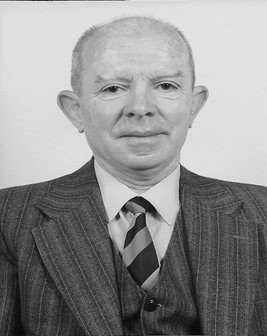
Memorie.al / Only a few words are needed to understand that the life and work of the geologist Dhimitër Gjenerali has been a long marathon, a walk in good and bad times through labyrinths and dangerous passageways. And in this long and uninterrupted journey, he has been sometimes alone and sometimes with comrades. But nothing ends here…! Now he says he lives in emigration, in Toronto, Canada. While another part of the time in the United States. He adds that he feels well; and he is a person who adapts easily, even though both countries of the distant continent are beyond the Mediterranean and the Atlantic. Regarding these etc., he makes himself known to us in this interview that we are publishing below in this article.
Mr. Gjenerali, what are the oil-bearing capacities in the territory of the Republic of Albania?
In pre-war Albania, two oil fields with reservoir (collector) of Neogene sands and sandstones were put into exploitation, among the clays above the cover in Kuçovë and Patos (these mainly by foreign companies) – according to the numerous surface outcrops of oil-saturated sands and sandstones. After the war, the country was assisted by a large number of Soviet specialists equipped with the technology of the time, even with drilling rigs.
Marinza was discovered around the years ’57-’58, a larger field than the first two with oil, again in the Neogene sandstones – now not in lenses but in stable horizons (about 4 levels) among the clay covers; this part of the Neogene (Tortonian) is older and lower than the Patos levels and does not outcrop at the surface, but is placed directly above the paleo-cave limestones of the giant carbonate uplift of Patos-Verbas.
Albanian oil began to breathe well. With the arbitrary withdrawal of Soviet specialists by their government, the works continued by eager Albanian specialists, whose number increased and was perfected every year. We, the few specialists, escorted the Soviet colleagues in groups – according to sectors, with bouquets of flowers to the airport, and they, until the end, continued to instruct us about the continuation of the works – since they were very passionate.
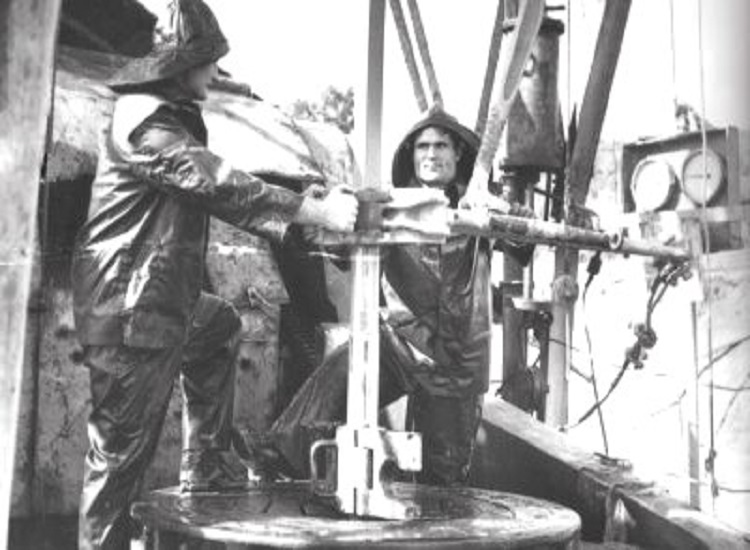
The first oil field in the massive-culminating limestones was discovered in Gorisht around the years 1964-’65; the fruit of a new era, very quickly oil production doubled and around the years 71-72 it surpassed the figure of 2 million tons/year. Of course, exploration investments increased and for drilling, drilling rigs, etc., were now imported from Romania, where many of our talented specialists studied and returned to the homeland.
Very quickly, but with “effort,” the giant oil-condensate field in Cakran-12 was discovered, again in the massive-culminating limestones. This field was more than double the volumetric size of the Gorisht anticline and the oil-yield would undoubtedly be of the same scale, but the open fountain in the first well (Cakran-12) was commanded (closed) for only about 50 hours, then it erupted like a dragon – which we will discuss below.
But there are many anticlinal uplifts (“mountains” of the pre-Neogene) of the limestones, both near Gorisht and Cakran and continuing to the Adriatic Sea. In most of these anticlinal structures (limestone uplifts), only one well has been drilled and, due to asymmetry, the structure (uplift) has been left in most cases to the East, which future drillings will catch.
But let us recall that even the Cakran field was not caught with the first well; indeed Cakrani-16 had remained only about 100-150 m. above the limestones of the field. There are several such zones, whether of this depth (about 3000 m.), or somewhat deeper; the dragon well Ca-12 was designed almost by the orientation of the wells since the seismic reflections were only fragmentary; this due to the shape that all carbonate structures have with us, both those that outcrop everywhere at the surface and those of depth (Ballsh, Gorisht, Krane, Cakran, etc.).
We have a territory with narrow, steep structures with a chest or dome shape characteristic of geo-synclinal zones. This shape makes the seismic reflections fragmentary among the “noises.” Of course, with the future attack with drillings of the carbonate structures near the fields initially as well as subsequently, Albanian oil will flourish and from the two million tons of annual production that was achieved with Gorisht and its double that the initial Cakran field would realize, it would increase even more.
For curiosity, in the streams of the Eastern cliffs of Cakran, cuts were made near Gorishova to collect in a surface reservoir the oil-condensate that flowed in the form of springs on a steep surface over many square kilometers; but the condensate self-ignited quickly.
When did the exploitation of the Albanian underground begin?
On this topic, the first leading colleagues of the department have written books (such as Eng. Zenel Hamiti, etc.). I believe that initially exploitation began in the pure bitumen of Selenica by a French company, according to the multi-year contract with the concessionaire, the dear and respected old patriot, Ismail Qemali.
For oil, exploitation began after drilling attempts in the compact sandstones (collectors) in Drashovicë; but production began in Kuçovë and Patos by the AIPA Company. This company carried out quite a lot of study and exploration works in Central Albania; it carried out drillings in Zhapokikë of Berat, Pekisht of Lushnjë, Kozan of Elbasan, etc.; but always shallow for the sandstones.
After Liberation, were there concessions with foreigners?
Of course there were none; there were long-term credits, which included the arrival of specialists equipped with the technology of the time, mainly from the former Soviet Union, which had and has quite a few oil and gas fields; then from Romania and finally very little from China. The organization of the Eastern bloc did not presuppose the granting of concessions but, I would say that even long-term credits have certain dependence; my knowledge in this field may even be inaccurate.
What quality does Albanian oil have?
The oil that comes out of our underground is of an average quality among the types; it is sulfurous oil with a quality that improves toward the depth of the location. Apparently during migration the oil absorbs something – especially from the sulfurs and carbonates. For the improvement of the quality of Kuçovë’s oil, the sulfur plant was built right there, in the refinery inherited from AIPA. This plant as well as the carbon black one was projects of the talented engineer-constructor Mr. Eshref Toptani (of the German school) who appears only as co-author.
The new refinery of deep oil processing in Ballsh, part of the Chinese credits – was a big step forward in improving the quality of fuels. About the Cërrik refinery I know little – it was built according to the predictions of Soviet specialists for the fields that wait nearby – which we cannot yet concretize despite the fact that they call us through the signals of the works in progress.
Have we ever exported oil?
We have exported, since fuels were and continue to be much sought after in the international market. It is understood that our exports were not as much as those of the former Soviet Union or Romania, because they had much larger territories and production-processing capacities; nevertheless, we had to import goods and technology – vital for the economy and industry of the country – which dictated the necessity of exports for balancing. In this framework, fuels played and continue to play a main role./ Memorie.al