
By Kastriot Dervishi
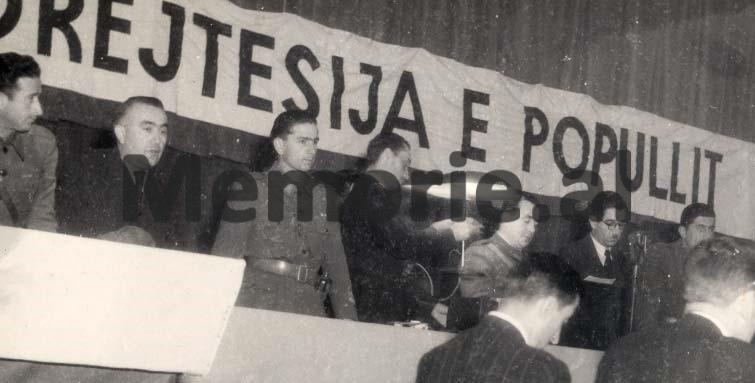
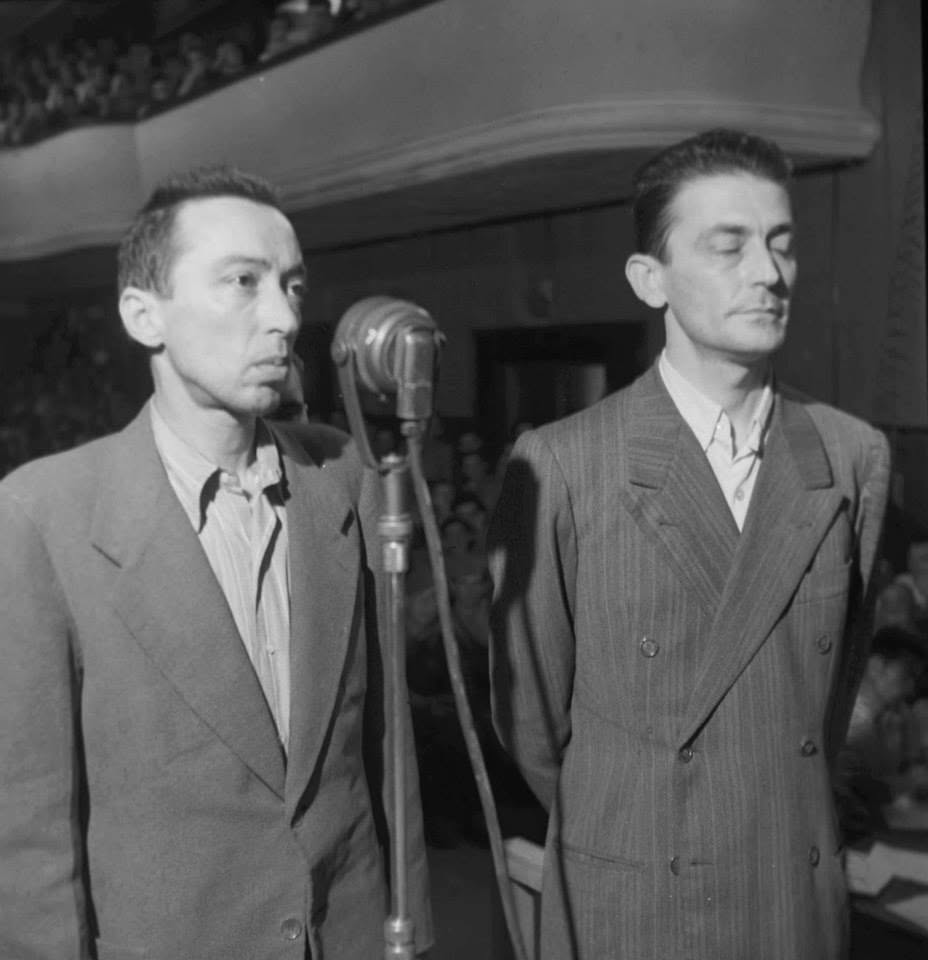
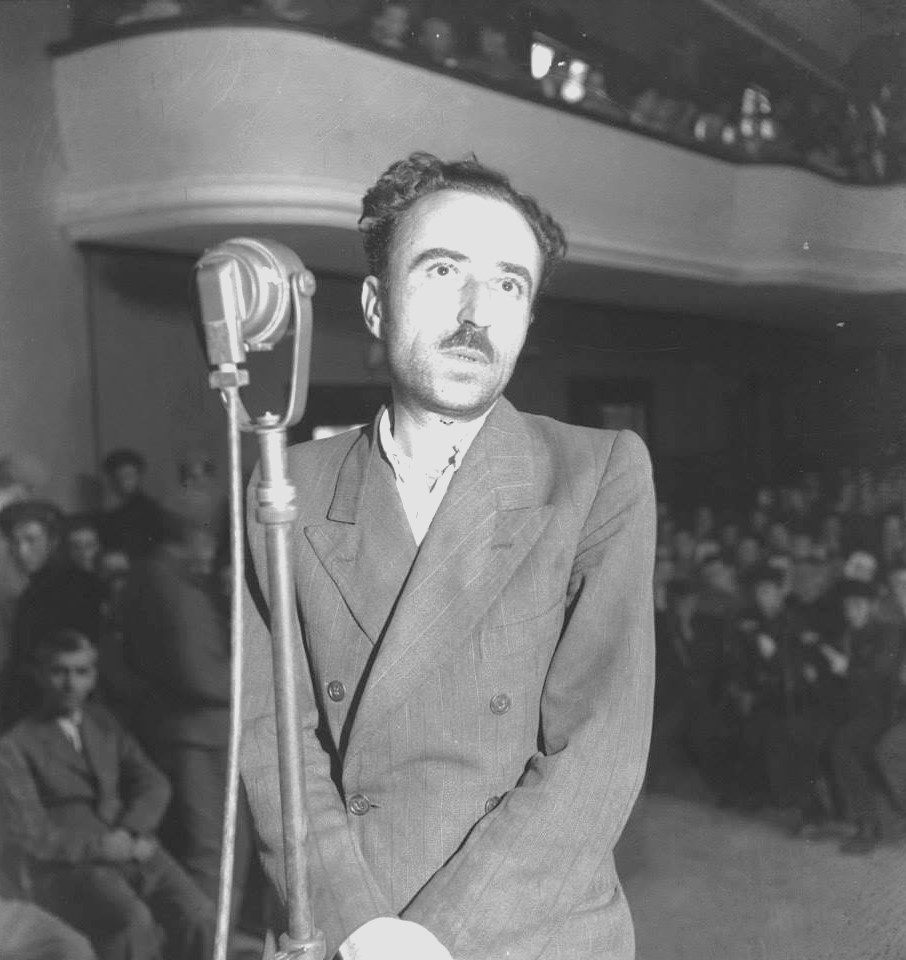
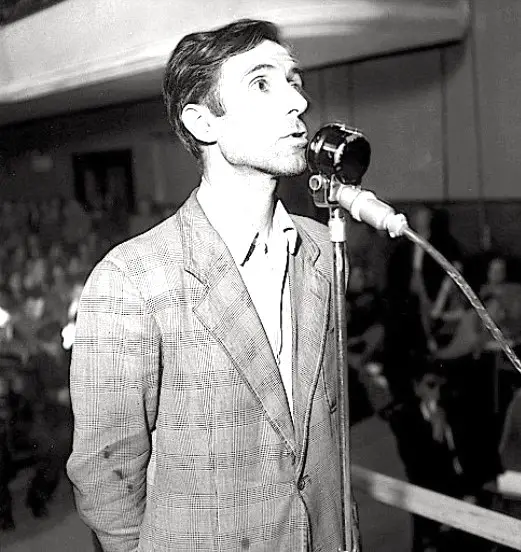
Memorie.al / On September 27, 1947, in the hall of the “17 Nëntori” cinema, the Council of the High Military Court announced the sentencing of the “Group of Deputies” of the first Legislature elected in 1945, and many other intellectuals, characterized as their collaborators. The judging panel was appointed by the Central Committee of the Communist Party of Albania. The Prosecutor General was Josif Pashko, former deputy commissar during the war, and the president of the court was Niko Çeta, the nr. 2 head of State Security, with an elementary education and a blacksmith by profession. Those sentenced by them to hanging, shooting, and heavy imprisonment were all personalities and representatives of the intellectual elite with Western leanings in post-war Albania.
THE SENTENCED
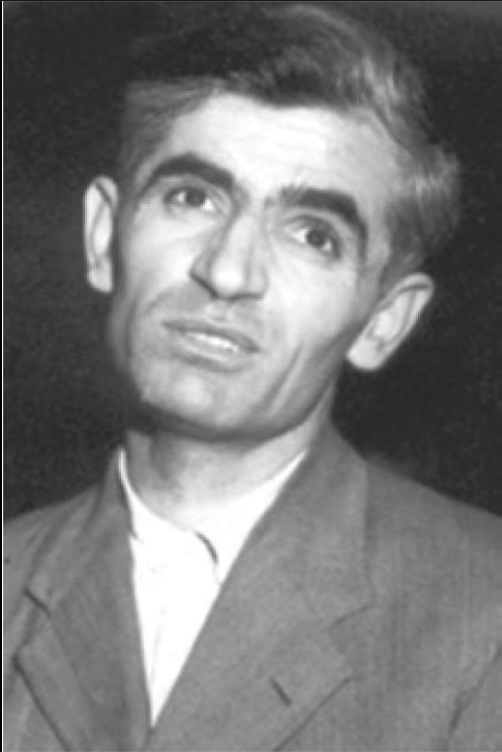
Shefqet Beja, deputy, active participant in the National Liberation Movement, sentenced to death by hanging. Sheh Ibrahim Kurbunara, deputy, one of the signatories of the Declaration of Independence, sentenced to death, hanging. Dr. Enver Sazani, deputy, Director of the Military Hospital, sentenced to death, by firing squad. Salaudin Toto, deputy, founder of the Institute of Albanian Sciences and first chairman of this Institute, sentenced to death, by firing squad.
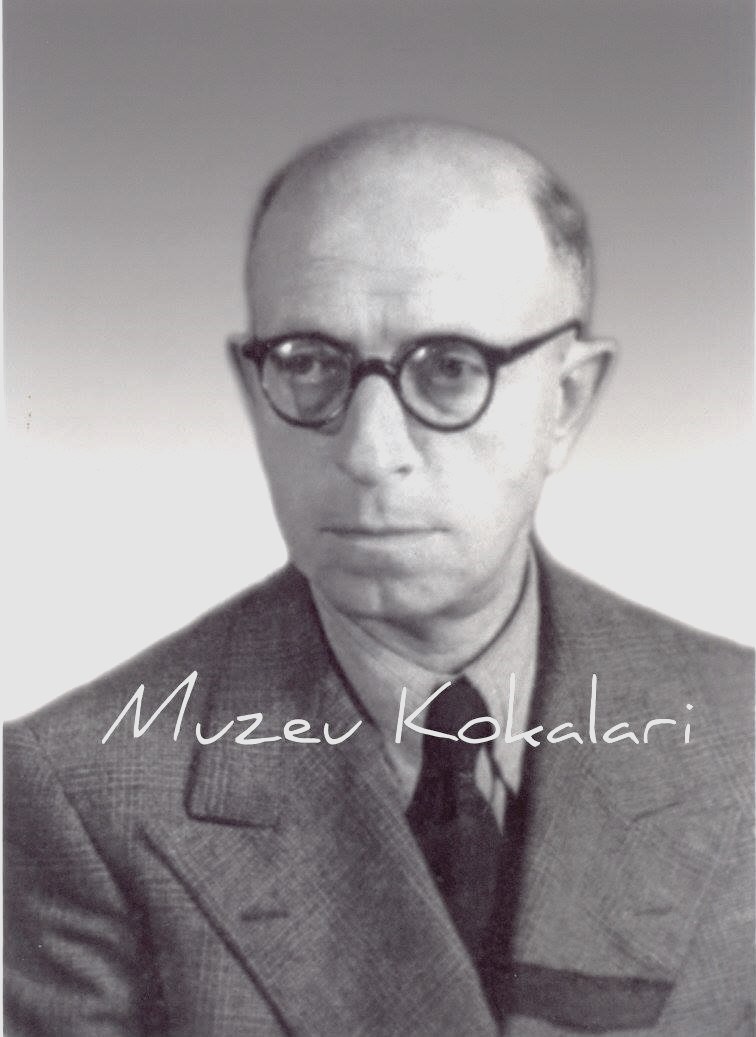
Irfan Majuni, deputy, clerk in Tirana, sentenced to death, by firing squad. Sulo Ismail Klosi, graduated from the Faculty of Oil Geology in Strasbourg, chief engineer in Rubik, sentenced to death, hanging. Riza Alizoti, graduated from Oxford, specialized in mining exploitation in Strasbourg, sentenced to death, hanging. Salim Kokolari, teacher at the French Lyceum in Gjirokastër, supporter of the National Liberation War, sentenced to death, by firing squad.
Muhamet Prishtina, son of the patriot Jahja Prishtina, sentenced to death, by firing squad. Tefik Deliallisi, teacher by profession, sentenced to death, by firing squad. Hysen Shehu, son of Sheh Ibrahim Kurbunara, sentenced to death, by firing squad. Beqir Çela, teacher by profession, sentenced to death, by firing squad. Abdyl Kokoshi, graduated in Law, sentenced to death, by firing squad. Pertef Karagjozi, clerk by profession in Tirana, sentenced to death, by firing squad. Agathkli Xhitomi, notary by profession, sentenced to death, by firing squad.
The other members of this trial, deputies and their supporters, were sentenced to heavy imprisonment, and among them there were even those who died under torture, such as the case of Baba Myrteza Paja from Kruja.
The imprisonment and sentencing of the deputies and intellectuals took place at the moment when the People’s Assembly was to ratify the Yugoslav Convention and the alignment of foreign and domestic policy as pro-Eastern with the Soviet Union at the head.
For this reason, the elimination of nationalist intellectuals with Western culture was sought, and especially of the Deputies who might vote against the Soviet and Yugoslav Conventions and could endanger their ratification.
MANIPULATIONS OF THE PROCESS
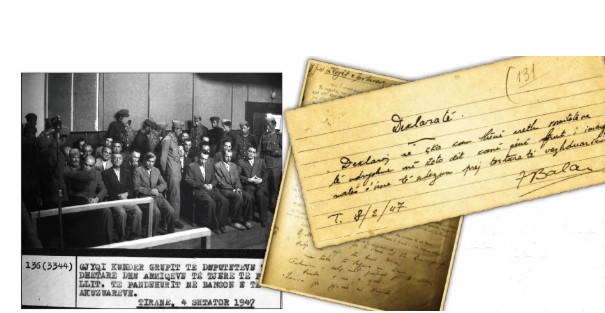
The greater part of the investigative and judicial process against the first group of deputies is manipulated by the investigation…! During the judicial process against 24 defendants, the investigation was able to establish false data against 20 persons, whom it also set against one another. So only with the statements of four persons, other defects of the investigation, and with integration with other processes, the truth is reached…!
Foto Bala, one of Enver Hoxha’s contemporaries, who in his statement of February 8, 1947, that is, one month after the arrest, says that everything he had signed up to that moment was the fruit of an “imagination inflamed by continuous tortures.”
Two other proofs regarding the manipulation of the investigative-judicial process concerning the “group of deputies” come from two investigating officers. One of the testimonies, ironically, was taken from the prosecutor of the process, Josif Pashko.
The first investigator testifies:
“In the deputies’ process, things were not going well, as the process was not coming together. On the part of the defendants there was considerable resistance. The trial was decided to be held very quickly without having the argument made for their guilt. The Directorate decided to take statements from persons who knew or knew something of the activity of Shefqet Beja, Selaudin Toto, etc. Vaska gives me a list of names and tells me to take statements from these to prove the guilt of the deputies.
No process was made without suggestions. Irfan Majuni throughout the whole process showed nothing about his activity, except for some statements through which he would appear in court. As accusations, the sayings of Tefik Deliallisi would suffice. After Tefiku was questioned, before the second session of the trial began, Irfan Majuni was agitated by me, telling him that if he told, there would be facilities, but nevertheless, he was not convinced. When Nesti came to visit the prisoners, his presence made Irfani admit guilt, that is, he accepted everything Tefiku said.”
Officer Foni Qirko testifies:
“During the years 1947-1948, I saw several processes that were completely or partially false. Thus the process of Kolë Kuqali was made by the Security investigators after he had killed himself and had deposed nothing in the investigation. Likewise the process of Baba Myrteza Kruja, the whole part that speaks of his activity after liberation is added by the Security investigators after his suicide….!
In Gjirokastër, the defendant Agathokli Xhitomi, who in Tirana despite tortures for three consecutive months, denounced nothing, managed there to make a complete process for himself and to be charged by the Security organs to prepare complete processes for the other arrested, promising this one release from prison…”!
What must be emphasized about the process against the “Group of deputies” and other intellectuals is the use of terrible tortures. During the investigation period, these defendants died from severe tortures:
– Ali Begeja, former mayor of Tirana (first process), died on 18.8.1947. It was written about him that he allegedly “died in prison by throwing himself from the window.”
– Stanislav Zuber (first process), for whom the exact date of death is missing, although there are various data.
– Ferit Hysenbegasi, jurist (second process), 17.9.1947
– Avdul Bani (second process), guard of Islam Radovicka
For this reason the investigative and judicial process is to the extent of 90-95% untrue and manipulated, and this because of unimaginable tortures where the main one has been that of cutting the flesh.
List of tortures
1 – The vest (the most terrible torture, the person is tied to a stake and takes on the appearance of a lamb roasting on a spit).
2 – The whip and the stick.
3 – Being left without bread, without water, without sleep and on one’s feet for whole days.
4 – Electric current until one fainted.
5 – Hanging heavy chains on the neck.
6 – Tying hands behind the back to a window or to some hanging tree until the fingers are cut.
7 – Breaking of bones and plucking of flesh with pincers (this was used especially after the death sentence of Shefqet Beja and against them).
8 – Salt in the mouth.
9 – Pretending that they would be executed or hanged and they were lifted into the air or pulled to the rope.
10 – Moral torture regarding the family: we will imprison, we will kill, indeed in Shkodër to break the resistance of Dulo Kali, they brought into an adjoining room his two imprisoned daughters and two imprisoned men and they pretended to be his daughters and had brought them to be dishonored
11 – Putting head-down into a barrel full of water.
12 – Once Myftar Tarja (investigator – note) put a Toptani’s need into his mouth and unwashed socks.
13 – Burning of the flesh with cigarettes. In the end against a provocateur from Kukës, alcohol was thrown on his hands or hair and set on fire.
– Food with salt and being left without water.
– Being put into water and left with wet clothes in winter.
– Gradual reduction of food to die within 1 or 2 years
– Being left without sleep standing./ Memorie.al