• Rreth Nesh
  • Kontakt
  • Albanian
  • English
Friday, September 4, 2026
Memorie.al
No Result
View All Result
  • Home
  • Dossier
  • Interview
  • Personage
  • Documentary
  • Photo Gallery
  • Art & Culture
  • Sport
  • Historical calendar
  • Others
  • Home
  • Dossier
  • Interview
  • Personage
  • Documentary
  • Photo Gallery
  • Art & Culture
  • Sport
  • Historical calendar
  • Others
No Result
View All Result
Memorie.al
No Result
View All Result
Home Dossier

“In December 1942, in a special declaration on the independence of Albania, the Soviet government emphasized that; the USSR does not recognize Italian claims on…”/ Nikolay Shmelev’s book, “Novaja Albanija” Moscow 1951

“Në Komitetin Qendror të Partisë kishim mbërritur letra, ku shkruhej që; nipi i Kadri Hazbiut, vazhdonte të mësonte në të njëjtën shkollë me nipërit e shokut Enver dhe…”/ Dëshmia e rrallë e Agron Aranitasit
“Në dhjetor 1942, në një deklaratë të veçantë mbi pavarësinë e Shqipërisë, qeveria sovjetike theksoi se; BRSS-ja, nuk i njeh pretendimet italiane mbi…”/ Libri i Nikolali Shmelev, “Novaja Albanija” Moskë 1951
Mao Ce Duni: “Mos kinin frikë se jeni pak, edhe Marksi me Engelsin ishin vetëm në fillim, por idetë e tyre….”/ Takimi i panjohur me Hysni Kapon dhe Ramiz Alinë më 29 qershor ’62, në Wuhan
“Tuk Jakova është në dijeni se ndiqet nga organet tona, pasi në Qytetin ‘Stalin’, ai i tha bashkëpunëtorit ‘Nuredini’, se Sigurimi…”/ Raport-survejimi, Berat, 1955
Mao Ce Duni: “Ndryshe nga Marksi dhe Lenini që ndoqën shkollat e larta, unë me Stalinin jemi vetëm me të mesme…”/ Proces-verbali sekret i takimit me Hysni Kapon dhe Beqir Ballukun, Pekin 1967
“Sovjetikët u larguan me nëndetëset e tyre që nuk i kishin dorëzuar, mirëpo na lanë këtu rreth 150 marinarë të tyre…”/ Fjala e panjohur e Enverit më 30 maj të 1960-ës

Part Ten

Memorie.al – The CIA has revealed the major role that the Soviet Union played in Communist Albania. In several documents marked “Top Secret” but declassified for years, it is shown that the USSR built several important military bases, especially in the south of the country. There, details are given about the submarines that Moscow had on the island of Sazan and in the Bay of Vlorë, as well as air bases, such as those of Rinas, Kuçova, etc. Then, an overview of political developments is provided, mentioning the dismissal of the Minister of Defence, Beqir Balluku, in the summer of 1974, from all his functions in the army and the party. Likewise, a special place in the declassified CIA documents is given to those that speak about Albanian political émigrés in Yugoslavia, who were incorporated into the Prizren Committee, initially led by Apostol Tanefi, and under pressure from the UDB [Yugoslav secret police], which recruited them through coercive measures, such as returning to Albania, etc.

                                                Continued from the previous issue

The Soviet Version of Modern Albanian History

Gjithashtu mund të lexoni

“Iran’s threat to close the Strait of Hormuz created great concern, disorientation and unprecedented alarm in the US…”/ Enver Hoxha’s political diary, June 1984, revealed

“American philosopher George Santayana says that a past that is not judged is destined to be repeated…”/ Reflections of the philosophy professor at the University of Bologna

(Published in Moscow and Pristina)

Yugoslav Interference

In November 1944, Tito’s representative, Velimir Stojnic, tried to include the Balli Kombëtar [National Front] in the national liberation movement and also increased the number of his agents in Albania. Since 1943, Tito’s envoy, the old spy Svetozar Vukmanović, had tried to organize a resistance army with the aim of establishing Anglo-American control over all the Balkan countries.

But the Albanian Communist Party did not get caught in this net woven by Tito’s henchmen, as it isolated the members of Balli Kombëtar and drove them out of Albania. Little by little, the liberation army liberated the country. On 24 March 1944, the First Anti-Fascist National Liberation Congress was convened in the liberated city of Përmet and changed its name to the National Anti-Fascist Liberation Council.

It declared itself the highest legislative body in the country, while the Anti-Fascist Committee became the highest executive body. The brilliant victories of the Soviet army in the Balkans inspired many Albanian patriots and increased the strength of their strikes against Albania’s enemies, who were using all their resources against the Soviet offensive.

Marching many kilometres through the mountains, the Albanian Liberation Army struck the Italo-German forces from behind, destroying their communications and damaging their manpower.

On 29 November 1944, the fascist usurpers withdrew even from their last base in Albania. But the war was not over. The German army was still putting up strong resistance in Yugoslavia. After withdrawing from Albania to the north, German forces were trying to break through toward the northern Balkans.

Therefore, after finishing its own war, the Albanian Liberation Army also participated in the liberation of areas of Kosovo, Macedonia, and Montenegro. The freedom-loving peoples of Europe will never forget the contribution of the Albanian Army in the war against fascism.

The Role of the USSR

From the moment of Fascist Italy’s attack on Albania, the Soviet Union’s sympathy was entirely with the Albanian side, and it never accepted the claims of the imperialist powers over its territory.

In December 1942, in a special declaration on Albania’s Independence, the Soviet government emphasized that: “The USSR, in full sympathy with the Albanian side and its liberation struggle, does not recognize Italian claims over Albanian territory, but desires an Albania free from fascist occupiers and the restoration of its full independence.” This unwavering stance of the USSR was in complete contrast to the hypocritical behaviour of imperialist powers such as Britain and the USA.

The publication of the Soviet government’s declaration at the height of the liberation war in Albania greatly contributed to the success of its liberation forces. In its declaration, the Soviet government expressed its confidence that the struggle of the Albanian people was the same as the struggles of all the Balkan peoples oppressed by the Italo-Germans and in sync with the struggle of all freedom-loving nations that were driving the usurpers from their lands.

As for the problem of Albania’s future government, the declaration continued, that is an internal matter and will be decided by the Albanian people themselves. Later events fully justified the confidence of the Soviet government, as the war ended with the victory of the communist forces over the occupiers.

After the victory, Albania chose the form of government that best suited the interests and hopes of its people, establishing a democratic regime, built on the foundations of socialism. The Albanian people owe their victory to the USSR, Stalin, and the Soviet army. Leader Enver Hoxha has said:

“The effort of our people, who shed blood for the liberation of the country from the hoof of the Italo-German fascists and from feudalism and the bourgeoisie, the victory of the war for freedom, and the happy future that lies ahead of them, are closely linked with the USSR and the great Stalin.

Without the help of Stalin and the great Soviet army, we would never have achieved these great victories; on the contrary, Albania would have continued to be governed, as it had been for centuries, by serviles and would have suffered under the barbaric boots of imperialist colonizers.”

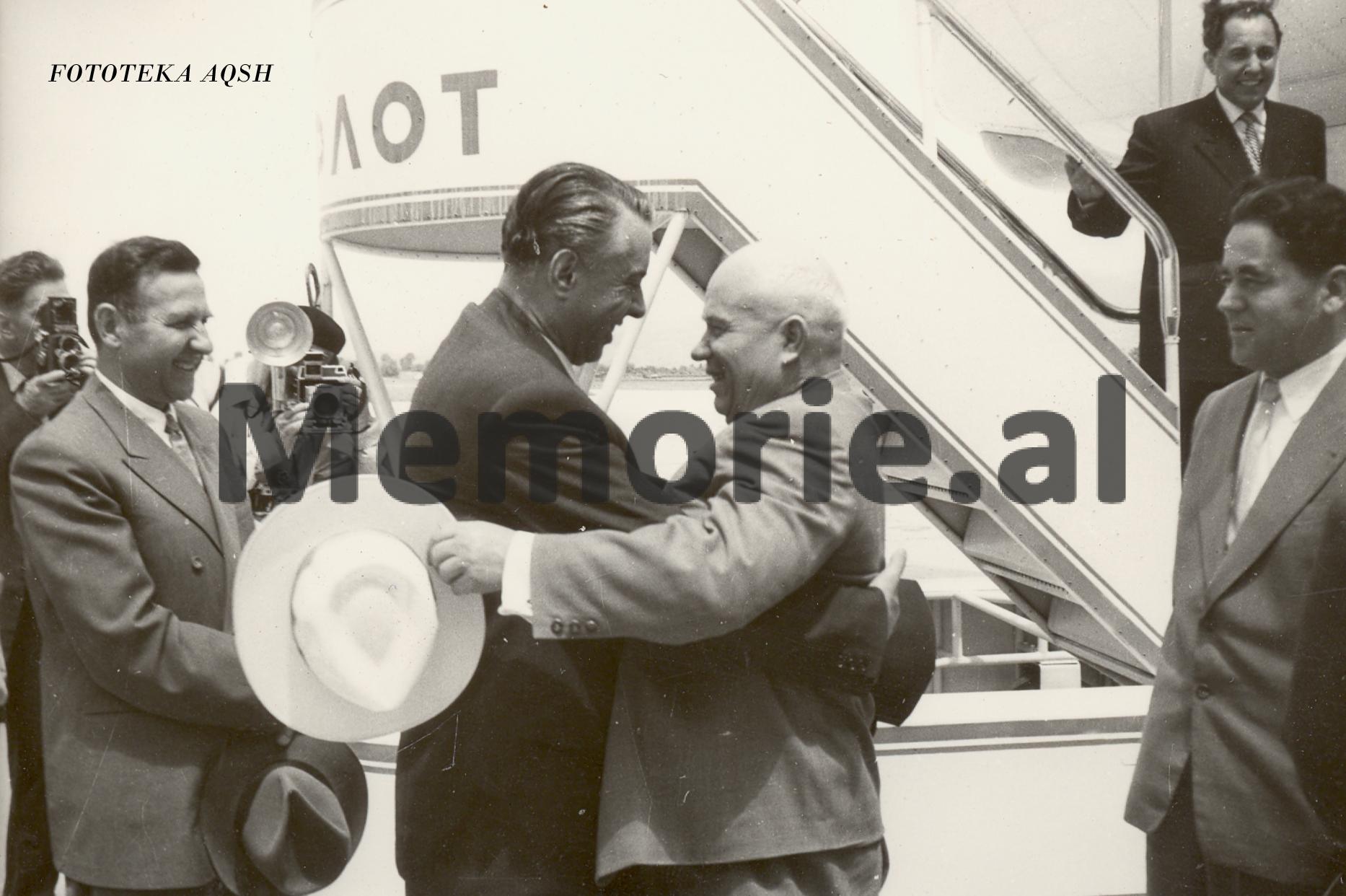
Enver Hoxha and Mehmet Shehu had been in constant conflict with each other for years. The CIA has declassified several documents on the situation in Albania during the years 1949–1955, and besides various political developments, the conflict between Mehmet Shehu and Enver Hoxha is also mentioned.

According to the document, Moscow was in the middle of them, and in its government, ministers had lined up either pro-Hoxha or pro-Shehu. There, the complaints that were made to Russia are detailed, while in the end, Moscow sided with Hoxha. / Memorie.al
                                             To be continued in the next issue

ShareTweetPinSendShareSend
Previous Post

"American philosopher George Santayana says that a past that is not judged is destined to be repeated..."/ Reflections of the philosophy professor at the University of Bologna

Next Post

"In private settings in Kosovo, Schwandner-Sievers encountered a Tito-nostalgia similar to that of other nations and ethnicities, former Yugoslavia..."/ Reflections of Fadil Hoxha's niece

Artikuj të ngjashëm

“In December 1942, in a special declaration on the independence of Albania, the Soviet government emphasized that; the USSR does not recognize Italian claims on…”/ Nikolay Shmelev’s book, “Novaja Albanija” Moscow 1951
Dossier

“Iran’s threat to close the Strait of Hormuz created great concern, disorientation and unprecedented alarm in the US…”/ Enver Hoxha’s political diary, June 1984, revealed

September 3, 2026
“One of the village men, an immigrant who had just returned from the USA, came to the German, whom the Nazi asked; are there any partisans here…”/ The rare testimony of a survivor of the Borova Massacre, July ’43
Dossier

“American philosopher George Santayana says that a past that is not judged is destined to be repeated…”/ Reflections of the philosophy professor at the University of Bologna

September 3, 2026
“His remains, no one remembered where they were left, since no one showed the crime, but maybe Luan Qafëzezi, may have taken one…”! / Reflections of the well-known publicist, about the Beratas poet
Dossier

“The Albanians were angry when they learned about the hypocrisy of the representatives of London and Washington, who collaborated against the communist liberation army…”/ Book by Nikolay Shmelev, “Novaya Albanija” Moscow 1951

September 4, 2026
In July 1943, in Voskopojë, I met Enver Hoxha for the first time. He stood out from the others because he was very well-dressed and extremely charming, but…”/ The rare testimony of Dhora Leka!
Dossier

“Even though Abaz Kupi knew we were leaving and he wouldn’t get the money, he still lent us a considerable sum…”/ Letter from three British soldiers, 1944, revealed

September 2, 2026
“When Abaz Ermenji was asked if he saw the possibility of Tito overthrowing the Hoxha government, he said Tito did not have many supporters in Albania and…”/ Secret CIA documents revealed
Dossier

“When Abaz Ermenji was asked if he saw the possibility of Tito overthrowing the Hoxha government, he said Tito did not have many supporters in Albania and…”/ Secret CIA documents revealed

September 3, 2026
“In Savër, Gjazë, Greater Kosovo, etc., where thousands of Albanians were exiled by the communist regime, we are not simply visiting forgotten places, but…”/ Reflections of the former head of “Voice of America” ​​on the communist past
Dossier

“In Savër, Gjazë, Greater Kosovo, etc., where thousands of Albanians were exiled by the communist regime, we are not simply visiting forgotten places, but…”/ Reflections of the former head of “Voice of America” ​​on the communist past

September 1, 2026
Next Post
“In private settings in Kosovo, Schwandner-Sievers encountered a Tito-nostalgia similar to that of other nations and ethnicities, former Yugoslavia…”/ Reflections of Fadil Hoxha’s niece

"In private settings in Kosovo, Schwandner-Sievers encountered a Tito-nostalgia similar to that of other nations and ethnicities, former Yugoslavia..."/ Reflections of Fadil Hoxha's niece

“Historia është versioni i ngjarjeve të kaluara për të cilat njerëzit kanë vendosur të bien dakord”
Napoleon Bonaparti

Publikimi ose shpërndarja e përmbajtjes së artikujve nga burime të tjera është e ndaluar reptësisht pa pëlqimin paraprak me shkrim nga Portali MEMORIE. Për të marrë dhe publikuar materialet e Portalit MEMORIE, dërgoni kërkesën tuaj tek [email protected]
NIPT: L92013011M

Na ndiqni

  • Rreth Nesh
  • Privacy

© Memorie.al 2024 • Ndalohet riprodhimi i paautorizuar i përmbajtjes së kësaj faqeje.

No Result
View All Result
  • Albanian
  • English
  • Home
  • Dossier
  • Interview
  • Personage
  • Documentary
  • Photo Gallery
  • Art & Culture
  • Sport
  • Historical calendar
  • Others