By LUTFI ALIA
Part One
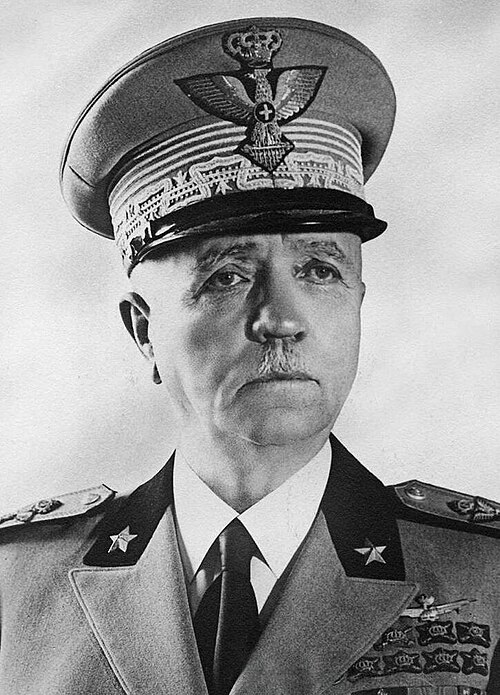
Memorie.al / On September 3, 1943, the Prime Minister of Italy, Marshal Badoglio, signed the armistice with the Anglo-American Allied forces, who ordered him to communicate this decision immediately to the Italian people. Badoglio hesitated and was not announcing the armistice, but the Anglo-Americans applied pressure by bombing Rome and Naples. On September 8, 1943, at 18:30, General Dwight Eisenhower, on Radio-Algiers, proclaimed the capitulation of Fascist Italy. An hour later, Prime Minister Badoglio was forced to notify the Italian people of the capitulation and the signing of the armistice.
General Maitland Wilson, commander of the Allied Forces in the Mediterranean, ordered the Italian troops to surrender their weapons to the partisans and to fight against the Germans, while General Dalmazzo, commander of the Italian army, did the opposite – he made a fatal decision.
While one of his representatives, in a meeting with British Captain Seymour (the SOE agent in Albania), was discussing the possibilities of Italian cooperation with the Allies, General Dalmazzo himself, on September 12, and signed the agreement with the German Command in Albania for the transport of Italian soldiers to Manastir [Bitola], from where they would take the train to Belgrade. It was said they would be repatriated.
The announcement of the armistice created confusion in the Italian army, as most considered it the end of the war. In the absence of precise orders, Italian commands and soldiers felt abandoned and bewildered.
Most of the army was captured by the Germans, who sent them to extermination camps in Germany; the officers of the “Perugia” Division, who refused to surrender their weapons, were shot by the Germans; the soldiers of the “Brennero” Division threw down their weapons and returned by ship from Durrës to Trieste; while a portion, as in the case of the “Florence” Division, linked up with the National Liberation Movement and together fought against the German occupiers.
The General Staff of the National Liberation Army, as soon as it was informed of Italy’s capitulation, immediately addressed a call to the partisan forces and the people to continue the fight against the new occupier: “Today more than ever, we must show the other enemy, the German invader, our strength and our determination for the holy liberation war.”
In the order of the General Staff, addressed to the commands of the partisan formations, it was emphasized to strike the German occupiers and to take under protection the Italian soldiers, who were bewildered by the armistice situation, since they risked being punished by the Germans or sent en masse to extermination camps in Germany.
Precisely in those days, the command of the Martanesh Battalion received an order from the General Staff that, together with the Çermenika and Berzeshta Battalions and with the Shëngjergj Company, they should attack the German column that was escorting over 1,000 carabinieri, financiers, mounted guards, and 450 Italian Blackshirts, commanded by Colonel Gamucci, commander of the Legion of Carabinieri of Tirana.
The departure of the Italian forces was ordered by General Lorenzo Dalmazzo, Commander of the 9th Army, after an agreement with the German high command. The column set out from Tirana for Manastir, where they would take the train to Belgrade, from where they hoped to be repatriated. Some of the soldiers marched on foot, others in trucks. The motorcade was preceded by the 26th Blackshirt Battalion, which traveled one kilometer ahead of this massive column, escorted by German forces.
The combined partisan forces organized an ambush at Kroi i Pishkashit [Pishkash Spring], 3 km above Qukës. In a narrow section of the road, before a curve, the partisans blocked the passage with stones that they rolled down from the cliff opposite. All the partisans positioned themselves on the eastern side along the mountain slope, bringing under control the entire length of the column, while on the western side was the Shkumbin River and the steep and impassable slope.
They waited at Kroi i Pishkashit, as described in his diary by Second Lieutenant Franco Galiardi (49th Artillery Regiment, Parma Division): “After a short stop in Librazhd, we resumed the march…! At Qukës, our motorcade left behind the carabinieri of the Legion of Tirana. Along the road we see soldiers walking on foot, tired, sweaty and revolted. At 12:30, a mass of soldiers turned back in haste shouting: ‘The rebels! The rebels!’
At a distance of 50 m ahead of me, the road was blocked with stones. The 26th Blackshirt Battalion pushed back the mass of soldiers and mules that were returning in disarray. The German armored cars tried to get to the front, but it was impossible. The partisans are very close, positioned on the hillside, with their weapons aimed at us, but they were not firing.
A loud voice invited us to go to the mountain together with them, to fight the German occupiers. The partisans were not interested in us, but in the carabinieri and the Blackshirts, who were armed…” (Diary of Second Lieutenant Franco Galiardi) The partisans’ call to surrender and fight together against the Germans was repeated several times.
The first to surrender were the soldiers and carabinieri who had marched on foot, then the officers. The German armored cars opened fire against the partisan positions. At the center of the fighting were the partisans of the Martanesh Battalion, where there was the greatest concentration of German soldiers.
Hysen Koxherri with machine-gun bursts and the dense fire of the partisans’ weapons blocked the advance of the German forces.
The exchange of fire continued for several hours. The German attack at the head of the road continued with hand-to-hand combat, in which several German soldiers were killed, while in the partisan ranks Shaban Kenga and Emin Balla were killed.
The two companies of German soldiers abandoned the column with the soldiers, and after taking a portion of the Italian soldiers and militiamen, continued along the road toward Prrenjas, crossed Qafë Thana and reached Struga.
Regarding the fighting at Kroi i Pishkashit, the General Command of the Gendarmerie, with document No. 28/1 – Reserves, dated 29.9.1943, informed the Ministry of Internal Affairs: “…. On September 29, 1943, at the place called Kroi i Pishkashit, 3 km from Qukës, a partisan company attacked a motorcade with Italian soldiers who were traveling from Librazhd to Struga, some by vehicle and the rest on foot…”!
Regarding the action at Kroi i Pishkashit, in the work “History of the Anti-Fascist National Liberation War of the Albanian People: April 1939 – November 1944, Tirana 1984,” concerning this event, it is written: “The partisan forces opened surprise fire and an armored car and two vehicles were engulfed in flames. Fierce fighting broke out. The enemy counterattacked several times, but when it saw that it was suffering significant losses in forces and equipment, it was forced to withdraw toward Qafë Thana.
In this action, 20 German soldiers were killed and about 1,000 Italian soldiers, carabinieri, non-commissioned officers and officers were captured, along with 700 rifles, 39 light and heavy machine guns, 14 mortars, 51 horses and mules, and 16 vehicles loaded with ammunition, food and clothing. During the fighting, two partisans were killed, Shaban Kenga from Martanesh and Emin Balla from Shëngjergj.”
The body of partisan Shaban Kenga was not found. Regarding his death, many suppositions were created. It was said that he was wounded and taken by the Germans in a truck, who took him to a concentration camp in Germany, but this was not true. The event was clarified in 1970, when a peasant from Prrenjas revealed that after the partisans had left, he had found the body of Shaban Kenga and had buried it in the village cemetery.
After the end of the fighting, the partisan forces and the column of Italian soldiers who surrendered began the march toward Çermenika, accompanied by the partisans of the Martanesh and Çermenika Battalions and the Shëngjergj Company. The weapons, ammunition and other materials were loaded onto several trucks, while the soldiers of all the units that surrendered continued the journey on foot. Here begins the history and tragic fate of the Gamucci column.
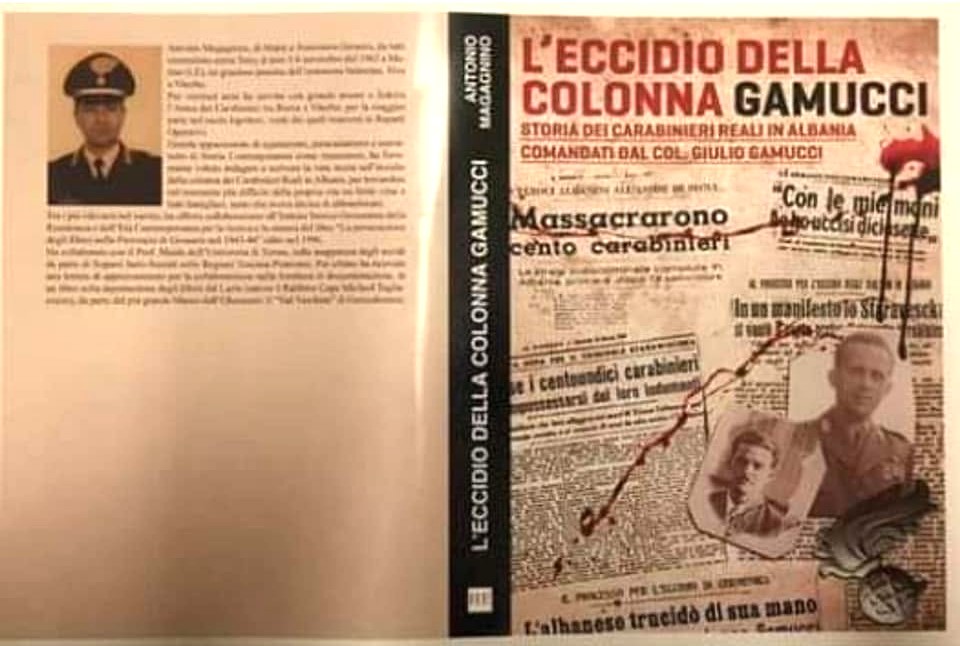
Although this history has no direct connection with Martanesh, since in some circumstances and in some events the partisans of the Martanesh Battalion are also present, I am presenting a brief overview of how numerous authors treat it, with the aim of shedding light on some aspects that are still dark and unresolved regarding this history.
Intermezzo
September 12, 1943: General Dalmazzo signed the agreement with the General Command of the German Army in Albania for the evacuation of Italian troops. September 15, 1943: The military forces of Tirana began preparations for the long march. September 25, 1943: The Gamucci Column left Tirana and after a journey with many vicissitudes to Elbasan, continued the road to Librazhd, Struga, with destination Manastir.
At Qafë Kërrabë (km. 17), the column was attacked by partisans. Over 500 Italian soldiers surrendered to the partisan forces. The rest of the column continued the march toward Elbasan. After a short rest in Elbasan, the column continued the road to Librazhd.
September 29, 1943: The partisan ambush at Kroi i Pishkashit, the mass surrender of Italian soldiers and officers.
September 29–30, 1943: The march from Kroi i Pishkashit, on the itinerary Qukës, Skroskë, Përroi Bushtricës, Guri Stafës, Vlash, Qarrishtë, Fushë Studen, Lunik, Orenjë, Fushë Gurrë.
October 1, 1943: The Gamucci Column arrives at Lunik. October 2, 1943: The column arrives at Orenjë. The carabinieri with some officers were sent and settled in Fushë-Gurrë, where they were under the strict control of the partisan guards of the Çermenika Battalion.
The route of the Gamucci column, from Tirana to Kroi i Pishkashit (blue line) and the journey to Orenjë (black line). (T. Mereu, L. Mereu. La Colonna Gamucci. Alla ricerca della Verità. Alcione, Trento 2014). October 2, 1943: The partisans of the Martanesh Battalion, after taking a quantity of weapons, two “Breda” machine guns, ammunition and food, returned to Ballejë. They also took a platoon of Italian soldiers, some of whom they kept in Ballejë, while others they distributed to the houses of the peasants.
October 3, 1943: The partisan forces of the Çermenika Battalion disarmed all the carabinieri and other soldiers, while the officers were left only with their pistols. October 8, 1943: Colonel Gamucci and the group of officers were isolated in the building of the municipality of Zdrajshë, where they were under the control of the partisan guards of the Çermenika Battalion.
October 10, 1943: The officers of the British mission Smiley and McLean paid a short visit to the base of the Italian prisoners at Guri i Muzhaqit and after a conversation with Kadri Hoxha, left for Fushë Bizë, where Brigadier ‘Trotsky’ Davies was expected to land.
October 15, 1943: At 14:00, Second Lieutenant Galiardi and Captain Carboni met and conversed with commander Kadri Hoxha, who, to their question: “What would they do with the Italian officers,” said: “Per quanto riguarda gli ufficiali, una soluzione definitiva è in via di attuazione – (as regards the officers, a final solution is being implemented).”
(Television interview of Kadri Hoxha in 1996) October 16, 1943: Xhelal Staravecka arrives at Fushë Gurrë with the II Battalion of the I Assault Brigade, with the task: “Implementation of the order of Dushan Mugosha and Mehmet Shehu: The shooting of the carabinieri and officers.” / Memorie.al
Continues in the next issue