By Eugen Shehu*
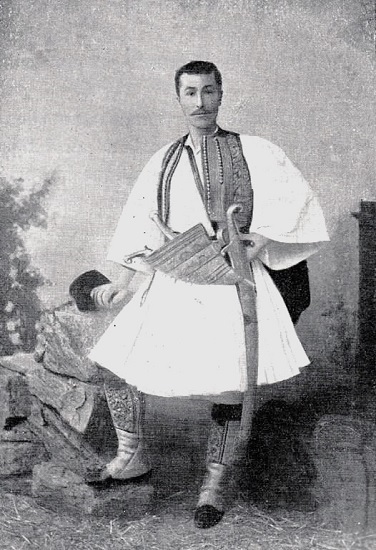
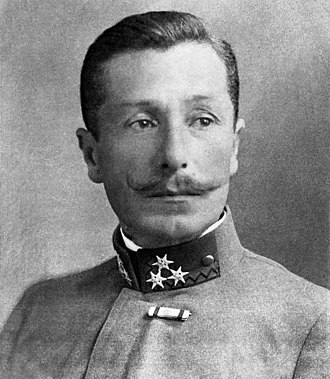
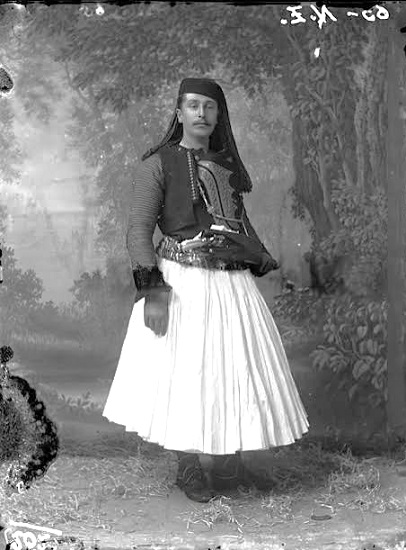
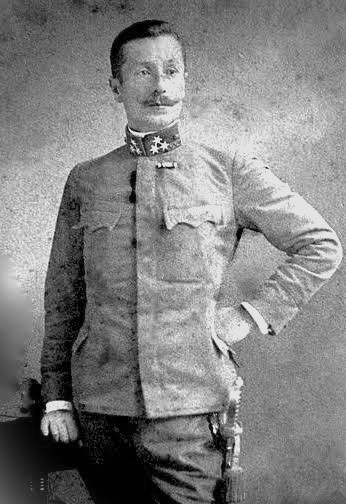
Memorie.al / The great Albanian families have managed, through endless pain and centuries of wars, to pass down an unblemished moral dignity. Like the beech of a tree, they have protected trunks and branches against storms, nourishing them with the Albanianism preserved over centuries. These distinguished families, these great households, have been and remain interpreters of the history of our nation—a history filled with defeats and victories alike. In this constellation of Albanian nationalism, the Toptani family undoubtedly occupies a prominent place. Among the scions of this family, Said Toptani would become particularly known in the second half of the 19th century. Although he came from a family that owned nearly half the lands of Tirana, Said would support the Albanian common folk in the so-called movements against the Tanzimat.
The new taxes that the Sublime Porte wanted to impose on the Albanians were yet another burden and suffering for a nation enduring extreme poverty in the long Ottoman night. Said Toptani’s public opposition to the reforms undertaken by Istanbul led to his internment in the small Turkish town of Aka, along with his family. It was precisely in this town, on March 14, 1867, that Murati, Said’s first son, was born. A few years later, through the intervention of Sami Frashëri, Said Toptani was allowed to go to Istanbul. There, his family would have almost daily contact with the distinguished Frashëri family, who not only kept alive in their souls the spirit of freedom but also strove by every means to pass it on to their fellow countrymen.
He received his first lessons in Turkish, although only Albanian was spoken at home. But writing in Albanian was still difficult, especially in Istanbul, at the heart of the Ottoman Empire. After that, in 1878, Murat continued his studies at the “Madame Fyres” college in Istanbul, known for its high teaching quality and the comprehensive education it provided. When Said Toptani was allowed to go to Albania, he did not take Murat out of school. On the contrary, following Sami’s advice, he left his son to continue attending school while staying at the Frashëri home. This fortunate circumstance allowed young Murat to gain more knowledge from Naim and Sami than from the Turkish teachers at “Madame Fyres.”
There, in the hearth of Albanianism, Murat became acquainted not only with the language, traditions, history, and culture of Albania but also with the path of the rifle and the pen that dozens of great Albanian patriots had chosen for the autonomy of the Albanian lands. “On the school benches and in the family environment, Murat Toptani met the daughter of the national poet Naim Frashëri, Mrs. Asie, whom he later married.” (Those Who Proclaimed National Independence – Tirana 1997, p. 146). In those same years, Murat also became closely acquainted with other prominent patriots such as Hoxha Tahsimi, Ibrahim Temo, Ferhat Draga, and Shahin Kolonja. At the same time, he would be a close friend of Mid’hat Frashëri, on which occasion his wife Asia would take the place of a sister. Years later, when both of them would carry on their shoulders the burdens of Albania, a correspondence would undoubtedly unite them wherever they were. The illumination of this correspondence will certainly cast new thoughts and hypotheses on the history of Albania, especially at the beginning of the 20th century.
In the years 1884–1888, Murat pursued studies in Istanbul at the renowned “Galatasaray” faculty, where, besides knowledge in the field of international law, he also successfully mastered the following languages: French, Turkish, Arabic, Persian, and German. Inclined to stay up until the late hours studying, thanks to his unyielding will, he also began translating into Albanian, always having at his side the unstinting help of the poet and patriot Naim Frashëri. In 1895, after marrying Asie, Murat Toptani decided to go to Tirana, despite the fact that a brilliant career awaited him in the hierarchy of the Ottoman Empire. But the distinguished scion of the Toptanis preferred to go to his homeland, to Tirana—filled with mosquitoes, misery, without lights or roads, hidden among thorns and mud.
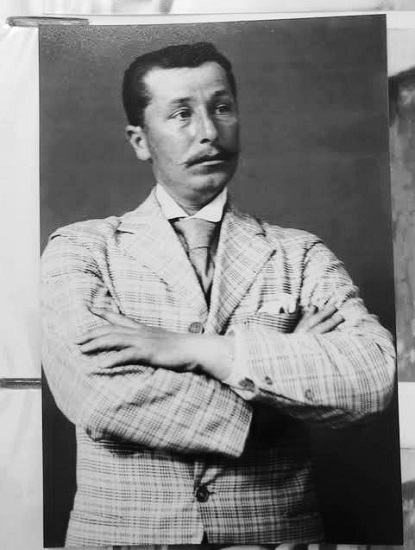
In the very first months, he settled in the large family home and began working to spread the Albanian language, following the method of itinerant teachers. Tall, with a sharp gaze, extremely energetic, Murat Toptani would take to the roads of Albania, wishing to spread the beautiful Albanian language to the remotest village. Thanks to the honored name of his father, said, wherever he went—in Durrës, Krujë, Mirditë, and Lezhë—the people received him with love. But when he revealed his purpose and secretly gathered children to open their eyes, the Albanians would surround him with an unparalleled affection. In one of the secret reports that the Russian consul in Manastir sent to St. Petersburg on November 26, 1896, among other names, he also listed Murat Toptani, who “is making a special contribution to introducing the Albanian language into the current Turkish schools.” (Central State Archive, Tirana. Fund “Documents before 1912,” file 17, sheet 4).
In the autumn of 1897, the Sublime Porte undertook a series of strict measures against the “rebellions” that had appeared in the Albanian vilayets: among these measures, the Turkish spies had also compiled a list of Albanian patriots who, according to them, were the main instigators of these “rebellions.” It is easy to guess that at the top of this list stood the name of Murat Toptani, who by a special decree from Istanbul was interned in Tripoli, Libya. The objections of the notables in Tirana, Shkodër, and beyond fell on deaf ears this time, and even Naim’s efforts in Istanbul were disregarded. The news had now spread not only in the Albanian vilayets but even further. In the first days of 1898, the Albanian press of the time would write: “The letters coming to us from over there say that Turkey has arrested Murat Bey and will send him into exile.” (Shqipëria newspaper, no. 40, Bucharest, January 1898).
Initially, Murat Toptani was sent to the prison of Gallipoli and after some time to that of Tripoli. By now, for the hundreds of Albanians living in Tripoli, the prisoner Murat Toptani was the “teacher” of the Albanian language, so they could not remain idle. When they saw that their repeated protests were ignored by the Sublime Porte, these very Albanian patriots bribed some Turkish prison guards and managed to get their distinguished compatriot out of his cell. Then, with the help of his neighbors, Murat left Tripoli and settled in Italy, out of danger for his life. There he immediately got in touch with the director of the magazine La Nazione Albanese, Mr. Anselmo Lorecio, a great friend of the Albanians. In August 1898, he published in that magazine an article titled “Albania and the Albanians,” which is in fact a political manifesto.
After recounting the origins of his nation, Toptani in this manifesto informs the Italian public and beyond that the Albanian people have shown they have a tendency to fight for their freedom and autonomy. He expresses his conviction that the wars of Gjergj Kastriot Skanderbeg, in defense of the Albanian lands and also of European civilization, cannot be coincidences but have sprung from the freedom-loving spirit of his compatriots. This is the reason, concludes this political manifesto, why I believe that: “Albania shall forever remain only for the Albanians, even if it may come at a high price. Never from the life of the Albanians does the hope and desire for freedom fade.”
At the beginning of the 20th century, Murat Toptani wandered through Italy and Europe. He collaborated with several of the newspapers that Albanian patriots published at that time, striving for the national cause. But he also found time to work on translations or his own creations, especially in poetry. He became closely acquainted with European culture, on which occasion he also ventured into painting and sculpture. Equipped with a deep and multifaceted culture, even though this period of creativity, he wanted to awaken the dormant consciousness of his compatriots. In one of the reports of that time, Consul von Ciedenek informs Vienna, among other things, that: “Murat Toptani continues to propagate the autonomy of his country.” (Archive of the Institute of History – Tirana. Fund of Vienna documents, document 176).
During these years, his collaboration with another distinguished patriot, Faik Konica, who published the newspaper *Albania* in Brussels, is also worth noting, as their cooperation in the field of journalism was not lacking. After long journeys, he returns once again to Tirana, but the Sublime Porte, which had been following his patriotic activities, arrests him and sends him this time to the infamous prison of Çanakkale. Once again, the intervention of Albanian patriots with the Sultan was needed for him to be released, but “without the right to go to Albania or to engage in propaganda, wherever he might be.” While he was interned in Konya, Turkey, Ferid Pasha, a great friend of the Frashëri family, was sent there as the city’s governor. He had known Murat before, and with the reputation he enjoyed, he managed to remove him from the list of internees; moreover, knowing his inclinations as a painter and sculptor, he assigned him to municipal work for the beautification of the city.
Thus, Murat Toptani would display his full talent, giving the city of Konya a different face and thereby winning the admiration of many citizens. But this activity did not for a moment prevent the great patriot from maintaining his spiritual ties with his homeland. He continued exchanging letters with Mid’hat Frashëri, Ibrahim Temo, Faik Konica, and Josif Bageri; he often met with Albanian patriots in Istanbul and was a fervent supporter of the Albanian autonomist movement, as conceived by the Secret Committee of Manastir. After his internment period ended, he settled once again in Istanbul, but when he realized that his place was not there, followed step by step by the Sultan’s spies, and certain that if he were caught again a bullet awaited him, Murat Toptani preferred to die in his homeland, there on the battlefield, rather than in the dungeons of Çanakkale. Taking advantage also of the promises of the Young Turks, at the beginning of 1908 he went to Tirana and, as energetic as he was, within a few weeks he opened in his large house, in the heart of Tirana, the first Albanian-language school for that city.
In this national humanitarian action, he also had the support of dozens of other patriots from Tirana, but the public opening of the school on the upper floor of the house endangered not only the house but also its owners. A year later, when the Young Turks began punitive operations against the Albanian national movement, it was the Tirana patriots, united as one fist, who armed themselves and defended with their lives the sacred house, which had been transformed into a hearth of Albanian education. It was these same patriots who kept hidden for months, in the surroundings of Tirana and Krujë, the Albanian teacher and brave man Murat Toptani, from the pursuits of the Turkish government. It was precisely the activity and sacrifices of this man in service to his nation that, at the popular assemblies of Tirana, in November 1912, he was unanimously chosen as a representative of this city for the raising of the independence flag in Vlorë, as well as for the creation of the first Albanian state.
In the first days of November, Murat Toptani was summoned to Durrës by his cousin, Esat Pasha Toptani, who even promised him wealth and offices if he would fight against Ismail Qemali. Murat Toptani not only refused such shameful offers but also threw in his cousin’s face the flirtations he had made and was making with anti-Albanian circles inside and outside the Albanian vilayets. Thus, Esat Pasha Toptani, finding no support even among his own people, went to Vlorë and, for appearances’ sake, supported the first Albanian government. But only a few months later, using intrigues and with the support of foreigners—especially the Serbs and the French—he not only sabotaged this state but also brought about unprecedented turmoil in the years 1913–1915.
Murat Toptani was among the first to welcome the elderly Ismail Qemali at the Durrës pier; he had also paid dozens of Tirana volunteers who would accompany the patriot and diplomat from Vlorë through the mud and rains of Myzeqe. Thus, the Tirana patriot entered heroic Vlorë with his head high, meeting and embracing dozens and dozens of other men who were rising to determine the fate of their nation. Regarding the first day of the Assembly of Vlorë, the Albanian press of that time would write: “The National Assembly, gathered by delegates from all regions of Albania here in Vlorë, was opened today at 4 p.m. at the home of Mr. Xhemil Bey. Mr. Ismail Qemal Bey, as the prime initiator of the gathering, took the floor and explained to the delegates the purpose of the Assembly, namely to strive together and take the necessary measures to save Albania from the great danger it finds itself in today. As rules and custom require, the verification of the delegates’ credentials then began, whose names are as follows… From Tirana, gentlemen Abdyl Bey Toptani and Murat Bey Toptani.” (*Përlindja e Shqypnis* newspaper, Year II, no. 6-7, dated January 31 – February 4, 1914).
The Albanian government led by Ismail Qemali, as is known, faced great difficulties from the very first days of its proclamation. Murat Toptani was entrusted with important duties in education, on which occasion he had to hurry to every corner of Albania, working as always with characteristic energy, to place Albanian education on as national a basis as possible. Particularly in terms of school textbooks, he gave his help not only by organizing renowned specialists but also by paying out of his own pocket many of the compilers of these texts. Murat Toptani was also among the first initiators for the creation of the Albanian Academy of Sciences, which would precede Albania’s economic, political, and social developments. Even though some at the time considered these ideas of his as dreams, the scion of the great Toptani family wanted to see his country, though economically ruined, as soon as possible in civilized Europe.
After the fall of the provisional government of Vlorë, Murat Toptani aligned himself with those patriotic politicians who placed the interests of their nation above all else. In particular, he opposed the shifty policy of his traitorous cousin, Esat Pasha Toptani, as well as the reactionary movement of Haxhi Qamili. He cooperated with progressive Albanian circles and, through various journalistic articles, raised his voice high against the dangers threatening Albania in the whirlwind of Balkan events. In the autumn of 1914, it was Esat Pasha Toptani who again sought the support of his cousin, Murat—of course, to the detriment of national interests. But this time, Murat Toptani sent word to his cousin that their paths were forever separated: one on the path of honor, the other on that of shame.
Two weeks after this event, Esat Pasha Toptani paid some mercenaries from Tirana, who surrounded Murat Toptani’s house. Thanks to a few of his friends, Murat and his family escaped, while the large house in the heart of Tirana—that house that had been searched and raided dozens of times by the Ottoman occupiers—was now reduced to ashes by some Albanians bought by Esat Pasha. Along with the furnishings and ancient walls, thousands of books in dozens of languages, thousands of manuscript pages, and hundreds of articles collected by the son of Tirana from all corners of the Ottoman Empire were destroyed by the flames. This was certainly a great blow to Murat Toptani, the patriot who had strived every minute of his life for his nation, its prosperity, and its future. After this, he traveled to Vienna, where he did not interrupt his contacts with Viennese diplomats concerning the fate of Albania.
He still maintained ties with Mid’hat Frashëri, Sali Gjuka, Luigj Gurakuqi, etc. He returned to Albania amid the upheavals of 1917 and, 3–4 months later, closed his eyes in sorrow, on February 20, 1918. Thousands were the residents of Tirana who accompanied to their final resting place the teacher, patriot, poet, painter, and distinguished sculptor, their eloquent son, the man who had given everything to his homeland. A few days later, the newspaper *Vllaznia*, published by Albanian students in Vienna, would write, among other things: “Murat Toptani showed without fear on all occasions that he was always on the side of his nation and with unparalleled zeal strove for its good.” Great men close their lives, but not their works, for which the nation honors them./ Memorie.al
Bern-Switzerland*