From Mevlan Shanaj
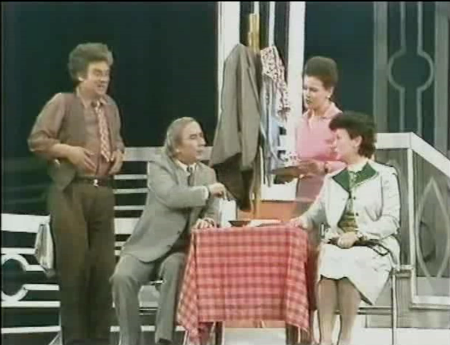
Memorie.al – I would like to invite a debate on Albanian stage creativity during the period 1950–1990. In my view, despite the pressures of socialist realism and the ideological constraints of the time, Albanian theater experienced significant artistic achievements. Within those limits, works were created that delved into the psychology of the Albanian individual, reflected the moral and social conflicts of the era, and built characters that remain in the public’s memory. It is enough to recall dramas such as “Toka Jonë” (Our Land), “Familja e Peshkatarit” (The Fisherman’s Family), “Karnavalet e Korçës” (The Carnivals of Korça), “Hijet e Natës” (Shadows of the Night), “Shtëpia në Bulevard” (The House on the Boulevard), “Prefekti” (The Prefect), “Njollat e Murmë” (The Stains of Murmë), “Zonja nga Qyteti” (The Lady from the City), and “Pallati 176” (Palace 176).
If the most important measure of theater is the relationship it creates with its audience, then these works passed the test of time. They were followed with interest, returned to the stage, became part of the collective memory, and many of their characters continue to be quoted even today.
Naturally, this success was not solely the merit of the playwrights. A crucial role was played by directors such as Pandi Stillu, Piro Mani, Mihal Luarasi, and Kujtim Spahivogli, who brought these works to life with a stage language that was modern for its time. Equally decisive was the brilliance of the performances by actors such as Marie Logoreci, Ndrek Luca, Naim Frashëri, Kadri Roshi, Violeta Manushi, Mihal Popi, Pandi Raidhi, Robert Ndrenika, Vangjush Furxhiu, Roland Trebicka, and many others.
The question I pose for debate is this: Is it right that today we judge Albanian theater of that period solely through the prism of ideology, leaving its aesthetic, directorial, and acting achievements in the shadows? Or should we be able to distinguish the limitations of the system from the genuine artistic values that survived within it? In the works I cited, the characters gained weight not from political speeches, but from moral dilemmas. Human dilemmas are the substance of art. Precisely there, art was born.
I believe that the history of theater should be neither apology nor denial. It should be a fair assessment, where art is judged by the criteria of art, without forgetting the historical context in which it was created. Only in this way can we give the works and the artists who shaped Albanian stage culture the place they deserve. Hasty characterizations, whether those of socialist realist propaganda or those of total denial, flow into streams that pour into a sea without an address.
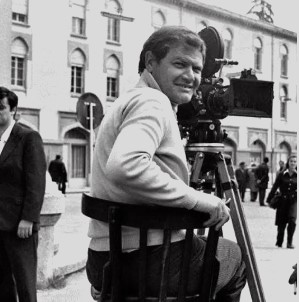
THE CAMERA IS THE DIRECTOR’S STYLOGRAPH
Film is perhaps the most collective art that humanity has created. Film is born from the meeting of many minds, many sensibilities, and many professions. Every film is an orchestra, where each instrument has its own importance, but where the conductor remains the director. The basis of a film is dramaturgy, that is, the script.
However, the director is not a ruler who gives orders. He is the creator who knows how to listen, to persuade, and to inspire. He must be able to make every collaborator feel the film as their own. The director harmonizes the work with the screenwriter, selects the actors, and achieves interaction with the Director of Photography, the production designer, the composer, the editor, and undoubtedly determines the creation of characters with the actors. From world experience, consider the collaborations of Federico Fellini with Marcello Mastroianni, or Martin Scorsese with Robert De Niro, Tom Cruise.
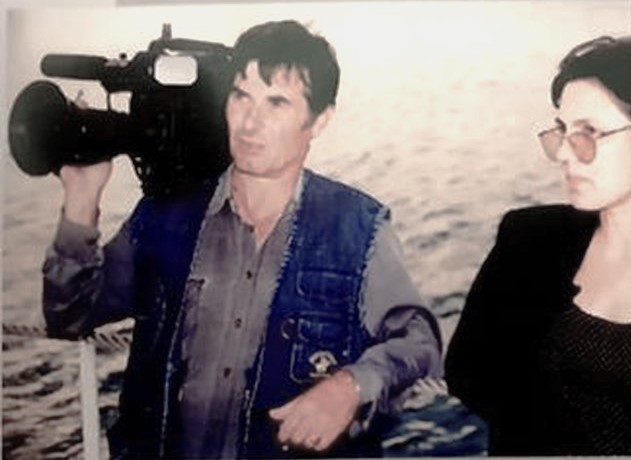
In these collaborations, the closest positions to the director are held by the screenwriter and the director of photography. It is no coincidence that it is said: “The camera is the director’s stylograph.” The director writes with ideas, with emotions, and with rhythm, but those ideas take shape through the eye of the camera. If the script is the thought, the camera is its writing.
The Director of Photography is not just a technician. He is the visual translator of the work’s core idea. A camera movement, an angle of view, a light contrast, a long shot, or a sudden close-up can completely change the emotional meaning of a scene.
That is why the relationship between the director and the cinematographer is built on complete trust and professional respect – even more beautifully when good friendly relationships are created. They must reach the point where they understand each other even without many words.
The history of cinema knows many creative duos that have left their mark precisely because they built this common language. Martin Scorsese worked for nearly two decades with the Director of Photography Ballhaus, who was a master of:
– long and fluid camera movements;
– the dramatic use of light;
– dynamic compositions;
– combining realism with elegant visual style.
In my own experience, I have collaborations that could remain as a study book – my numerous collaborations with Pali Kuke and with Stefan Gajo. If the director fails to share not just the image but the entire vision for the upcoming film with the cinematographer, the film loses a part of its soul.
But the collaboration does not end here. The scenographer builds the space where the characters will live. The costume designer gives time, character, and identity to the figures. Thus, I recall the excellent collaboration with the painter and scenographer Fatbardh Marku on the film “Plumba perandorit” (The Emperor’s Bullet), which, together with the extraordinary cinematography of Pali Kuke, gave that film European dimensions.
The composer creates the emotion that is often not seen but is felt – as is the case with Aleksandër Lalo in the film “Të shoh në sy” (To Look You in the Eye), and Kujtim Laro has left a monumental creation in the film “Lule të kuqe, lule të zeza” (Red Flowers, Black Flowers).
The editor is the co-author of the film’s rhythm; at the editing table, a film can be reborn or be lost – collaborations and clashes with the master Ismail Balla…! The sound recordist, the unforgettable Gjergj Shteto, and so on – the makeup artists, the lighting technicians, the producer, the assistant directors, and indeed every member of the team adds a stone to the building of the work.
The secret of success lies not only in individual professionalism but in the ability to collaborate. On a shoot, difficulties constantly arise: the weather changes, time runs short, the actor does not immediately find the right emotional state, and technology creates obstacles.
It is precisely in these moments that the quality of the team is tested. A group that communicates and respects each other overcomes obstacles with creativity, not with conflict. From my memories, when it happened that we clashed with a collaborator during work, we would have lunch or dinner together to forget the unwanted moment.
The director must know how to accept that sometimes the best idea may come from a collaborator. Cinema knows many cases when a suggestion from the cinematographer, the actor, or the editor became an inseparable part of a great film. The wise director does not see this as a loss of authorship, but as an enrichment of it.
Film is proof that the greatest art is born when individualities do not disappear, but unite in a shared vision. This is how I had an impressive collaboration with Afrim Spahiu, a professional who knew how to create spaces of understanding while respecting respective positions.
Therefore, the expression “the camera is the director’s stylograph” has a deeper meaning than it appears. It is precisely the relationships of trust within the group that give life to the film – not as the work of a single person, but as the fruit of an artistic collaboration where each leaves their own mark.
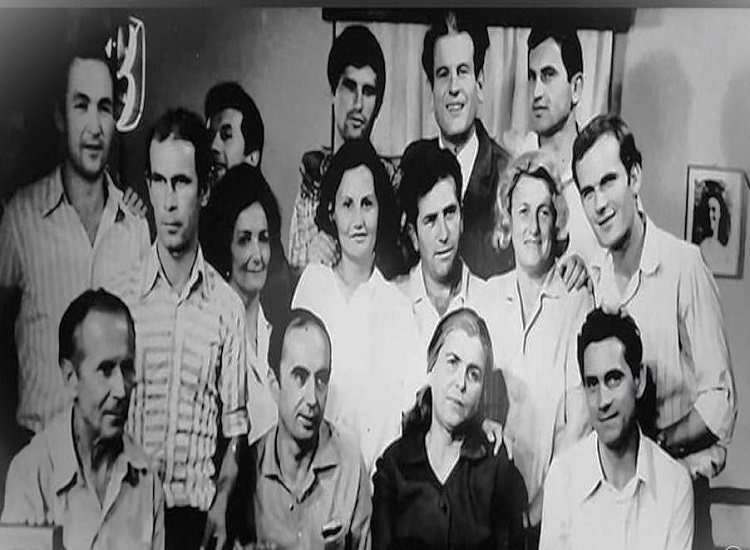
On this occasion, I express my deep gratitude to all my collaborators, to whom we entrusted ourselves and from whom we learned, giving the most sincere dedication to the work. Therefore, I feel proud that with great effort, we have given Albanians a magnificent part of their lives – not only history but above all, pieces of our shared life, as seen in feature films and numerous documentaries. Gratitude to those who created Albanian Television – the University of Knowledge for all of us. / Memorie.al