By Bashkim Trenova
Part Thirty-Two
– NAZIBOLSHEVISM – LITERATURE AND THE ARTS –
FOREWORD
Memorie.al / Historians, political philosophers, intellectuals from various schools or different positions have dedicated thousands and thousands of pages, entire volumes, studies, and articles to the comparison between Nazism and Communism. Generally, their publications and studies focus on the police control of society by these dictatorships, the role of the dictatorial state hierarchy, the head of state as a suppressor of free thought, the omnipresent place of official propaganda in society, the mass massacres and the network of concentration camps, the activities of the secret police – the NKVD in the USSR (later the KGB) and the Gestapo in the Third Reich. In his book “Le Passé d’une illusion” (The Past of an Illusion), François Furet notes that Nazism and Communism share the same opposition to liberal democracy and what they call “capitalist bourgeoisie.” Both ideologies claim to be socialist and use the image of socialism. Communist countries called themselves “socialist.” “Nazism” is a shortening of National Socialism.
Continued from the previous issue
PAINTING AND SCULPTURE
Soviet painting was subjected to the orders of the regime. A painter, in order to live, had to accept this yoke, to obey the orders of the Party and its officials. The control and supervision of painters’ works was carried out through Glaviskusstvo (the General Directorate of Literary and Artistic Affairs), as well as through the Committee on the Arts attached to Sovnarkom (Council of People’s Commissars).
Communism does not tolerate enemies. Those deemed as such are punished, annihilated. Any form of art not in line with Socialist Realism was severely suppressed. A large number of painters left Russia to escape this situation. Kandinsky left in 1921 and settled in Germany, where he remained until Hitler came to power. He then went to France.
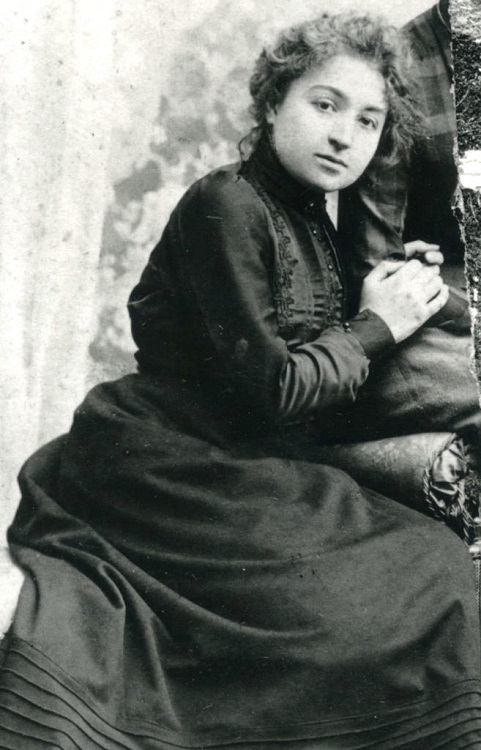
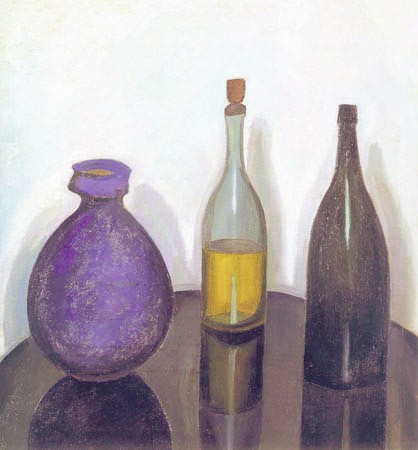
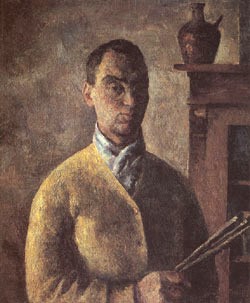
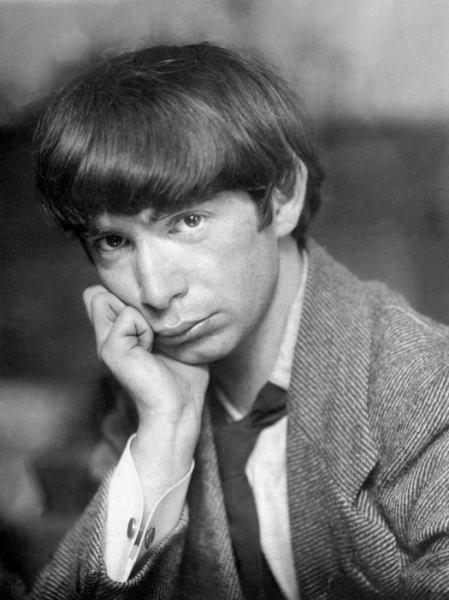
Chagall abandoned Russia in 1922, first going to Berlin and then to Paris. Robert Falk went to Brussels with his family. Antoine Pevsner lived in Paris from 1923. Ossip Zadkine first left for Paris, where he lived for a long time, and then for the USA. The Futurist painter Alexandra Exter immigrated to France in 1924. Dobuzhinsky, with his family, abandoned Russia in 1924, wandering through various countries.
The exodus of painters from the Soviet Union continued over the years. At the end of 1969, Kuzkovsky immigrated to Israel and was expelled from the Union of Artists. In 1978, Oscar Rabin was stripped of his Soviet citizenship by the Supreme Soviet. He was sentenced to family exile, a forced exile, a deportation. In subsequent years, a number of non-conformist artists were forced to abandon their homeland and settle in Europe or the USA. In the late 1980s, painters Ilya Kabakov, Erik Bulatov, Oskar Rabin, and Vladimir Yankilevsky emigrated and settled in New York or Paris.
Russian or Soviet painters, who could not leave the country after the revolution and who, in one way or another, did not accept the yoke of Socialist Realism, who respected their own personality in creativity, ended up in prisons, gulags, or before firing squads. The painter Mikhail Vasilyevich Nesterov was arrested in 1938 and imprisoned in the Butyrka prison. Ülo Sooster, an art student, was imprisoned in one of the camps in Siberia.
The painter Mikhail Sokolov, one of the most famous after the revolution, was sent in 1938 to a camp in the Kemerovo region, where he continued to paint miniature paintings depicting the taiga and portraits of his companions in misfortune. Another painter, Gustav Klutsis, was arrested on January 16, 1938. On February 11, 1938, he was sentenced to death by an NKVD commission for “participation in a counter-revolutionary nationalist terrorist organization.” He was executed on February 26 of the same year at the Butovo firing range near Moscow, along with other intellectuals and artists.
Grigory Ivanovich Gurkin, a Russian landscape painter, was arrested and executed by firing squad on October 11, 1937. In Soviet Russia, a powerful figurative propaganda developed, occupying streets, crossroads, parks, factories, and everywhere else. Part of this propaganda, in addition to painting, banners with slogans, portraits of communist leaders, thematic posters, etc., was also sculpture. The attention that the leader of the Bolshevik revolution, Vladimir Ilyich Lenin, paid to the role of sculpture in the land of the Soviets is significant.
In his memoirs, Lunacharsky, the People’s Commissar for Education, writes: “As early as 1918, Vladimir Ilyich told me that art needed to be encouraged to move forward as a means of agitation. For this, he presented two projects…! The second project was for the large-scale erection of monuments to great revolutionaries, temporary plaster monuments, both in Petrograd and Moscow…! Vladimir Ilyich called this ‘monumental propaganda’.”
Lenin not only gave orders and directions, not only drafted and presented projects, but also demanded accountability, exerted pressure, and ordered that his commissions not be delayed, but implemented immediately. In July 1918, he sent this letter to the People’s Commissariat for Education and the People’s Commissariat for the Properties of the Republic:
“We demand that you immediately provide us with information on what has concretely been done to implement the decrees of May 13, 1918, especially regarding 1 – the removal of old monuments; 2 – their replacement with new monuments, even temporary ones…! The delay that has continued for two months in the implementation of this decree… is unforgivable.”
On September 18, 1918, he addressed this threatening telegram to Lunacharsky: “Today I heard Vinogradov’s report regarding busts and monuments. I am deeply outraged. For months, not a single bust has been made. The disappearance of Radishchev’s bust is a comedy. There is not a single bust of Marx to place on the street. Nothing has been done for propaganda with inscriptions on the streets. I reprimand you for the criminal and negligent attitude you have shown. I demand that the names of all responsible persons be sent to me to be put on trial. Shame on the saboteurs and the gullible.”
Even when a monument was to be realized according to his request, it was always he who had the final say, who made remarks about the unaccomplished work according to him. When a model of the monument to Marx was presented to him for approval, Lenin said: “…tells the sculptor that the hair should resemble more, so as to create the impression of Karl Marx, as in his good portraits, because as it is, it doesn’t resemble him that much.”
Like all artists of that time, Russian sculptors were forced to create works of art expressing revolutionary ideas, or more precisely, the ideas of the leaders of the Communist Party of the USSR. The Bolsheviks had complete control over the creativity of Russian sculptors. Among the first projects of Soviet sculpture was that of 1919, for the erection in the city of Petrograd of a tall tower 400 meters high dedicated to the Third International, known as “Tatlin’s Tower”.
Artists had to create monumental works not only according to the demands of the Bolshevik leaders, but also dedicated to their cult. The subjects of their creativity were also heroes of the revolution, of World War II, workers with heroic appearances, powerful muscles, fists raised and threatening looks, ready for battles, smiling and happy collective farmers. Their works were often of massive scale, thus conveying the idea of the grandeur of the Soviet state.
The most famous sculptures of this era are undoubtedly those dedicated to Lenin, the founder of the USSR, and his successor Stalin, erected in the central squares of every city and village, in schools and pioneer camps, in hospitals, barracks, in front of factories and stadiums, in universities and, of course, in the Kremlin – in short, throughout the Soviet space.
Lenin was initially the central figure of Soviet monumental art. The cult of Lenin flourished especially after his death. Thus, the project was drafted for a giant monument to the Bolshevik leader at the highest point of the Palace of the Soviets. The statue of Lenin alone reached a height of 100 meters. Approximately 14,000 statues dedicated to Lenin were erected in the Soviet Union.
Starting from the 1930s, the figure of Stalin gradually took the central place in the works of Soviet sculptors. Thousands of monuments were dedicated to him across the country. Initially, he stands alongside Lenin. This can be seen in the monument ‘Ленин и Сталин в Горьком’ (‘Lenin and Stalin in Gorky’), which depicts the two communist leaders sitting on a bench discussing. Stalin himself highly valued this monument.
The first monument dedicated to Stalin on the occasion of his 50th birthday, was created by sculptor Matvei Kharlamov in 1929 and placed in Leningrad. The largest monument dedicated to Stalin’s glory – ‘Памятник Сталину в Сталинграде’ (Stalin Monument in Stalingrad) – was erected in Stalingrad. With a height of 24 meters, it dominated the entrance to the Volga-Don Canal.
This monument was removed in 1962 and replaced with a 27-meter-high statue of Lenin, which today represents one of the tallest monuments in the world. Other monuments were erected to Stalin in Minsk, Yerevan, Tbilisi, Leningrad, and elsewhere. These were works by sculptor Vladimir Ingall.
The most famous monument of Stalin is the one erected on the banks of the Moscow Canal, connecting this canal to the Volga. It became a model for many others that followed throughout the country. Its author is sculptor Sergei Merkurov. Another of his works is the monument ‘И. В. Сталина на Всесоюзной сельскохозяйственной выставке’ (I.V. Stalin at the All-Union Agricultural Exhibition) (VSKhV), a giant monument 25 meters high, depicting Stalin in the central square of the All-Russian Agricultural Exhibition in Moscow.
In addition to the Soviet Union, monuments dedicated to Stalin were erected after World War II also in the countries of Eastern Europe, satellites of the Soviet Union, including little Albania and distant Mongolia. In East Germany, in the Soviet sector of Berlin, the ‘Stalindenkmal’ (Stalin Monument) was erected, in bronze, 4.8 meters high, a work by the Soviet author Nikolai Tomsky. It was removed almost in secret on the night of November 13, 1961, as a result of the de-Stalinization campaign launched at the 20th Congress of the Communist Party of the Soviet Union./ Memorie.al