

By DASHNOR KALOÇI
Part One
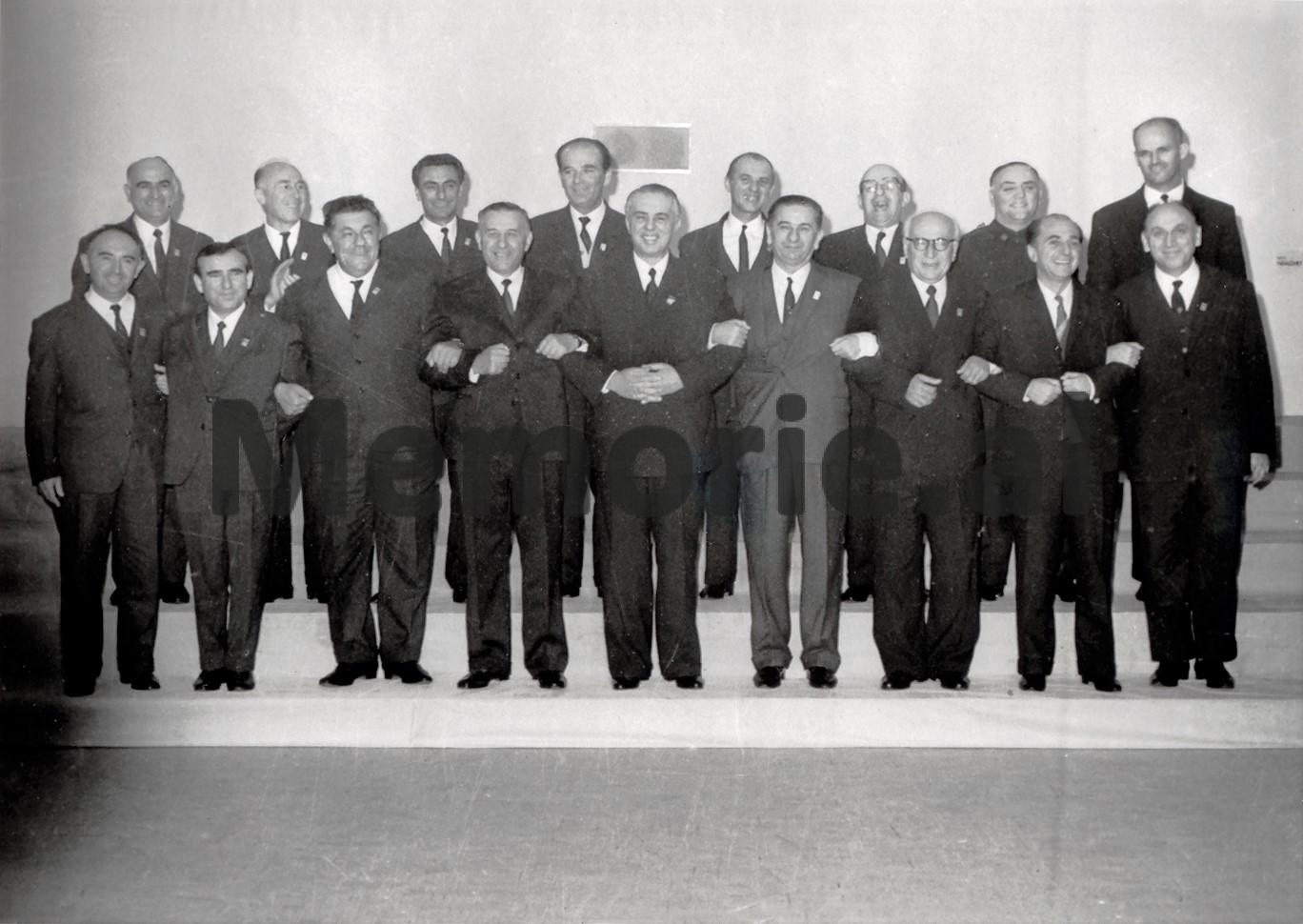
Memorie.al / Just as it had happened at the end of 1948, when Enver Hoxha broke official relations with the Yugoslavia of Marshal Josip Broz Tito, as well as in 1961, with the Soviet Union led by Nikita Khrushchev, when the “reactionary element” in Tirana and various districts of the country “had awakened and begun to stir,” in the summer of 1978, when official Tirana was announcing the final break of relations with the People’s Republic of China, history repeated itself point by point, with the exact same situation unfolding. Regarding this, the high leadership of the PPSH (Party of Labour of Albania), headed by Enver Hoxha, Hysni Kapo, Ramiz Alia, etc., were kept informed and made thoroughly aware through dozens of report-informations sent to them by the Minister of Internal Affairs, Kadri Hazbiu, or his subordinates, the Deputy Ministers of Internal Affairs, such as Feçor Shehu, Rexhep Kolli, Mihallaq Ziçishti, etc. Within this framework, according to the guidelines and orientations provided by the high leadership “to keep the situation under control,” the Ministry of Internal Affairs and the State Security (Sigurimi) launched crackdowns – arresting, imprisoning, sentencing, and interning dozens of individuals, primarily from the strata of “enemies of the people” and “reactionary families,” who were always under strict surveillance and tracking by the relevant state organs.
All of this and more has long been known, including through the publication of a large number of archival documents sourced from the Archive of the Ministry of Internal Affairs or the Central State Archive (where the archive of the former Central Committee of the PPSH is located). These documents shed light on the situation in the country during the time period when the high leadership of the PPSH was announcing the official break of relations with its former close friends, such as Tito’s Yugoslavia, Nikita Khrushchev’s Soviet Union, or the People’s Republic of China, which, following the death of Mao Zedong, was led by Hua Guofeng at the head of the party.
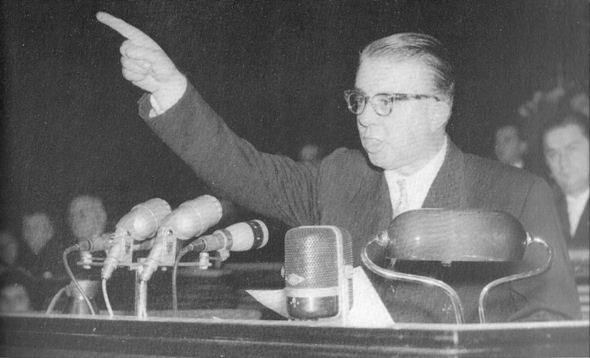
Based on the above, in this article, we are publishing the speech delivered by Enver Hoxha at the 5th Plenum of the Central Committee of the PPSH, which held its proceedings on June 26 and 27, 1978, just a few days before official Tirana publicly announced the break of relations with the People’s Republic of China. As we will observe from his speech, the head of the PPSH, Enver Hoxha, focused extensively and solely on the defense aspect of the country, which perfectly demonstrates his paranoia that, following the break of relations with China, Albania could become the target of an external military attack.
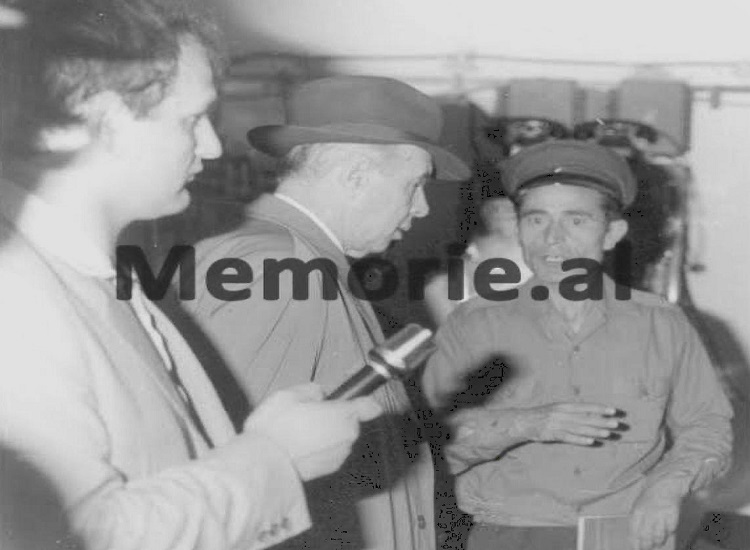
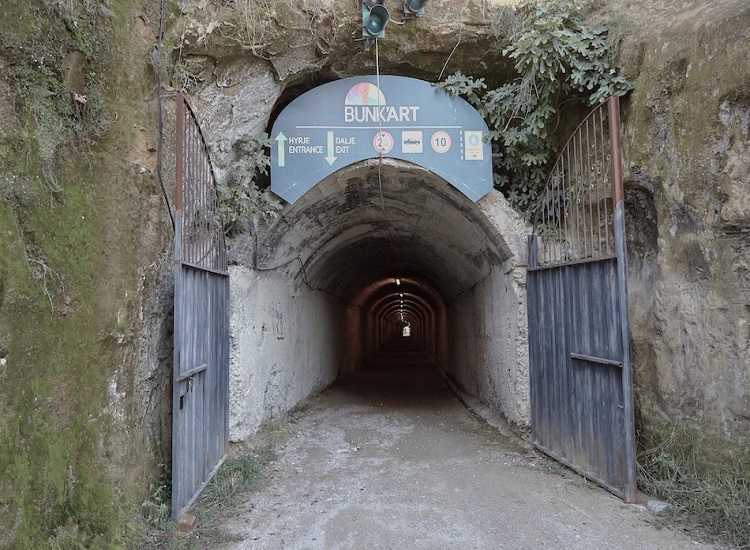
This fact – namely, his paranoia – is demonstrated, among other things, by the fact that just two days prior to the proceedings of the 5th Plenum of the Central Committee of the PPSH, Enver Hoxha visited the command post of the General Staff of the Ministry of Defense and the People’s Army (known today as “Bunk’Art 1”). This underground, anti-atomic facility had just been completed on the outskirts of the capital (the hills of Shishtufina). It was presumed that, as the Commander-in-Chief of the Armed Forces and Chairman of the Defense Council, Enver Hoxha would take refuge there and, from his office, direct the combat operations for the defense of the country if Albanian territory were to be subjected to foreign military aggression “by a foreign state, the forces of the Warsaw Pact, NATO, both combined, or a coalition of hostile states,” as stipulated by the regulations and documents of the People’s Military Art.
All of the above was and remained purely theoretical, as that eventuality never occurred. Thus, “Socialist Albania, standing proud on the shores of the Adriatic,” never became the target of any external military attack or aggression, and the facility of the General Command Post (“Bunk’Art 1”) remains there to this day as a testament to the Cold War era. For years, it has been transformed into an attractive museum that welcomes thousands of domestic and foreign tourists. Driven by this, in this article, we are publishing in full and with the respective facsimiles, the speech delivered by Enver Hoxha at the 5th Plenum of the Central Committee of the PPSH (held on June 26 and 27, 1978), where it is plainly visible that the main leader of communist Albania, beyond mobilizing the armed forces, seems to have intended this primarily as “consumption” for the outside world!
ENVER HOXHA: “LET US PREPARE IN EVERY ASPECT FOR DEFENSE, SO THAT THE ENEMY NEVER TAKES US BY SURPRISE”
We maintain the army on its feet and train it to have it ready to withstand an eventual attack that might threaten the freedom and independence of our people. Therefore, a massive task is set before us to organize this army as best as possible, to prepare it properly politically, ideologically, militarily, and theoretically. However, we must provide this theoretical preparation to the army and the cadres so that they know how to cleverly apply military science on our terrain against the enemies who might attack us. By this, I mean that we must know how to counter the enemy’s tactics and strategy with the tactics and strategy of our people’s war, of our People’s Military Art.
It is true that the enemy will launch their attack using modern mechanized means, combined from all directions – from the sea, from the air, and from the land – in order to break our resistance, pierce the front, and occupy a place on our soil. Let us always bear in mind that an attack by our enemies, whoever they may be, large or small, will be lightning-fast. From the very beginning, the enemy will deploy all their forces against us to break us both militarily and morally.
Therefore, keeping these factors always in mind, we must construct the military training and the organization of our army in such a manner that we can resolutely confront both the element of surprise and the numerous modern assets at the enemy’s disposal, as well as their lightning tactics, and destroy them based on our Military Art of People’s War. We must anticipate all these combat tactics and methods, as well as the enemy’s combination of different branches of arms.
We must also anticipate the best possible combination of our own types of weapons in combat, so that the enemy’s weapons inflict the least possible damage upon us. Consequently, during the phases when the enemy attempts to pierce the front or gain a foothold on our land, we will be on our feet, alive and strong, to annihilate all their plans and prevent them from succeeding in their operations. Precisely on this matter, all branches of arms have their specific importance, but no single weapon can be viewed as an asset with limited activity or uncoordinated with other weapons in frontal combat or in the rear, where the enemy might disrupt us and will attempt to disrupt us.
If we know how to use our weapons in unity, effectively, with sound criteria, and with cool-headedness, then we will inflict massive losses upon the enemy, regardless of the large potential – both military and human – at their disposal, and we will thus achieve success. Yes, without underestimating other weapons, the infantry branch must always be considered the one that will play, and is bound to play, a major role in the practice of warfare against the attacking forces of the enemy.
The infantry will be that living force which, at any moment, will stand against the attacks of the enemy infantry. Therefore, it must not only be greater in headcount compared to the other branches of our army, but, like all other branches, it must be specifically trained to a high level, imbued with a great offensive, defensive, and counter-offensive spirit. By deeply understanding the tactics and strategy of our Military Art of People’s War, our infantry will know, at any given moment, how to counter the enemy’s actions and their weapons, whether known or unknown, and will cause them to fail in their offensive undertakings.
Hence, the combat training of the infantry takes on a special significance. It must be qualified, scientific, and not a routine, simple training reduced to marches without objectives, without well-defined principles, without elaborated tasks, and without putting these tasks into practice to be solved. Neither cadres nor soldiers – be they active, reservists, or volunteers – are permitted to fail to exert all their efforts toward the theoretical study of our Military Art of People’s War and toward the application of this art in living practice across different terrains and atmospheric conditions.
The enemy may possess vast capabilities for increasing firepower, because their infantry can and will be aided by an even greater firepower from the air and naval assets they have and will have. But we, too, have increased the firepower within our infantry, and this is not a small feat, but a grand one. It must be understood that the increase in firepower, used well and timely, will cause great damage to the enemy. Furthermore, it is also a positive psychological factor for our army, as it instills a conviction in the strength of our resistance against the enemy’s weapons.
Against all the means of warfare at the enemy’s disposal which they will unleash against our country, and against their tactics and strategy, we shall counter with our own strategy, tactics, forces, and weapons. Therefore, the tasks emerging in times of war must be deeply understood, with the aim that the enemy never finds us by surprise under any circumstances, but rather that everyone is in their designated place and ready to respond immediately with fire to their attacks. This is of immense importance; therefore, it is necessary that cadres and soldiers, through continuous intensive training, keep their physical condition always agile and active.
They must eradicate from their minds any sense of arrogance and the notion that we can withstand the enemy’s power in such a general war with minimal training, without proper organization, or by being liberal in demanding accountability, or indifferent in giving and receiving instruction and applying it in practice. We must always keep in mind the necessity of strengthening combat readiness and conducting training at an ever-higher level within our army, because it is of great importance and serves as one of the keys to victory.
It is true that the war is won by the one who is stronger, and our strength lies also in physical agility and quick reflexes; but, above all, it lies in the understanding and implementation of the military line of the Party, of our Military Art of People’s War, and in the proper execution of combat orders. Therefore, training exercises must not be neglected under any circumstances, because every exercise conducted is a serious task that demands specific attention to be performed well. The Party within the army must dedicate special care to the execution of combat training under conditions that closely simulate actual warfare.
This requires officers to be agile, to be constantly alongside the soldiers, to teach them how to position themselves and how to solve problems quickly and with precision. We need comprehensive, rigorous, and high-level training. Only through such well-prepared and effective training will our people become capable of successfully repelling the enemy’s attacks. Therefore, they hold extraordinary importance. The training exercises we conduct must be dynamic, and within this dynamism, orders must be executed, but simultaneously, everyone’s mind must work so that the order is executed in the best possible manner in the interest of our victory—with the fewest losses for us and the maximum losses for the enemy.
We must train for every eventuality: for an attack from the sea, for an airborne landing right in the middle of our defensive lines, for an airborne landing in the rear, as well as for any type of warfare that the enemy might organize against us. Therefore, all these types of training must be developed with clarity, precision, and with the most accurate imagination possible regarding the clashes that will unfold between us and the enemy, should they attack us. Back when the army was led by the traitors Beqir Balluku, Petrit Dume, and Hito Çako, many of these exercises lacked substance, did not serve the intended purposes, involved heavy formalism, and were done mostly for parade purposes.
Even the utilization of the armaments we hold in our hands was carried out defectively during the time the traitorous elements led the army. We were always concerned by the lack of cooperation between units, detachments, and between different branches of arms. This flaw, which previously existed in our army, has now been corrected, and work must be done to ensure it is absolutely eradicated entirely, because the coordination of actions in combat is of extraordinary importance. It is inconceivable for detachments and different types of weapons to fight in isolation. Therefore, their actions must be synchronized, and the various branches of arms must operate together.
For this purpose, it is vital that such a necessity is understood right now, achieving a perfect synchronization of training between different detachments and arms. The commands of various units, as well as the commands of arms of any kind – acting according to a plan and in a studied, clever manner – must cooperate closely with one another in games, exercises, and also in small-scale practices. Our military personnel must have this matter clear in theory as well, because a lack of proper cooperation among all arms, or the absence of properly synchronized operational links between detachments, causes fractures in our front or weakens the strike against the enemy.
Thus, staff exercises must occupy an important place in the general training of our army, because they are the ones that will direct the war, direct the detachments, and direct the weapons. However, it is indispensable that these exercises are carried out on the terrain, and for this purpose, all assets must be put in motion and tested across multiple levels, starting from the top down to the bottom. Regarding communication matters, we have always had great concern, and we maintain it to this day, because communication plays a decisive role in war.
If communication is defective, or if the enemy inflicts frequent and irreparable defects upon it during war, the command of the war will suffer from severe shortcomings, which could cause dangerous difficulties for us. Therefore, starting from now, we must give importance to communication from the top down to the lowest detachments, just as we give importance to every other branch in the army, and just as we give importance to the matter of fortification. We must also place great emphasis on military schools. We must always send devoted young cadres there – sons of workers and peasants, sons of patriots and communists – all of whom we must educate with a strict proletarian military discipline and equip with a sense of sacrifice, heroism, and endurance.
We must educate our students who graduate as officers to know neither fear nor panic, to think for them based on our Marxist-Leninist theory, and to apply our Military Art of People’s War through the prism of this theory. They must always be tireless, active, and mobile, working to maintain an agile body and a developed mind, striving to acquire general education and culture, but particularly to attain higher military education. Our officer must become such that, by his own example, he mobilizes with the same courage and the same inspiration the entire military personnel under his command whom he leads into battle.
When we speak of officer cadres, the Party must take into account both the active cadres of the army, but especially the reservists. I say especially the reserve cadre, because in the event of war, they too will command sub-units; therefore, starting today, there is a great need for training, direction, organization, and inspiration. This requires us to apply ourselves with great diligence to the work in this direction; in a word, great importance must be attached to the preparation and education of these cadres. Our reserve military cadres must constantly refresh the knowledge they acquired back when they were in the active army.
The detachments they have been assigned to command and educate in the free schools must be considered as active combat detachments, possessing the same moral-political-military and technical-organizational qualities as the detachments where soldiers complete their regular military service. These reserve cadres, who will command and direct these units – which will constitute our great army, the volunteer forces, and those of civil defense – must bear in mind that the fates of the war and of the victory over the enemy depend heavily on them as well, and not just on the main headquarters. The commander, the commissar, and the staff of the lowest unit play a decisive role in executing the orders of their superiors.
Therefore, their preparation within the arms where they have served and continue to serve – regardless of the fact that they are in the reserve – must be entirely perfected and of high quality. That is, they must be well-qualified both for providing instruction, executing orders, implementing directives, and for deepening them. In all these directions, they must be rigorous, agile, and disciplined. When I emphasized that the Party’s work with the cadres and all working people, wherever they carry out their daily activity, must also be closely linked to their military preparation, I intend for this to be understood in connection with the current moments.
This is absolutely indispensable. It is clear that the worker, cooperativist, or intellectual who displays and must display discipline in life today, who applies a proletarian discipline in his daily work, will surely display discipline also in executing the directives of the Central Committee of the Party and the General Command in times of war. He who receives this upbringing now will find within himself the strength and capability to properly carry out the great duty of defending the homeland. For that employee who precisely implements technical norms to realize the plan on time, in quantity, and with great savings, there is no reason why the precise execution of military duties should not also become a habit and part of his upbringing. The same norms must be applied precisely, at the designated time and place, both in ordinary work and in the army. / Memorie.al
(This Plenum, which convened on June 26 and 27, 1978, discussed the report: “On the work done for the implementation of the decisions of the 5th and 6th Plenums of the Central Committee of the Party of 1974, and the tasks set forth by the 7th Congress of the Party for the further strengthening of the defense of the country” and adopted the corresponding decisions).