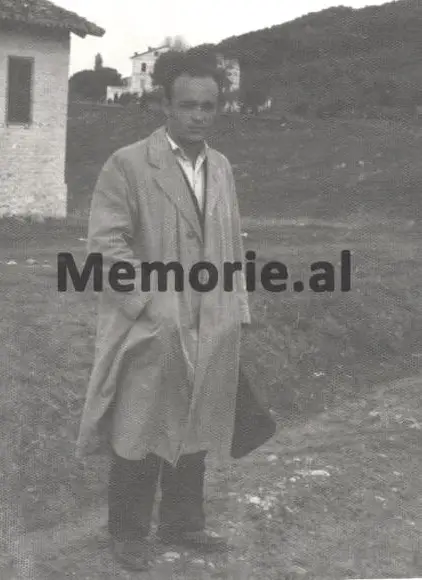
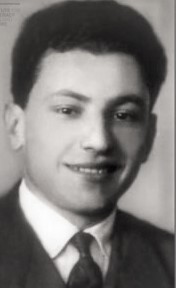
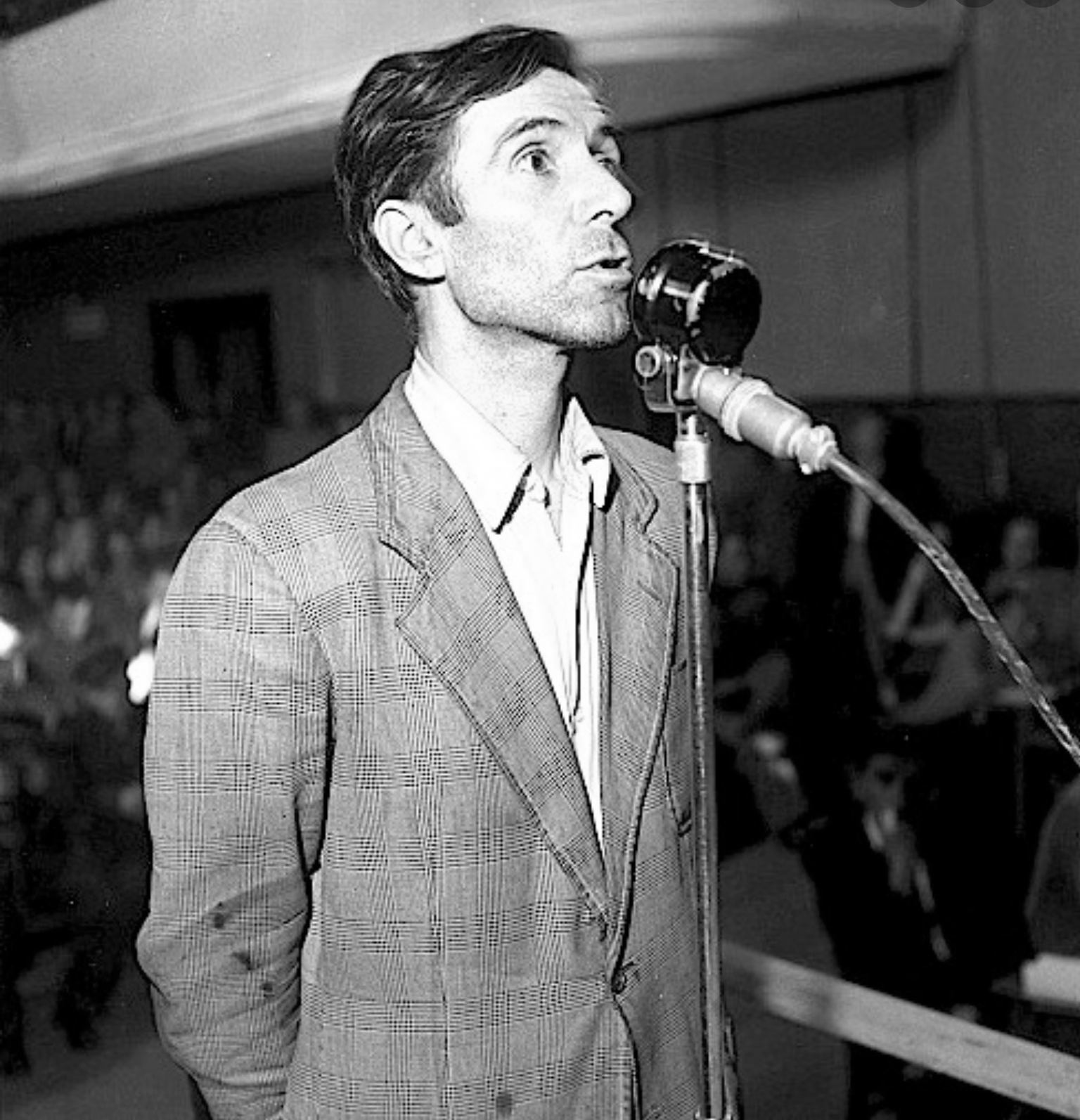
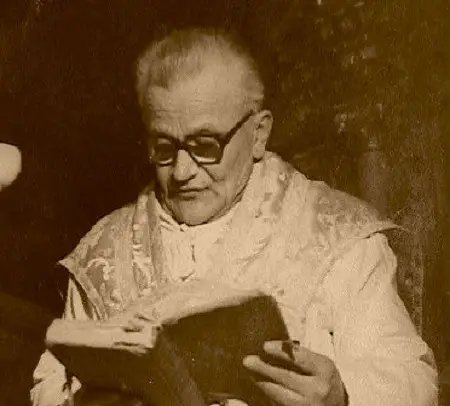
Memorie.al / The adventure of dozens of young people who escaped from Albania to Yugoslavia to reach the West, in most cases, ended in misfortune. Their repatriation, based on a secret agreement between the State Security and the UDBA, was followed by a long ordeal of suffering and persecution. A similar fate, like that of dozens upon dozens of young people who looked danger in the eye for a better life, was also endured by Sherif A. Ismaili, who after his forced return suffered in the prisons of the communist dictatorship for 20 consecutive years under the charge of high treason. Ismaili escaped from Tamara in Shkodra, where he was performing his military service, and after voluntarily surrendering at the border post of former Yugoslavia, he was sent to Titograd.
After several months in that country, he was returned to Han i Hotit by the Yugoslav UDBA, being handed over to Albanian State Security officers. The political persecutee of the communist regime, Sherif Ismaili, stated that at the same crossing point, the Albanian side handed over to the Serbian agents a Kosovar citizen who had escaped from Kosovo because he had openly expressed his anti-Serbian Albanian national views.
Mr. Sherif, when you escaped to Yugoslavia, you were performing military service on the border. So, you had been chosen among your peers to guard the front line, as it was stigmatized back then. What prompted you to undertake this dangerous adventure?
The political conditions of that period were the main guarantee for the contingents entrusted with border duty. Apparently, I met those conditions, and precisely for that loyalty, I was selected to serve on the border. It was in 1967 when I started my military service in Tamara, a border point in the most remote area of Shkodra. You could only get there with high-clearance vehicles, and not every month of the year. The road was very bad, dangerous in places, and from October to the end of March, snow and ice made it impassable. We lived almost isolated. Supplies to Tamara and Budaç were made in summer and autumn. Generally, these areas had two seasons: late summer, with very high temperatures and great drought, and a long winter with precipitation, wind, frost, and ice. I was born in Rrushkull, a low-lying area, and military service in the farthest northern corner of Albania, in an extraordinary climate, confronted me from the very first days with an extremely difficult and unimaginable situation.
How did the idea of escaping come to you, while you were part of the unit entrusted with guarding the border?
The circumstances of duty and the very harsh conditions of service prompted me to make decisions I had never even considered. For months, I did not see my parents or any of my family, because no one could come to visit me. I was not given any leave. The service was very hard. We had to patrol the border night and day, during freezing cold and heavy snow, and on rainy or scorching hot days. The idea of escape came and lodged itself so firmly in my mind that it somehow became a decision in itself. I knew the area with my eyes closed. Our post and the Serbian one were not very far apart. The border was patrolled only by Albanian soldiers, as the Serbs and Montenegrins were rarely seen in summer, and in winter they would go down to the lowlands. On August 1, 1967, I found the opportunity. After finishing my duty, I carefully slipped away so as not to be noticed by the soldiers. I crossed the border hill without difficulty at the spot I had planned and walked toward the Serbian military post. There I surrendered. The soldiers saw that I was wearing the uniform of the Albanian state border and understood that I had deserted. It wasn’t the first time they had encountered Albanians crossing the border, but this was the first time a soldier from the Tamara unit had abandoned the country and sought refuge in a foreign land. They sent me to Titograd. There, for six days, they interrogated me, and then they let me go free, forcing me to report to the police according to a schedule. They also provided me with a document that allowed me to eat at the camp for political asylum seekers. And so nine months passed. Besides food and clothing, they gave me 15,000 dinars for pocket expenses, to use as I wished.
So, for nine months you were a political asylum seeker, but then how did events unfold?
The idea of escape was not to stay in Yugoslavia, no matter how well they treated us there. From the very beginning, my goal was to reach America. I requested this from the official authorities in Titograd on the very first day. The truth is that they promised me that after some time they would send me to the USA. It so happened that after nine and a half months, things changed. The UDBA and the Albanian State Security had come to an agreement to repatriate me. On May 15, 1968, they put me in a covered car. There were also two armed men. It didn’t occur to me that they were going to return me. I thought they were transferring me to some camp, as they often did. Before handing me over at Han i Hotit, they told me that across the border, the Albanian State Security people were waiting for me. They exchanged me for a Kosovar who had escaped from Kosovo for political reasons, to get away from the Serbian regime. Such agreements existed between the UDBA and the Albanian State Security. Dozens of escaped Kosovars were handed over to the Serbs, only to end up in torture cells and terrible prisons. Such a fate awaited us, the escapees to former Yugoslavia.
What happened to you after your forced repatriation to the Albanian authorities?
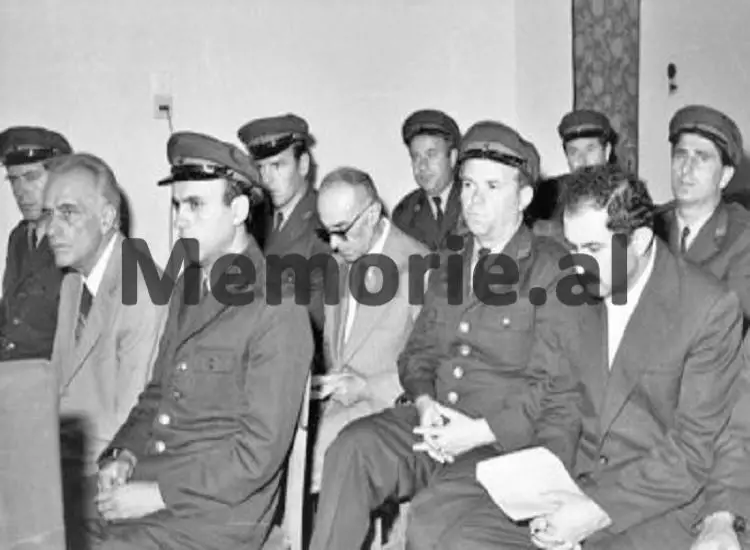
The return predetermined everything about my fate. Investigation and trial, leading to a conviction for treason against the homeland. Among other charges, Article 55 was invoked. The investigation was terrible. In Shkodra, they tortured me until I lost consciousness. It is hard to describe. Only the walls, the handcuffs, and the executioners are witnesses to the violence the investigators inflicted on me. For three months, I endured the blackness of olives. During all that time, my body remained blackened. I appeared before the High Military Court on August 1, 1968. By decision number 92, I was sentenced to 20 years in prison for high treason against the homeland, and all my property from the house in Rrushkull was confiscated.
Where did you serve your sentence, and what do you remember from the days and nights of hell in the communist prisons?
I served my sentence in Spaç, Burrel, and finally in Sarandë. In the Spaç mine, we extracted copper and pyrite. There I met many prisoners who wanted to escape to former Yugoslavia and then to America. I took it upon myself to show them the way to the border and then to the Serbian border post. There was a gallery that had been made but had collapsed. From below, you could see a part of the sky. We decided to clear it and find the most suitable time. My fellow sufferer Mustaf Bajraktari, afraid that the escape plan would not work, ran away alone without notifying us. He came out of that gallery but was spotted by the camp guards and was chased until he was caught. Someone from inside the prison accused me of having betrayed the plan. I tried to explain to convince them that it wasn’t as they thought. One of them pulled out a pickaxe and tried to hit me. I grabbed the pickaxe from him and struck him, injuring his head. The prisoner died, and I was sentenced for a second time. The combination of the two sentences gave me a total of 25 years in prison. In the dictatorship’s prisons, I met political convicts such as: Ali Çeno, Pjetër Arbnori, Vangjel Lezho, Faik Hoxha, Fejzi Alizoti, Avdulla Sallaku, Pater Gega, Simon Jubani, Asllan Patrioti, and others. I spent my prison years in Burrel, Ballsh, Qafë Bar, Bulqizë, Sarandë. In 1982, I did not benefit from the amnesty because of the article for treason against the homeland, even though some prisoners did benefit, having a few years reduced. At the time when the communist system was breathing its last, I was released after having served a full 21 years in the terrible claws of the regime.
Finally, you returned to Jubë-Sukth, and you also received the status of political persecutee. What have you gained from this status during this period?
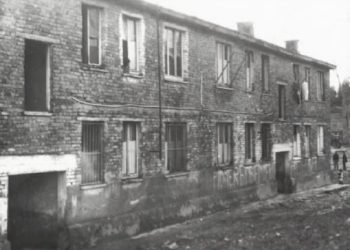
In short, I would say two words: out of the frying pan into the fire. Apart from freedom of speech and the freedom to travel anywhere, nothing else. Yes, yes, nothing! Moreover, my social condition is becoming increasingly severe and threatening. Do you see where I live with my wife and three children? In this shack, like a ghetto. In another kind of prison, I would say without hesitation. What have I gained? Nothing. The house I live in was built 60 years ago. It is collapsing. Take a look inside and out, and you’ll be convinced of what I’m telling you. I don’t even have the slightest possibility to repair it. The ceiling is about to fall, the plaster has cracked everywhere. The roof tiles haven’t been replaced for 50 years. Rain and cold get inside. The entire roof has rotted. By law, I am owed 145 million lekë for the years of political imprisonment. So far, I have received only 25 million lekë in voucher bonds and not a single lek in cash.
Have you benefited from any healthcare?
That is out of the question. I have been an invalid since 1997. Doctors in Tirana operated on me incorrectly on my larynx. The lack of professionalism in diagnosis, surgery, and chemotherapy treatment severely damaged me, and no doctor takes responsibility. The doctors have damaged my spinal cord, and now not only do I speak with great difficulty, but even to go out the door or to the toilet, I need the help of my wife and daughter, because one person cannot support me. Here in Jubë-Sukth, people are poor and cannot help me. It is impossible for me to seek my rights. That’s why they haven’t given me any installments, as my fellow sufferers have received. Even the voucher bonds were stolen from us. We have sent letters and telegrams everywhere, but we have gained nothing.
Did you become an invalid during the prison years, or afterwards?
In 1990, I came out of prison, with the new political changes that were coming to Albania. I worked in Rrushkull at very heavy jobs. Prison had made me half a person. People in the village looked at me askance. No one would greet me or even say hello, even though in Tirana the winds of the communist system’s collapse had begun to be felt. A few years later, in 1997, I fell ill and was hospitalized with problems in my larynx. The doctors operated on me and gave me chemotherapy for some time. The radiation severely damaged my spinal cord. Besides the larynx problems, another misfortune arose. I became paralyzed. I couldn’t move at all. The doctors, to discharge me from the hospital, told me that recovery would come slowly and that I would eventually walk. But that didn’t happen. I have been paralyzed for 11 years. My wife and one of my daughters take me to the bathroom. So, as half a person, I was even sent to the gate of the “Petrol Impex” company, where they kicked me. Neither yesterday nor today do I have the slightest possibility to sue the doctors who cut my life in half? I don’t have the money either. The state owes me 145 million lekë as a political convict. I haven’t received a single penny. I live as miserably as possible in this shack that is falling down. / Memorie.al