By Bashkim Trenova
Part Twenty-One
– NAZIBOLSHEVISM – LITERATURE AND ARTS –
PREFACE
Memorie.al/ Historians, political philosophers, intellectuals from various schools or different positions have devoted thousands and thousands of pages, entire volumes, studies, and articles to the comparison between Nazism and Communism. Generally, in their publications and studies, they focus on the police control of society by these dictatorships, the role of the dictatorial state hierarchy, the head of state as a suppressor of free thought, the omnipresent place of official propaganda in society, the mass massacres and the network of concentration camps, the activity of the police, the NKVD in the USSR (later the KGB) and the Gestapo in the Third Reich. In his book “Le Passé d’une illusion” (The Past of an Illusion), François Furet notes that Nazism and Communism share the same opposition to liberal democracy and what they call “capitalist bourgeoisie.” Both ideologies claim to be socialist and use the image of socialism. Communist countries called themselves “socialist.” “Nazism” is an abbreviation of National Socialism.
Continued from the previous issue
FILM
Censorship, as in all arts, is lifeless; it closes its eyes only when cinematographers work to elevate the cult of Lenin or Stalin and beyond, treating them like saints in the church icons of past centuries. To be more concrete, let us cite below, to begin with, a letter that Soviet filmmakers sent to Stalin in 1934: “The best in us – the power of persuasion, the ideological power of our films – is the direct result of the Party’s leadership, which has opened for us the art of seeing the world, has given us the strength and the right to reconstruct it through the resources of our art.
We work in different ways, with the help of different methods and in different genres, but we are all inspired by the common desire to express as clearly as possible the ideas that inspire the best part of humanity, the ideas of Marx and Lenin, the ideas of the brilliant Leader of the Party, the most determined and most revolutionary: Joseph Vissarionovich Stalin.”
Several films were initially dedicated to Vladimir Ilyich Lenin. In 1934, Dziga Vertov made the documentary film ‘Три песни о Ленине’ (‘Three Songs about Lenin’) based on archival data and oral testimonies. The final scene shows a family listening to the announcement of Lenin’s death and crying over the loss of the one who brought them light. Among other films dedicated to the leader of the Bolshevik Revolution are ‘Ленин в октяабре’ (‘Lenin in October’), an autobiographical film from 1937, and ‘Ленин в 1918’ (‘Lenin in 1918’) from 1939, which screens the Civil War in such a way that it brings Stalin’s figure to the forefront.
The films were directed by Mikhail Romm, who can be said to thus begin the cult of Stalin’s personality on screen. In 1937, Dziga Vertov made the film ‘Колыбельная’ (‘Lullaby’) that flatters Stalin. In 1938, Chiaureli made ‘Великое зарево’ (‘The Great Glow’) with Lenin and Stalin as central figures.
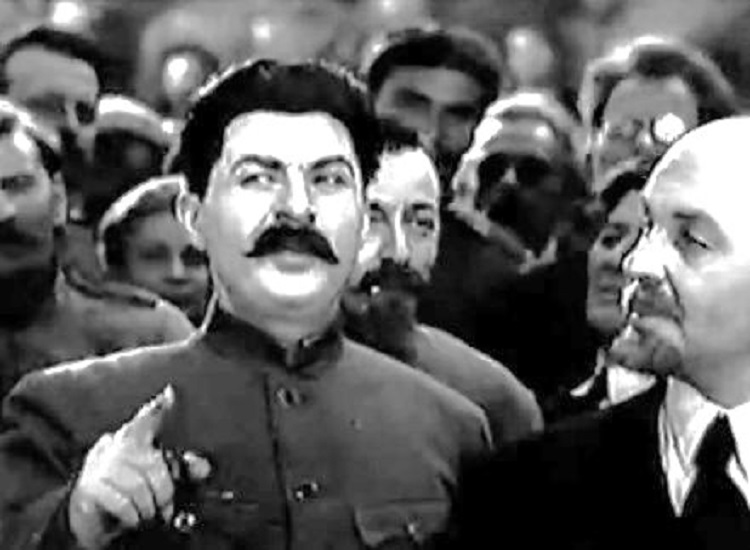
Further, in 1940, Lev Kuleshov continued to screen Stalin in the film ‘Сибиряки’ (‘Siberians’). In 1941, Mikhail Kalatozov made the film ‘Валерий Чкалов’ (Valery Chkalov), a “homo sovieticus,” an aviator who works for the homeland and socialism and who, in apotheosis, meets Stalin, the great leader. In 1947 and 1949, Mikhail Chiaureli, also known as a singer of triumphant cinematic Stalinism, made, in the same vein, the films ‘Клятва’ (‘The Oath’) and ‘Падение Берлина’ (‘The Fall of Berlin’). In Chiaureli’s films, the dictator appears as a demigod or god, capable of fixing a broken tractor in “Red Square,” but also of making infallible decisions, leading the Red Army to victory from his headquarters in the Kremlin.
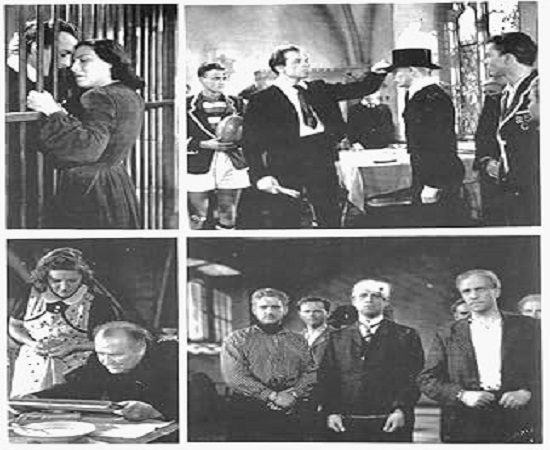
‘Клятва’ (The Oath) from 1946 is another film by Chiaureli. According to its script, during the winter of 1924, the old Bolshevik Stefan Petrovi and his daughter Olga set off to deliver a letter to Lenin from their village. On the road, they are attacked by a band of kulaks that kill Stefan. His wife, Varvara, decides to send the letter to Moscow. Along the way, she learns of Lenin’s death. In “Red Square,” before the crowd, Stalin swears to implement Lenin’s teachings. Varvara hands him the letter. The country changes and the Petrov family play an active role in this. Nazi Germany attacks the Soviet Union. Varvara sends her children off to defend the homeland. The Nazis are stopped at Stalingrad. After the victory, Stalin and Varvara meet again.
Films that hymn Stalin and his cult continue over the years. One such is ‘Танки’ (‘Tanks’) made in 2018 by director Kim Druzhinin. In Soviet cinematography, it is also noticeable that a number of films are shot in which Stalin is not encountered physically nor his name mentioned, but which are without any doubt addressed to or dedicated to him, clearly a model of him. These are historical films, dealing with historical figures, whether from that time, like ‘Chapaev’, or even from a more distant past, like Alexander Nevsky, Ivan the Terrible (Part I), Admirals Nakhimov, Kutuzov, Ushakov, etc.
The film ‘Чапаев’ (‘Chapaev’) by Sergei and G. Vasiliev was shot in 1934. Chapaev is a hero of the October Revolution. Coming from the bosom of the people, he is a determined and brutal fighter, but also a great brave leader whom one can follow. Such a character, even physically, resembles Stalin. And, according to the film, if Chapaev kills his own soldiers without trial, he does so because they are traitors. The analogy between Chapaev and Stalin and his purges is clear. Regarding the film ‘Александр Невский’ (‘Alexander Nevsky’) by Eisenstein, shot in 1938, the author supports the Kremlin dictator through a preceding Russian model of his, that of the most popular prince in Russian history, who fought against Europeans who wanted to conquer Russian lands.
In the film, the enemy is represented by the Catholic Teutonic knights, who symbolize Germany, which attacked the Soviet Union in 1941. The Teutonic knights are, in the film, inhuman beings, robots, while the Russians are presented as living people who react emotionally to the enemy attack. As for their leader, Alexander Nevsky, he is placed on the height of a hill, supported by the Orthodox Church, a new ally for the Kremlin Bolsheviks in these times of German danger, and, especially, a symbol of Russian identity.
Nevsky is presented as a great leader who mobilizes and saves the people, destroys the enemy, and defends the country’s independence. He embodies a myth. He is a saint of the Orthodox Church. Theoretically, it is difficult to find common ground between a church saint and the head of the “proletarian state,” Marxism, or Bolshevism. In practice, seen also in this case, the parallel between Alexander Nevsky and Stalin, a former seminarian who studied to become an Orthodox priest, later converted into a Bolshevik revolutionary, leaves no room for discussion.
We recall that after the signing of the German-Soviet Non-Aggression Pact in 1939, the film was withdrawn from cinemas as unnecessary. With the launch of the Nazi operation “Barbarossa” against the Soviet Union in June 1941, the film again took its place in cinemas to raise high the Russian patriotic spirit against the German aggressors.
‘Пётр Первый’ (‘Peter the First’) by Vladimir Petrov is another historical and biographical film in two parts, directed by Vladimir Petrov. It deals with the life and state activity of the transformer of 18th-century Russia, Russian Tsar Peter I, starting from the Battle of Narva in 1700 until his acceptance of the title of emperor in 1721. The first part of the film was shot in 1937 and the second in 1938. The message of this film is ideologically the same as that conveyed by other Soviet films with themes from the historical past and with central figures of various state personalities; tsars, princes, admirals.
‘Минин и Пожарский’ (‘Minin and Pozharsky’) is a film dedicated to historical figures of the Russian Middle Ages. It was made in 1939 by Vsevolod Pudovkin and Mikhail Doller, based on the novel by Viktor Shklovsky – “Russians at the beginning of the 17th century.” The film shows how in 1611 the Poles invaded Russia and became masters of Moscow. On “Stretenka” street, crowds of people rushed to Prince Pozharsky to ask for weapons to fight against the invader. Pozharsky contemptuously rejects the traitor Grigori Orlov’s offer to submit. He takes command of the popular revolt.
But the well-armed Polish troops suppress the Russian uprising. Seriously wounded, Pozharsky leaves Moscow. In Nizhny Novgorod, the merchant Kozma Minin organizes a people’s militia to fight against the invader. The troops of Minin and Pozharsky crush the enemy. The Polish units stationed in the Kremlin surrender. The elated people storm Red Square to celebrate the liberation of Russian land from the invaders. In 1941, Pudovkin, Doller, etc., were awarded the “Stalin Prize.”
The epic film was used quite effectively by Soviet directors in the late 1930s and early 1940s to propagandize the Russian nationalism embraced by the leaders of the Soviet state. To put it more clearly, the epic films of the 1930s and 1940s primarily present historical figures of Great Russia. In general, the directors of these films are willing to interpret and falsify historical events, drawing parallels with the international conflicts of the time, erasing the boundaries between the proletarian internationalism propagated by Marxist-Leninist doctrine and bourgeois nationalism, using nationalism as a propaganda weapon of socialist culture.
The film ‘Иван Грозный’ (‘Ivan the Terrible’) is the last film made by Soviet filmmaker Sergei Eisenstein. It consists of two parts. Part I was made in 1945, while Part II, blocked by censorship, was released in 1958. The film deals with the efforts of Tsar Ivan IV of Russia (1530-1548), known as Ivan the Terrible, to unite the Russian principalities into a single modern and powerful state. To achieve this goal, the Russian Tsar had to contend with external enemies in the East and West, but also with an internal plot within his circle, with rebellious local boyars. Unrestrained and cruel, Ivan IV establishes a strong Russia and creates a model of power for future tsars.
The analogy with the current events of the time is not hard to understand. Four centuries later, Stalin, to strengthen and maintain his power, for a strong and united Russia, had to watch over the Soviet empire consisting of 15 republics stretching from the Baltic Sea to the Pacific Ocean, destroy his comrades-in-arms or generally the “internal enemy,” break the “external enemy,” Nazi Germany, the armies of the Nazi Wehrmacht, descendants of the Teutonic hordes. The first part of the film was awarded the “Stalin Prize.”
The film ‘Кутузов’ (‘Kutuzov’) was made with the sole purpose of convincing Soviets that victory over Nazi Germany was possible, to mobilize the people in the Great Patriotic War against Nazi aggression. The film reflects the Russian view of the main events of the Patriotic War of 1812. It deals with Napoleon’s arrival in Smolensk, Russia, in 1812 and the Russian Tsar’s appointment of Kutuzov as commander-in-chief of the Russian army.
Kutuzov follows a strategy that forces the French army, commanded by Napoleon, to retreat. Vladimir Petrov’s Kutuzov, dedicated to the general who saved Russia from the invasion of Napoleon Bonaparte, ends with the complete withdrawal of the exhausted, hungry French troops, closely pursued by the Russians. Napoleon ends the film by acknowledging his mistake in undertaking a military campaign against Russia.
Following the film, one cannot help but notice how Kutuzov in his time, and Stalin during the Nazi aggression, both followed a “scorched earth” policy to prevent and make impossible the supply of weapons and food to the enemy. In the film “Kutuzov,” the named marshal is depicted as a master strategist, capable of understanding the enemy’s strategy and who fully enjoys the trust of his men. For Soviet citizens, the message was clear: they must have complete confidence in the abilities of their leaders, first and foremost the new tsar, Stalin, to end the war forever, by bringing the enemy to its knees and shaming it.
The filming of “Kutuzov” took place in 1943, the year when the “Red Army” would begin the march that, two years later, would end in Berlin. The film was presented to the public on March 13, 1944. Its director Vladimir Petrov, chief operator Mikhail Guindin, and actor Alexander Diki, who played Kutuzov, were awarded the “Stalin Prize.”
In the years 1917-1919, the Soviet power supported the production of propaganda films (agitki). During these years and afterwards, a rapid increase in films based on the literary works of Russian classics is observed, following Bolshevik logic and in service of official propaganda. Thus, the film ‘Отец Сергий’
(‘Father Sergius’) from 1918, directed by I. Protazanov, places emphasis on the anti-clerical theme of the novel of the same title by Leo Tolstoy and conveys a powerful ideological message.
Leo Tolstoy’s novel ‘Война и мир’ (‘War and Peace’) was screened in 1967 by Sergei Bondarchuk. The film, with the same title, is one of the most ambitious projects of Soviet cinematography. Its shooting lasted over six years. 58 museums and 40 industrial enterprises were engaged for its production, 50 large-scale sets and 8 bridges were built. For filming the great battles of Austerlitz and Borodino, 15,000 Soviet soldiers were mobilized; 23 tons of explosives, 40,000 liters of paraffin, 15,000 smoke grenades, 2,000 swords, and 1,500 artillery barrels were used. A special cavalry regiment of 950 swords was created just for this occasion. All this is quite understandable if we turn to Bolshevik logic.
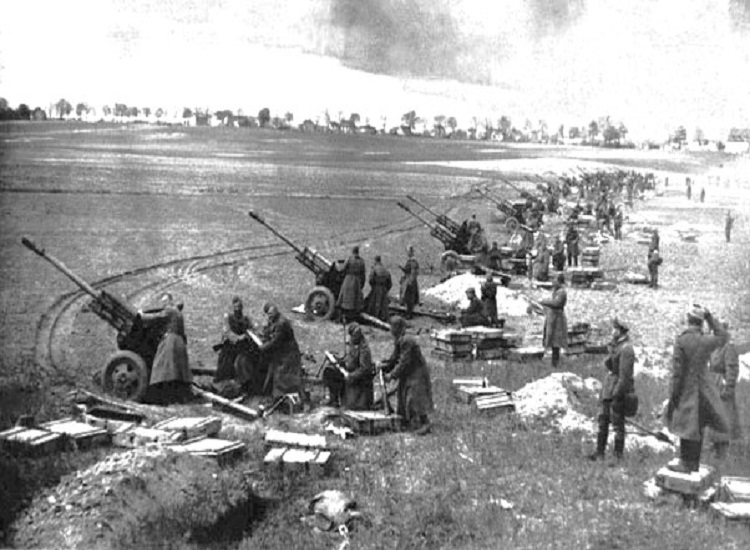
During World War II, the Bolsheviks used the novel “War and Peace” as a powerful propaganda tool to strengthen patriotic feelings and national unity. The victory of Tsarist Russia over Napoleon Bonaparte in 1812 occupies an important place in the novel. Soviet leaders used this to draw a parallel between it and the resistance against Nazi Germany. The Soviet government of the time gave great publicity to the novel, presenting Tolstoy as a forerunner of Socialist Realism. Tolstoy became the most published author in the country during the war, even surpassing Lenin. The influence of the novel also extended to the military command. Soviet generals found a source of courage in “War and Peace.”
They quoted Tolstoy’s work on the war fronts to link contemporary events with Russia’s epic national history, to view current battles through the prism of patriotic historical sacrifice, thus inspiring resistance and victory over the Nazis. Leo Tolstoy supports a fatalistic theory of history in his novel. He describes with great care and accuracy the aristocratic circles of the Russian Empire.
The characters of “War and Peace” are numerous and detailed, but it is not possible to find there a “hero” of the Socialist Realist type. After all, none of this matters to the theoreticians of Socialist Realism and above all to their bosses in the Kremlin. For them, when they need it, if it serves them, everything is beautiful in life! The “holy” principles, the fanatical codes, are forgotten very quickly if they get in the way! / Memorie.al