Part One
Memorie.al / “Neither beatings with sticks, nor weapons, nor cannons, nor exile, nor imprisonment, nor even death itself move them from their place.” The speaker was a young Albanian who had completed part of his schooling in the United States. He has now returned to his country, where he is working with great diligence. He is one of the few educated people in Albania, but he aims that the next generation will not count the educated men and women of Albania on one’s fingers. The words mentioned above were preceded by these: “At the moment, from north to south and from east to west of Albania, all classes of people – whether Muslims or Christians – have one desire, almost a passion, for national education. They all understand that, just as in the past the sword was the symbol of power, today education is the goddess of power, and they will be educated, regardless of persecution.”
Albanians have become aware of their need for Western civilization and progress. But, from the first day of the adoption of the new Ottoman Constitution, the Young Turks were determined that civilization should come to Albanians only after it had passed through a Turkish and Mohammedan sieve. This program could not be accepted by Albanians, even if the Young Turks had been able to implement it. The Albanian is European: for more than two thousand years he has lived where he lives now – in the fortresses of Epirus and Illyria, across the Adriatic parallel to the heel of Italy.
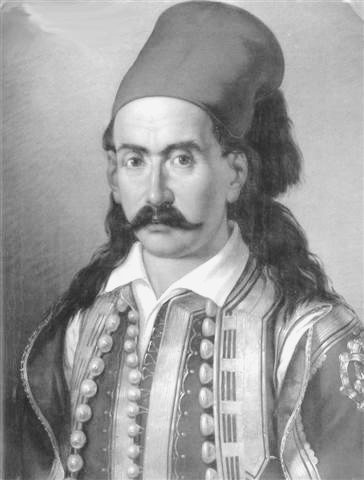
At the beginning of the nineteenth century, Albanians mingled with their southern neighbors, the Greeks, and were the backbone of the war for Greek independence. The compatriots of Marko Boçari all immigrated to Cephalonia, on the coast of Greece, but about 2 million less fortunate Albanians now live under Turkish rule.
During the 125 years before the discovery of America, the proud republic of Venice had a benevolent supremacy over the Albanian coastal cities and thus delayed Turkish domination by a century.
With the fall of Shkodra in Albania and the expulsion of the Venetians by the Turks in 1748, the latter began their rule – centuries of deceit, broken promises, and cruelty.
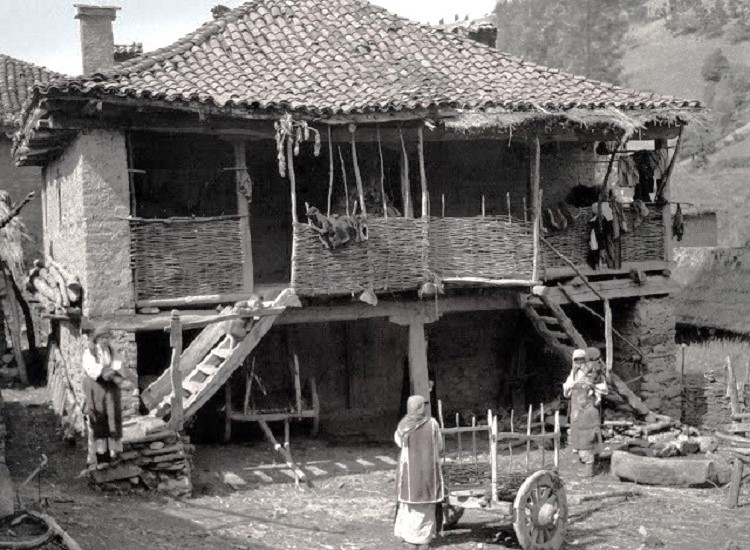
The result of Turkish rule can be summed up as the deeper sinking of Albanians into poverty, superstition, and bloodthirst, due to the fertile ground guaranteed by mountainous terrain and primitive traits. Over two millennia, the waves and impulses of progress have not reached the Albanian, or have bypassed him, leaving him untouched.
Vengeance is still practiced
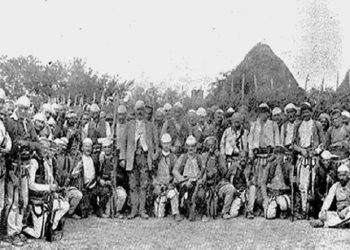
Today, as in the past, it is true that one in five highlanders falls victim to terrible vengeance, which only civilization can eradicate from Albanian life. Shooting a person, even treacherously, is a matter of taking blood. Nothing else can restore wounded honor. If the killer himself is not killed, then one of his relatives must be the victim, and thus the endless chain begins. When vengeance has gone too far, it can be bought if you have enough money, or it can be stopped through some of the collectivities of the Albanian code.
No one should speak of the Albanian as a man without laws. He scrupulously enforces what he knows and accepts: but these are the laws given to him by nature and customs, as well as the nature of his ancestor’s centuries ago, somewhat “codified” in the 15th century, although to this day they have never been put in writing. Some of the strange rules that govern his life are: Persons who descend from a common male ancestor through the male line consider each other brothers, or brother and sister, and consequently marriage within the tribe is excluded.
Young men may swear brotherhood, and this creates a relationship that subjects both, along with their descendants for several generations, to the same marriage laws that regulate blood ties. Persons who have the same godparent cannot marry, and there are two types of godparents: that of baptism and that of the hair.
When a child, girl or boy, turns 2 years old, his hair, which until that moment has not been touched by scissors, is cut in a ceremony. The cutting is performed by the godparent, who then, if the child is Christian, leaves a tuft of hair for each point of the compass, forming a cross. If Muslim, three tufts to form a triangle. In the case of vengeance, a man must not be touched if accompanied by a child or a woman.
Indomitable personality
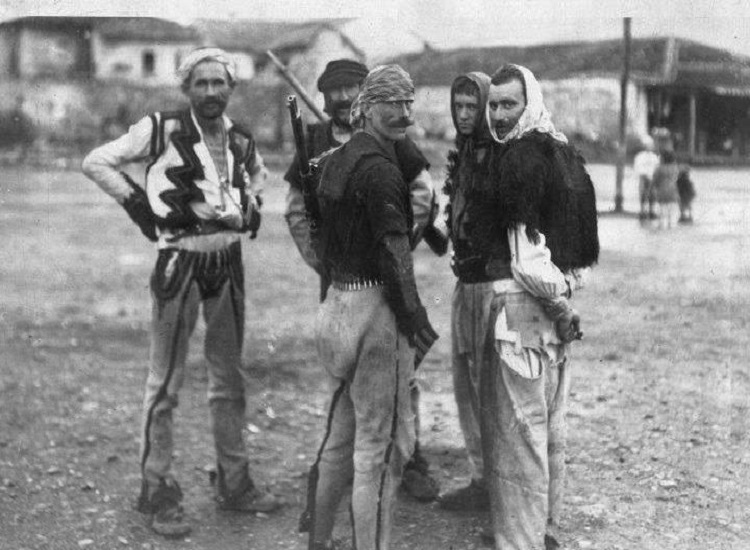
Today, the Albanian is the most picturesque personality in Europe. Yet, as interesting as his traits are, so is his political future. Recently, an Albanian national consciousness has emerged that refuses to be suppressed. Under the abnormal governance of the Turks, the various Christian races of the Empire, such as the Ottoman Armenians, Ottoman Bulgarians, and Ottoman Greeks, each have their own national existence, a state within a state, though always subject to the will of the Turks.
Albanians, although generally having developed a kind of Muslim loyalty that gives them almost solidarity with the Turks, are determined to have a national entity as well. Although cursed with the backwardness that has more or less accompanied the Mohammedan faith everywhere, their leaders understand that they are not an Oriental race, but a Western one. That their Turko-Mohammedan traits are a veneer, and that one generation with proper education will suffice to make the great leap forward and take their place among the civilized races of the Balkan Peninsula.
Not incompatible with the new Albanian nationalism – indeed it may be its reason – is the fact that the Albanian is one of the most individualistic members of the human race. Had he not been so, he would have lost his identity long ago, melting into the various peoples that over time have come around the Albanian mountains. Despite continuous attacks by Romans, Goths, Serbs, and Bulgarians, and 350 years of Turkish domination, the Albanian has preserved his indomitable individuality.
Crispi, the Italian statesman, was of Albanian descent. He was a member of the large colony of Albanians in Sicily and southern Italy, whose ancestors, nearly one hundred thousand, emigrated when Turkey conquered Albania. To this day, the Albanians of Italy preserve their ancestry.
The unwillingness or inability of Albanians to change their individuality is tragically reflected in the continued existence of the Albanian tribal system and the perpetual feuds between tribes.
As a result, Albania has not been able to present a united front against a common enemy. Only one great national unifier hero has emerged for Albanians – Skanderbeg. He died in 1467, after winning 21 battles against the Turks. His death left Albania without a leader, and the brave Albanians, who knew no loyalty or law beyond that of family and clan, fell under the rule of Mehmet II, conqueror of Constantinople. Mehmet could oppress them, but not subjugate the Albanians.
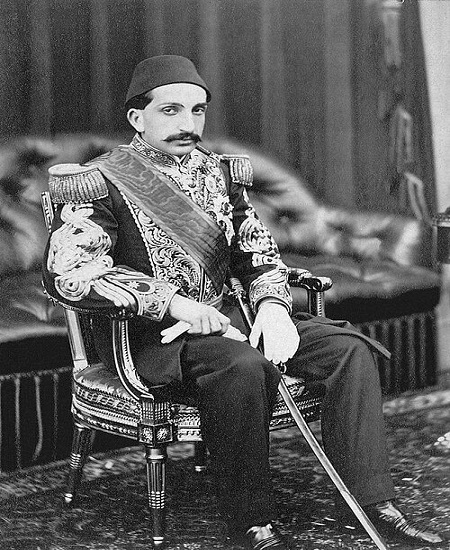
Neither did later sultans manage to fulfill this great desire. The best they could do was to win them over, and until the last day of Abdul Hamid’s tyranny, Albanians were treated as a distinct people. Hamid bought their loyalty by imposing no taxes, restraining military conscription, and selecting the best of these rugged highlanders as his personal bodyguards.
The Young Turks were merciless
When after 1908 the Young Turks had adopted their Constitution and were trying with great effort to bring order to the Ottoman Empire, the treatment of Albania was one of the most delicate problems. It should have been handled more carefully.
Through delicate handling, fulfillment of promises, and a show of fair sympathy for the aspirations of an ignorant but highly capable race, the Young Turks would have been able to raise and strengthen in the province of Albania an impenetrable barrier to European aggression.
Instead, they have followed a course that has been properly described by the Constantinople correspondent of the London “Times” as the policy of the steamroller. Ignoring the advice of every experienced politician, the Young Turks rushed to “treat” Albanians just like the ignorant Turkish peasants in Asia Minor. No other strategy could have been more inappropriate or more destined to fail. The first signs of opposition appeared in the autumn of 1909, but it took the spring of 1910 for a revolt to assume serious proportions.
On April 5 of that year, the Muslim Albanians of the northeastern corner of Albania took up arms against the government. For a few days, the rebels held Kaçanik, but 50,000 Turkish troops were immediately sent to the region and the movement was suppressed. It was local in character and lacked organization. Albania as a whole was not its target.
However, the Young Turks thought the time had come to teach the disobedient Albanians a lesson. The troops that had been gathered to suppress the uprising marched through Albania. One division went west, to Shkodra. They traversed mountain roads that for generations had been closed to anyone traveling accompanied by a Turkish soldier, because Albanians did not like the uniform of Turkish authority. But now the highlanders, caught by surprise, were to be disarmed.
After the defeat their brothers had suffered, fewer in number and faced with automatic weapons – an unusual terror for ordinary Albanians – there was no hope of resistance. Their weapons – their pride and possessions – were taken from them, and the Albanians were “taught a lesson” cruelly. Another division of Turkish forces marched south and penetrated the peaceful valleys of Albania.
In Elbasan, the intellectual leaders of the New Albania had opened a normal school. They were trying to prepare Albanians to become teachers for their ignorant compatriots throughout the country. They used the Albanian language and, according to the vote of an Albanian congress a year earlier, they wrote this language – a European language – in Latin letters.
Under Abdul Hamid, every effort to write or teach in the Albanian language was suppressed. Only in the schools of Austrian and Italian missions in northern Albania, where Austrian and Italian propaganda was offered, and outside the Sultan’s surveillance, had it been possible for Albanians to study in their own language.
As for an alphabet, Austrian politicians who supported the missionary work of Austrian priests and never ceased to advance Austrian schemes looked with suspicion toward a future for Albania, whose leaders educated in Italy or Austria would be united by a common language and alphabet. Thus a long alphabet was created and offered to children in Austrian mission schools. / Memorie.al
Taken from the archives of “National Geographic,” November 1912