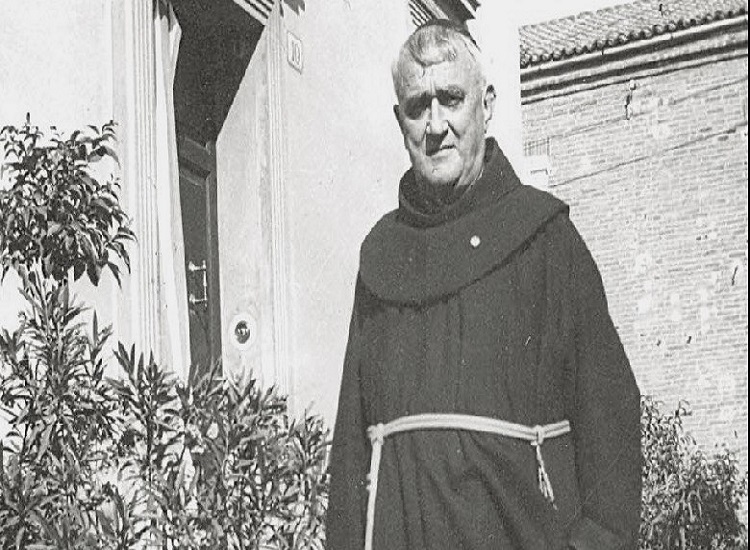
Memorie.al / Among the theses that were being prepared for discussion at the Third Conference of the League of Writers, this analysis on the work and activity of Father Gjergj Fishta is also presented, with no author mentioned at the end, where it is argued paragraph by paragraph why this author should be eliminated once and for all from the history of Albanian literature, and what was the “hostile” spirit in his works. “The language Fishta uses is the most extreme Gheg and the most difficult to understand. A more extreme Gheg has not been written since the League of Prizren onwards. With this, he seeks to fanatically fight against the tendency that Gheg had shown to draw closer to Tosk during the Renaissance period, with Vaso Pasha, Filip Shiroka and later with Luigj Gurakuqi…”
Thus it is written in a paragraph of this analysis, concluding a little further below with a series of conclusions on the points, where and why this author, who did not fit the new communist regime being installed in Albania, should be condemned. Below we present the second part of this document.
Excerpts from the theses of the Third Conference of the League of Writers
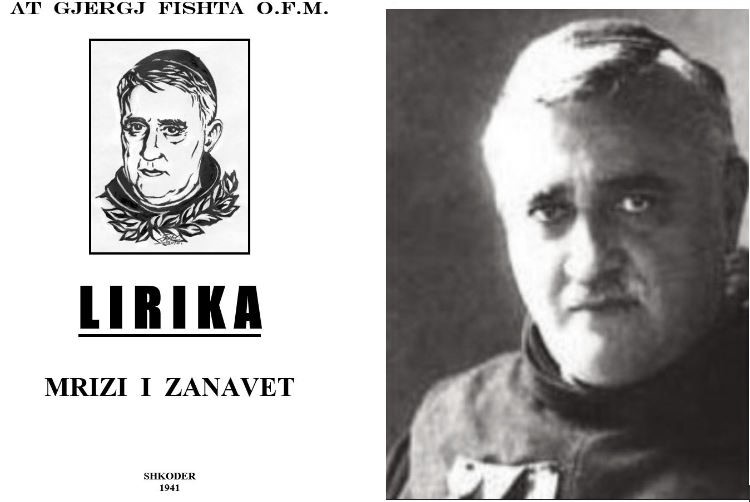
THE MEADOW OF THE NYMPHS
– Fishta does not change his political line, his poetic content, not even in his lyrical poems, nor could he change it. Here too, he sings hymns to feudalism and imperialism; here too, he vomits bile against neighboring peoples, especially against the Slavs; here too, he sings hymns to the “King.”
The lyrics of The Meadow of the Nymphs are generally an echo of The Highland Lute. There are also some lyrics here with a non-political subject, such as “Manliness,” “Judgment Day,” “An Autumn Flower.” In such subjects, Fishta usually falls into rhetoric, into reclamation, into dry reminiscences and imitations. Fishta feels and sings only as he was educated; he feels and sings things of the class and the cliques that raised him, that taught him and magnified him with decorations and titles like “National Poet,” “Academician,” etc.
As a lyric poet, Fishta was generally not accepted even by the official criticism of the past; this means that his lyricism had not brought the ruling class as great services as The Highland Lute had done. Even less, therefore, shall we accept Fishta today as a lyric poet, for his lyricism is either a poisonous echo of The Highland Lute, or it is rhetoric and dry imitation of foreign poets.
This can be clearly seen in his lyric poem “An Autumn Flower,” where Fishta has imitated Leopardi, Horace, Manzoni, Monti, and Foscolo simultaneously. Moreover, in some verses he has even translated these poets word for word. Likewise, in the lyrics “Manliness” and “Judgment Day,” with bombastic rhetoric, he has tried to imitate the universal grandeur of Michelangelo’s artistic concepts, but his personal creation is not visible in them.
THE DONKEY OF BABATASI
– The satire of Fishta is summarized in these two works. It has been said many times, and sometimes even in our revolutionary time, that Fishta as a satirical poet is a poet of value and as such will remain. This idea is very wrong. In Fishta there are contradictions – nobody denies this nor can deny it, because the political line he follows in the choice of themes and in their treatment is itself full of contradictions.
It is the political line of imperialism and the ruling classes in the historical process of our country. And dialectics teaches us that imperialism and the ruling classes live as parasites on contradictions. Contradictions disappear from the socio-economic and political system only with the disappearance of classes, and consequently in art these contradictions will only be able to disappear then.
Fishta was raised, lived and sang upon a system of the strangest contradictions. It is no wonder, therefore, if we see Fishta at some moments rise up and satirize Turkey, Italy, England, or any other imperialist state. At other times he has even praised these states.
Thus he acted according to the moment, according to the political situation, according to the interests of the ruling class for which he sang. Thus, for example, we should not be at all surprised when Fishta, in the heroic-comic poem “Palok Cuca,” throws himself against Italy and the House of Savoy, because the same Fishta, in 1940, will wish glorious victory to the House of Savoy in the telegram he sends to Victor Emmanuel on the occasion of the 40th anniversary of his reign.
Nor is it any wonder if we see Fishta rise up and criticize the government of Tirana in The Donkey of Babatasi. He did this at a moment when Zog and his clique were pondering and could not decide which imperialism to sell themselves to, while another treacherous clique, of which Fishta was a part, had decided that Albania should sell itself to Italy and wanted the first step to begin precisely where the foundation of an independent state’s sovereignty lies, i.e., in the economy. Here’s what Fishta says in The Donkey of Babatasi:
“Well, the trade treaty
Between Albania – and Italy,
Which now for more than a year or two
Has been ready, but until today
The Government hasn’t put its hand to it,
But left the field and the mountains
For the waters to muddy and the house to fall,
Since the deal doesn’t make money?…”
(The Donkey of Babatasi…, p. 45)
Naturally, to realize the policy of selling the country to foreigners, one had to go even further – foreigners had to be brought in from the very beginning of the existence of the new state to infiltrate everywhere in the administration, to prepare the ground for occupation. Here is the advice Fishta gives to the new Albanian state through his satire:
“To get all our affairs in order,
We need to bring learned people
From Europe: professors
And experts: and into their hands
To release the administration…”
(The Donkey of Babatasi…, p. 55)
For the ruling class and the treacherous cliques, whose poet is Fishta, after the First World War there remained only one master with whom things worked out well: imperialist Italy. And Zog, the representative of this new betrayal, one of the greatest and most despicable ever committed at the expense of the Albanian people, fulfilled both of these behests for Fishta: he granted economic concessions to Italy, and filled the state apparatus with so-called Italian advisers who, in cooperation with internal agents like Fishta and his comrades, prepared the black day of April 7, 1939, for the Albanian people.
After Zog did these things, Fishta no longer criticized him or his executioners; moreover, he even became his close friend, wrote praiseful articles for his monarchy, and went in and out of his palace as if it were his own home. That is where the so-called value of the political criticism of Fishta’s satire lies: criticize today what does not serve your interest, in order to become a close friend of it tomorrow if interests unite.
Such is the morality; such are the principles upon which Fishta’s satire is also based. It would be a great mistake if anyone were to accept Fishta’s satire today as something positive: those who wish to do such a thing either have not studied Fishta deeply and speak superficially about him, or do this intentionally to leave some free corner for Fishta in our literature even today.
Fishta has been consistent everywhere and always in his literary production with the political and ideological line that the ruling class of our country, for which he sang, followed. The content of his works, from the first part of The Highland Lute, published in 1905, to the end of his life, represents the treacherous activity of this class’s policy, with all its vacillations, jumps and zigzags.
Fishta’s social satire deals with the vices of impoverished nobles, with women’s vices and other idle matters, and is treated in a way that leaves no constructive critical mark on society.
Art, Style and Language
– Naturally, Fishta’s art is closely linked to the content of his works. Prosopopoeia, hyperbole, metaphor and declamation of bombastic words deafen the ears throughout his poetry. Naturally, he is forced to act thus, because underneath these he will cover his unreal figures, the fantastic situations of events, the ahistorical disproportions of his heroes. Fishta could not be natural, realistic in his art; neither the subject matter he treated, nor the ideological and aesthetic school in which he had studied, would allow him such a thing.
The subject matter he treated is a great lie. With this, he aims to achieve goals that are in opposition to the truth, and therefore his art and style are forced to make efforts to find their expression outside of nature: thus, inevitably, his art – in full accordance with the content, compared to the reality of things and human history – sublimates into superhuman forms, falls into comicality; compared to the enemy, whom he seeks to find where he does not exist and to fight with the fanaticism of an inquisitorial cleric, falls into monstrosity. His entire Highland Lute is executed with such an art and style.
And this had a consequence for Fishta: the foundations of his art, his ideology, feeling and imagination were crookedly educated and fed throughout his life; inevitably, their artistic and stylistic garb would also emerge crookedly. Falsity and the unnatural cannot be sung realistically and naturally; evil and monstrosity cannot be sung beautifully.
The meter he usually uses is simple: his entire Highland Lute is written in octosyllables that have tonic accents on the third and seventh syllables. In his lyrics and satire, he has also used other verses, ranging from trisyllables to hendecasyllables. Generally, he knows meter well, but the heavy language he uses makes reading and scanning his verse difficult. The style of his prose is heavy and tangled, because his period seeks to follow the model of the classical Latin and Italian period, without considering the simple nature of our language.
The language Fishta uses is the most extreme Gheg and the most difficult to understand. A more extreme Gheg has not been written since the League of Prizren onwards. With this, he seeks to fanatically fight the tendency that Gheg had shown to draw closer to Tosk during the Renaissance period, with Vaso Pasha, Filip Shiroka and later with Luigj Gurakuqi. Even by means of language, Fishta performs the plaything of the ruling class and the external enemies of our country: he opens the chasm of division even further than the time of the Turkish occupation had opened it.
d) CONCLUSION
– Fishta, who began his political career with compromise toward the Ottoman occupier, with hymns of praise and love toward the new imperialists threatening our country, with savage hatred toward neighboring peoples, with sublimation of feudalism and patriarchalism, with disregard for the people crushed under a thousand miseries – Fishta was the one who realized in literature the entire line of the most furious reaction in our country.
For this merit, the ruling classes that took over economic and political rule after Albania’s liberation from the Ottoman yoke, baptized Fishta as “National Poet.” For this merit of his, his masters – emperors, kings and popes – gave him decorations and academic titles.
For this, too, the official criticism of the servilism and literary conformism of Zog’s time surrounded the “National Poet of a Thousand Flags” with halos, with incense and laurels, and called his ugly work a “literary epoch.” The ruling class and the various imperialists were right to reward Fishta, because he sang all his life, placed all his artistic and cultural energy at their disposal, and developed for them an intense political activity.
His work remains a document of unprecedented betrayal in our literature: betrayal of the country’s independence and the people’s freedom. It remains an eloquent document of the savagery and cruelty of the means with which the ruling classes are accustomed to achieve the oppression and exploitation of peoples. It remains a document of barbarism and cannibalism, characteristic of the inquisitorial clerics of the middle Ages./ Memorie.al