


Dashnor Kaloçi
Part Nineteen
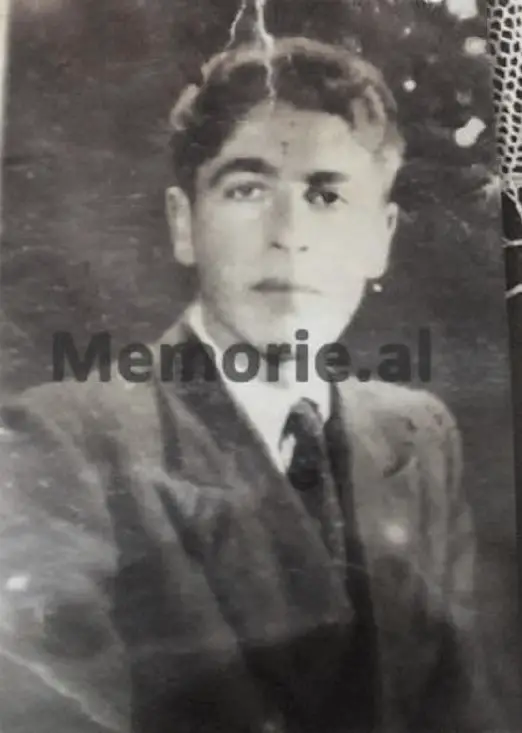
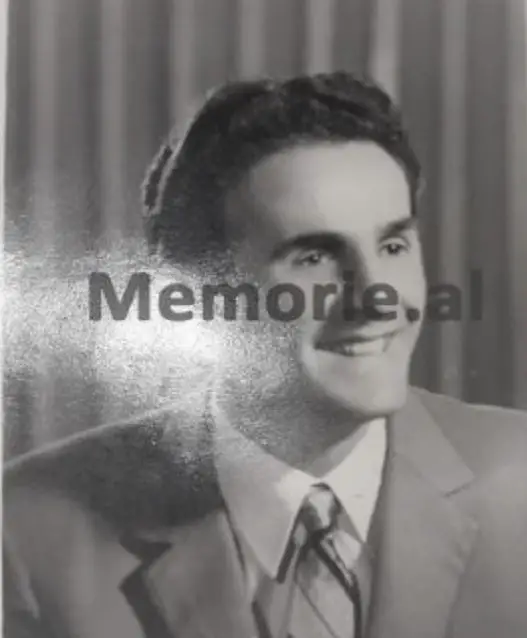
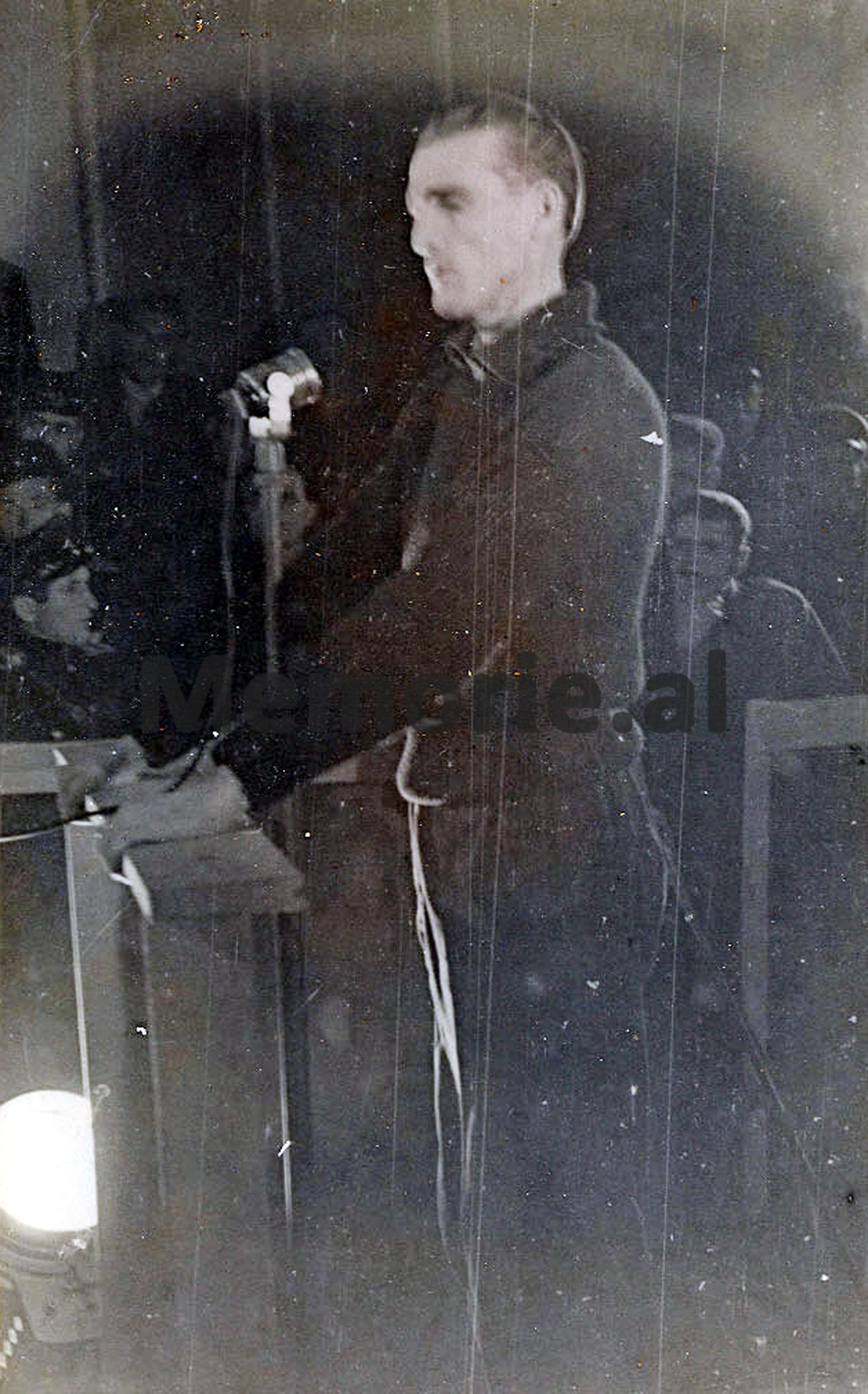
Memorie.al /publishes several archival documents extracted from the institution of the Authority for the Information of the Files of the former State Security, where there is a voluminous dossier belonging to Tuk Jakova, who, since the period of Zog’s Monarchy, was one of the main leaders of the Communist Group of Shkodra, sentenced to political prison in the famous trial of 1938, together with Qemal Stafa and Vasil Shanto, participant in the founding meeting of the Albanian Communist Party and member of its Provisional Central Committee, from the founding meeting of November 8, 1941, political commissar of the First Assault Brigade and the First Corps of the National Liberation Army, where from the end of the War, from November 1944 until 1955, he held several high party and state functions and duties, such as: member of the Political Bureau and secretary of the Central Committee of the Albanian Communist Party, plenipotentiary ambassador of the People’s Republic of Albania in Belgrade, President of the Trade Unions of Albania, Minister of Finance and Deputy Prime Minister of the Albanian government, chaired by Enver Hoxha, etc. The entire voluminous dossier (personal and investigative) published for the first time by Memorie.al, containing hundreds of unknown documents incriminating former Lieutenant General Tuk Jakova (“Hero of the People”), which belong to the period of the years 1951-1959, when, after numerous contradictions with Enver Hoxha since the end of the War, in 1951 he was expelled as a member of the Political Bureau and in 1955 was also expelled from the Central Committee of the PPSH, dismissed from all party and state functions he had held until that time, was internally exiled with his family to the Berat district, where after working for some time as head of the Carpentry Department in that city, in 1957 he was sentenced to isolation in the Kanina Castle in the Vlorë district, where he was arrested in 1958, sentenced to 20 years in prison, accused as a “traitor and enemy of the people”, until he died in the Tirana Prison hospital in 1959 under mysterious circumstances! What is said in the secret documents (reports, photographs, cards, forms, information reports, notes, minutes, surveillance reports, action plans, denunciatory letters, etc.) belonging to the period 1955-1959, when he was under constant pursuit and surveillance by the State Security organs, who were the officers of the Ministry of Internal Affairs charged with observing him, and the names and pseudonyms of the Security collaborators who kept him under strict control?!
Continued from the previous issue
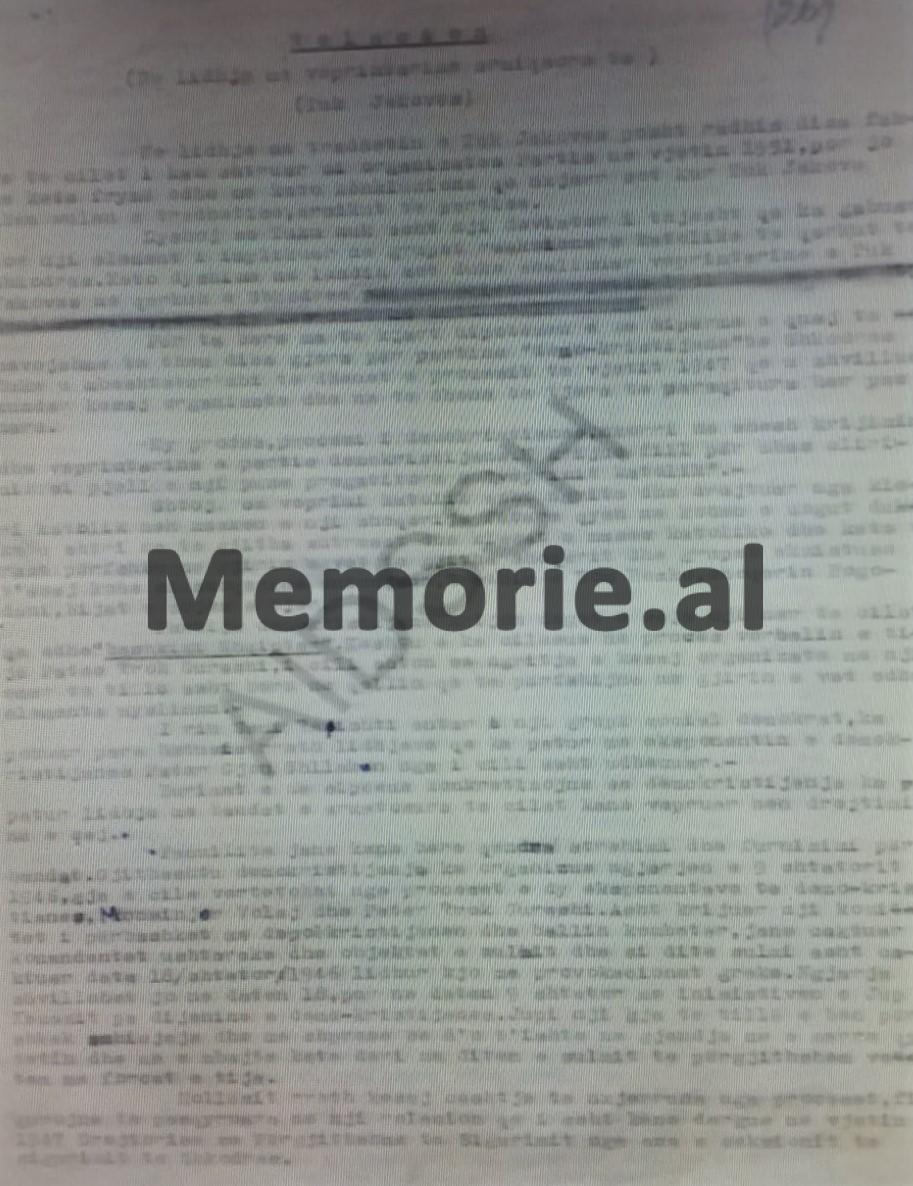
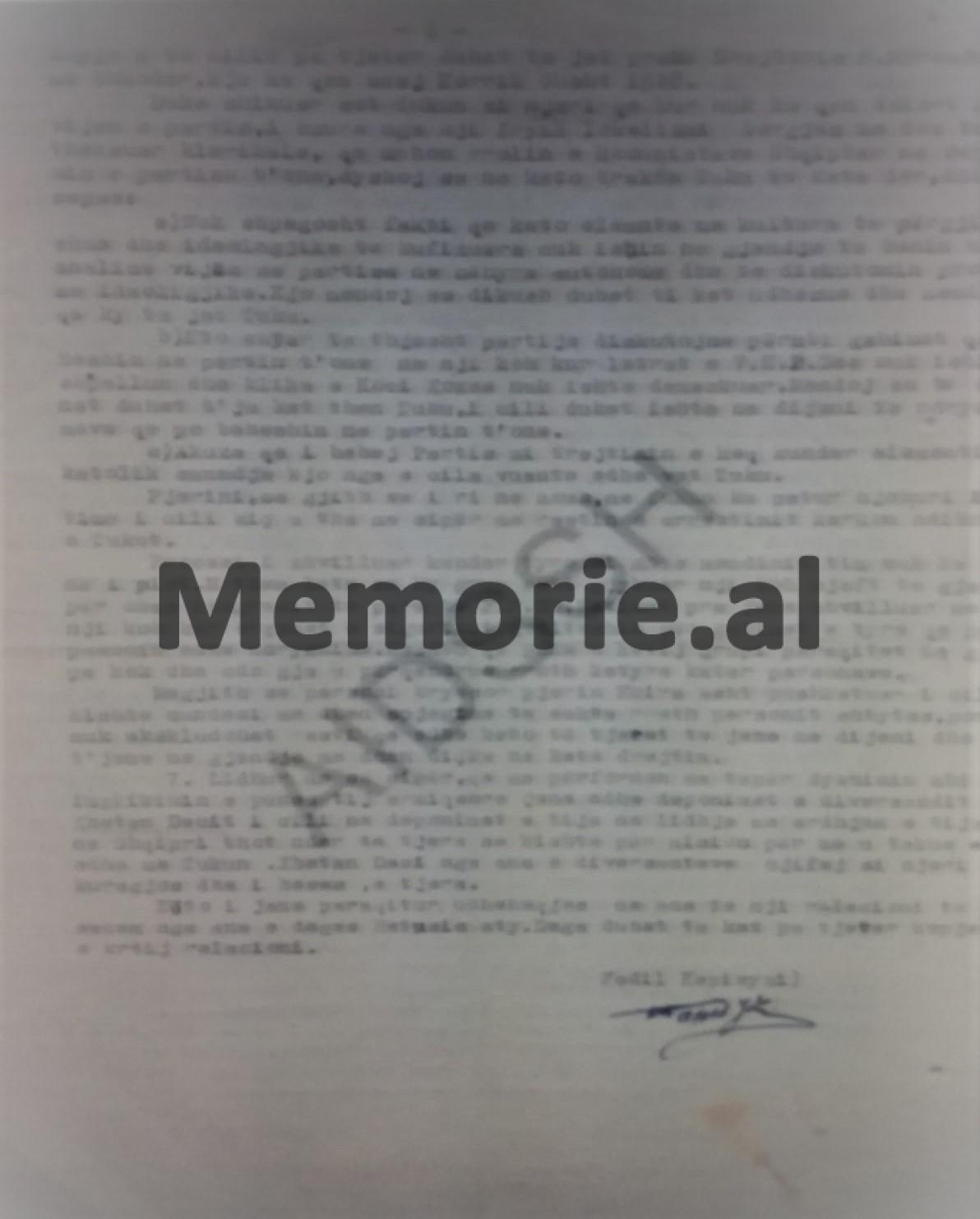
The secret document with the report of the senior State Security officer, Major Fadil Kapisyzi, regarding his accusations of the hostile activity of Tuk Jakova from the year 1944
Report regarding the hostile activity of Tuk Jakova
Regarding the treason of Tuk Jakova, I list below some facts which I wrote to the Party organization in 1951, but not in this spirit nor with these conclusions that I draw today when Tuk Jakova bears the stamp of treason, of an enemy of the Party.
I suspect that Tuku is not a simple deviator who made mistakes, but an element implicated in the reactionary Catholic groups of the Shkodra District. These suspicions arise in me today when analyzing the activity of Tuk Jakova in the Shkodra District.
To clarify the above hypothesis, I deem it necessary to say a few things about the “Christian Democratic” Party of Shkodra, based on data from the 1947 investigative trial against this organization and other data presented for the first time.
This trial, the ‘Christian Democrat’ trial, brought to light the creation and activity of the ‘Christian Democratic’ Party. It was created immediately after liberation as the offspring of preparatory work of “Catholic Action”.
I add that “Catholic Action” was established and directed by the Catholic Clergy, under the mask of a religious society as far back as Zog’s time, spreading across all strata and classes of the Catholic populace and on this occasion it encompassed within itself all existing societies and groups of that time, such as: the “Antonian Society”, the “Don Bosco Circle”, the “Bogdani Society”, and the “Daughters of the Old Lady”.
The Christian Democratic Party creates its own branches, one of which is the “Albanian Union”. Thus it was described in his minutes by Father Rrok Gurashi, who adds that the establishment of an organization with such a name was done with the aim of including Muslim elements as well.
The young man Sami Repishti, a member of a social-democratic group, stated before the investigation regarding the connections he had with the ‘Christian Democrat’ exponent Father Gjon Shllaku, from whom he received instructions.
The above sources specify that the ‘Christian Democrats’ had connections with armed bands that operated under its direction.
The parishes served as shelter and supply centers for the bands. Also, the ‘Christian Democrats’ organized the event of September 9, 1946, which is evidenced by the trials of two exponents of the ‘Christian Democrats’, Monsignor Volaj and Father Rrok Gurashi.
A joint committee with the ‘Christian Democrats’ and the National Front was created, military commanders and attack targets were designated, and September 18, 1946 was set as the attack date, linked to Greek provocations.
The event took place not on September 18, but on September 9, 1946, on the initiative of Jup Kazazi, without the knowledge of the ‘Christian Democrats’. Jup did such a thing out of ambition and in the hope that he would be able to take the city and hold it with his own forces alone, until the day of the general attack.
The details regarding this matter, reflected in the trial records, appear in a report that was sent in 1947 to the General Directorate of State Security by the Shkodra Security Section.
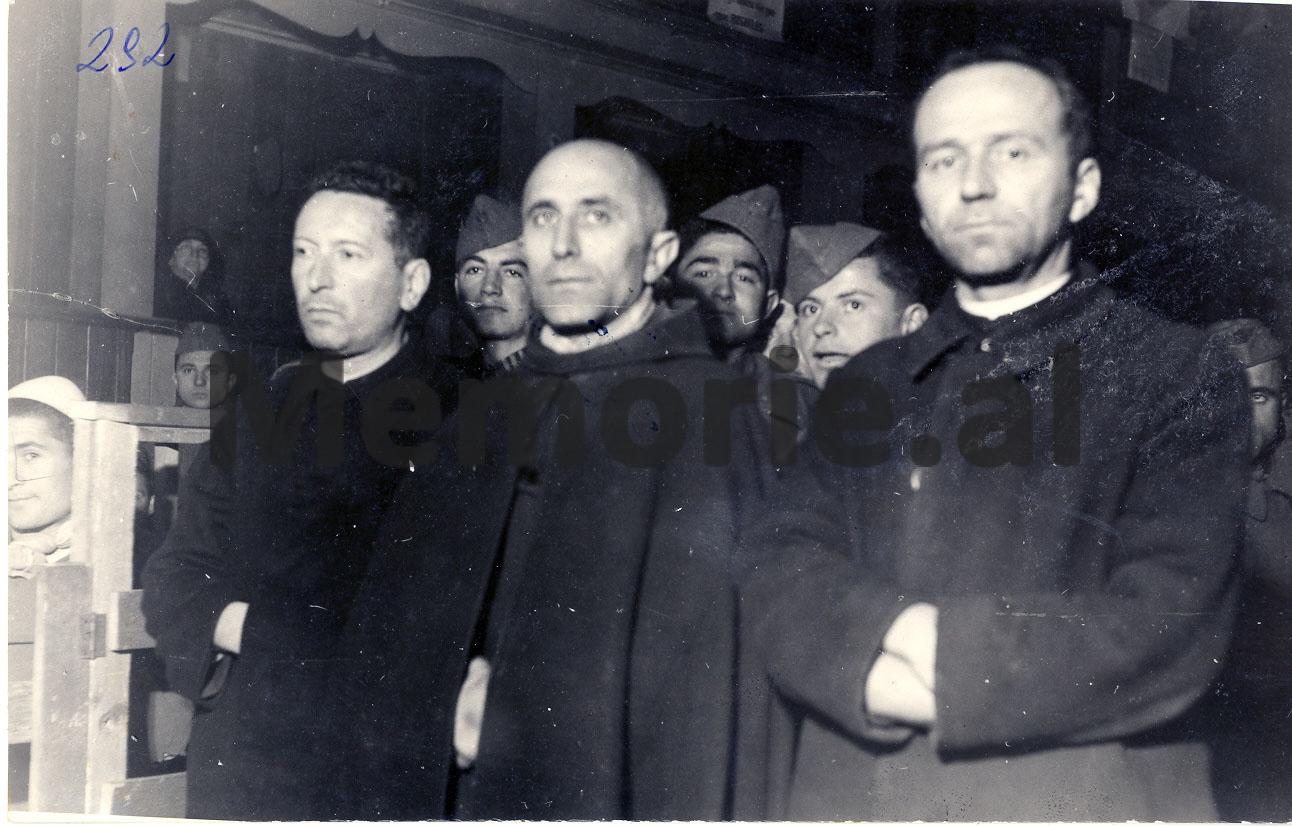
I add that from the search carried out in the Friars’ Church; weapons were found hidden in large quantities inside and in the churchyard.
That the Church as a directing head and spy center was also proven during the War. The Church outwardly presented itself as an institution that stands above politics and outside politics, reflected by its famous slogan: “Above all politics and outside all politics,” while in fact, into all organizations, into power and into spy centers, they inserted clerical elements under the official cassock of the Church.
For example, Dom Lazër Shantoja, an exponent of fascism, Father Anton Arapi, regent, Dom Alfoins Tracki in the Gestapo, Father Lek Luli, exponent of Legality, Dom Zef Shestani, exponent of the “National Front”, Dom Nikoll Gazulli, exponent of ‘Nacional Independientes’, and Dom Luigj Pici, member of the National Liberation Council for the Shkodra District.
All except the latter gathered elements from “Catholic Action” and cast them into the organizations where these belonged. The vast majority among them was the “National Front”.
It is interesting that the “National Liberation” slogan was considered by the Church as a communist movement; communists were considered faithless and as such, also cursed.
How then is it explained that Dom Luigj Pici, not only was not cursed and thrown out of the Church’s ranks, but on the contrary, was kept in close ties by the Archbishopric, who, escorted by partisans, descended from time to time into the city, attending the periodic meetings of the Archbishopric.
Facts later showed that this man (Dom Luigj Pici) had been an enemy element and certainly also a spy. After liberation, he was killed while resisting with arms at the moment the Security men came to arrest him.
What has been said and many other facts present the hostile activity of the Catholic Clergy, its great influence exerted on the Catholic populace, and the difficulty of the latter in breaking away from this influence, especially those who were educated in clerical schools.
Tuku’s relations with the Catholic Clergy and his loyalists are as follows:
Tuku, as is known, on the eve of liberation came to Shkodra in the capacity of Commissar of the III Corps and at the same time as a member of the Central Committee, who, as such, was directly interested in the placement of cadres.
Thus we see that in the first days of liberation the District War Committee was dismissed, being replaced with other elements. One of the persons appointed to the new Committee was Gjovalin Luka.
- In the National Liberation Council of the District, included as members of this Council were the advisor to the Archbishopric, the merchant Pjerin Simoni, and Luigj Simoni, former Honorary Consul for Czechoslovakia, Zef Haxhija, and others.
In the Center district, appointed as Council members were Loro Kovaçi, a member of the “Antonian Society”, who, with the occupation of Albania, forcefully demanded the official establishment of the Fascist Party, which had not yet been formed, and his son, after liberation, was arrested for counter-revolutionary offenses, implicated in an organized group. Luigj Mjeda, appointed Council member, loyal to the Clergy and a Gestapo spy; for the latter, he was arrested and sentenced, and others.
- Thus Tuku, being an opportunist to the bone and sick with the spirit of the Catholic Clergy, instead of building the People’s Power, he loaded the Power with anti-people individuals, such as merchants, priests, spies, and other fanatical Catholics.
With the creation of the District Command, Gaspër Pali was appointed commander, a former lieutenant colonel of the Occupation Army, a member of the Central Committee of the ‘National Front’, with pronounced clerical tendencies, brother of Palin Pali, who was executed in 1948 as a member of the ‘Christian Democrats’, collaborator of Riza Dani, arrested while attempting to flee to Italy.
- I add that in December 1944, the Jesuit organization “Albanian Union” was spreading its first tracts in the city of Shkodra. Tuku, upon returning from Tirana or wherever, is informed of the arrest and orders his immediate release.
- The son of Kol Bibë Miraka, Ndoc Kola, was arrested not as the son of Kol Bibë Miraka, but for his own counter-revolutionary activity. Like the first, he too was released on the order of Tuk Jakova. Later, Ndoci escaped and at the head of an armed band continued criminal activity until the year 1951, when he was killed.
- The State Security organs in 1945-1946 sought to arrest Noc Gëra, the personal secretary of Llesh Marashi and courier between Lleshi and the English major, Hill. The Security organs investigate and seek his arrest, while Kol Jakova (since Tuku was in Tirana at that time) refused to hand him over, under the pretext that he would hand him over to Tuku in Tirana and the latter would do as he wished with him. In fact, that is what happened. Noci went to Tirana but was not arrested; he is still free today and works at the People’s Theater. He must certainly be categorized.
The House of Culture in Shkodra was established and placed in charge was Gjovalin Luka, with his assistant Father Gjon Shllaku, former director of the “Antonian Society”, exponent of the Christian Democratic Party, who for his activity in this role in 1946, was executed.
During the time he held this function, the drama of Father Gjergj Fishta, “Judas Maccabeus”, with a pronounced reactionary content, was staged, which at the end concludes with the curse that Judas Maccabeus pronounces upon the people of Israel.
After this incident, the melodrama “The Red Ruba” by author Dom Ndre Zadeja was prepared. At this time, the author was under arrest and after some time was executed as an English agent. A strong intervention was needed to stop the performance. The work had some patriotic content and at that time the author had not yet been unmasked to the masses as an enemy element, so the performance gave the impression that the blow against Dom Ndre Zadeja was unjust.
Thus, Father Gjoni, by virtue of the position given to him, tried to accomplish his mission as an element of the ‘Christian Democrats’.
- In June-July 1948, in Shkodra, tracts were distributed with content directed against our Party, accusing it of supposedly having deviated from the path of Marxism-Leninism, also slandering that “Catholic elements are being treated badly”. In July of the same year, its members were arrested.
They included: Pjerin Kçira, Gjovalin Mazrreku and Lin Çollaku, the latter two with the rank of captain and the first as aspirant, active members of the State Security section of the Center district, students of the Jesuits.
Also Zef Bardhoku, a demobilized former officer. When Pjerin Kçira, the main element of this group, is arrested, he tells his mother to go and tell Tuku; it is unknown what Tuku promised her.
Regarding her visit to Tuku, the Security Directorate was informed via a radiogram from the District Security Section, a copy of which must certainly be with the Internal Affairs Directorate in Shkodra; this was in July-August 1948.
Looking at Tuku today, as a man who has never agreed with the Party’s line, sick with a spirit of bourgeois localism, with a pronounced clerical dose, who denies the role of Albanian communists in the formation of our Party, I suspect that in these tracts Tuku must have had a hand, and here’s why:
- It is not explained how these elements, with limited general and ideological education, were able to autonomously analyze the work and line of the Party and discuss ideological problems. I think someone must have instructed them, and I think that someone must be Tuku.
- These simple party members discussed the mistakes being made in our Party, at a time when the letters of the C.P.S.U. had not been published and Koci Xoxe’s clique had not been unmasked. I think the data must have been given by Tuku, who must have been aware of the changes taking place in our Party.
- The accusation made against the Party regarding the poor treatment of Catholic elements, a sickness from which Tuku himself also suffered. Pjerini, although young in age, had intimate knowledge with Tuku, and as mentioned above, upon his arrest, he sought Tuku’s help.
- The trial conducted regarding them, in my opinion, was not complete. I say this because this group was tried a considerable time after the First Congress of the PPSH. The investigations were conducted at a time when the State Security organs were being criticized for their mistakes and were also undergoing changes.
Thus, the work of this group appeared in court without a head, and everything was concentrated around these four persons. Although the main person, Pjerin Kçira, was executed, who would have been able to give accurate explanations about the instigator, the possibility is not excluded that the others too were aware and might be able to provide something in this regard.
Regarding the above, which strengthens my suspicion about the implication of his hostile work, are also the depositions of the diversionist Xhetan Daci, who, regarding his depositions about coming to Albania, states, among other things, that he had a mission also to meet with Tuku. Xhetan Daci was known among the diversionists as a courageous, trustworthy man, etc.
These were presented to the leadership by means of a report by the Investigation Branch there. The Branch must certainly have a copy of that report. Memorie.al
Fadil Kapisyzi