Memorie.al / The Government watched, the State Security (Sigurimi) watched. These structures had instinctively transitioned from the hesitation of December 1990 – when they lost their first battles against the students of Tirana and Shkodra – to the preparation for revenge. They were waiting for the right moment. The end of December 1990 and the beginning of January 1991 were accompanied by a rise in uncertainty and chaos in the country. On January 11, the first “anti-rally” was held during a Democratic Party gathering in Tropoja. Groups of “Enverists” sought to overturn the situation in their favor. All signs indicated that the new opposition, led by Berisha and Azem Hajdari, was gaining ground territory by territory, battle after battle. The PLA (Party of Labour of Albania) feared total elimination as a political force, as had happened a year earlier with the League of Communists of Kosovo.
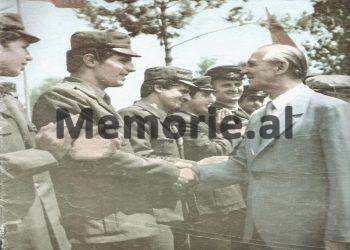
The communist dictator, Ramiz Alia, began preparing to undermine the opposition’s ground. A fierce duel emerged during January-February of that year, where students and unionized workers would play a crucial role. The PLA still pinned its hopes on the military. They attempted to manipulate the students of the United Officers’ School in Tirana. But even there, opposition had been born. On January 8, the first public protests began at this school, where later the failed coup of February 22 would be prepared.
The regime felt threatened. It was trying to preserve its symbols and, along with them, the legacy upon which the “barracks society” was built. To this end, on January 30, Ramiz Alia issued a decree for the protection of monuments.
Protests of the Students of the Higher Agricultural Institute in Kamëz
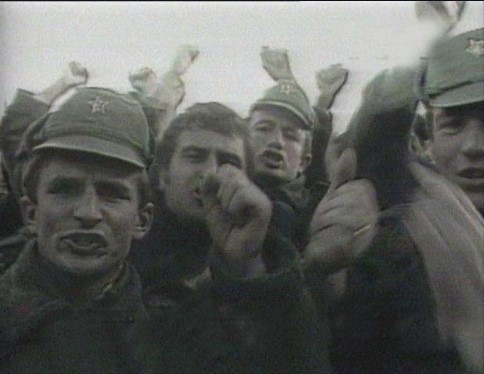
While the structures of the “dictatorship of the proletariat” regime were crumbling, anarchy and popular discontent remained. The movement that would lead to the toppling of the symbol of the dictatorship on February 20 would be born again in student circles – specifically at the Higher Agricultural Institute (ILB) in Kamëz. On February 5, a large group of students, dissatisfied with the miserable economic conditions, began protesting.
Around midnight, they decided to create a Commission led by student Osman Stafa and drafted a petition with economic demands, mainly regarding housing, food, and education conditions, as well as the removal of ideological subjects from the curriculum. On the second day of the protest, they organized a boycott of classes. On the third day, the protest yielded its first result: the Rector of the Higher Agricultural Institute, Haxhi Aliko, resigned.
Solidarity of Tirana Students
On February 6, the amphitheater of the student town in Kamëz was packed. Osman Stafa read the students’ demands to the government. Azem Hajdari and Arben Imami from the Democratic Party participated, establishing links between the students in Kamëz and the University of Tirana. That same morning, posters calling for solidarity appeared in “Student City” in Tirana.
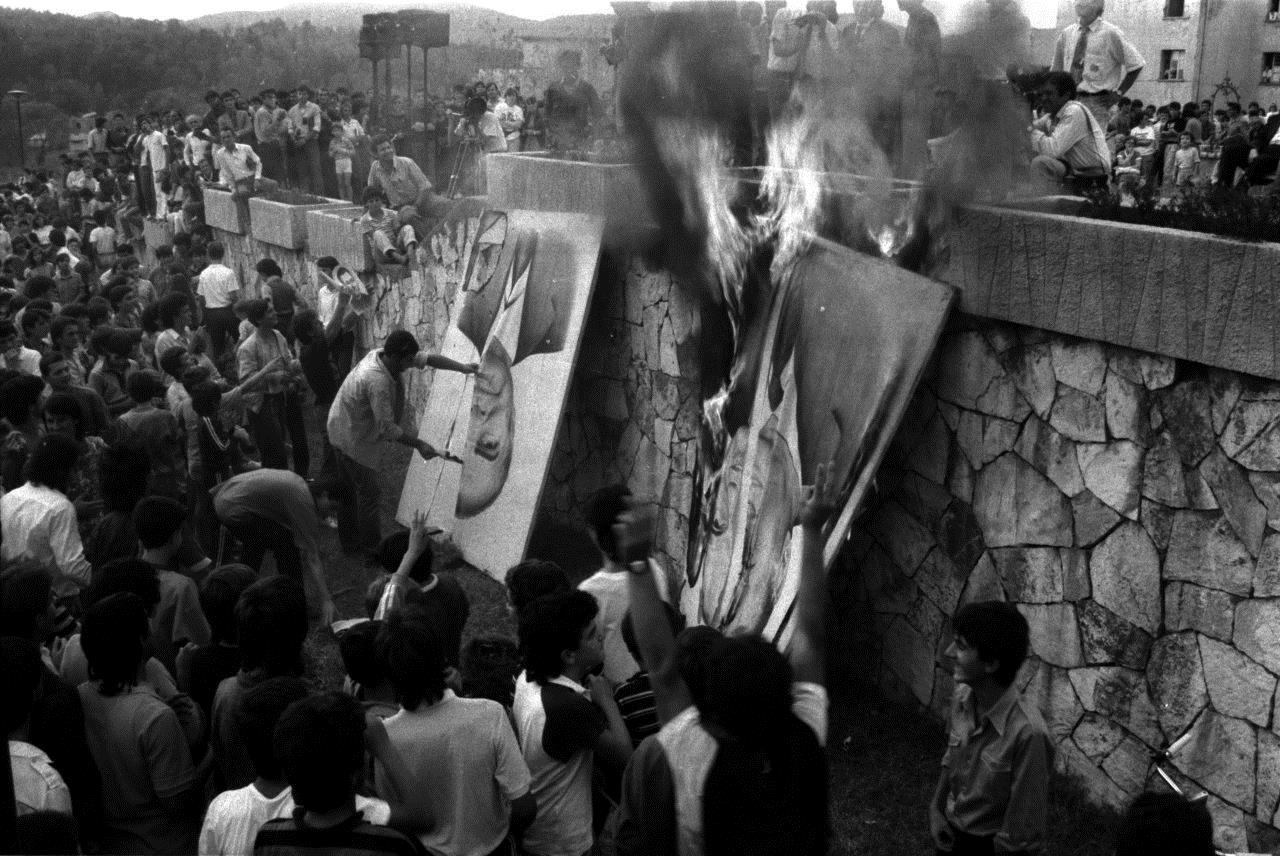
While students in Kamëz negotiated with Adil Çarçani and the government, the protests shifted back to “Student City” in Tirana. These students were radical. They decided to escalate the protest, demanding the removal of the dictator’s name from their University. From this date until February 18, a “public trial” of Enver Hoxha took place at the main square (now “Democracy Square”).
On February 7, students presented a petition demanding the dismissal of the Director of the Albanian Radio Television, Vorgjil Kule, and the Foreign Minister, Reiz Malile. Point four of the petition stated: “Based on the petition drafted by students, lecturers, and staff, the name of Enver Hoxha shall be removed from the University of Tirana, and it shall be called simply: The University of Tirana.” Point 8 called for the abolition of the recent decree on the protection of historical figures.
The Democratic Party and Berisha Denounce the Coup Preparations
The protests encouraged the Democratic Party (DP) and its leadership. The opposition had strongly opposed holding elections on February 10, as planned by the PLA. Ramiz Alia, forced by pressure from the opposition and the people, accepted the postponement of parliamentary elections to March 31, 1991.
At this time, there were rumors in Tirana of a coup being prepared by the military. In an interview with the “Voice of America,” Sali Berisha stated that “there were more and more signs that the Minister of Defense, Kiço Mustaqi, was preparing a coup.”
Continuation of Protests in “Student City”
The “trial” against the dictator Hoxha continued for its fifth consecutive day. On February 12, Sabri Godo, Skënder Gjinushi, Gramoz Pashko, and Azem Hajdari spoke at the rally. Godo and Gjinushi were not favored by the students as they sought a compromise regarding the dictator’s name, while Hajdari and Pashko were applauded.
By February 14-15, the “Student Movement” gained support from across the country. In Shkodra, students led by Flamur Buçpapaj declared a boycott. On February 15, the government responded by proposing a referendum on Enver Hoxha’s name, but only after the March 31 elections.
On February 16-17, the protests took a new turn. A Strike Committee was approved, consisting of Blendi Gonxhe, Ridvan Peshkëpia, Ilir Disadari, Ndue Lugja, Tefalin Malshyti, and Mesila Doda. The Minister of Education, Gjinushi, decided to close universities until February 25, 1991. Police brutally demanded that students vacate their dormitories. Over 1,500 Tirana families offered to take students into their homes.
February 18: The Start of the Hunger Strike
Having failed to reach an agreement with the authorities, the students chose a new form of struggle: a hunger strike. On February 18, around 12:00, the Strike Committee announced the end of negotiations.
The ceremony was emotional. Students kissed the national flag before entering the strike area in the “Studenti” Cinema-club. Renowned lecturers like Abdi Baleta, Ylli Vejsiu, and Omer Stringa joined them. Baleta made an emotional call for solidarity.
Positions toward the Student Strike
The Council of Ministers and the PLA Central Committee rejected the students’ demands on February 19. This decision, which led to the potential sacrifice of about 725 students and lecturers, heightened tensions. The DP and Berisha eventually gave their full support to the students. Berisha declared: “It would be tragic if the cult of Enver Hoxha became the cause of a great national drama that history would never justify.”
February 20: The Call to Topple the Dictator
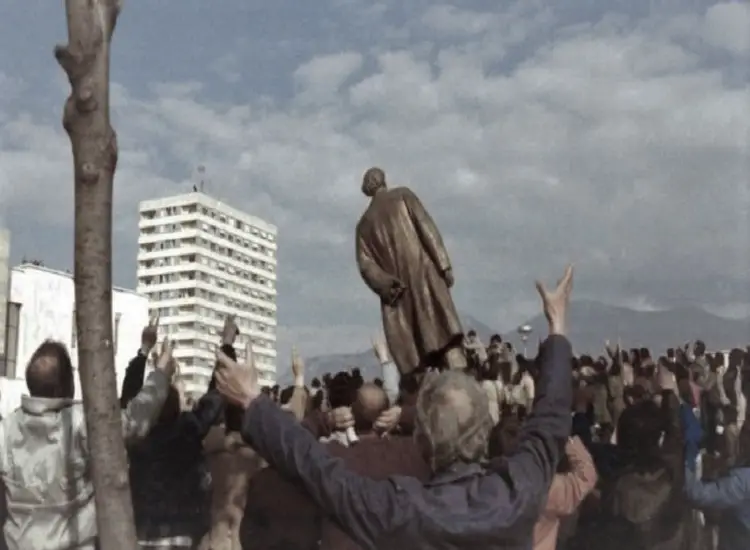
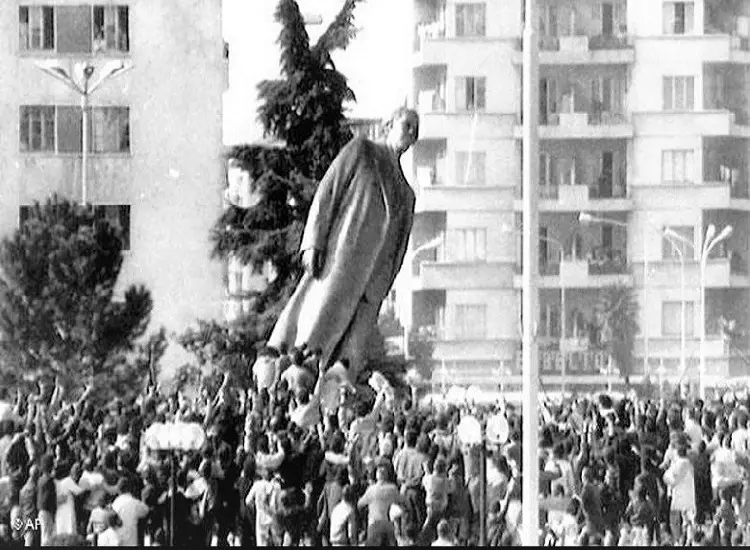
Was the toppling of the statue prepared? I think not. For those of us in the square that day, it was a spontaneous moment. It arose from a movement of hatred fueled by the police and the “Sigurimi” dogs, the sound of gunfire, and the horror of the potential death of the holed-up students, as well as 50 years of bottled-up resentment.
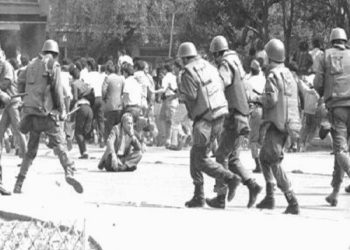
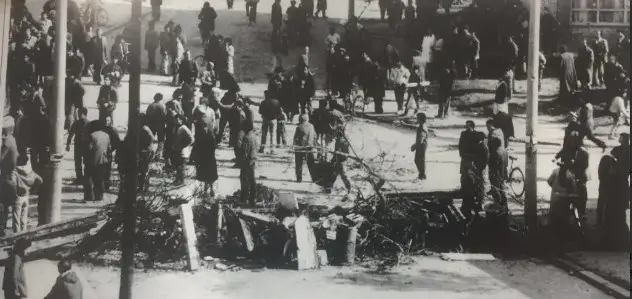
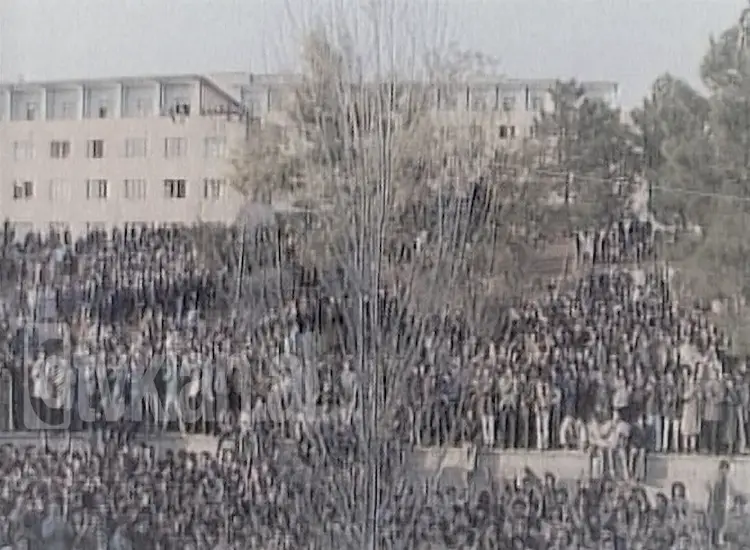
Over 100,000 people gathered. The situation was explosive. Famous actress Rajmonda Bulku called on all mothers and women to march. The enraged crowd, after clashes with the police, toppled the statue. At approximately 14:10, the most important symbol of communism in Albania had fallen.
Hours later, the authorities changed their stance. Skënder Gjinushi informed the students that the dictator’s name would be removed. A decree by Prime Minister Adil Çarçani stated: “Since it will be reorganized, the University of Tirana will no longer bear the name of Enver Hoxha. This decree enters into force immediately.”
The “Enver Volunteers” Association Tensions the Situation
During the “Evil February,” as Ismail Kadare would call it, rumors of civil war and coups were everywhere. On February 12, the “Union of Enver Volunteers” was founded, led by Hysni Milloshi. This organization was clearly state-directed, using military trucks to transport members to “anti-rallies.” They threatened to restore the monument and even to declare Vlora the new capital of Albania.
The Failed Coup Attempt
Following February 20, military armored vehicles and Special Forces surrounded Tirana. Ramiz Alia announced a new government, replacing Adil Çarçani with the conservative economist Fatos Nano. He created a Presidential Council, which the DP, through Abdi Baleta, labeled “unconstitutional.”
On February 22, disgruntled officers at the Military Academy issued an ultimatum for a referendum on Enver Hoxha. Armed clashes occurred, resulting in four deaths, including a policeman.
The military officers, furious over the fall of the bust, summoned Alia to the Ministry of Internal Affairs to demand an explanation: “Why were measures not taken to protect the monument?” Alia famously replied that “he had given the order to fire, but his order was not obeyed!” Later, Minister of Internal Affairs Hekuran Isai stated he had not followed the order to avoid a bloodbath. The coup failed because the regime no longer had popular support. It was hated by everyone./Memorie.al