• Rreth Nesh
  • Kontakt
  • Albanian
  • English
Sunday, July 12, 2026
Memorie.al
No Result
View All Result
  • Home
  • Dossier
  • Interview
  • Personage
  • Documentary
  • Photo Gallery
  • Art & Culture
  • Sport
  • Historical calendar
  • Others
  • Home
  • Dossier
  • Interview
  • Personage
  • Documentary
  • Photo Gallery
  • Art & Culture
  • Sport
  • Historical calendar
  • Others
No Result
View All Result
Memorie.al
No Result
View All Result
Home Dossier

“After departing from Rehova in Berat and passing through the ‘Siena’ division on the way to Fier, he spent the night in a unit on the outskirts of Vlora, where…”/ The unknown side of the Duce’s visit to Albania in ’41

“Pasi u nis nga Rehova e Beratit dhe gjatë rrugës së Fierit kaloi në revistë divizionin ‘Siena’, natën e kaloi në një repart në periferi të Vlorës, ku…”/ Ana e panjohur e vizitës së Duçes në Shqipëri në ’41-in
“Kryeministri, s’lë vend pa shkelur, por s’gjeti një herë kohë, të shkojë në atë djep të kulturës dhe historisë shqiptare, në shtëpinë muze të Vëllezërve Frashëri…”?! / Refleksionet e publicistit të njohur
“Pasi u nis nga Rehova e Beratit dhe gjatë rrugës së Fierit kaloi në revistë divizionin ‘Siena’, natën e kaloi në një repart në periferi të Vlorës, ku…”/ Ana e panjohur e vizitës së Duçes në Shqipëri në ’41-in
“Shqiptarët janë shumë më lart si popull se italianët, por jo më pak i mshojnë gjithnjë ‘nevojës së civilizimit’, pasi…”/ Libri i suedezit që vizitoi Shqipërinë në ’35-ën
“Në rrugën nga Berati për nga shkoje në vijën e parë të frontit, u vendos artileria e rëndë italiane dhe dëgjohej shpërthimi i tyre çdo natë…”/ Kujtimet e panjohura të italianit, që jetoi 20 vite në Shqipëri

By Zylyftar Hoxha

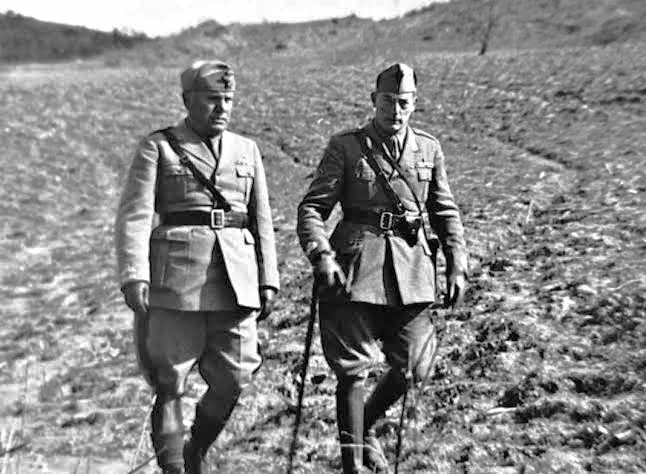
Memorie.al / Nearly two years after the occupation of Albania, Benito Mussolini (the Duce) set foot in our country for the first time. The purpose of this incognito visit, kept extremely secret, was not Albania, but the Italo-Greek front, where matters were going from bad to worse. His sudden arrival was meant to raise the morale, which had hit rock bottom, of the fascist troops, who were suffering defeat after defeat at the hands of the Greeks. The news of the Duce’s visit to Albania was made public on May 10, 1941, nearly a month and a half after he had returned to Rome. In his honor and in honor of those fallen in battle, a giant memorial was later erected on the heights of Tërpan in Berat, but unfortunately, it was demolished due to the mentality of the time.

Likewise, a beautiful memorial, which also suffered the same fate as the first, was located in the Italian soldiers’ cemetery in Uznova, Berat. The Duce stayed in Albania for 18 days, visiting the entire front line of combat.

According to a diary of the Supreme Command of the Armed Forces of Albania, it is learned that Mussolini, having set out from Bari, arrived at Tirana airport on March 2, 1941, at 10:05 AM. There he was received by General Cavallero, the Viceroy General Jacomoni, and General Ranza.

Gjithashtu mund të lexoni

“In Tivar we found ourselves at the target of rifles and machine guns placed on every street corner, windows and terraces of houses…”/ The rare testimony of a survivor of the massacre on April 1, ’45

“It was called ‘Vezir’s Bridge’, in honor of Mehmet Pasha Bushati, vizier of Shkodra, who was the leader of Spas, Pista, Trun, Lajthiza and Sakati…”/ The unknown history of the famous bridge that the communists mined in ’78

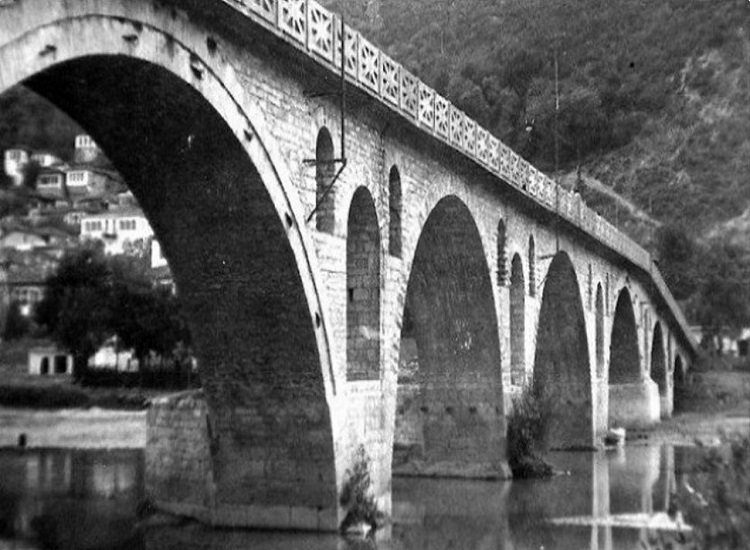
Without stopping at all in Tirana, and only briefly in Ndroq, where the command of the Bersaglieri of the First Regiment “Italia” was located, he immediately set off towards Rehova in Berat. In Berat, he was forced to temporarily stay among the soldiers of the “Bari” division, which was deployed on both sides of the Goricë Bridge, due to the bombings that the Allies were carrying out in the city.

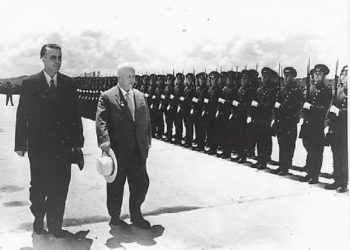
After this short break, at midday he found himself in Rehova, where he tried to give courage to the officers gathered there. At 15:00, he set off from Rehova and, along the road to Fier, reviewed the “Siena” division. He spent the night in a unit stationed on the outskirts of the city of Vlorë.

On March 3, the Duce set off towards Dhëmblan and Tërpan, reviewing the “Lupi di Toscana” regiment, the 67th Infantry Regiment of the “Legnano” division, and also participating in a religious mass for officers in Dhëmblan. In the evening, he returned to position 22 on the outskirts of Vlorë, which in a way became his residence during the days of his stay in Albania.

On March 4, Mussolini set off for Berat; on a packed day, he met with the “Blackshirts” who were marching towards the city and with detachments of the “Bari” division, stopped at Military Hospital No. 482, and then had breakfast with the workers who were repairing the road to Ujë i Zi.

In Rehova, he had a long conversation with the generals of the commands of the IV and VIII Army Corps, and of the “Pinerolo”, “Gagliari”, “Puglie”, “Bari”, “Centauro” divisions, etc. In the evening, he returned to his base in Vlorë.

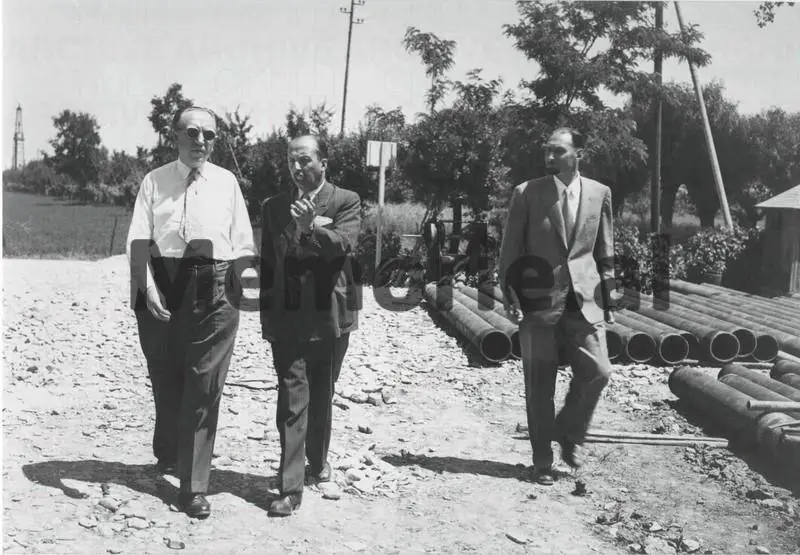
On March 5, Mussolini went to the Devoll area, where he visited Albanian “volunteers,” returned to Kuçovë, where he had lunch at the headquarters of AIPA (the Italian Albanian Petroleum Company). He went again to Berat, showed interest in the wounded, and after reviewing the “Lancieri di Milano,” he returned to position 22, near Vlorë.

On March 6, the Duce went to Dhërmi, where he visited the military hospital, returned to Llogara, where he stayed at the naval observatory, then visited the hospital center of Dukat and reviewed the XVIII Infantry Regiment “Acqui”; he did the same in Shushicë with the XV Legion of the “Blackshirts” from Brescia, and in Brataj with the 77th Infantry “Lupi.” On his way back to his residence, he attended exercises by the “Arditi” in the afternoon and visited Hospital No. 118.

On March 7, at 10:00 AM, Mussolini met with a delegation of villagers, to whom he donated a school, laying its foundation stone. He spent the night at another base, in position no. 34, near Berat. On March 8, he went again to Rehova for a routine of meetings with officers and soldiers and slept again in position no. 34.

On March 9, he observed combat operations, spending the entire day in the trenches. He did the same on March 10 and 11. On March 12, Mussolini, accompanied by General Priçolo, went to Elbasan, where he spoke with the commander of the IX Army, General Pirzio Biroli. At 19:45, he returned to his previous position in Vlorë.

On the 13th, 14th, and 15th, there is nothing noteworthy to record, and apparently his visit had come to an end; he spent the entire day at the observatory and shared bread with the soldiers. On March 16, in the morning and afternoon, Mussolini received his generals. On March 17, he passed through Elbasan once more. On March 18, he went to Gramsh, inaugurated the bridge over the Devoll, and visited the hospital in Llixha.

On March 19, the Duce showed interest in defensive fortifications and roads. On March 20, he visited the hospitals of Krasta and went as far as Lake Ohrid; on his return, he listened to reports from the generals. On March 21, the fascist prime minister returned to Rome, dissatisfied and disheartened by what he had seen at the front. The toll of the Italo-Greek War was extremely tragic, but it is interesting that the figures are more or less balanced. / Memorie.al

Italy                                           Greece

Killed          13,755                    13,408    

Wounded   50,874                     42,485    

Sick / III       52,108                   10,000   
ShareTweetPinSendShareSend
Previous Post

"In 1943, when Nexhmije Xhunglini invited Musine to engage and contribute to the Anti-Fascist National Liberation War, she told him..."/ The rare testimony of the renowned intellectual Merita Skupi

Next Post

"Turkish passports and the preparation of annual lists of relevant visas to exit Yugoslavia will be made..."/ Year 1938, when the Yugoslav Kingdom and Turkey would deport the Albanian population

Artikuj të ngjashëm

“In Tivar we found ourselves at the target of rifles and machine guns placed on every street corner, windows and terraces of houses…”/ The rare testimony of a survivor of the massacre on April 1, ’45
Dossier

“In Tivar we found ourselves at the target of rifles and machine guns placed on every street corner, windows and terraces of houses…”/ The rare testimony of a survivor of the massacre on April 1, ’45

July 11, 2026
“It was called ‘Vezir’s Bridge’, in honor of Mehmet Pasha Bushati, vizier of Shkodra, who was the leader of Spas, Pista, Trun, Lajthiza and Sakati…”/ The unknown history of the famous bridge that the communists mined in ’78
Dossier

“It was called ‘Vezir’s Bridge’, in honor of Mehmet Pasha Bushati, vizier of Shkodra, who was the leader of Spas, Pista, Trun, Lajthiza and Sakati…”/ The unknown history of the famous bridge that the communists mined in ’78

July 11, 2026
“Everyone started a new life, from the Middle East, to Australia, even someone in Europe or the USA, as a collaborator of the CIA, KGB or Stasi…”/ How did the “butchers” of World War II hide?!
Dossier

“Everyone started a new life, from the Middle East, to Australia, even someone in Europe or the USA, as a collaborator of the CIA, KGB or Stasi…”/ How did the “butchers” of World War II hide?!

July 11, 2026
“The massacre of Tivar was prepared by the head of the Yugoslav leadership, although later A. Ranković, etc., described this event as an ‘incident caused by Albanians’…”/ The unknown side of the Serbian genocide, on April 1, ’45!
Dossier

“The massacre of Tivar was prepared by the head of the Yugoslav leadership, although later A. Ranković, etc., described this event as an ‘incident caused by Albanians’…”/ The unknown side of the Serbian genocide, on April 1, ’45!

July 10, 2026
“‘The graves of the čikas’ are sacred, there should be no parties there, but once at a wedding when the partygoers started playing music, snakes fell from the trees and…”/ The incredible story where 5 Gjakova girls are buried
Dossier

“‘The graves of the čikas’ are sacred, there should be no parties there, but once at a wedding when the partygoers started playing music, snakes fell from the trees and…”/ The incredible story where 5 Gjakova girls are buried

July 10, 2026
“The first captaincy is known in the Port of Durrës in 1914, but in fact in the village of Obot in the Shkodra district, on the Buna River, there was an inspectorate…”/ The unknown history of Albanian ports
Dossier

“The first captaincy is known in the Port of Durrës in 1914, but in fact in the village of Obot in the Shkodra district, on the Buna River, there was an inspectorate…”/ The unknown history of Albanian ports

July 10, 2026
Next Post
“The project or ‘Nacertania'” of Ilia Garashanini, aimed at the displacement of Albanians from their ethnic lands and…”/ The new book of the well-known journalist, publicist and diplomat

"Turkish passports and the preparation of annual lists of relevant visas to exit Yugoslavia will be made..."/ Year 1938, when the Yugoslav Kingdom and Turkey would deport the Albanian population

“Historia është versioni i ngjarjeve të kaluara për të cilat njerëzit kanë vendosur të bien dakord”
Napoleon Bonaparti

Publikimi ose shpërndarja e përmbajtjes së artikujve nga burime të tjera është e ndaluar reptësisht pa pëlqimin paraprak me shkrim nga Portali MEMORIE. Për të marrë dhe publikuar materialet e Portalit MEMORIE, dërgoni kërkesën tuaj tek [email protected]
NIPT: L92013011M

Na ndiqni

  • Rreth Nesh
  • Privacy

© Memorie.al 2024 • Ndalohet riprodhimi i paautorizuar i përmbajtjes së kësaj faqeje.

No Result
View All Result
  • Albanian
  • English
  • Home
  • Dossier
  • Interview
  • Personage
  • Documentary
  • Photo Gallery
  • Art & Culture
  • Sport
  • Historical calendar
  • Others