By Qerim Lita
Part Four
– Ukë Cami, a Distinguished Albanian Military Officer and Nationalist –
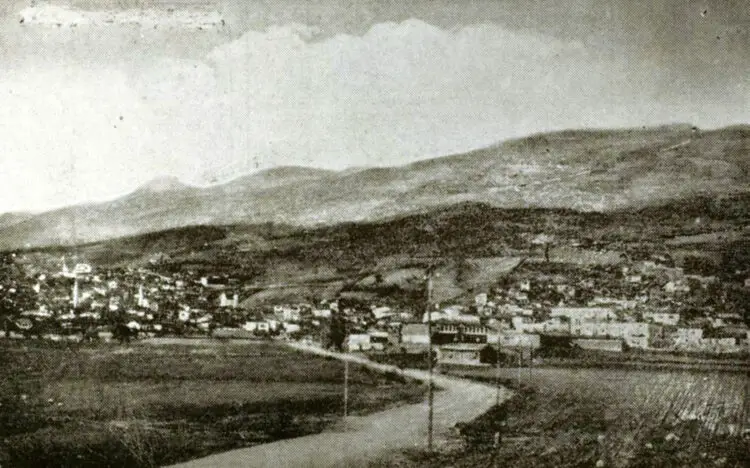
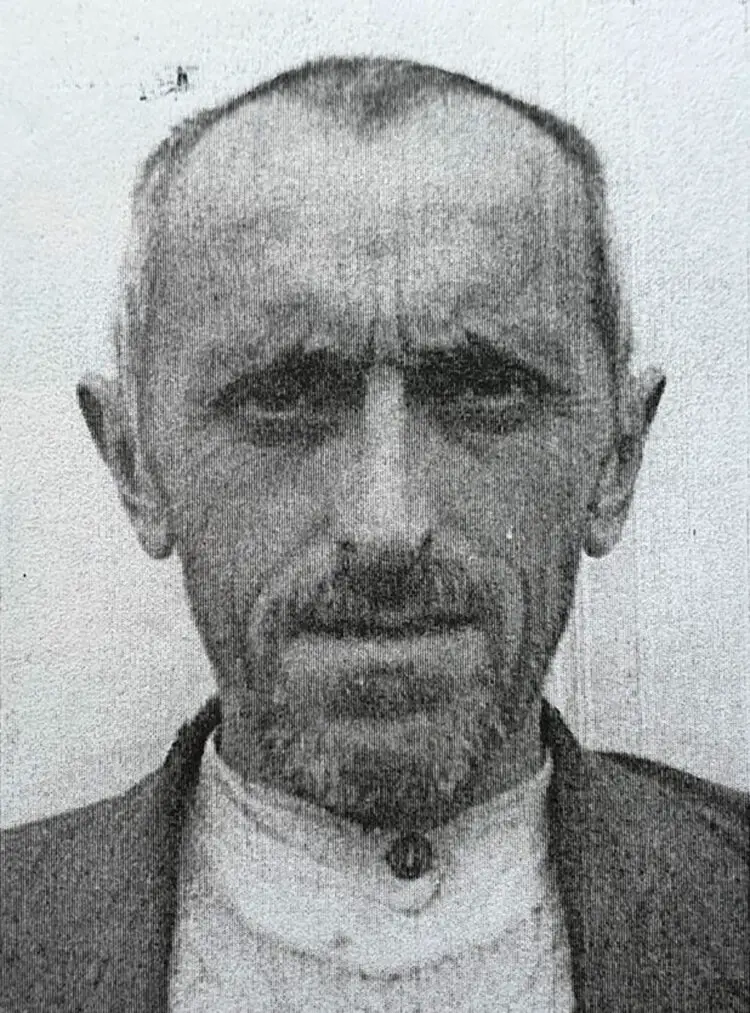
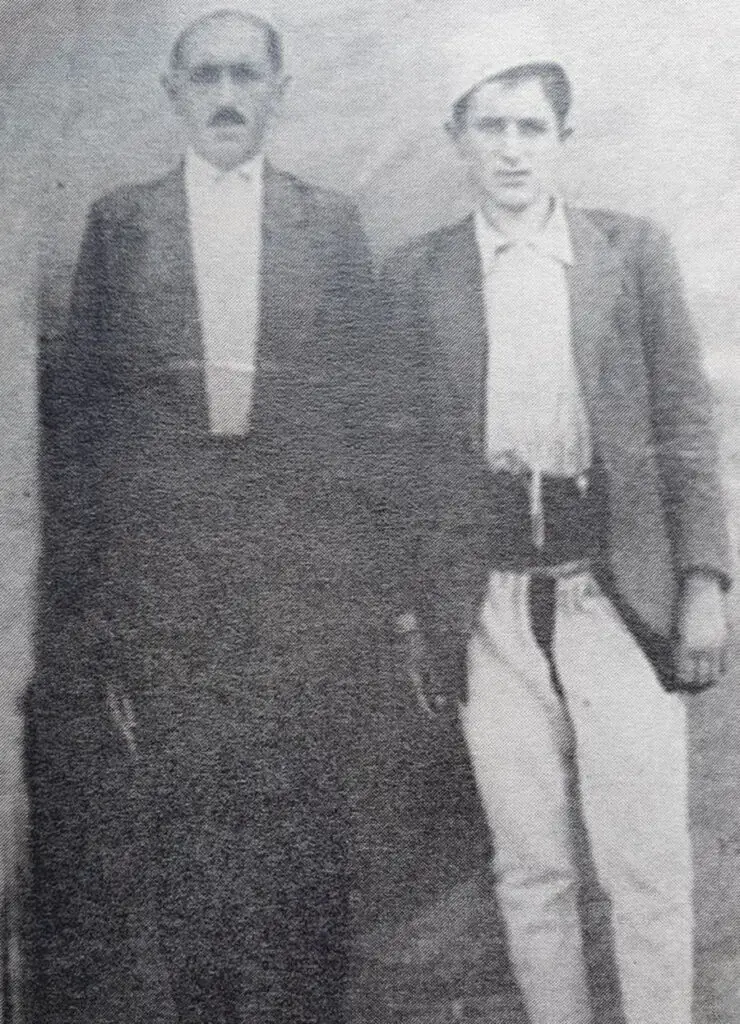
Memorie.al / Ukë Ramadan Cami were born in 1896 in Sepetovë, a neighborhood of Tërbaç, Ostren Municipality, Dibra. His home, located near the vital routes to Struga, Dibra, Golloborda, and the Minor and Greater Gryka, was always open to the leaders and patriots of the national movement. His father, Ramadani, was a determined fighter for the constitution and among the first to participate in the formation of the “Bashkimi” (Union) Club of Dibra. As an activist of the club, supported also by Eqerem Cami, he conducted extensive propaganda activities in both the city and the highlands. The Camis are a prominent family, part of the Dibra nobility, with branches in the villages of Gjorica, Viçisht, Golovisht, Sepetovë, and Greater Dibra.
Continued from the previous issue
The political and security situation deteriorated further during August, considering that Lower Dibra was now entirely controlled by the UNÇSH (Albanian National Liberation Army) forces, numbering over 2,500 partisans equipped with the most advanced weaponry of the time. Meanwhile, for tactical reasons, Yugoslav-Macedonian communist units were stationed in the mountains of Gajre and Osoj, while Albanian communist units under the command of Mehmet Shehu and Haxhi Lleshi operated in Golloborda, Ostren, Luzni, and Selishtë.
Facing the forces of the Yugoslav-Albanian communist coalition were insufficient Albanian volunteer forces, which in early August 1944 were positioned as follows: Ali Maliqi with his forces remained in Klloboçisht; Sabri Kadriu–Maqellari, Fuat Dinja, and Hilmi Karahasani with their forces in Greater Dibra; Ukë Cami with his force in Mirosh; Demir Dema in Kojnarë; Cen Elezi in Dardhë; Hazis and Dan Kaloshi in Sinë; Ramadan Hoxha in Shqath of Muhur; Dervish Lusha and Haxhi Noka (both wounded) were in Gryka e Nokës; Llan Kaziu in the mountains of Selishtë; and Zuf Xhilaga in the mountains of Deshat.
Hysni Dema, in his capacity as the commander of operations for the Dibra District, reported to the Ministry of Internal Affairs on August 1, 1944: “…the morale of the population and the leaders is very low,” noting that this was a result of massive propaganda by the communists, who “as always continue their propaganda supported by the Allies.” He further pointed out, based on reliable sources, a significant preparation by Yugoslav-Albanian communists to occupy Dibra, predicting that this communist assault “will not last more than four or five days.”
He saw the only solution, as he phrased it, “to save the Nation from complete catastrophe,” was the swift organization of Albanian nationalist forces for a “serious operation,” which should begin “before the Communists start their Offensive… to strike the Communists a crushing blow. If this is not taken seriously and acted upon in this manner,” Dema continued, “the High Authorities must be convinced that the Communists will also occupy Greater Dibra and, in this way, will dominate the situation in all of Albania…!”
During August 1944, fierce battles between partisan units and Albanian nationalist units took place in Fushë Alie and surrounding villages. The bloodiest battle occurred in the village of Sinë, lasting two full days and nights, with many killed and wounded on both sides. After the retreat of the nationalist forces led by Halil Alia and Selim Kaloshi, units of the 4th and 5th Albanian Partisan Brigades burned almost all the houses in the villages of Sinë and Fushë Alie. “In the village of Sinë,” reported the vice-commissar of the 5th Brigade, Manush Myftiu, “the houses of the village were burned for no reason, solely out of revenge for fallen comrades…! The conduct of the military leaders was very poor, which encouraged the partisans to destroy even more severely what remained of the fires…!”
The brutal behavior of the Albanian partisan units toward the Albanian residents of this area of Dibra is best described by one of the main leaders of the LNÇ (National Liberation Movement) in the Dibra region, Sulë Baholli: “…Then the combined forces of the 4th and 5th Brigades attacked Fushë Aliaj and set fire to Halil Alia’s tower, but they also killed and burned innocent people…! All the houses in the village of Fushë-Aliaj were burned, instead of burning only the houses of prominent reactionaries…!”
THE SURRENDER OF UKË CAMI
The defeat of the nationalist nobility in Sinë and Fushë Alie, followed by the aforementioned criminal conduct of the partisan units, pushed a part of the nationalist leadership to negotiate with the leaders of the UNÇSh and UNÇJ (Yugoslav Partisans). Thus, Dan Kaloshi soon joined the ranks of the UNÇSh. On August 22, Dali Ndreu wrote to the commander of the 5th Brigade, Shefqet Peçi: “As has been emphasized before, importance must be given to the mobilization of the 1st Division. Therefore, give Dan Kaloshi a company, as he has the potential to mobilize and has promised to do so, and let him immediately begin mobilization for the 5th Brigade.”
A similar approach was taken with Cen Elezi and his son, Xhelal Ndreu. Under these circumstances, Ukë Cami, together with Murat Labënishti and Esad Doko, held negotiations with the representative of the Macedonian Partisan Staff, Vidoe Smilevski – “Bato,” for a possible cooperation. Sources of the time indicate that a verbal agreement was reached, according to which Ukë Cami would not oppose partisan attacks to take Dibra, while Labënishti and “Doko” would join their forces with the partisans, provided that “Dibra and Struga with their surroundings belong to Albania after the liberation.”
The withdrawal, or rather the joining of a portion of the Albanian nationalist units with the LNÇ units, along with the German retreat (September 1, 1944), allowed Yugoslav-Albanian partisan units to enter Greater Dibra on September 2 without any resistance from Albanian nationalist leaders. As soon as Greater Dibra was taken, Yugoslav military rule was established, which in the name of “collecting weapons” and “identifying Ballists,” arrested dozens of prominent Albanian activists, some of whom were executed without any trial.
Among the prisoners was the commander of the 1st Operational Zone of the LNÇJ for Macedonia, Hamdi Dema. Regarding his imprisonment and subsequent macabre murder, an OZN (Yugoslav Secret Police) document states: “Hamdi Dema: As an agent… he entered the LNÇ in the Kërçovë-Dibër territory, reaching the position of commander of the 1st Operational Zone, moving toward the line of splintering the movement. He was arrested and liquidated in 1944 by OZN agents during an attempted escape from the Prilep prison.”
Although Ukë Cami offered no armed resistance during the occupation of Dibra, staying neutral based on the agreement with Vidoe Smilevski, Albanian partisan units, under the order of Haxhi Lleshi, burned all his houses and those of his cousins in the village of Vllasiq to the ground. This incident is described in the document “Internationalist Aid of the APS to the Albanian Peoples of Macedonia in the War against Nazi-Fascism,” where it is stated: “…The 2nd Battalion of the 1st Shock Brigade, the Dibra Battalion, and a Kosovo unit crossed into Macedonia to coordinate actions with the Yugoslav forces… Haxhi Lleshi told the Macedonians to burn the houses of this reactionary in Vllasiq; the Macedonians refused, but the Albanian partisans burned the houses to ash for crimes he allegedly committed in Albania and Macedonia…!”
It is important to highlight that the terminology used by the Albanian communist leadership was identical to that of the Yugoslavs. Ukë Cami, like the entire nationalist and anti-communist elite, was labeled a “reactionary” and “criminal” simply because he did not agree to let Albanian lands be re-occupied by Yugoslav communist units. Haxhi Lleshi and his clique had forgotten that during the war, many communists – including the Baholli sisters – had been sheltered in Ukë’s house in Vllasiq.
While the 4th Albanian Brigade was ordered to leave Macedonia for Serbia and Croatia to fight the Germans, a campaign of terror against Albanians began in Struga, Kërçovë, Gostivar, and Tetovo by Macedonian chauvinists. Prisons, mosques, and schools were filled with innocent Albanians. In the tobacco monopoly building in Tetovo alone, there were over 6,000 prisoners. According to semi-official data, in two months, approximately 400 Albanians were executed or died of disease in Kërçovë, 500 in Gostivar, 350 in Tetovo, and 70 in Grupçin.
This was the third time Ukë Cami’s houses were burned. While the first two times (1913 and 1918) were carried out by the invading Serbian army, the third time was unfortunately carried out by an Albanian military force acting on behalf of Josip Broz Tito’s policies. Mehmet Shehu, commander of the 1st Division, defended this anti-national stance fanatically. On September 12, 1944, he wrote to Qemal Agolli: “We told the Kërçovë delegation: We cannot accept any agreement with the leadership of Kërçovë and Gostivar unless they surrender unconditionally to answer for their treason… Even if we Albanians come to Kërçovë, we will only come with Macedonian comrades and not just with the Albanian flag, but certainly with the Macedonian flag too… The people of Kërçovë must understand that the only way to save them is to unite immediately with Macedonian forces and separate from the traitors of the country…”
ARREST AND SENTENCING OF UKË CAMI
Left with no other choice, Ukë Cami surrendered under “besa” (word of honor) to the Bektashi cleric Baba Faja Martaneshi. Although news spread that Baba Faja had pardoned him, extreme communist circles in Dibra and Yugoslav-Macedonian officials insisted he be punished. Consequently, on September 19, 1944, in the presence of Mehmet Shehu, Panajot Plaku, and Baba Faja, Ukë Cami was forced to sign a declaration acknowledging his friendship with other nationalist leaders and stating his readiness to appear before a people’s court.
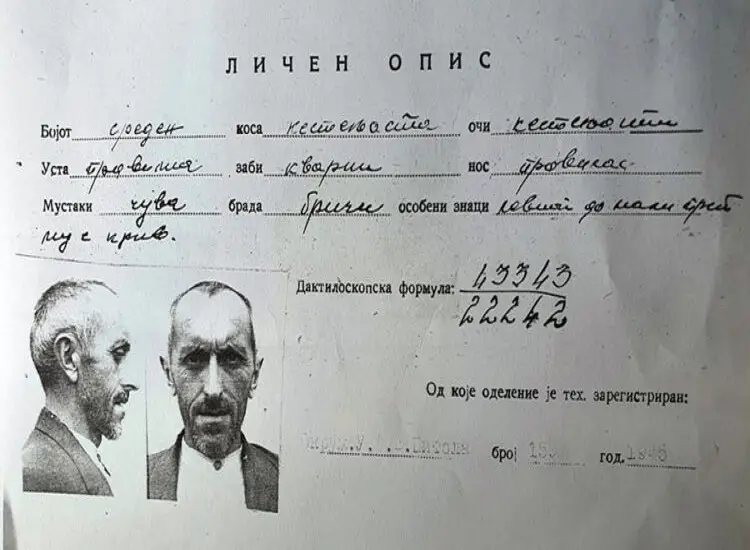
Initially left free to travel to Berat and Korça, he was eventually arrested in Tirana. At the request of the Yugoslavs, on September 30, 1944, he was sent to the OZN prison in Dibra, then Struga. On May 17, 1945, a military court in Struga sentenced him and his comrade Fik Maliqi to death. The verdict stated: “Ukë Ramadan Cami… has been a major of Balli Kombëtar… an organizer of armed formations to fight the partisan movement… mobilized and armed the people to fight against the partisans, etc.”
Following a massive outcry and letters of support from residents of Dibra, Struga, and Golloborda, the Supreme Court of Yugoslavia commuted the sentence on November 8, 1945, to 8 years of hard labor. He served this sentence in full at the Idrizovo prison until November 30, 1952. While he was imprisoned, his family faced severe repression. His son, Liri Cami, was pursued by the UDB as an “admirer of Ethnic Albania.” In Albania, his sons were sent to concentration camps in Lushnje, and his brother Rifat was imprisoned in 1947.
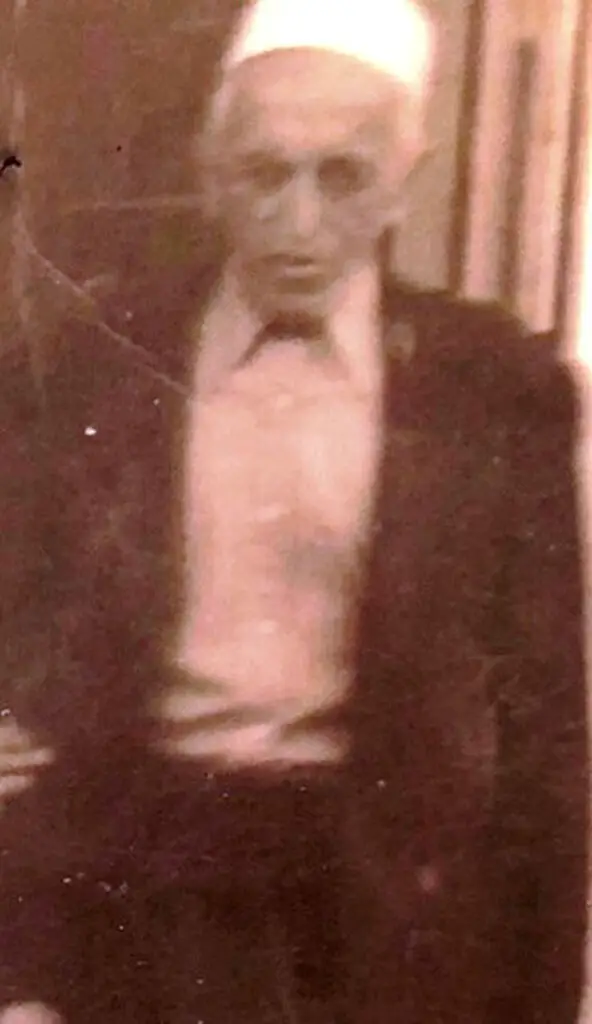
Ukë Cami died in 1980 at the age of 84. A Yugoslav UDB report from 1964 notes: “Ukë Cami… remains highly suspicious to our service… he continues to maintain a pure nationalist-chauvinist stance, longing for Greater Albania.” The report quotes Cami’s bitter words to his peers: “It is very hard for us bajraktars today to be commanded by shepherds, who previously didn’t even have berries to eat, while now they eat us with our sandals and all.”/Memorie.al