Part Two
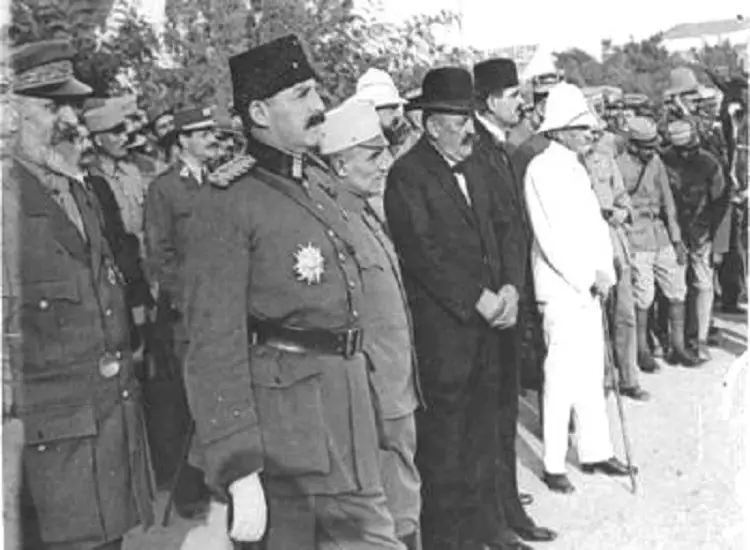
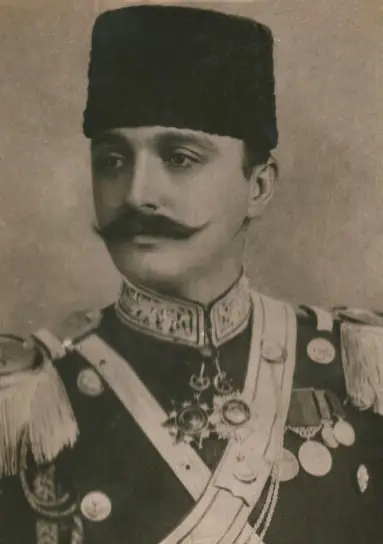
Memorie.al / Esat, the son of Ali Bey Toptani, was born in Tirana around 1860. His brother, Gani Bey, was four years older. Since childhood, he was known for his bad and hot-tempered character. His elder brother was no less so, and their father was the first victim of their bad character. One day they covered him with a mat soaked in oil and threatened to burn him. In fact, Ali Bey was not mentally 1well. When he grew up, Gani Bey behaved in Tirana like a true ruffian (or gangster), instilling terror among his friends and enemies.
Then he received an order to go to Dibra, but according to instructions given by the tyrant, he was stopped outside the city of Durrës, sent to Esat’s properties, and there they killed him by hitting him with stakes, after having put him in a sack! We do not want to discuss here the issue of the aid that Esat Pasha had given to the Serbs during their retreat and whether this aid was an exclusive act that interested the tyrant, or rather an action without interest to the Albanians themselves.
In his memoirs, which the newspaper “Koha” published two days after his death, Esat seeks to take all the credit himself, and for this, he did not hesitate at all to blaspheme his nation. This was Esat’s true character, for which nothing existed or should exist outside of his own person.
It is a fact that Esat’s fate was tied to that of the Serbs, his allies and benefactors, and as such, he was forced to leave Albania and seek refuge in Thessaloniki, where he continued to hold himself out as the chief or chairman of the Albanian Government, a title he had taken during the short and temporary dictatorship he exercised in Durrës.
In Thessaloniki, Esat was well treated by the Greeks and the French, but was especially protected by the Serbs, who gave him a monthly pension of 200,000 francs for the expenses of his so-called government, as he had some people around him who took the titles of ministers, as well as his famous “tabor” (battalion/detachment).
There is no reason to speak ill of the Albanians who made up his tabor and who, after all, were brave, sincere, and honest people, but the same cannot be said of their chief, who thought only of himself, while his soldiers thought more of their homeland.
These people did not act at all out of appreciation and regard for Toptani. On the contrary, Esat’s presence in Thessaloniki could rightly be considered an unfortunate incident and did not inspire any confidence in the Albanians. Witnesses are the Albanians of Korça, who faithfully cooperated with the French troops but persistently demanded that Esat should not set foot in Albania again.
Similarly, the inhabitants of Gjirokastra fought alongside Italian troops, thus serving the cause of the Allies and the independence of their homeland. During his stay in Thessaloniki, a very scandalous stay, his house, as it was said, was a real hotbed of disorder, a gambling house, and corruption.
Young men of Thessaloniki, in order to escape military service, received certificates of Albanian nationality from the pasha, as well as food… etc., which the intendance handed over to the Pasha for the troops of his tabor, which he sent to his favourites (male and female), or to retail sellers. Furthermore, a scandal occurred: the payment of the tabor, which the pasha demanded in gold but which was handed over to the soldiers in paper money.
Mr. Fontenay and Mr. Krajevski, whom the Republic had appointed near Esat, must know something about this subject. They wanted to treat Esat as a faithful ally of France; it was not taken into account that our hero never accepted obedience. He was an egoist who possessed a high degree of “cursed egoism.”
Above all, especially when it comes to his person, what is ignored is the fact that when the end of the great battle seemed doubtful to him, he tried to approach the Central Empires and began to contact the Ottoman legation in Bern. This is nothing extraordinary for a man of his mould, given that after betraying Abdul Hamid, the Young Turks, and the Albanians, he finally betrayed the Italians and became their enemy in order to switch to the Serbs’ camp.
But luck began to tire. It was first England, which, in response to a call from the House of Commons, declared that it did not recognize any official function of Esat (1918); then, around the end of the year, France severed all ties with him and Krajevski was recalled.
At the beginning of 1919, Esat came to Paris; he had no official function, as a government had in the meantime been formed in Albania and a delegation had been sent to Paris, which did not prevent our Pasha from giving himself titles such as Chairman of the Albanian Government and Head of the Delegation. His life in Paris was easily recognizable: his mistress cost him more than 2,000,000 francs with pleasures, car, etc., without counting the waste of water in the cities.
But why does he use this time and the title of the Chairman of the Albanian Government and of the Albanian Delegation, which he assigns to himself? Did he ever raise his voice when his country was threatened with division? No. He amuses himself, intrigues against his country, thinking only of himself.
Initially, in May, four Albanians: Imizot Koleci, a Catholic Bishop, Bajram Veizi, Fuat Bey Toptani, and Ymer Bey Shijaku, went to Paris to talk with Esat and tried to penetrate his thoughts once more. The latter two Albanians, out of the four, stayed at the “Continental” hotel, where Esat himself stayed, and all four had many meetings with the latter, who constantly declared to them that:
1- Serbia gave him a monthly pension because of the sympathy this government had for him, but that these sums were not at all a debt of Albania.
2- There was no convention between Esat himself and Montenegro.
3- On the contrary, he had promised the Serbs a border correction in their favour and a customs and military union. Esat was so naive that he himself handed over the text of his agreement with Yugoslavia, as presented by a memorandum of this Kingdom to the Peace Conference.
Hasan Rizai was in fact killed by Osman Bali, but he claimed that this was not done at all by his order. On the other hand, when he was beside himself and furious, he swore to take revenge on all his political enemies if he ever managed to set foot in Albania.
But he knew well that he could not go to Albania, because he would be arrested, judged, and hanged. Italy was wrongly accused of having made his return to Albania impossible. What is little known is the fact that Esat had had secret meetings with Italian agents, Costoldi, Galli, and Lodi, during the last four months, and that he was ready to change camps. To leave Serbia for Italy, and there is nothing extraordinary in this, all the more so since the hatred for the Albanian government of Tirana, a hatred that the Italians and Esat shared equally, made their cooperation quite natural.
P.S. – Some details about his character:
Esat and Gani had married two sisters from the Toptani family, who were their cousins: Esat married a Turkish woman again after having squandered the fortune of his first wife and not worrying at all about his two daughters. One day, he met a polite girl in front of his house in Tirana, whom he asked whose she was. “I am your daughter,” replied the innocent child. With false documents, he secured ownership over the assets of his cousin, Selim Pasha.
In Ioannina, he exiled important people to force them to pay tribute. Thus, Mustafa Pasha, Omer Efendi, and many others were interned. After ordering the killing of Hasan Riza Bey in Shkodra, he sent word to Alush Lohja that he was ready to pay 300 Turkish liras out of his own pocket to anyone who would denounce the murderer.
For the tragic murder of Nexhat Efendi, he issued a circular stating that Nexhati had absconded with a large sum which he was looking for and promised a reward to anyone who would discover him.
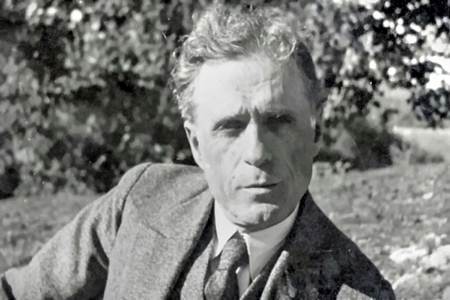
Biography of Mid’hat Frashëri
He was born in Ioannina on March 25, 1880, and died on October 3, 1949, in New York, USA. He was the son of Abdyl Frashëri and the nephew of Sami Frashëri and Naim Frashëri. He knew his father very little and grew up under the care of Sami and Naim. He completed his academic education in Istanbul. After finishing school, until 1905, he worked in the Turkish administration and then moved to Thessaloniki, in the state administration.
He began to be active in Albanian politics at the end of the 19th century. One of the most prominent figures in Albanian politics in the first half of the 20th century. In 1908, he began publishing the newspaper “Liria” (Freedom) in Thessaloniki. During this period, he collaborated closely with Kristo Luarasi, who managed the printing house / Publishing House “Mbrothësia” (Progress/Enlightenment).
He participated in the Congress of Monastir, also known as the “Alphabet Congress,” from November 14 to November 22, 1908. Mid’hat Bey Frashëri was elected Chairman of the Congress and Vice-Chairman of the Alphabet Drafting Commission (the Chairman of the Commission was Father Gjergj Fishta).
At the age of 32, he definitively left Istanbul and travelled to Albania, passing from Kosovo to Skopje and then to Elbasan. In 1912, in the independence government created by Ismail Qemali, he was elected Minister of Public Works. On March 30, 1913, he resigned from office. He welcomed the arrival of Prince Wied in Albania and helped in the Ministry of Foreign Affairs. After the departure of Prince Wied, Mid’hat Frashëri left Albania and until 1918, lived in several Balkan states.
In 1916, he settled in Bucharest, where he was arrested by the police and interned in Moldavia. In 1918, with the end of the First World War, he was allowed to leave and settled in Lausanne, Switzerland. There, he addressed a memorandum to the conference that was preparing the creation of the Serbo-Croatian-Slovene Kingdom. In the memorandum, he declared: “Without the solution of the Albanian problem, there will be neither a new Yugoslavia nor a final solution to the borders in the Balkans.”
In 1920, he settled in the USA. He returned to Albania in 1922. In January 1923, he began his duty as Minister Plenipotentiary of the Republic of Albania in Athens. He held this position until December 1925. Disappointed by the political developments in Albania, he resigned and declared his withdrawal from political activity. In 1927, he began publishing the magazine “Dituria” (Knowledge) in Tirana and founded the bookstore “Lumo Skëndo”.
In 1939, after the occupation of the country by fascist Italy, he decided to return to political activity. In 1941, he was the chief ideologue and one of the founders of the Nationalist Party, better known as the “Balli Kombëtar” (National Front) Party. An opponent of the Communist Party of Albania, he was forced to leave Albania in November 1944 and settle in Italy. During a trip to New York, USA, he died as a result of a heart attack. / Memorie.al