• Rreth Nesh
  • Kontakt
  • Albanian
  • English
Friday, May 15, 2026
Memorie.al
No Result
View All Result
  • Home
  • Dossier
  • Interview
  • Personage
  • Documentary
  • Photo Gallery
  • Art & Culture
  • Sport
  • Historical calendar
  • Others
  • Home
  • Dossier
  • Interview
  • Personage
  • Documentary
  • Photo Gallery
  • Art & Culture
  • Sport
  • Historical calendar
  • Others
No Result
View All Result
Memorie.al
No Result
View All Result
Home Dossier

“The Sigurimi agreement with Italian criminal organizations was approved by the Politburo and Enver Hoxha, because they needed…”/ Book by the lecturer at the University of California in the USA, Jana Arsovska

“Marrëveshja e Sigurimit me organizatat kriminale italiane u miratua nga Byroja Politike dhe Enver Hoxha, pasi u duhej…”/ Libri i pedagoges së Universitetit të Kalifornisë në SHBA-ës, Jana Arsovska
“Kur motoskafi i kontrabandistëve italianë nuk zbatonte urdhrat për të ndaluar, por tentonte të largohej, komandanti i anijes, Aleko K., qëlloi në drejtim të tyre …”/ Dëshmia e rrallë e ish-ushtarakut të Marinës
“Nga avioni që fluturonte sipër nesh, më thanë në radio; të urdhërojmë të fikësh motorrin dhe të na presësh për kontroll, sipas konventës së OKB-së, për luftën në Bosnje…”! / Kujtimet e ish-kapitenit të anijes “Vlora”
“Ajo mund të bllokonte daljen në det të mjeteve luftarake në raste alarmi, pasi…”/ Dëshmia e rrallë e dy specialistëve, mbi misterin e gazit nënujor në Bazën Ushtarake të Bisht Pallës, në vitet ’80-të
“Kapiteni i anijes ‘Islam Mustafa’, Fran Ivanaj, u vra nga jugosllavët në dhjetorin e 1975-ës, pasi me Protokollin e vitit ’67, Mehmet Shehu, i’u dha atyre…”!/ Relacioni për Komitetin Qendror, tetor ‘82

                                      – Organized crime during communism –

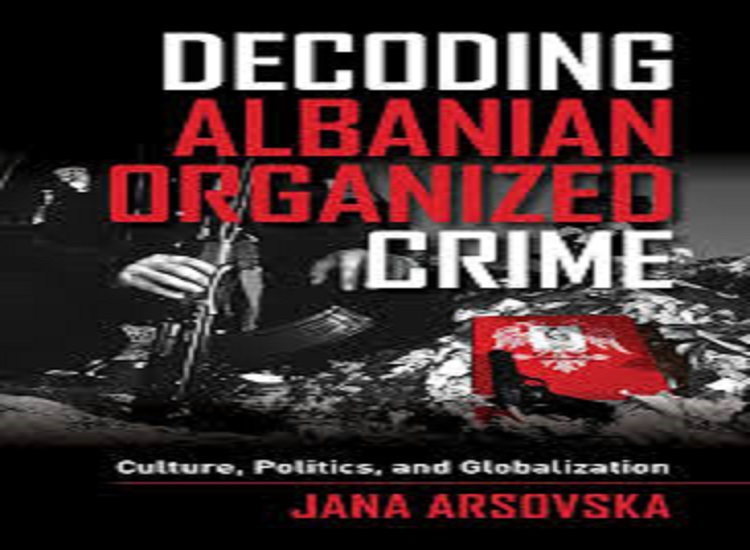
Memorie.al / “The branding of Albanian crime”. This is the title of the book by Professor Jana Arsovska of the University of California in the USA, who has investigated the Albanian mafia around the world for several years. The book, a publication of May 2015, has caused a stir in the USA and other countries, while in Albania not a word has been said. In this book, the author has studied Albanian organized crime from its beginnings, during the time of communism, right up to the present day. The author, a professor at the University of California, based her book on various studies, interviews, and reports from foreign secret services, as well as some UN reports concerning drugs and criminal organizations active in the world.

It is important to know that pre-existing criminal networks, specialized knowledge, and access to the development of criminal activities are significant opportunity factors that partly explain the rise of Albanian organized crime after the fall of communism in 1991. Like most post-communist countries, Albania was home to a vast network of people who had previously worked for national military services, secret services, or the police.

In fact, the internal secret and police services were a key part of the absolute communist regime. According to a 2008 report by the United Nations Office on Drugs and Crime (UNODC), the State Police in Albania and other Balkan countries operated extensively outside the law. Over time, underground operators and security services in the region joined forces to create a vast intelligence apparatus.

Gjithashtu mund të lexoni

“After he got out of prison in 1963, he was interned in the villages of Berat, Fier and Lushnje, where, unprotected by anyone, he fell prey to the murderous games of the Security…”/ Testimonies of the well-known writer from the USA

“In 1938, music became a powerful propaganda tool of the Third Reich and Germany was declared the ‘Land of Music’…”/ The unknown side of Nazism’s relations with art and culture

The communist-era security agencies also commonly interacted with professional criminals, including many who were in Western Europe, who were informally used as informants or operatives (Leman and Janssens 2006).

According to police reports, these people were used for a variety of state security tasks, such as smuggling oil, weapons, and drugs, and for killing dissidents who had left the country. In Serbia, for example, things got so bad that the Zemun Clan, one of the country’s main drug control groups, was largely integrated with the JSO – an elite special operations unit – and had its own artillery, armored vehicles, and helicopters (Samuels 2010).

State Tolerance

In Albania, certain organized crime activities, also not defined as such at the time, were tolerated by the state even during communism, because they generated extra profits for the state, met consumer demands that could not be guaranteed by the official economy, and helped destabilize capitalist societies. The internal security services often took part in such illegal activities.

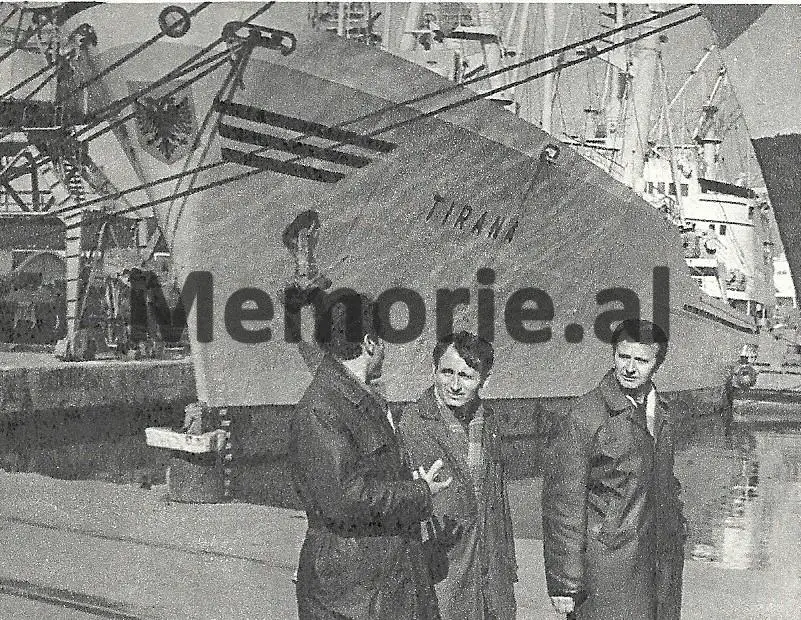
For example, although not well documented, there appear to have been relationships between the Albanian Secret Service, the Sigurimi, and organized crime (Leman and Janssens 2006; CSD 2004). A confidential intelligence report prepared by a liaison officer in 2008 indicates that, starting in the 1960s, the Albanian communist state made secret agreements with certain Italian criminal organizations, allowing them to smuggle cigarettes into Albanian territory.

The intelligence report states that in 1966, Albania provided Italian criminals with escape routes across the Adriatic Sea. Italian mobsters were also allowed to use Albanian airports, where they stored smuggled cigarettes. The agreement between the Sigurimi and the Italian criminal organizations was approved by the Political Bureau and the dictator of Albania, Enver Hoxha.

Based on this agreement, a special unit called “101K” was created in Albania. Located in the village of Rrushbull, five kilometers from the port of Durrës, the unit consisted of Albanian border police officers. The 101K guarded the ships full of cigarettes departing from Durrës, as well as overseeing the cigarette depots located in Rrushbull.

According to the report, in just one year at the end of the 1960s, the Italian mafia paid the Albanian state 22 million US dollars. The money went into the state budget, and some of it ended up in the budget of the Ministry of Internal Affairs. In fact, the report reveals that the Alouette helicopters still in use in Albania today were bought in the 1980s with money from the Italian mafia. Based on the Belgian intelligence report, another criminal activity in Albania appears to have been the cultivation of *Papaver somniferum*, the poppy plant from which opium and many other refined opiates are extracted. After the farmers collected the opium, it was handed over to the communist state, which reported that the drug would be used for medical purposes, but internal reports indicated that the amount of opium cultivated significantly exceeded the legitimate medical needs of the Albanian population. Witnesses report that the production was intended for export to other countries, and the Belgian investigative report claims that the communist leadership argued that it should be used “to poison capitalist societies, so that communism could triumph.”

Other types of organized crime also flourished in Albania during the communist regime. For example, people with structured connections created a parallel system for supplying food, which was scarce at that time, moving it from shops to consumers at much higher prices. Cooperation among various actors – producers, drivers, sales managers, local shops, customers, and so on – was necessary to create such a food distribution system. Memorie.al
ShareTweetPinSendShareSend
Previous Post

"Writing correctly in Gheg today is not simply a matter of desire; it is an act of intellectual resistance, as those '100 people' who keep it alive are..."/ Reflections of the renowned journalist

Next Post

"Pashk Trokthi made an extraordinary contribution, not only to the spread of Albanian education, but also as a great diplomat and patriot..."/ The unknown story of the Bishop of Skopje

Artikuj të ngjashëm

“After he got out of prison in 1963, he was interned in the villages of Berat, Fier and Lushnje, where, unprotected by anyone, he fell prey to the murderous games of the Security…”/ Testimonies of the well-known writer from the USA
Dossier

“After he got out of prison in 1963, he was interned in the villages of Berat, Fier and Lushnje, where, unprotected by anyone, he fell prey to the murderous games of the Security…”/ Testimonies of the well-known writer from the USA

May 14, 2026
“In 1938, music became a powerful propaganda tool of the Third Reich and Germany was declared the ‘Land of Music’…”/ The unknown side of Nazism’s relations with art and culture
Dossier

“In 1938, music became a powerful propaganda tool of the Third Reich and Germany was declared the ‘Land of Music’…”/ The unknown side of Nazism’s relations with art and culture

May 14, 2026
Rare testimonies: “How I met some of the Catholic clergy in the prisons of Enver Hoxha, who…” / Unknown memories of the intellectual who suffered 21 years in the communist ‘hell’
Dossier

“The profile of Dom Simon is like the episode of Jesus, when he drives the stalls out of the temple and the question is, should he have been more ‘gentle’…”/ Reflections of the well-known writer from the USA, about the rebellious friar…!

May 13, 2026
“As Vladimir Voinovich wrote, there would be as many KGB colonels and generals in the Writers’ League as in the General Staff, because…”/ New book by journalist and diplomat Bashkim Trenova
Dossier

“As Vladimir Voinovich wrote, there would be as many KGB colonels and generals in the Writers’ League as in the General Staff, because…”/ New book by journalist and diplomat Bashkim Trenova

May 15, 2026
“Not forgetting King Zog’s stance during the war and the loyalty of his soldiers to France, General De Gaulle made…”/ The unknown side of the Albanian Monarch with the head of France
Dossier

“Not forgetting King Zog’s stance during the war and the loyalty of his soldiers to France, General De Gaulle made…”/ The unknown side of the Albanian Monarch with the head of France

May 13, 2026
“Xhaviti says that; I have only written to the main leader of the Party, telling him not to brag like a rooster, because… ”/ Eavesdropping in Burrell Prison, in ’81
Dossier

“Arshi Pipa realized that dream that all political prisoners had, escaping from Albania, to show the world the terrible punishments…”/ Reflections of the famous writer from the USA

May 14, 2026
Next Post
“Pashk Trokthi made an extraordinary contribution, not only to the spread of Albanian education, but also as a great diplomat and patriot…”/ The unknown story of the Bishop of Skopje

"Pashk Trokthi made an extraordinary contribution, not only to the spread of Albanian education, but also as a great diplomat and patriot..."/ The unknown story of the Bishop of Skopje

“Historia është versioni i ngjarjeve të kaluara për të cilat njerëzit kanë vendosur të bien dakord”
Napoleon Bonaparti

Publikimi ose shpërndarja e përmbajtjes së artikujve nga burime të tjera është e ndaluar reptësisht pa pëlqimin paraprak me shkrim nga Portali MEMORIE. Për të marrë dhe publikuar materialet e Portalit MEMORIE, dërgoni kërkesën tuaj tek [email protected]
NIPT: L92013011M

Na ndiqni

  • Rreth Nesh
  • Privacy

© Memorie.al 2024 • Ndalohet riprodhimi i paautorizuar i përmbajtjes së kësaj faqeje.

No Result
View All Result
  • Albanian
  • English
  • Home
  • Dossier
  • Interview
  • Personage
  • Documentary
  • Photo Gallery
  • Art & Culture
  • Sport
  • Historical calendar
  • Others