





By DASHNOR KALOÇI
Part Two
Memorie.al / The events of the spring of 1981 in Kosovo, which began at the start of March with the protests and demonstrations of the student youth and subsequently of the people of Kosovo, who rose up to demand their lawful freedoms and rights, as well as the status of a republic, just as all other peoples and ethnicities then within the Socialist Federal Republic of Yugoslavia had and enjoyed – led by the Bosnian Cvijetin Mijatović (President of the Presidency, May 1980 – May 1981) – as is already known, provoked a harsh reaction from official Belgrade. The high leadership of Serbia at the time, led by Prime Minister Ivan Stambolić (President of the Executive Council of the Socialist Republic of Serbia), upon which the Socialist Autonomous Province of Kosovo then depended, sent armored forces there and violently suppressed those protests, not only with police forces, but by also bringing the army and tanks out onto the streets and squares of Prishtina and other cities where those peaceful protests took place, during all of which days (March 11 – April 11, 1981), there were a total of 12 victims.
These events, which became the lead story in all world media, as well as the public reaction of official Tirana, are now very well-known from dozens of writings or archival documents published mostly after the 1990s, but what has remained a great enigma and has not been made known to this day is this: how did the leader of communist Albania, Enver Hoxha, initially react to those events; what was his first impact regarding what was happening in Kosovo; and what steps did official Tirana subsequently undertake to come to the aid of its compatriots in the Socialist Autonomous Province of Kosovo? Did Enver Hoxha stand by what he had said in 1970, that Fadil Hoxha and the high leadership of Kosovo were doing very well to oppose Kosovo being given the status of a Republic within the framework of the Yugoslav Federation, or had he changed his mind and his stance?!
Regarding these and other matters, we are familiar with several archival documents located in the Central State Archive (the personal archive of Enver Halil Hoxha), which have been unknown until today and will be published for the first time and in several installments by Memorie.al. From these documents, it is noticeable that from March 4, 1981, (when the spontaneous student youth protests first began in Prishtina), until April 3, when Enver Hoxha held a working meeting with Prime Minister Mehmet Shehu and Ramiz Alia regarding the events in Kosovo – thus for a full month – there was complete silence and no meeting of the Political Bureau or the Secretariat of the Central Committee of the Party of Labour of Albania was held, thus no reaction from the high leadership of the PLA or official Tirana.
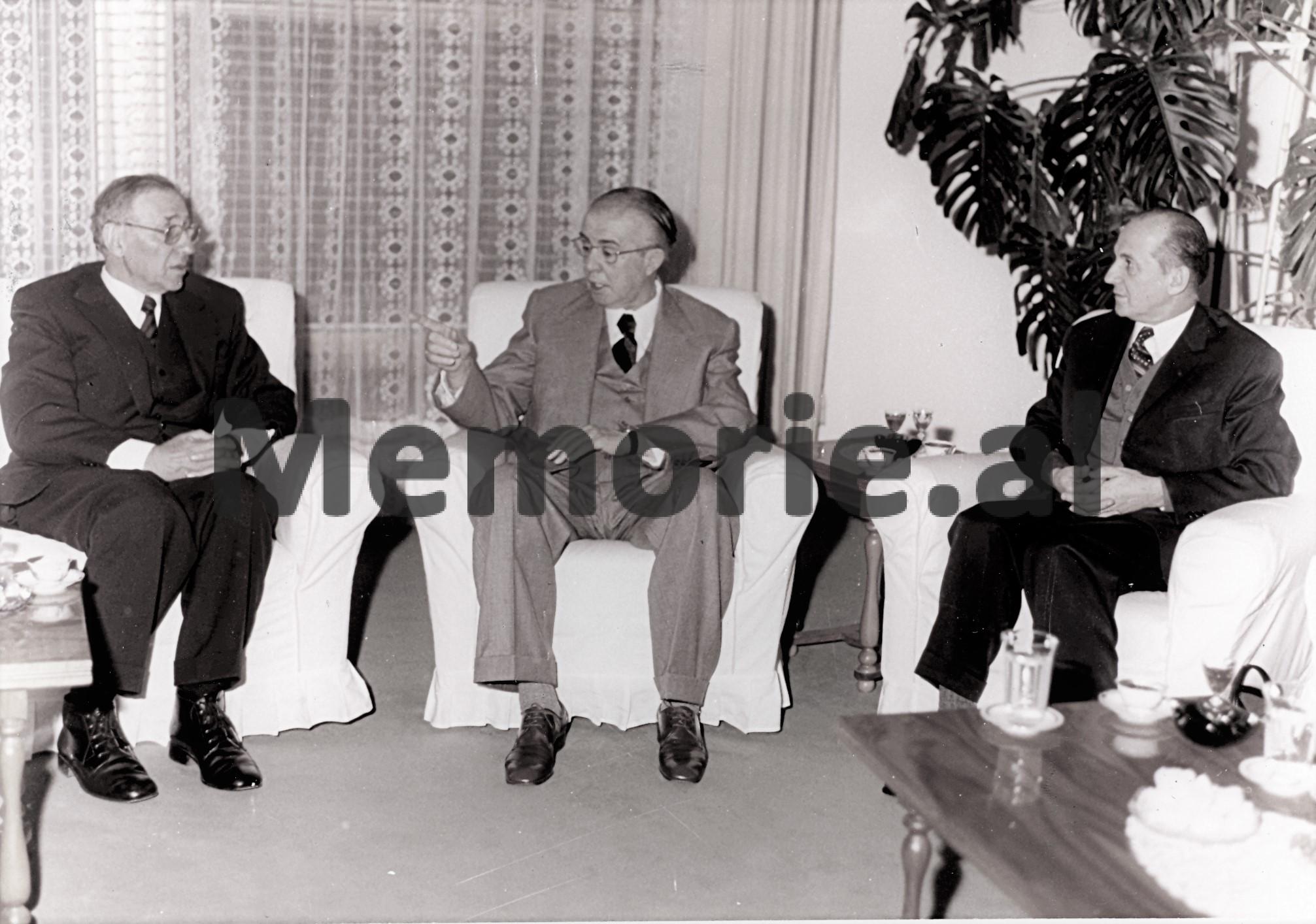
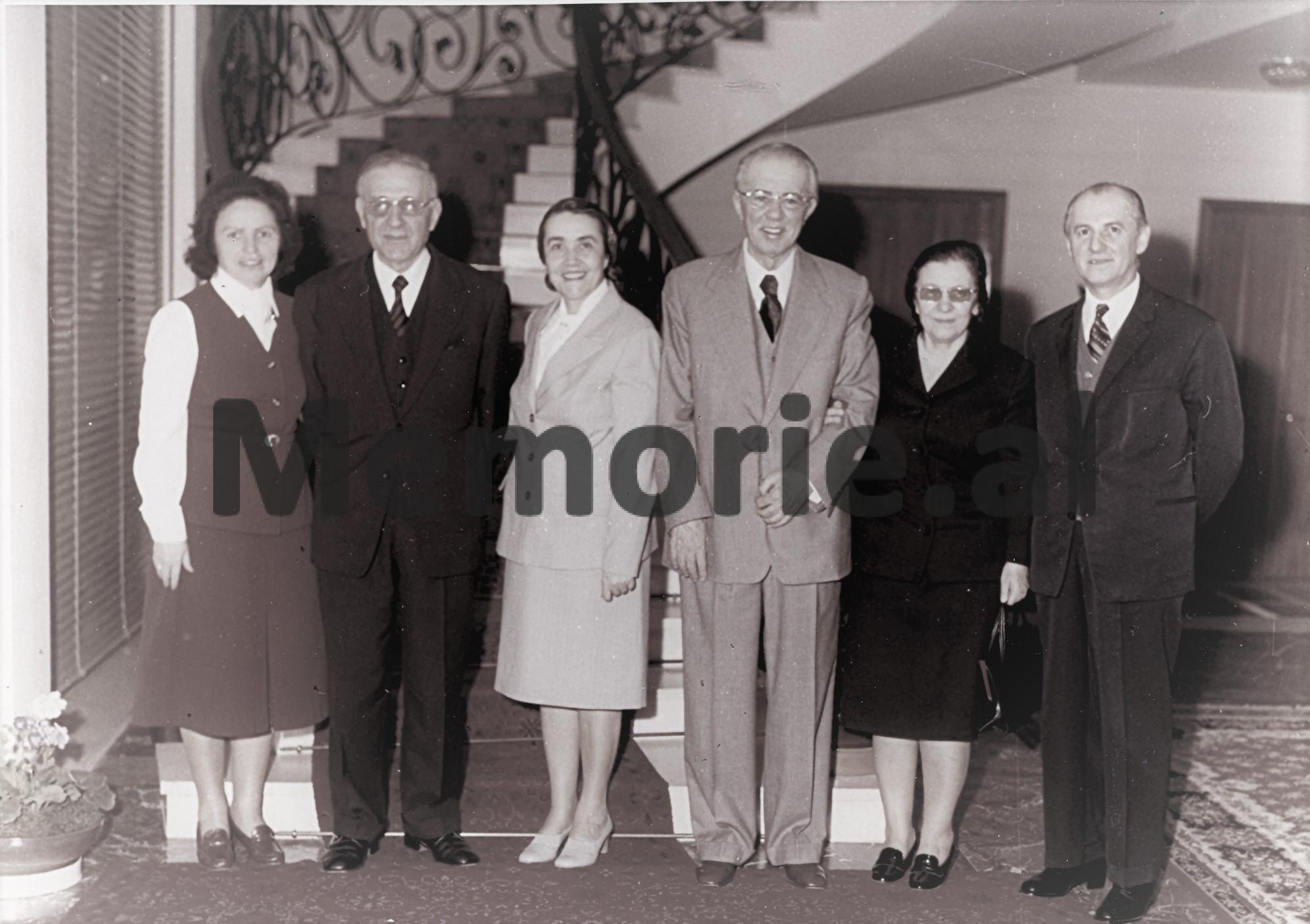
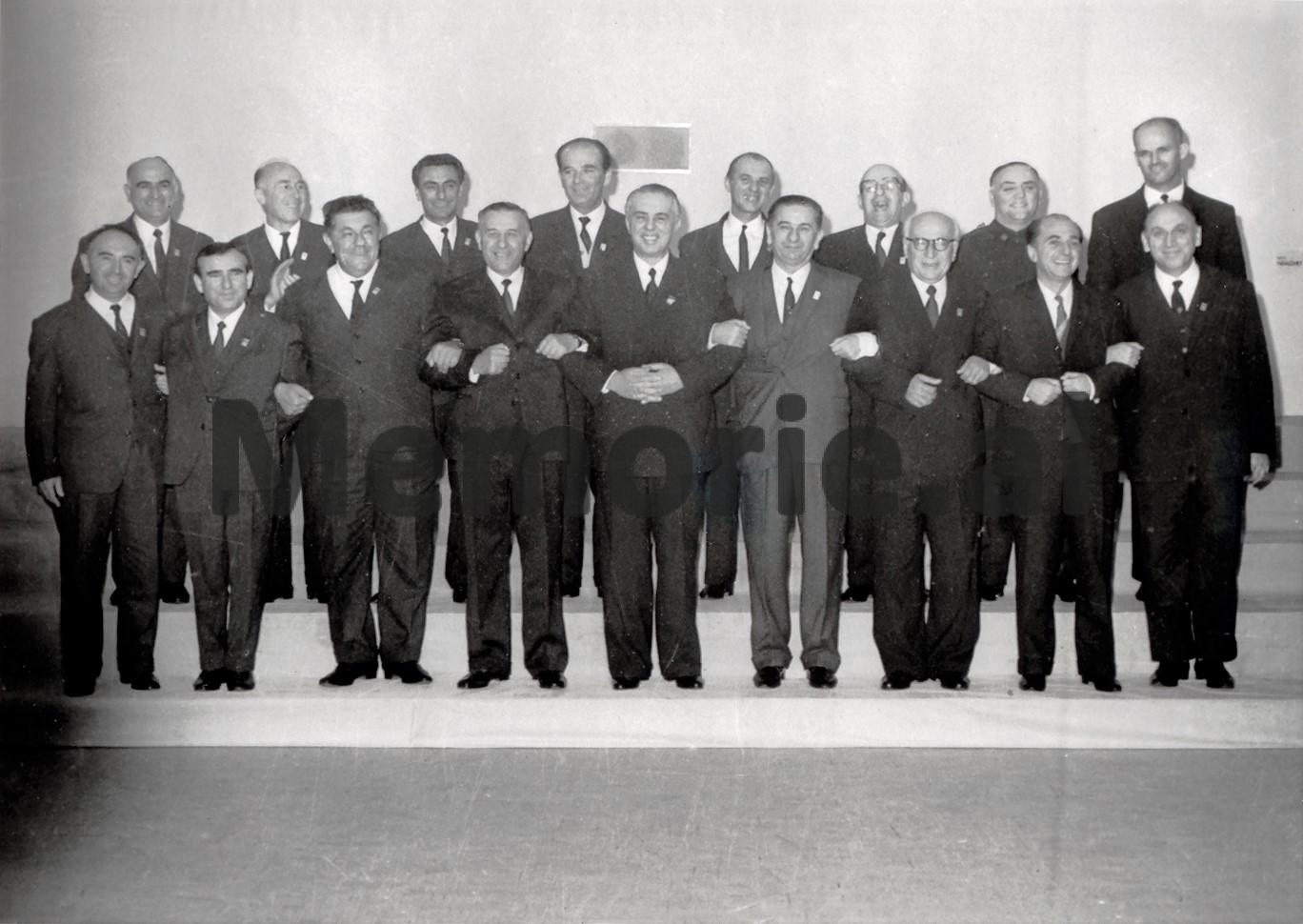
Likewise, what is noticeable in these documents is the panic that seized the main leader of communist Albania, Enver Hoxha, who was hesitant and undecided about the stance official Tirana should maintain regarding the events in Kosovo, so much so that in another conversation at the House of the Party on April 5, 1981, with the “comrades of the leadership” (Mehmet Shehu, Adil Çarçani, Hekuran Isai, Kadri Hazbiu, Pali Miska, Spiro Koleka, Rita Marko, Pilo Peristeri, Simon Stefani and Qiriako Mihali, Nedin Hoxha and Behar Shtylla), where they would go for coffee, or to play cards, billiards, etc., Enver asked them: “What do you think about the recent events in Kosovo and what should we do? Should we take a stance and be concerned, or not?” Likewise, during another brief conversation that Enver Hoxha had in his office with Ramiz Alia about a month later (on May 13, 1981), he told him: “Regarding the events in Kosovo, it seems to me that our subordinates should also think, and it should not be expected that I am the only one to think about them”!
Regarding these and other matters, these archival documents, which belong to the period April–June 1981, where Enver Hoxha held several conversations and meetings, both with his two closest collaborators (Prime Minister Mehmet Shehu and Secretary of the Central Committee, Ramiz Alia), as well as with the Political Bureau and the Secretariat of the Central Committee, are being published for the first time with their respective facsimiles by Memorie.al.
Continued from the previous issue
ARCHIVAL DOCUMENT OF ENVER HOXHA’S CONVERSATION WITH MEMBERS OF THE POLITICAL BUREAU AT THE HOUSE OF THE PARTY IN TIRANA, REGARDING THE EVENTS IN KOSOVO, ACCORDING TO NOTES TAKEN BY BEHAR SHTYLLA
NOTES FROM COMRADE ENVER’S CONVERSATION WITH THE COMRADES OF THE POLITICAL BUREAU OF THE CENTRAL COMMITTEE OF THE PLA REGARDING THE RECENT EVENTS IN KOSOVO
Tonight, at the House of the Party, Comrade Enver came out. One after another, comrades Mehmet Shehu, Adil Çarçani, Hekuran Isai, Kadri Hazbiu, Pali Miska, Spiro Koleka, Rita Marko, Pilo Peristeri, Simon Stefani, and Qiriako Mihali also arrived. Comrade Nedin Hoxha and I were also there. After other matters, Comrade Enver addressed the comrades with the question:
– What do you think about the recent events in Kosovo and what should we do? Should we take a stance and be concerned, or not? We have all read the news, and on this matter we must decide. Since we are almost the entire leadership here tonight, it is good to discuss it.
At first, Comrade Enver asked Comrade Spiro what he thought. Comrade Spiro expressed the opinion that we should express ourselves with an article in defense of the efforts of the people of Kosovo for their rights and against the barbaric repressive measures of the Yugoslav leadership.
After him, Comrade Adil took the floor, who also expressed himself in favor of an article, arguing that this is our right and duty, and is not at all interference in Yugoslavia’s internal affairs.
Comrade Hekuran Isai, arguing with the circumstances and interests of our country’s Security, expressed the opinion that perhaps at this time we should not come out publicly on this matter.
Comrade Rita Marko said that we should come out with an article; both our people and the people of Kosovo expect what our Party will say, and this will have a positive effect.
Comrade Kadri, although he considers the events in Kosovo positive and deems it right for our Party to take a stance, thinks that perhaps the public stance might not be expressed immediately these days, but should be considered when it would be more appropriate.
Comrade Pali expressed himself in favor of coming out with an article.
At this moment, Comrade Enver took the floor and said that apparently all comrades are of one mind that we should take a stance, with the exception of Hekuran, who thinks this should be done at another time. I, Comrade Enver continued, have talked with Mehmet and Ramiz, and thus we have decided, as you also said, to come out with our viewpoint on the recent events in Kosovo.
Comrade Enver said that we have thought to proceed in this way:
On Tuesday, to publish in the press an expanded news item on these events, relying on the news of “Tanjug” and on the speeches of various leaders of Kosovo, Serbia, and Yugoslavia, quoting those parts and those characterizations which, then, will be used in the article both as facts and to strike them.
On Wednesday or Thursday, to publish an article on these events.
Then Comrade Enver elaborated on the reasons why it is necessary to take a public stance on these events. The main ideas he developed, briefly, are these:
Our Party and state must express their stance publicly on these events, because we take a stance blow for blow on important events anywhere in the world, even in distant countries. How then can we remain silent about these events happening on our border, in Kosovo, for our brothers?! Our people and Kosovo would not understand this silence.
The stance of our Party on these events is expected by our people at home, by the people of Kosovo, by world public opinion; this is also necessary for within Yugoslavia. Let us dot the i’s, let everyone see clearly the correct, principled, consistent, and unwavering stance of our Party and state.
This will be a great support for the people of Kosovo. Our brothers in Kosovo will see once again that Mother Albania is with them in every difficult situation, just as Kosovo will always be in support of Albania; let the Yugoslavs also understand that we do not allow them to do as they please with the Albanian people in Kosovo and elsewhere. This is very important.
Comrade Enver, making an assessment of the events in Kosovo, pointed out these main aspects:
The events that took place in March and the first days of April in Prishtina and other parts of Kosovo are positive and have great importance. The students, workers, and people of Kosovo are fighting for their rights, which are even recognized by the Yugoslav Constitution, but which in fact are denied to them. Perhaps the moment and the path chosen for this action might not have been the most appropriate or timely, but they have judged these; they are acting for a just cause.
As it appears, these events are not spontaneous. There is organization there, and not only in Prishtina, but throughout Kosovo. These events were prepared, and this was known beforehand. We have no hand in these events; our principled stance on the Kosovo issue is well known even to the Yugoslavs, despite the allusions made in their press and speeches, but naturally in this rise of national consciousness and fighting spirit in Kosovo, the policy of our party, various connections, cultural exchanges, and the exchange of people with Kosovo have their influence.
The leadership of the province that of Serbia and of Yugoslavia, have rushed with unprecedented fury and savagery against the people of Kosovo, taking extremely severe and brutal measures, including killings: martial law, arrests, raids and torture, patrols with tanks and airplanes. As far as we know – because we do not have details – a savage repression is being exercised in Kosovo, and we cannot remain silent.
- On this occasion, the leaders of Kosovo and the entire leadership of Serbia and Yugoslavia left no accusation or baseness unsaid against the Kosovars, even Fadil Hoxha and Xhavit Nimani with their comrades vomited bile, especially Fadil. They did this willingly or under pressure, that matters little. On television, Xhavit Nimani, when he spoke, did not raise his head, while Fadil vented with hatred and pounded his fist on the table.
They stooped to monstrous slander, as if the demonstrators had put children in front so the police could not shoot. We will say in the article, said Comrade Enver that Albanians do not have this habit and are not afraid; these things are done by gangsters, but if there were also schoolchildren present, this proves that the demonstrations had a peaceful character.
Whereas the assertion of the Yugoslav bosses means that, had there not been children in the demonstrations, the police would have carried out massacres and would have unleashed tanks against the demonstrators.
What issues will be addressed in the article?
Comrade Enver briefly developed the main topics thought to be addressed in the article. They will mainly be these:
a – The principled policy of our Party towards the Yugoslav people and Yugoslavia, both during the National Liberation War and after liberation.
b – The right of our Party and state to be interested in the Albanian population of Kosovo and other areas; this is also our duty – and this cannot be considered interference in Yugoslavia’s internal affairs.
c – What the Kosovars are demanding and why they took to the streets in demonstration: for problems and rights that the Yugoslav constitution recognizes for them, but which the Yugoslav leadership ignores or does not take into consideration.
ç – The economic situation of Kosovo compared to the other provinces and republics of Yugoslavia: flagrant discrimination, with facts given by the Yugoslavs themselves.
d – The demands for freedom and republic: not secession, but within the constitution and argued: what secession from Serbia (the chauvinist speech of Vidić) and a federal republic within the framework of Yugoslavia.
dh – Nationalism and irredentism: known political doctrines, and how they should be understood in the case of Kosovo. Those who are themselves irredentists cannot speak of irredentism, etc.
e – The repressive measures and suppression of the Kosovars.
They will come to an end. Those who think they will frighten the Albanians with police and tanks are mistaken. The people of Kosovo are brave and patient, but they do not allow their rights to be trampled upon.
ë – Reaffirmation of our stance in relations with Yugoslavia.
– Comrade Enver informed the comrades of the instructions given yesterday to our Ambassador in Belgrade, who last night requested a meeting at the Ministry of Foreign Affairs in Belgrade. He will say that he has learned from colleagues that they were summoned to the MFA and informed about the events in Kosovo, whereas he, the Ambassador of Albania, was not summoned. He will protest against this discrimination. At the same time, he will say that he has learned from the press about the recent events in Kosovo and will demand that the unjust repressive measures be put to an end, etc.
All the comrades expressed themselves fully in agreement with Comrade Enver’s views.
Comrade Enver, after an intervention by Comrade Mehmet, expressed the opinion that it is not excluded that our article on the events in Kosovo might have an effect on the issue of our gold held by England and the reparations from Germany, since the Western governments, being bourgeois as they are, will remember that now Albania is quarreling with Yugoslavia and might approach the Soviet Union, therefore they might take steps on the issue of gold and reparations to avoid such an approach by Albania. (Comrade Enver said this jokingly).
The meeting continued until 20:40. When he got up, Comrade Enver said that this meeting, although no protocol was kept, was necessary for us to hold because the matter is important and we needed to decide together.
NOTE: I jotted these notes down on paper immediately after returning from the House of the Party. They contain the main ideas. / Memorie.al
Behar Shtylla
Tirana, April 5, 1981, Sunday, 22:30