

By DASHNOR KALOÇI
Part Seven
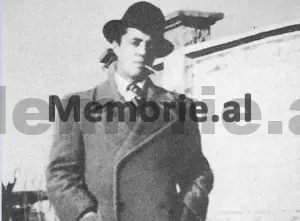
Memorie.al / Even though he was the main leader of communist Albania for 40 consecutive years, governing his country with an iron hand from 1945 until he died on April 11, ’85, but also after his death, and until the collapse of the communist regime at the beginning of 1991, a complete official biography of Enver Hoxha was never published, although he himself left written a series of works of about 80 volumes. Moreover, even after the 1990s and up to today, a biography of the former communist dictator Enver Hoxha has not yet been published that is based on archival documents that shed light on the early origin of the family, with its genealogical tree, as well as a life story of him, from the day he was born until the day he died…! This apparently also due to the fact that throughout his life, there were many light and shadows, indeed many dark stains, which made him himself never give approval for the publication of a biography of him in a separate book, even though those biographies have in fact existed. Indeed three such biographies and with different authors, which are found even today in Enver Hoxha’s personal fond, in the Central State Archive in Tirana.
The first official biography of Enver Hoxha became public in 1946, within the framework of the “popularization” of his figure, as “the main leader and first secretary of the Communist Party of Albania, commander-in-chief of the National Liberation Army with the rank of general-colonel, chairman of the presidency of the Democratic Front of Albania, prime minister of the Albanian government, minister of People’s Defense and minister of Foreign Affairs.” As can be seen also in the respective facsimiles attached to this article, this biography, which is a small booklet of 58 pages, published in the “Rinia” Printing House (former “Gutenberg” printing house) on the first page (after the dark burgundy cover and the photo of Enver Hoxha in the military uniform of a general with medals on his chest), has written in capital letters: “ENVER HOXHA, A SHORT BIOGRAPHY”. That first official biography of Enver Hoxha was prepared for publication by the employees of the Agit-Prop sector (Agitation and Propaganda) at the apparatus of the Central Committee of the PPSh [Party of Labor of Albania], but in reality its compiler and author was the first captain, Ndreçi Plasari, whose name does not appear in the book in question, but is found written in his own handwriting on the first page of the typed material that was sent for printing.
The book, or more precisely the brochure “ENVER HOXHA, A SHORT BIOGRAPHY”, begins with a description of the city of Gjirokastra where Enver was born on October 16, 1908, and continues with several paragraphs on the history of the Hoxha family, (a thing which occupies only the first two pages), while the entire remaining part is dedicated to his role (Enver’s) during the period of the “Anti-Fascist National Liberation War” with some of its main events, (the founding of the PKSH [Communist Party of Albania], the Peza Conference, the Labinot Meeting and the creation of the General Staff of the National Liberation Army on July 10, 1943, the Mukja Agreement, the Përmet Congress, etc.), concluding with January 11, 1946, with the event of the proclamation of the Republic. Even today it is not known with precision why that brochure with Enver Hoxha’s first official biography (where a life story of him for the period of Zog’s Monarchy is almost entirely missing), which glorifies his figure and role, (or that of the Hoxha family), from the period of childhood up to the time it was published, was immediately withdrawn from circulation, (it is said after two or three months) and was never again used even for references, in books, albums, or other works dedicated to his figure.
Because from that time onward, Enver Hoxha began the elimination of his close collaborators, (members of the Politburo, ministers, deputies, etc.), by imprisoning, interning or executing them, and the book in question with his biography could no longer circulate with the names of “enemies of the people”. The second biography of Enver Hoxha was written in 1950 (15.VI.1950) and its author is Misto Treska, a close man and very trusted by Enver Hoxha, from the period of the French Lyceum of Korça and the Communist Group of that city where he was a member, who during the War period was political commissar of the partisan Battalion “Reshit Çollaku” and after 1944, was promoted to major, being appointed as prosecutor and member of the judging body in the Special Trial of 1945, which sentenced to death former prime minister Maliq Bushati and the members of the Regency, Lef Nosi and Father Anton Harapi..
Just like the biography written by Ndreçi Plasari in 1946, that of Misto Treska too, which has 238 pages of handwriting and the same title (“Enver Hoxha, a short biography”), glorifies beyond measure the figure and role of Enver Hoxha, in all the time periods treated there. Perhaps this has also been the main reason why that biography written by Misto Treska about Enver Hoxha, not only was never published, but was not even typewritten with a typewriter, like the 1946 biography of Ndreç Plasari, or the other that was written later. Likewise, it is not known with precision whether this “service” that Misto Treska did for the main leader of Albania, Enver Hoxha (with whom he was acquainted also from the period of studies in France), influenced his later career, where he served as a jurist, translator, book author, diplomat, ambassador of Albania in France, Belgium, etc., as well as chairman of the Committee for Friendly and Cultural Relations with the Outside World, where he also retired in 1981.
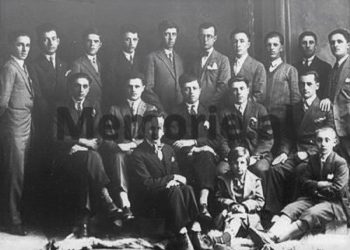
The same thing also for professor Ndreçi Plasari, historian and researcher who during the communist regime held important academic and political posts, being for a long time also deputy director of the Institute of Marxist-Leninist Studies in Tirana, directed by Nexhmije Hoxha. In those duties, professor Plasari served until 1982, when he was struck by the Party, accused as “a man of Mehmet Shehu, who had been sent by him to the British archives to inflate his (Mehmet’s) cult and had hidden the documents that proved that Mehmet Shehu had been an agent of the Intelligence Service”! The third biography of Enver Hoxha was written in 1969 and its author is Aqif Selfo, a close friend of childhood and youth with Enver and his neighbor in the city of Gjirokastra and, later, in the French Lyceum of Korça, where they studied together and Selfo served for some time also as a dormitory supervisor at that lyceum. On the first page of that biography, it is written: “Memories from the life of the Hoxha family, its origin and a life story of comrade Enver Hoxha, for the period 1908-1930 and 1931-1939, 6.1.1969, by Aqif Selfo”.
That biography, or more precisely a life story, as its author himself has titled it, (it has 124 pages of handwriting, while 82 pages typed), just like those of Ndreçi Plasari and Misto Treska, from beginning to end, glorifies the figure and role of Enver Hoxha, indeed with distortions and falsifications of historical events and facts. (As for example, on p. 46 of his memories, Aqif Selfo among other things writes that: “Enver set off for Belgium, settled in Brussels and began the duty of secretary of the Consulate. He stayed here partly in 1934, all of 1935 and partly in 1936. Alongside the duty of secretary of the Albanian Consulate in Brussels, Enver also continued his studies at the law faculty and gave the exams of the second year”. While in another archival document found also in Enver Hoxha’s personal fond, the Albanian diplomat Nos Qosja who served in our embassy in Paris, among other things writes: “During my visit to Belgium with comrade Harrilla Kola, we went to the University of Brussels (Faculty of Law) and asked and established: Comrade Enver is registered in the Faculty of Law for the academic year 1934-1935. In the archive of that faculty, there exists a card with these data;
HOXHA Enver
Academic year 1934-1935
Date of birth; October 3, 1908 (Gjirokastra)
Register number; 2821
His address; “Legation d’Albania 155 Rue de la Loi, Brussels”.
The card is white; it does not appear that he has given any exam”.
Paris, February 22, 1969 Nos Qosja
From what is said also in the archival document in question, (which is conditioned with the period when it was written and Enver’s biography by Aqif Selfo), it results that Enver Hoxha has not given any exam in the Faculty of Law of Brussels, a thing which refutes what Aqif Selfo writes, that “Enver gave the exams of the second year”! Perhaps this has also been the main reason why those “Memories” were never published as a book, since in the period they were written, many of Enver’s and Selfo’s friends and peers were still alive, (in political prisons or free), as from the period of their childhood in the city of Gjirokastra, that of the Lyceum of Korça, or also of studies in France. But even though those “Memories” never saw the light of publication, in all likelihood they served their author Aqif Selfo as a shield for a quiet life (he worked as a teacher in Tirana at the “Qemal Stafa” gymnasium, until he retired), unlike his two cousins, Riza and Syrja Selfo, whom Enver arrested and shot, even though they and the entire Selfo family had helped him with money, during the War period, 1939-1944.
On the basis of these three biographies, in 1978, a book was published or more precisely a type of brochure with the title: “Enver Hoxha, beloved leader of the Albanian people”- (Material for conversations, on the occasion of the 70th anniversary of birth), where on the first page after the cover, it is written: “Prepared by the sector of Marxist-Leninist education, at the C.C. of the PPSh. – In aid of agitators and propagandists”. The book in question is published by the “8-Nëntori” Publishing House in the “Mihal Duri” Printing House in Tirana. The fact that these three biographies of Enver Hoxha are found in his personal fond, indeed also with interventions and corrections by other persons, if they were not done by his order, in all likelihood they were written with Enver’s approval. Nevertheless these remain within the framework of hypotheses where there is room to investigate longer, but in this article we are publishing first the biography of Enver Hoxha, which is written by Aqif Selfo, which is published for the first time and with the respective facsimiles in several issues, by Memorie.al.
THE ARCHIVAL DOCUMENT EXTRACTED FROM THE PERSONAL FOND OF ENVER HOXHA THAT IS FOUND IN THE CENTRAL STATE ARCHIVE, WITH THE MEMORIES WRITTEN BY AQIF SELFO, ON THE ORIGIN OF THE HOXHA FAMILY AND A LIFE STORY OF ENVER HOXHA
Memories from the life of the Hoxha family, its origin, and the life story of comrade Enver Hoxha for the period 1908–1930 and 1931 – 1939
By Aqif Selfo
6.1.1969
But this too was resolved: His not-good economic situation on the one hand and the successful completion of the third class (troisieme) on the other hand made it possible for Enver to benefit from a state scholarship, to continue his lessons in the second class of the lyceum of Korça (i.e. in the seconde or deuxieme class). Thus with the opening of the school year 1927-1928 Enver set off for Korça and as a scholarship holder was placed in the lyceum’s boarding house. During the time he stayed in Korça, as a pupil, Enver, with his behavior and his courage, with his knowledge of the French language better than his fellow pupils and with the care he showed for the life and progress of his friends as well as for the elimination of various injustices that were done by the entrepreneurs at the expense of the boarders, won the sympathy of all his friends, of the school and of the boarding house as well as that of the professors, Albanian and French.
In the boarding house Enver and the other young pupils, who had come from the lyceum of Gjirokastra, found a warm environment. They found many pupils from different places of Albania, as well as from Gjirokastra who lived in it. Getting to know one another was for the good of the whole collective, both for the improvement of living in the boarding house, and for progress in lessons and for the development of their cultural horizon. But the boarding house of the lyceum of Korça, alongside these good sides, also had quite a few weak sides: it was not very in order to carry out the assigned duty as it should. The entrepreneurs, in order to profit as much as possible, supplied the boarding house very badly, both with food and with fire and with other necessary items. This situation caused the dissatisfaction of the boarders. These objected whenever the food was bad, or when the heating needs in winter were not met.
The objections became more frequent and stronger at the time when Enver was also in the boarding house. Enver was the first and initiator in such cases, for he could not endure the injustices and thefts that were continuously done by the entrepreneurs. Therefore whenever the dishes were cooked with spoiled meat, or with bad vegetables, so much so that they could not be put in the mouth, all the boarders rose from the tables without touching them at all. The boarding pupils, on the spot, formed the commission to complain to the directorate about the injustices and abuses that were being done. This commission composed of representatives of all the boarders went to the directorate of the boarding house and, in more serious cases, went also to the directorate of the lyceum. The strong protests of the boarders made the entrepreneurs somewhat change the food.
But there were also cases when the protests were not only not taken into consideration by the directorate but it also took punitive measures. The directorate, in these cases, called the protests and complaints of the pupils – boarders unjust and violations of discipline, therefore it also took measures against the initiators. For this reason in one of these protests not only was there no concession on the part of the directorate, but on the contrary, it took punitive measures against the main initiator, in this case against Enver: Enver was punished with exclusion from the boarding house for over ten days (this has happened around the school year 1928-1929).
The boarding house of the lyceum of Korça was also a good center for the development of the cultural horizon especially for the spread of progressive ideas. By many boarding pupils various books were ordered directly in France, not only novels of French and foreign authors, but also political brochures. Among the political brochures that circulated from hand to hand and that were read by them with great desire, there were also some books, of small format, on the life and activity of Lenin. The books of a political character were tracked down and ordered by one of the lyceum’s pupils, the boarder Selami Xhaxhiu. (These brochures, later, after the formation of the Party and the impetus that the national liberation movement took, were used by the party comrades of Gjirokastra).
In the boarding house there also circulated newspapers and magazines in the French language. One of the magazines that was read by many pupils of the lyceum was also the magazine “Monde” or “De Monde” (the exact name of this magazine I do not remember well). This magazine was progressive, leftist and had quite a few articles that treated various issues, especially on the magnates of world capital, like Ford and many others. Through these articles the young people of the lyceum of Korça formed the idea of how these magnates – many millionaires – enriched themselves not from their work but from the brutal exploitation of the work of others, of the workers. This literature outside of school as well as the textbooks, first of all those of history and literature, French and world, that were used in this period, have influenced a lot the pupils of the lyceum of Korça and therefore also Enver, in arousing hatred towards the oppressors and exploiters.
Enver gave great help also to the pupils, of his class or of the lower classes and sometimes also of the higher classes, who were weak in the French language. His help was first of all in filling the gaps that these had in the French language and in this way they reached the level of their classmates and could get good grades. Another important help was also the instructions that Enver gave to many of his friends, boarders or externals of the lyceum, on the way how to do better the compositions, literary comments and others. Enver won with his behavior and progress in language and history the sympathy of the professors and especially of K. Cipo, of Gorig, of Brexho, etc.
The time of exams, especially for the pupils of the last two years of the lyceum was the most tiring period. At this time Enver, like all the pupils of these classes, exploited this time to the maximum (after the end of the lessons the pupils of the last two classes had several days of rest that were exploited to prepare for the written exams and for the oral ones – the oral exams, for those who passed the written ones, were held, in all subjects within one day), he worked for hours on end, before dawn well, until the late hours of the evening, both in the boarding house and outside the boarding house, on the hills of the city of Korça, in quiet places, far from the noise of the city.
It happened that, at the time of the exams, some of the friends felt himself not sure about taking the written exams, more from the exam fever than from poor preparation, Enver, in this case, did his utmost so that this one would enter the exam and so it happened. From this interest of Enver, the pupil who felt himself not sure entered the written exams and passed not only those but also the oral exams: thus he passed the class.
In the school year 1929-1930 Enver was in the last year of the lyceum (in the philosophy branch). In June 1930 he took the exams, like all his classmates, of the philosophy class and thus finished the lessons of the lyceum, of the high school, successfully. So with the completion of the lyceum of Korça, Enver was a young man close to twenty-two years old. His ardent desire was the continuation of higher studies abroad, to deepen even more the knowledge and culture that he had received until then and to put them in the service of his people and his homeland.
Enver Hoxha during the years 1930-1939
The years abroad, 1930-1936
The successful completion of the lyceum was for Enver, as well as for all the young people who finished a high school, not only a great pleasure for the culture gained, but also the opening of the road for the pursuit of higher studies, for the further expansion of this culture. But the pursuit of higher studies, at that time, in the regime of ignorance, was a privilege of some, of a small minority. Whereas the sons of other strata, of middle citizens and of other categories, had to be content with that culture gained with many sacrifices in the high school and to be appointed somewhere as simple state employees.
In this category entered also Enver’s family. Therefore for him the pursuit of higher studies was conditioned only on the granting of a state scholarship, since the economic situation of his family was too difficult; it was not in a condition to bear the expenses for keeping their son, for several years, abroad. But the successful completion of the lyceum and as a scholarship holder that he was, in the last years of the high school, in the lyceum of Korça, Enver was granted the state scholarship in the faculty of natural sciences. The granting of this scholarship was a great joy for him although the branch that had been assigned to him was not very much in his heart; he desired more to pursue the faculty of letters or of history.
Enver went to France in 1930, to the most University City, Montpellier. Here he registered in the faculty assigned by the state, in the faculty of Natural Sciences. In Montpellier Enver alongside the pursuit of courses in the faculty of Natural Sciences, had the opportunity to read, for the expansion of his cultural and political horizon, also many works from French literature of known progressive authors, like Henri Barbys, Romain Rolland, etc.; the history of the French revolution of 1789, as well as Marxist-Leninist literature and newspapers and magazines of the left, progressive.
Alongside the progressive French press in the city and industrial centers, where there were Albanian students and workers, there also went the newspaper “Liria Kombëtare” (“La Liberte Nationale”) that was published in Geneva (Switzerland) by the political escapees of 1924. This newspaper came out under the direction of Omer Nishani. “Liria Kombëtare” also went to Montpellier. It went from hand to hand and was read by the majority of the students, i.e. by the students who were known for their progressive ideas and who were against Zog’s regime.
A fellow pupil of Enver who had finished the lyceum also in 1930 and had gone to pursue higher studies, in Montpellier, says: “Enver read strongly the progressive newspapers and magazines, of the left. He also went to various conferences especially in the hall of popular conferences – ‘Le Jardin de l’esplanade’ – In this hall conferences of various currents were often held as well as of the French Communist Party. Several times he had told me too that we should go together, but I had never gone”. (Foto Bala)
While a former pupil of the lyceum of Korça, who was studying in Montpellier and who finished higher studies in 1931, says: “For me Enver has been dear, well-behaved and open-handed, i.e., when anyone had need, he did his utmost to help him” – and ads: “Enver was of those who, if he had 5, would give you 3”. (Niko Stralla). Another fellow pupil of Enver who had finished the lyceum of Korça and was pursuing studies in Montpellier, tells of the attitude of the Albanian students towards a society formed by Greek and Yugoslav students.
He says: “A group of Greek and Yugoslav students, who were pursuing their studies in France, had taken the initiative for the formation of a society, with the aim that it would include in it all the students of the Balkan countries who were studying in France. The initiating group around 1932 or 1933 sent its delegates also to Montpellier to talk with the students of the Balkan countries who were found there, with the Albanian students, Bulgarian, etc. For this purpose a meeting was organized. In this meeting there took part the students of the Balkan countries as well as the Albanians. Among the Albanian students were, among others, Enver Hoxha, Shefqet Shkupi, Abas Xhomo.
In the meeting the delegates of this group spoke on the formation of the society and on its aims. The society had as its aim to include, in its bosom, all the students of these countries. They indirectly showed in the meeting the true aims of the formation of this society; the society was formed to guide the students of these countries in favor of Greece and of Yugoslavia.
In the meeting many questions were put to the delegates of this group and first of all: what rights would the Albanian students of Kosovo and the Bulgarian students of Macedonia have in the Yugoslav state? Would this organization be in a condition to help them for this purpose and to protect them so that not only would they return to their homes, but also would have all the rights of Yugoslav citizens. The delegates answered these questions with many empty words. Then the Albanian students, who were in the meeting, seeing the true aim of this society, decided, on the spot, to reject their proposal and went out. The same attitude was also held by the Bulgarian students and some students of other Balkan countries.
Enver in Montpellier continued, for a time, the faculty of Natural Sciences, but later he changed the branch and began to pursue Juridical Sciences. At this time, also in Montpellier, he gave the exams of the first year and partly the exams of the second year. Meanwhile the Ministry of Education, at the beginning of 1934, cut off his scholarship. Enver after staying also several days in Montpellier, set off for Paris in the hope of finding work and continuing his studies./ Memorie.al
Continued in the coming issue