





By DASHNOR KALOÇI
Part One
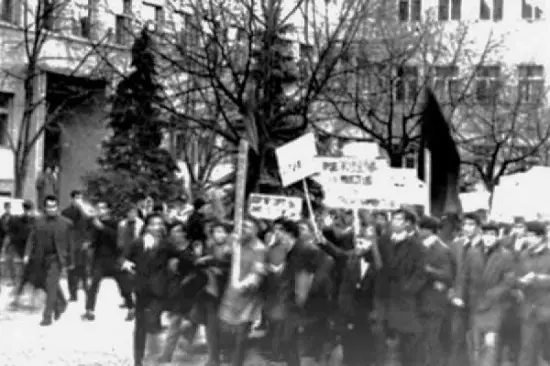
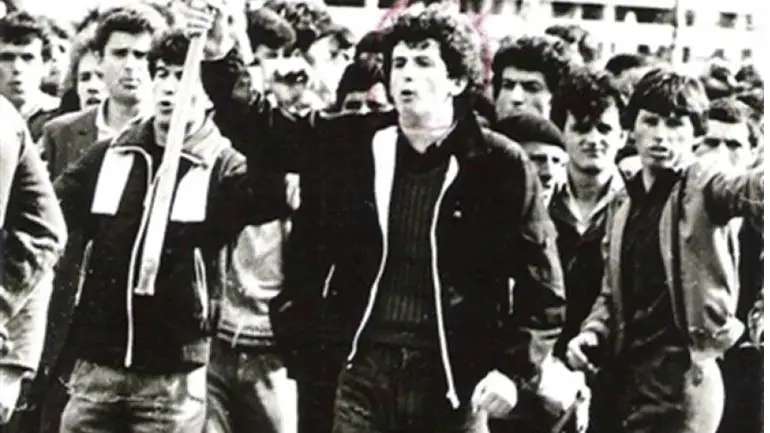
Memorie.al / The events of the spring of 1981 in Kosovo, which began at the start of March with the protests and demonstrations of the student youth and subsequently of the people of Kosovo, who rose up to demand their lawful freedoms and rights, as well as the status of a republic, just as all other peoples and ethnicities then within the Socialist Federal Republic of Yugoslavia had and enjoyed – led by the Bosnian Cvijetin Mijatović (President of the Presidency, May 1980 – May 1981) – as is already known, provoked a harsh reaction from official Belgrade. The high leadership of Serbia at the time, led by Prime Minister Ivan Stambolić (President of the Executive Council of the Socialist Republic of Serbia), upon which the Socialist Autonomous Province of Kosovo then depended, sent armored forces there and violently suppressed those protests, not only with police forces, but by also bringing the army and tanks out onto the streets and squares of Prishtina and other cities where those peaceful protests took place, during all of which days (March 11 – April 11, 1981), there were a total of 12 victims.
These events, which became the lead story in all world media, as well as the public reaction of official Tirana, are now very well-known from dozens of writings or archival documents published mostly after the 1990s, but what has remained a great enigma and has not been made known to this day is this: how did the leader of communist Albania, Enver Hoxha, initially react to those events; what was his first impact regarding what was happening in Kosovo; and what steps did official Tirana subsequently undertake to come to the aid of its compatriots in the Socialist Autonomous Province of Kosovo? Did Enver Hoxha stand by what he had said in 1970, that Fadil Hoxha and the high leadership of Kosovo were doing very well to oppose Kosovo being given the status of a Republic within the framework of the Yugoslav Federation, or had he changed his mind and his stance?!
Regarding these and other matters, we are familiar with several archival documents located in the Central State Archive (the personal archive of Enver Halil Hoxha), which have been unknown until today and will be published for the first time and in several installments by Memorie.al. From these documents, it is noticeable that from March 4, 1981, (when the spontaneous student youth protests first began in Prishtina), until April 3, when Enver Hoxha held a working meeting with Prime Minister Mehmet Shehu and Ramiz Alia regarding the events in Kosovo – thus for a full month – there was complete silence and no meeting of the Political Bureau or the Secretariat of the Central Committee of the Party of Labour of Albania was held, thus no reaction from the high leadership of the PLA or official Tirana.
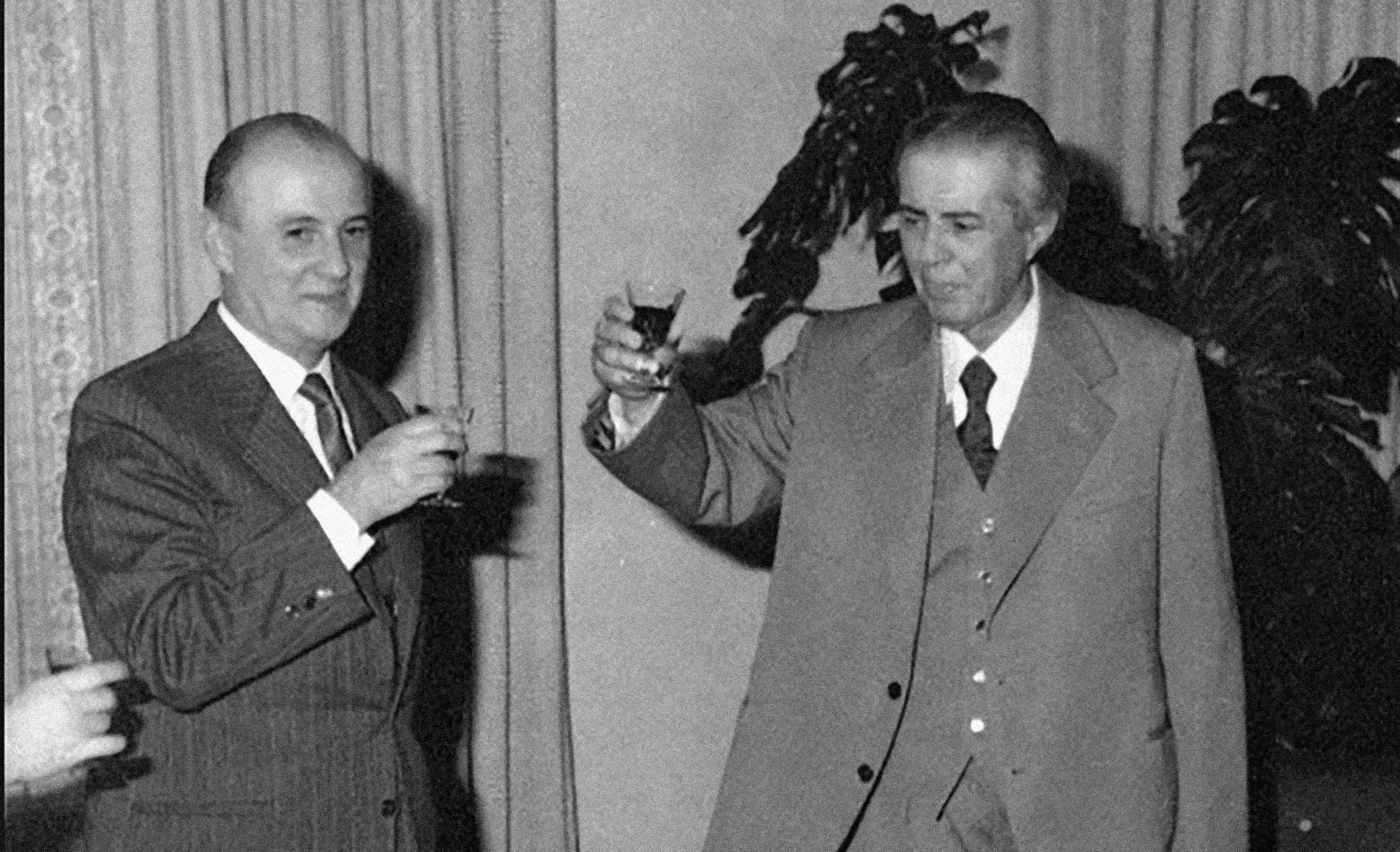
Likewise, what is noticeable in these documents is the panic that seized the main leader of communist Albania, Enver Hoxha, who was hesitant and undecided about the stance official Tirana should maintain regarding the events in Kosovo, so much so that in another conversation at the House of the Party on April 5, 1981, with the “comrades of the leadership” (Mehmet Shehu, Adil Çarçani, Hekuran Isai, Kadri Hazbiu, Pali Miska, Spiro Koleka, Rita Marko, Pilo Peristeri, Simon Stefani and Qiriako Mihali, Nedin Hoxha and Behar Shtylla), where they would go for coffee, or to play cards, billiards, etc., Enver asked them: “What do you think about the recent events in Kosovo and what should we do? Should we take a stance and be concerned, or not?” Likewise, during another brief conversation that Enver Hoxha had in his office with Ramiz Alia about a month later (on May 13, 1981), he told him: “Regarding the events in Kosovo, it seems to me that our subordinates should also think, and it should not be expected that I am the only one to think about them”!
Regarding these and other matters, these archival documents, which belong to the period April–June 1981, where Enver Hoxha held several conversations and meetings, both with his two closest collaborators (Prime Minister Mehmet Shehu and Secretary of the Central Committee, Ramiz Alia), as well as with the Political Bureau and the Secretariat of the Central Committee, are being published for the first time with their respective facsimiles by Memorie.al.
ARCHIVAL DOCUMENT OF ENVER HOXHA’S MEETING WITH MEHMET SHEHU AND RAMIZ ALIA, ON APRIL 3, 1981, REGARDING THE EVENTS AND DEMONSTRATIONS IN KOSOVO
REGARDING THE DEMONSTRATIONS IN KOSOVO, 3. IV. 1981
In the meeting with comrades Mehmet Shehu and Ramiz Alia, regarding the demonstrations and the situation created in Kosovo, Comrade Enver made the following assessment:
- We must analyze the events in Kosovo on a broad plane, first and foremost in relation to our country, to the People’s Socialist Republic of Albania. We know, and the Yugoslavs also know this, that our country has not been entangled, has no hand in the demonstrations taking place in Kosovo.
Our correct Marxist-Leninist policy has been and is for the expansion of relations with Kosovo and with other areas in Yugoslavia inhabited by Albanians, to help our brothers as much as we can to gain there as many of the rights as the Yugoslav constitution recognizes for them, and to always keep alive and develop the sense of nation, language, customs, etc., to increase love for the People’s Socialist Republic of Albania and for our Party.
This correct policy has given the results we know, which we can consider satisfactory. We must not forget that all our enemies, the imperialists, the social-imperialists, and others, have their sights set on socialist Albania, because it, with its correct stances, with its consistent struggle, with the example it gives by consistently applying Marxism-Leninism, spoils the plans of all oppressors, exploiters, and enemies of the peoples. Therefore, they are interested in liquidating socialist Albania. But how can they achieve this?
- To attack it directly is difficult and highly exposing for them. Therefore, they might think of achieving their goals by entangling Albania in some significant incident. From this point of view, the events in Kosovo may be instigated, or they may be exploited to provoke our country.
The imperialist, social-imperialist, and other enemies think that the uprising of the people of Kosovo against the Titoist regime might incite Albania to intervene, to act, judging that the time has come to realize the unification of Kosovo with Albania.
And, in case our Party takes this wrong step, they think, the enemies of socialist Albania are given the opportunity to intervene with arms and realize their aims to annihilate this hearth of socialism, the People’s Socialist Republic of Albania. But our Party and our socialist state do not make this mistake; do not fall into these traps. On this matter, we must be vigilant.
Now let us see more concretely who might be most interested in creating a critical situation in Yugoslavia in general, and in Kosovo in particular? Let us take them one by one. The Greeks and the Italians are not interested. Like them, the Americans also do not currently want Yugoslavia to be weakened or disintegrated. So, it can be excluded that they have a hand in the events in Kosovo.
What about the Soviets? It is possible. Nevertheless, it is difficult to fully accept this version. First, because (we do not know), but it is unbelievable that the Titoists would have given the Soviets such a free hand that they could organize such a large spy network capable of raising the masses to their feet.
Furthermore, we do not know that the Soviets have made so many economic investments in Kosovo that would somewhat favor their influence and presence there. Second, because the Kosovars, being good Albanian patriots as they are, find it difficult to trust the Russians, both because historically they have been pro-Serb and anti-Albanian, and because the Russians are already known as sworn fierce enemies of Socialist Albania and of the Party of Labour of Albania.
- Reasoning thus, with what we know about the situation in Kosovo, we can conclude that it is more likely that the demonstrations and the revolt of the masses in Kosovo are the work of internal forces. From following the development of Kosovo and the stances of various elements, it appears that there is a group of people there, mainly high leaders, who are satisfied with the existing situation, which see Kosovo as tied to Serbia and as its tail. Yesterday’s speech by Xhavit Nimani is a reflection of this comment.
There is then in Kosovo another group of people, who could be called moderates, who are for the development of Kosovo by utilizing the rights that the Yugoslav constitution gives it, and thus step by step and in favorable conditions, to achieve something more. These are measured in their steps, but, as it seems, they are neither organized nor have any particular influence on the masses.
There also exist in Kosovo various groups, from those called Marxist-Leninists to other exalted elements, who are in favor of actions. Precisely these may be the instigators of the demonstrations and the events happening there.
These people (or some of them) may have been encouraged and incited (the prompters act in many sophisticated ways) also by agents of the Soviets, just as they may have been encouraged by the Croats, or even by the Serbs, for actions like these that are happening, being told that now is the right time, etc., etc.
Why they might be encouraged by the Soviets or the Croats is understandable. But why by the Serbs? They might, on this occasion, want to strike the Albanians, to suppress and terrorize them, as well as to benefit by somewhat curbing the connections and relations that have developed so extensively between Kosovo and the People’s Socialist Republic of Albania.
They know that, regardless of the fact that Albania has no hand in these events, in the demonstrations and revolts in Kosovo, in the patriotism being expressed by the youth and people of Kosovo, the influence of Albania, of the Party of Labour of Albania, is present, which has grown greatly there thanks to our correct policy and the relations we have established with Kosovo.
- This is what I think about the events unfolding in Kosovo. How should these events, the demonstrations and revolt of the youth and people of Kosovo, be evaluated? Regardless of the fact that the current conditions are not favorable for achieving maximum results, regardless of the fact that the Titoists will suppress them and take measures against the Kosovar patriots, these demonstrations are positive and will exert a positive effect.
On the international plane, they show the world once again that Titoist Yugoslavia is rotten, that it is not as it presents itself, as a “paradise” for the nations that compose it, but a hell, where populations of different nationalities are oppressed and exploited.
Thus, all that our Party has said about Titoism, about self-managing Yugoslavia, is proven true. On the other hand, again on the international plane, these demonstrations once again raised before the whole world the problem of Kosovo, the injustice that has been done to our people.
On the internal plane, these demonstrations will further increase the fighting spirit and patriotism of the Albanians of Kosovo and of other areas inhabited by populations of Albanian nationality in Yugoslavia. They will also serve as a message to the Serbs and the Titoists that: “Here we are, the Albanians, who do not accept this situation and, when the day comes, we will know how to win our rights by force, because we are not afraid of your tanks, or of your airplanes.”
What should we do in this situation? We must be vigilant. We cannot come to the direct aid of our Kosovar brothers. This, for all that I have said, is neither advisable nor useful. Nothing good would come either to Kosovo or to the People’s Socialist Republic of Albania; on the contrary, we would fall into the trap of our enemies. But indirectly, we must help our Kosovar brothers.
- Our ambassador in Belgrade should be instructed to request a meeting at the Foreign Secretariat and, first, to consider it discriminatory that, while ambassadors of several other countries have been officially informed about the events taking place in Kosovo, the Albanian ambassador, from a neighboring country that is interested in its blood brothers, has not been informed at all by the Yugoslav Foreign Secretariat.
Second, to advise the Yugoslavs to be measured towards the demonstrators, not to follow the path of blows and repression, which is neither in the interest of the Kosovar people, nor of Yugoslavia itself?
Third, to recommend that the just demands that have been presented by the Kosovars, and which derive from the Constitution of Yugoslavia, should be fulfilled. / Memorie.al
Note: The conversation was typed based on the notes taken by comrade Ramiz Alia.