By GEORGE FRED WILLIAMS*
Part Three
Memorie.al / “Bah! Look at these barbarians!” has cried every tyrant who has driven his victim into misfortune, when at last he saw it impossible to make him a slave. The painful event of Albania has not been told to the people of the United States of America. It has been buried in the land of its own Byron and of the great states, which have decided to wipe this heroic people off the face of the earth. In the dark halls of European diplomacy for centuries, the fate of Albania has been confined and tormented. Even now, with tears in her eyes and utterly weakened by the bondage and injustice of centuries, she stretches out her withered hands to demand justice and freedom; but still in vain. Yes, the wages of sin is death, and the just care of God brings forth the fact that the present evil condition of Europe flows directly from that very policy which was used against Albania.
Continued from the previous issue
In contrast to the present, where they are poor and devastated by continuous wars, caused solely because they sought to free themselves from the yoke. Albania today could have been a flourishing and advanced state. Perhaps when the black diplomacy, which has its roots in the dark centuries and makes every state view others with great hostility, has disappeared, and some manner of human and brotherly sympathy is employed, then we will remember the fact that the success of one people does not need to be achieved through the defeat of another. Then the Slavs, Germans, English, Turks, and Albanians, can benefit far better from each other’s progress, flourishing, and happiness.
EUROPE’S BUNGLED DIPLOMACY
Meanwhile, Albania, the chief victim of this diplomacy, remains weary, bowed down, and drenched in blood because, even after the liberation of the other Balkan states from the yoke, it was left still under Turkey. Along with Albania, Macedonia also remained under the yoke. Had there remained any human sympathy in European politics and any sentiment to atone for the sins committed over the centuries, these powers would have given the Albanians the opportunity to form a government and implement a statute of their own. Even a horse’s brain would have thought that such a brave and warlike people would not accept a new tyranny’s yoke in place of the old one.
But bungled diplomacy decided to impose force and tyranny to rule this people; but this decision was bound to fail, as was seen. The European states have shouted and proclaimed that the Albanians are a disobedient, savage, and barbarous people. But on the other hand, they wanted to create a government over them without asking their wishes, without securing them any freedom or hereditary rights, and indeed without even a single soldier’s foot to enforce their program: they brought only a few officers, but no soldiers. However, if their declarations were true, they would have brought great armed force to bend the Albanians; but these shouts were merely to justify their own behavior.
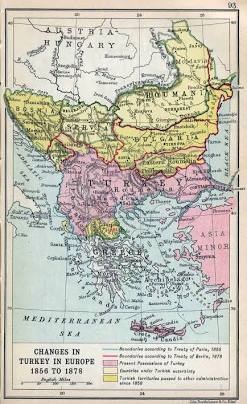
They cut significant pieces from Albanian territory and gave them to neighbors in the North, South, and East, thus causing daily confusion and wars among these states. The piece that remained from their “scissors” they called the independent state of Albania. The greatest mistake of their plans I will describe in the following chapter. Albania has become a threshing floor of diverse influences pulling it in different directions. There is no will, no program, nor recognized authority in this land. Propaganda, intrigue, and slander hide the truth. This is reported by Dr. Dillon from Durrës.
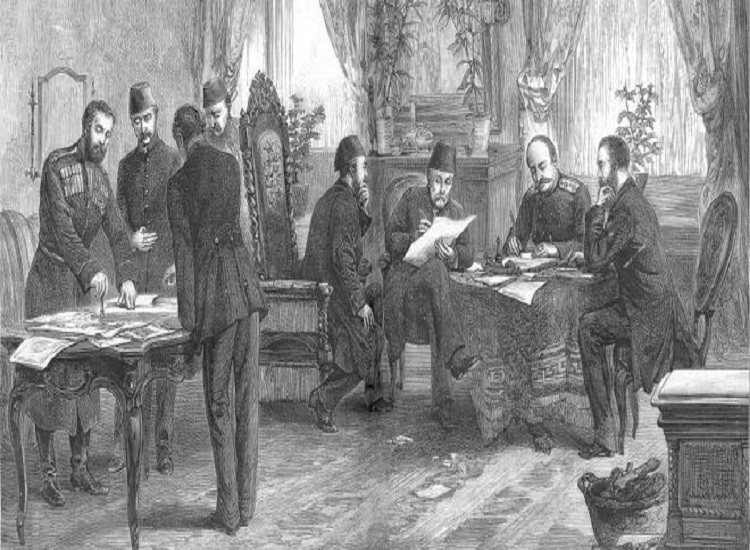
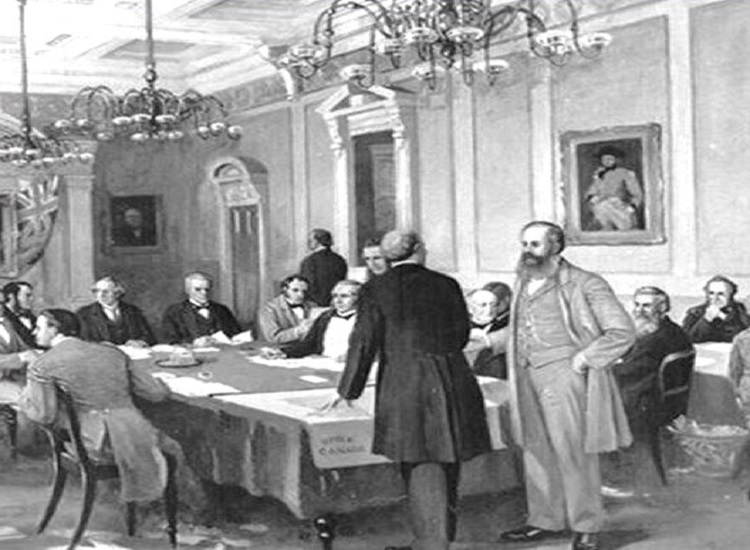
When the six Great Powers drafted a government plan for Albania, their work showed a strange incompetence, because it was a plan that did not suit a state like this. The Treaty of London contained the articles:
1) An autonomous, sovereign principality, with the right of hereditary succession to the throne by the descendants, and under the guarantee of the six Great Powers.
4) The control of civil administration and finances is given to an International Commission composed of delegates from the six Great Powers and one delegate from Albania.
7) The appointment of the prince, the formation of a final national government, the functions of the country’s authorities that exist, as well as the peace of the people, are left in the hands of the said commission.
8) The security of the people and order shall be maintained by an organization of gendarmerie and international police, which shall be in the hands of foreign officers who shall have the operative and superior command of the police and gendarmerie and of all necessary elements to ensure the peace of the people. I ask the reader to study these points, to form his own judgment, on how a state can be formed on such a plan? The three functions of a state are: the executive, the legislative, and the judiciary.
It is seen that the last two are not mentioned, except as a kind of authority left to the International Commission to form a national government with authority. The executive function naturally includes an executive head, which will have control over the civil administrations and the security of the people. The (London) Treaty includes a prince, but gave the International Commission control over civil administrations and finances. And on one hand, it places the security of the people under the International Commission, while on the other hand, it says: “The operative and superior command for maintaining the peace of the people is given to an international organization headed by foreign officers.”
What powers remain for the prince is not understood, while administrations, finances, and the security of the people were placed in other hands. According to the decision of the (London) Treaty, the prince was to be chosen without asking the people’s wishes, and the functions of the country’s authorities and the security of the people were taken from the people’s hands. No statute was set before them on the basis of which this people would not be governed, nor was any promise made for full liberty, or for exercising traditional rights. Here there was only a tyrannical rule and an outright despotism declared with urgency. As far as can be judged, this was anarchy intended to provoke insurrection.
Had the Albanian people not risen in what was called rebellion, it would not have been believed enough about the Albanians, and it would have been said that they have no idea of the freedom they seek. From this Treaty of London, confusion emerged as great and terrible as could be. The Great Powers then continued their program, choosing six persons, with consular positions, as members of the Commission. Without insulting that diplomatic position, this act was a bad job because the surrender of a state into such hands was not in the hands of men with diplomatic experience. Certainly, that the formation of a state was not placed in suitable hands is shown by the fruit of their work.
THE GOVERNMENT OF WIED
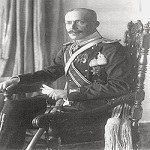
As prince of this principality, William of Wied was chosen, a major of the Potsdam Lancers Guard, a gentleman without any experience in governance and without the qualities needed for a head of state. He was a nephew of the Queen of Romania, called Carmen Sylva, and it should be noted that her financial support and urging, as well as the pressure from his ambitious wife, were the cause of his accepting this duty. The tragedy of errors began before the Prince arrived in Durrës. Essad Pasha, head of some tribes of Central Albania, without authorization from the people, went solemnly and presented the crown to Prince Wied, in the name of Albania. From the very first days, a dispute drew attention between the Palace official and the Court physician, which ended with the physician’s quick and very angry departure from Albania.
The International Commission, based on the Treaty of London, expected the prince to come and cooperate with them to solve the various problems of the state. But they soon learned that Wied was coming as a King and had requested to be received with all the magnificence befitting a royal reception. When they wanted to make some representations and for this purpose sought to cooperate with the Palace official, he replied that he had no time to waste with them. By what right Prince Wied took the title of King, no one has been able to explain. In the Treaty of London, he is listed as a Prince.
In his royal (!?) speech, the Prince emphasized that he would have the opportunity to cooperate with the International Commission, whereas the (London) Treaty states that he must cooperate. The governance or reign began by openly insulting the representatives of the Great Powers, who held the purse strings and almost all authority (because they had control of finances and administrations – trans. note). The Prince appointed a cabinet, but his ministers had no fixed or distinct authority, and in this way, everything the commission undertook, they opposed. Meanwhile, the Epirotes, who occupied Southern Albania, declared their independence. Essad Pasha asked for 25,000 armed men to subdue them, but there were no soldiers.
Dutch Colonel Thompson, who had command of the gendarmerie, was charged with a mission by the Prince to make an agreement with the “Epirotes.” He won their trust and reached a very good agreement, but Essad secured the cabinet’s denial of the colonel’s mission, and this mission was also rejected by the Prince. Later, when the International Commission made an agreement in Corfu with the Southern insurgents, the members protested that this Commission knew nothing of Colonel Thompson’s agreement, or of his mission. When I came to Durrës, one of the Commission’s members denied to me the main points of the Corfu agreement, a copy of which I presented to him, certified by the Commission’s secretary. In this manner, the affairs of creating a state continued.
The Commission’s meetings were made even more difficult by the disagreements and confusions between the representatives of Austria and Italy, who tried to shift the blame onto each other. The cabinet too was divided, and in May 1914, Essad Pasha, Minister of War, was arrested as a conspirator against the government, placed on an Austrian warship, and sent to Italy. On the other side, Albanian insurgents, the rebels, appeared armed before the gates of Durrës. Their only demand was that the Prince leave Albania, and from that time until the end, that has been their cry for every agreement they were called to make.
USING RELIGION AS A CAUSE FOR WARMONGERING
A sensible man would not have accepted the task of exercising tyranny over such a warlike people, without being assured by the Great Powers that they would give him military force, because the entire foundation of this undertaking was force. Indeed, even when the locals rose up in arms against him, the first thing he should have done was to ask for armed force or leave Albania, returning to his country. But when the local Muslims opposed him with arms, he hired Northern Catholic highlanders for payment to defend Durrës. Even the Muslims of Vlora came to the Prince’s aid, some of whom were left to oppose the Southern insurgents and others were brought to help Durrës against the insurgents of Central Albania.
The greatest problem of a government in this country is to bring into agreement or unite the elements of different faiths, with the aim of extinguishing as soon as possible the hostility among them, which had been introduced by the Turkish rulers. Within a few weeks of Prince Wied’s rule, the situation became very bad. In Southern Albania, Muslims killed Orthodox, and in Durrës, Catholic highlanders slaughtered Muslims within the premises of the Prince’s Palace, who was safe only under the gun muzzles of the Great Powers’ warships that were at the Durrës pier solely to protect the Prince and his family. It was openly evident that without the elements of different faiths uniting for cooperation, his government was in vain.
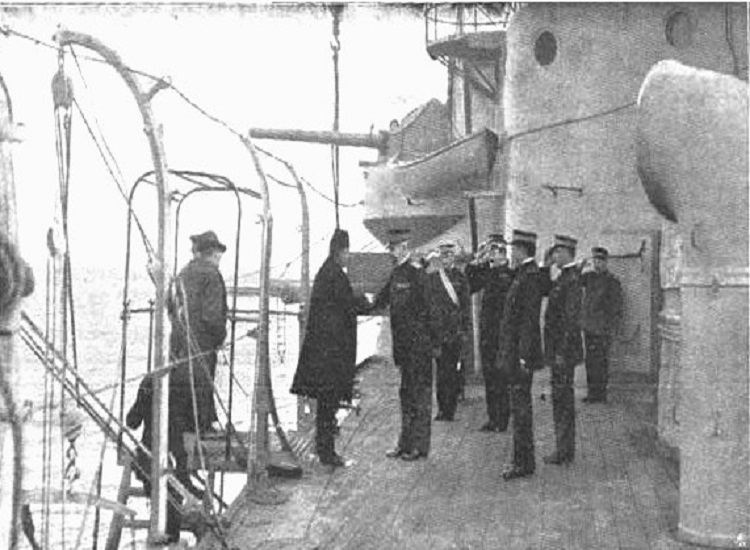
Wied settled in Durrës on February 21, 1914, and on May 24 of that year, after an assault by the insurgents, he and his family “fled” onto the Italian cruiser “Misurata.” Nevertheless, the next day he returned to his Palace, but the escape he had made the day before from the city to the warship had lost him his standing and made it impossible for him to maintain the image of a ruler over a people for whom manliness, heart, and bravery are quite ordinary things. A small comedic act was played on June 5, when on the afternoon of that day the warship “Tegelhoff” was to entertain the Prince. A royal ceremony was planned and the ministers accepted it, but that day the International Commission was trying to reach an agreement with the insurgents and feared that the roar of cannons might alarm and discourage them. The Commission won in stopping the ceremony, but not with the insurgents, who uttered their only word: “The Prince must leave our land.”
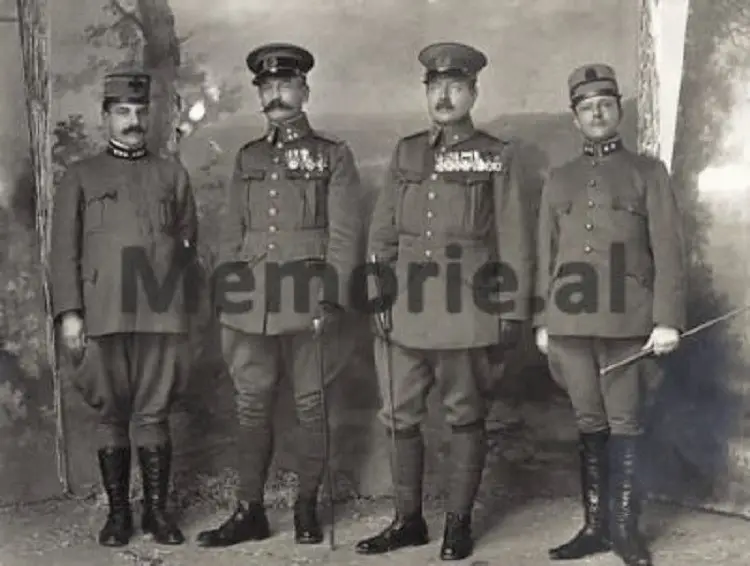
On the other side, all branches of the ruling powers came into ever greater disagreements by the minute and became more entangled among themselves. Some laid the entire cause of the troubles on the Dutch officers, who sought to have superior power and gave orders over those of the regular government. Therefore, on May 22, the cabinet members went as a group and submitted their resignations to the King, openly stating that they could no longer endure being used as puppets in the hands of the Dutch officers and taking responsibility for their crude and harmful mistakes. But on the other hand, at this time, the Dutch officers were the sole defenders of Durrës, commanding the Albanian highlanders, whose language they did not even understand. On June 15, 1914, Commandant Colonel Thompson was killed, and hundreds of men were killed in the marsh.
CHAOS IN DURRËS
I arrived in Durrës on June 18. During the week I spent in Gjirokastër with the insurgent leaders, I had learned of the killing of 70 unarmed Muslims, which the Commission had confirmed but the insurgents denied, and I had acquainted myself with all the disagreements that stood between the “Epirotes” and the International Commission in making peace. I was not only astonished but also horrified by the confusion I found in Durrës. Each member of the Commission was armed against the other, and instead of listening to the useful news I brought, each spent his time whispering in my ear the senseless things and misdeeds of the other.
No one had the slightest idea who held the rule or the supreme command, which was claimed with some authority by the Prince, by the Commission, by the Dutch officers, and by the cabinet. (Because the Treaty of London had sunk this affair by giving command on one hand to one, and on another to another, sometimes the Commission, sometimes the Prince, and sometimes the Dutch officers – trans. note). To describe in detail the confusions that grew worse daily in Durrës would not be all that useful. The government went once to Vlora and had to return to Durrës, due to plots, and there found Essad Pasha’s insurrection. An Italian officer was caught at night in Durrës signaling to the insurgents and thereby directing their operational routes. When arrested, it was found that he was cooperating with the officer who had been charged with a mission by the Prince to defend Durrës from the insurgents; then that mission was suspended.
A Dutch officer told me that the Prince could not by any means be convinced to lead the army, nor to appear before the war. The warships of the six Powers lay in dead stillness in the port. When the city was attacked, their commanders were called upon to fire a few cannon shots to frighten the insurgents, but they refused, saying they had strict orders to act only for the defense of the Prince’s person and his family. This clearly showed that the Great Powers had decided not to fire single cannon for the defense of the government they had undertaken to establish. My last experience in Durrës was one night before I left, when I was awakened by a terrible crackle of gunfire in the marsh, almost beneath my windows. / Memorie.al
*George Fred Williams (1852-1937) American diplomat, former Ambassador of the United States of America to Greece and to Montenegro, in the years 1913-1914.