






By DASHNOR KALOÇI
Part Three
Memorie.al / Even though he was the main leader of communist Albania for 40 consecutive years, governing his country with an iron hand from 1945 until he died on April 11, 1985, but also after his death, and until the collapse of the communist regime at the beginning of 1991, a complete official biography of Enver Hoxha was never published, although he himself left written a series of works of about 80 volumes. Not even after the 1990s and to this day, has a biography of the former communist dictator Enver Hoxha been published that is based on archival documents that shed light on the early origins of his family, with its genealogical tree, as well as a life story of him, from the day he was born until he died…! This apparently also due to the fact that throughout his life, there were many light and shadows, indeed many dark stains, which made him never give approval for the publication of a biography of him in a separate book, even though such biographies have actually existed. Indeed three such, with different authors, which are found even today in Enver Hoxha’s personal fund, at the Central State Archive in Tirana.
The first official biography of Enver Hoxha was made public in 1946, within the framework of “popularizing” his figure, as “the main leader and first secretary of the Communist Party of Albania, commander-in-chief of the National Liberation Army with the rank of colonel-general, chairman of the presidency of the Democratic Front of Albania, prime minister of the Albanian government, minister of People’s Defense and minister of Foreign Affairs.” As can be seen in the respective facsimiles attached to this article, this biography, which is a small booklet of 58 pages, published at the “Rinia” Printing House (former “Gutenberg” printing house), on the first page (after the dark maroon cover and the photo of Enver Hoxha in the military uniform of a general with medals on his chest), has written in capital letters: “ENVER HOXHA, A SHORT BIOGRAPHY”. That first official biography of Enver Hoxha was prepared for publication by the employees of the Agit-Prop sector (Agitation and Propaganda) at the apparatus of the Central Committee of the CPA, but in reality its compiler and author was the first captain, Ndreçi Plasari, whose name does not appear in the book in question, but is found written in his own handwriting on the first page of the typed material that was sent for printing.
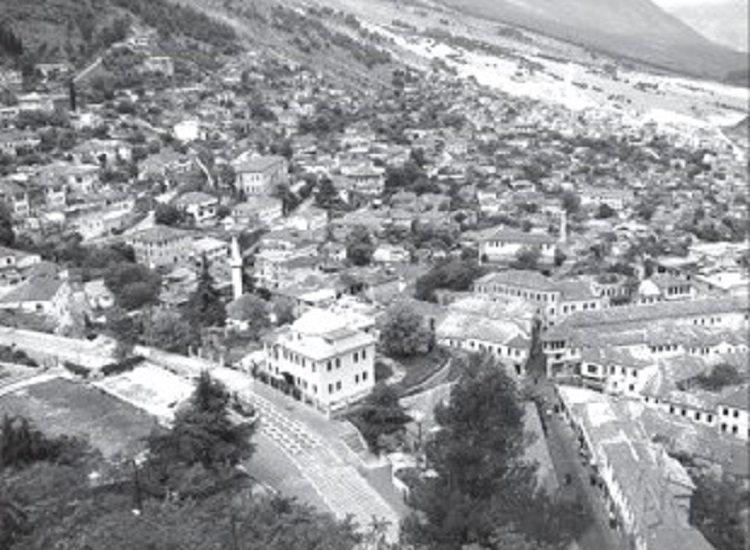
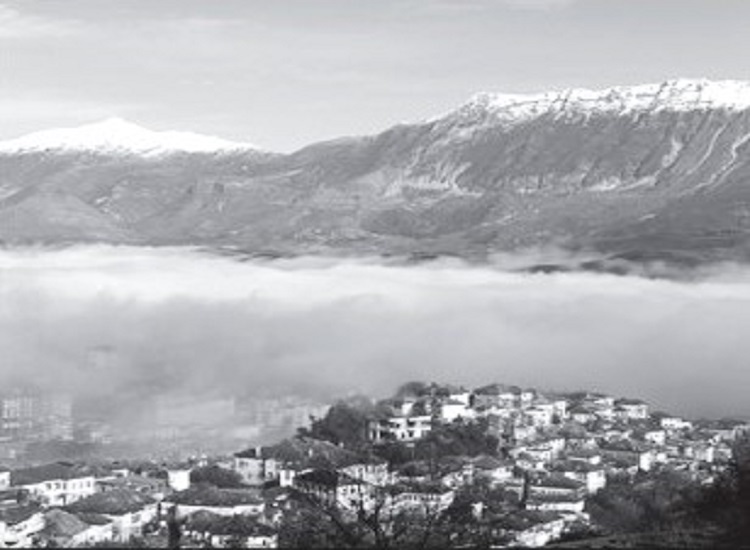
The book, or more precisely the brochure “ENVER HOXHA, A SHORT BIOGRAPHY”, begins with a description of the city of Gjirokastra where Enver was born on October 16, 1908, and continues with several paragraphs on the history of the Hoxha family (which occupies only the first two pages), while the entire remaining part is dedicated to his role (Enver’s) during the period of the “Anti-Fascist National Liberation War” with some of its main events (the founding of the CPA, the Peza Conference, the Labinot Meeting and the creation of the General Staff of the National Liberation Army on July 10, 1943, the Mukja Agreement, the Përmet Congress, etc.), concluding with January 11, 1946, with the event of the proclamation of the Republic. Even today it is not known with certainty why that brochure with the first official biography of Enver Hoxha (where a life story of him for the period of Zog’s Monarchy is almost entirely missing), which glorifies his figure and role (or that of the Hoxha family), from the period of childhood up to the time it was published, was immediately withdrawn from circulation (it is said after two or three months) and was never used again even for references, in books, albums, or other works dedicated to his figure.
Because from that time onward, Enver Hoxha began eliminating his close collaborators (members of the Politburo, ministers, deputies, etc.), by imprisoning, interning or executing them, and the book in question with his biography could no longer circulate with the names of “enemies of the people”. The second biography of Enver Hoxha was written in 1950 (15.VI.1950) and its author is Misto Treska, a close and highly trusted man of Enver Hoxha since the period of the French Lyceum of Korça and the Communist Group of that city where he was a member, who during the War period was political commissar of the partisan Battalion “Reshit Çollaku” and after 1944 was promoted to major, being appointed as prosecutor and member of the judging body in the Special Trial of 1945, which sentenced to death former Prime Minister Maliq Bushati and the members of the Regency, Lef Nosi and Father Anton Harapi.
Just like the biography written by Ndreçi Plasari in 1946, that of Misto Treska, which has 238 pages of handwriting and the same title (“Enver Hoxha, a short biography”), glorifies beyond measure the figure and role of Enver Hoxha in all the time periods treated there. Perhaps this was also the main reason why that biography written by Misto Treska about Enver Hoxha was not only never published, but was not even typed on a typewriter, like the 1946 biography of Ndreç Plasari, or the other one written later. Likewise, it is not known with certainty whether this “service” that Misto Treska did for the main leader of Albania, Enver Hoxha (with whom he had acquaintance also from the period of studies in France), influenced his later career, where he served as a jurist, translator, book author, diplomat, ambassador of Albania to France, Belgium, etc., as well as chairman of the Committee for Friendly and Cultural Relations with the Outside World, where he retired in 1981.
The same applies to Professor Ndreçi Plasari, historian and researcher who during the communist regime held important academic and political posts, being for a long time also deputy director of the Institute of Marxist-Leninist Studies in Tirana, directed by Nexhmije Hoxha. In those duties, Professor Plasari served until 1982, when he was struck by the Party, accused as “a man of Mehmet Shehu, who had been sent by him to the British archives to inflate his (Mehmet’s) cult and had hidden the documents that proved that Mehmet Shehu had been an agent of the Intelligence Service”! The third biography of Enver Hoxha was written in 1969 and its author is Aqif Selfo, a close friend of childhood and youth with Enver and his neighbor in the city of Gjirokastra and, later, at the French Lyceum of Korça, where they studied together and Selfo served for some time also as a dormitory supervisor at that lyceum. On the first page of that biography, it is written: “Memories from the life of the Hoxha family, its origin and a life story of comrade Enver Hoxha, for the period 1908-1930 and 1931-1939, 6.1.1969, by Aqif Selfo”.
That biography, or more precisely a life story, as the author himself has titled it (it has 124 pages of handwriting, while typed 82 pages), just like those of Ndreçi Plasari and Misto Treska, from beginning to end, glorifies the figure and role of Enver Hoxha, indeed with distortions and falsifications of historical events and facts. (For example, on p. 46 of his memoirs, Aqif Selfo among other things writes that: “Enver set off for Belgium, settled in Brussels and began the duty of secretary of the Consulate. He stayed here partly in 1934, all of 1935 and partly in 1936. Alongside the duty of secretary of the Albanian Consulate in Brussels, Enver continued his studies at the faculty of law and took the exams of the second year”. While in another archival document found in Enver Hoxha’s personal fund, the Albanian diplomat Nos Qosja who served in our embassy in Paris, among other things writes: “During my visit to Belgium with comrade Harrilla Kola, we went to the University of Brussels (Faculty of Law) and asked and ascertained: Comrade Enver is registered at the Faculty of Law for the academic year 1934-1935. In the archive of that faculty, there exists a card with these data;
HOXHA Enver
Academic year 1934-1935
Date of birth; October 3, 1908 (Gjirokastër)
Register number; 2821
His address; “Legation d’Albania 155 Rue de la Loi, Brussels”.
The card is white, it does not appear that he has taken any exam”.
Paris, February 22, 1969 Nos Qosja
From what is stated also in the archival document in question (which is conditioned with the period when it was written and Enver’s biography by Aqif Selfo), it results that Enver Hoxha did not take any exam at the Faculty of Law of Brussels, which refutes what Aqif Selfo writes, that “Enver took the exams of the second year”! Perhaps this was also the main reason why those “Memories” were never published as a book, since in the period they were written, many of Enver’s and Selfo’s comrades and peers were still alive (in political prisons or free), whether from the period of their childhood in the city of Gjirokastra, that of the Lyceum of Korça, or even studies in France. But even though those “Memories” never saw the light of publication, in all likelihood they served their author Aqif Selfo as a shield for a quiet life (he worked as a teacher in Tirana at the “Qemal Stafa” gymnasium until he retired), unlike his two cousins, Riza and Syrja Selfo, whom Enver arrested and shot, even though they and the entire Selfo family had helped him with money during the War period, 1939-1944.
On the basis of these three biographies, in 1978, a book was published, or more precisely a kind of brochure with the title: “Enver Hoxha, beloved leader of the Albanian people” – (Material for conversations, on the occasion of the 70th anniversary of birth), where on the first page after the cover, it is written: “Prepared by the sector of Marxist-Leninist education, at the C.C. of the CPA. – In aid of agitators and propagandists”. The book in question was published by the “8-Nëntori” Publishing House at the “Mihal Duri” Printing House in Tirana. The fact that these three biographies of Enver Hoxha are found in his personal fund, indeed with interventions and corrections by other persons, if not made by his order, in all likelihood were written with Enver’s approval. Nevertheless these remain within the framework of hypotheses where there is room for longer investigation, but in this article we are first publishing the biography of Enver Hoxha, which was written by Aqif Selfo, which is published for the first time and with the respective facsimiles in several issues, by Memorie.al.
ARCHIVAL DOCUMENT EXTRACTED FROM THE PERSONAL FUND OF ENVER HOXHA FOUND AT THE CENTRAL STATE ARCHIVE, WITH THE MEMOIRS WRITTEN BY AQIF SELFO, ON THE ORIGIN OF THE HOXHA FAMILY AND A LIFE STORY OF ENVER HOXHA
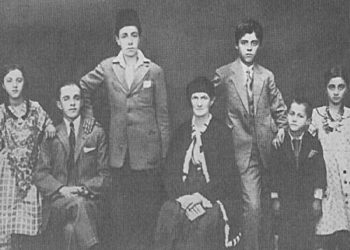
Memories from the life of the Hoxha family, its origin, and the life story of comrade Enver Hoxha for the period 1908–1930 and 1931 – 1939
By Aqif Selfo
6.1.1969
At the head of this autonomous province was placed Jorgji Zografua, as prime minister. “The Autonomy of Northern Epirus”, this artificial “puppet state”, was kept on its feet by the regular Greek forces, which now, masked, were called detached from Greece and from the Greek-minded of the country, who brought much harm to the Albanian cause and showed themselves very cruel towards the citizens and especially the peasants in various provinces. The citizens and peasants of the province of Gjirokastra opposed with all their might the implementation of Greek policy.
For this purpose, Greek andartes (komitas) bands were organized, who terrorized all those who did not submit to foreign rule. The andartes not only killed and slaughtered mercilessly, especially the peasants, but also burned their houses: in this period as a result of the burning of dozens and dozens of villages, thousands of peasants remained homeless, who took flight and went to the province of Vlora. After carrying out and continuing to carry out such barbaric acts in the villages, the turn came also to the city of Gjirokastra. To implement the cruel plans foreseen, Jorgji Zografua, as head of the so-called “Autonomy of Northern Epirus”, summoned to his office some of the notables of the city, such as Hysen Hoxha, Elmas Boço, etc.
Here Zografua, speaking Greek, told them that the people of Gjirokastra must leave the city and go to Gjergucat, a village several kilometers from Gjirokastra, at our expense, for the city will be burned, for this the people must be notified to prepare to leave the city. Hysen Hoxha replied in this way to the head of the “Autonomy of Northern Epirus”: Qirje Zografo (Mr. Zografo), why don’t you speak Albanian, where are you from? You are from a village that produced Koto Hoxhi, and as for our departure and the burning of Gjirokastra, we do not listen to leave, therefore you may burn Gjirokastra and let us be burned together with it.
The news of the burning of Gjirokastra caused a great shock among the inhabitants of the city, but despite this they were not confused and awaited this evil from moment to moment. Only some wealthy families and especially the members of the Angoni family were greatly frightened and to save themselves, they had prepared their clothes, tied them and made bundles and were ready to set off, i.e. to leave Gjirokastra. Regarding this matter, i.e. their departure, Hysen Hoxha intervenes again, he takes the initiative to force the members of this family to change their minds.
Regarding this matter there are two versions:
Upon learning the news of the members of the Angoni family, who were preparing to leave Gjirokastra, Hysen Hoxha himself goes to the house of the Angoni family. There he meets with the head of the family and tells him that; your family seeks to leave to save itself, you leave because you have the means; that you are wealthy and can live elsewhere too, but what about the others who are poor, what will they do, they will stay here, all of Gjirokastra will stay here, therefore you too must stay here together with everyone and in case you leave, know that it will not turn out well for you. Upon learning this news, some of the notables headed by Hysen Hoxha gathered to consider their departure.
They, seeing the consequences that their departure would have and the concern it would create among the inhabitants of the city, decided to write a letter to the Angoni family. In this letter they warned them about the danger that threatened them if they left Gjirokastra. The letter was signed by Hysen Hoxha himself and was sent with Fuat Nano, a good patriot and former treasurer of the “Drita” society of Gjirokastra. From these warnings, no family, in this so dangerous time, left Gjirokastra, including the Angoni family.
Regarding this matter – the burning of Gjirokastra – also in the letter cited above, which comrade Enver wrote to the “Asim Zeneli” gymnasium in Gjirokastër, dated September 22, 1962, on the occasion of sending as a gift the wall clock to the gymnasium, comrade Enver’s mother Gjulo Hoxha, tells this event as follows: “The ticking of the clock beat like our hearts and those of all Gjirokastrites, when the mullah (i.e. Hysen Hoxha) responded to the ultimatum of the Greek general, who wanted to burn Gjirokastra. Everyone awaited death from moment to moment, we awaited our houses being burned and us inside, but they did not surrender to the Venizelists and Zografos. Before the bravery of the people, the Greek general retreated. The city was saved from burning”. Thus the city of Gjirokastra was saved without being burned.
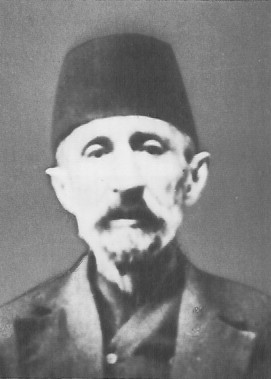
After all these important and dangerous events, Hysen Hoxha remains for several more years mayor of the municipality of Gjirokastra. Around 1920, he leaves the municipality and is appointed caretaker of the vakëf shops, he holds this duty until the end of his life. Hysen Hoxha was also one of the most liberal people towards religion. He was one of the first, in the city of Gjirokastra, who removed the sorëk and put the black feste on his head. Hysen Hoxha when speaking about religious matters and especially when the conversation fell on the imams – Ali, Hysen, Hasan and others like them, he spoke with contempt and said that these too were nothing other than people like everyone else.
His liberalism towards religion he showed also towards those things forbidden by religion: Hysen Hoxha, although they called him Hysen efendi or mulla Hysen, drank alcoholic drinks, raki, which for many people, at that time was a great sin for Muslim believers. Hysen Hoxha drank raki openly, in the marketplace, at feasts, at weddings without being shy of anyone. A good quality that Hysen Hoxha had that distinguished him from others in Gjirokastër was that he was simple and popular, in the full sense of the word. He dressed very simply and carelessly. When he left the house or when he returned home, in hot weather, he took off his xhube and threw it on his shoulder, while he removed the sorëk entirely from his head and held it in his hand or put it on top of his head to air his head, he did these without regard to the rank he had or what others might say about him.
Hysen Hoxha as mayor, for so many years in a row was loved and respected by all and especially by his subordinates. He behaved well and very kindly with everyone. He showed this best in his free hours. Often you would find him in some small café surrounded by simple and poor people, small employees or municipality workers. This attitude of his was not viewed favorably by many people, even by some of his relatives. These many times warned him about this attitude but he always told them that these people too exist and that with these one has conversation. Hysen Hoxha died around 1935. Halil Hoxha, the younger brother of Hysen Hoxha, Enver’s father, born in 1875, had completed the lower medrese in Gjirokastër.
All those who attended and completed this type of medrese not only received a certain education but also had a special privilege: they were not taken as soldiers and received the title mulla. Thus also Halil Hoxha when they called him they put before his name the word mulla: mulla Halil. While later, with the passage of time, and as his granddaughters and children as well as all his kin and acquaintances called him simply xhaxha. Halil Hoxha was more engaged with the arrangement of the household and family economy and with the administration of some small properties (some stremë, dynym) that this family had in Dropull.
Halili was aware of all the activity of his older brother, Hyseni. One of his granddaughters, daughter of Hysen Hoxha, tells that one day, in the time of Greece, daddy (Hyseni) was at the window and was looking at the road that descended to our house, at that time he sees, at the head of the road, some karafillakë (Greek police), who were descending the road. Daddy, assuming that they might be coming to search (to check) the house, calls to xhaxha: Halil quickly take the sundukopllo (a kind of small chest, with a key where we usually placed items of great importance or value) and take it outside, take it to the neighbors. But the karafillakë continued their way and went down. What was in the sundukopllo I don’t know, she adds.
The people of the province of Gjirokastra, under Greek occupation, were continuously under the control of the korofillakë and Greek agents. Therefore the people of this province, as well as of other provinces of Albania that were under foreign occupation, have suffered the black of the olive. Its economic situation was worsening more and more. The worsening of the economic situation of the province of Gjirokastra came as a result of the continuous plundering of livestock, various agricultural products and everything that fell into the hands of the Greek occupiers. This situation made it so that, in the time of the Greek occupation, many of the inhabitants of the city and villages took the road of emigration to earn their daily bread. So these sufferings and the bad economic situation, which affected the whole city and villages of the province of Gjirokastra, also affected the Hoxha family.
To keep the spirit alive, Halil Hoxha was forced to take the road of emigration with his eldest son Beqir, and they too, like many citizens and peasants from the district of Gjirokastra, went to the United States of America. They set off in the first months of 1916. After several months, still under the first Greek occupation, the Hoxha family’s house was burned. The Hoxha house was old and partly built with çatma wall (çatma = thin wall with small pieces of boards and painted on both sides with lime). So the house, being old and with çatma, burned within a short time. The cause of the burning of the house was: one day before the Hoxha family had washed clothes and after finishing washing they collected the ash of the fire and threw it in a magje (tub). During the night, the ash, not being completely extinguished, after burning the tub, set fire to the whole house. / Memorie.al
Continues next issue