
By Visar ZHITI
A life shattered into pieces of a poem: If I were a flower…
…
If I were a violet flower in the midst of thorns
to remain hidden, unseen
and one day to be discovered by the hands of two young people.
Out of fear, shunned by humanity, they would pluck me
I would be given to one another
as a keepsake.
…
A red carnation to bloom
and be carefully watered…
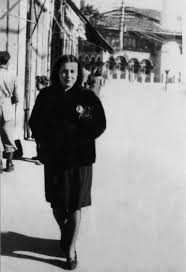
one day to be placed on the lapel of a coat.
I too would stroll through the city streets,
I would understand the youthful life
and everyone would gaze at him and me;
they are both beautiful, they would say.
…
Finally, let me be
at least a wildflower,
between the road and the stones
without anyone’s care.
One day I would be crushed by some human foot,
a man or a woman… I know but it doesn’t matter,
if I were a flower and not a human…
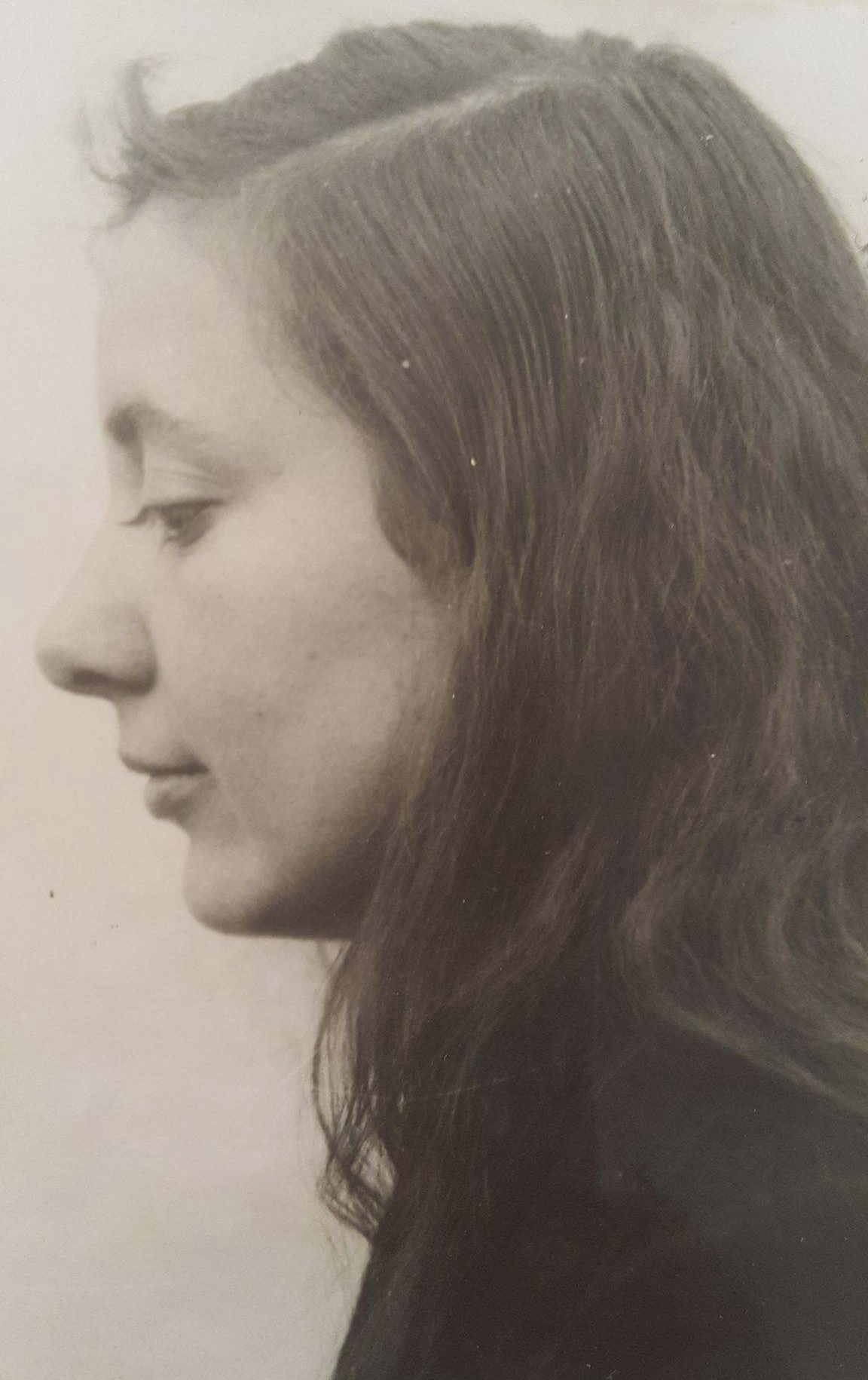
In these fragments of a poem by Musine Kokalari, all the shards of her life seem to be condensed: her desires and premonitions, her credo and reality, prophecy and future harshness, prison and death, while delicacy and tragedy are placed face to face.
Indeed, they are fragments of a poem, less than half of it, from those few weighty poems she left us, with that half-life where, more than singing, she seemed to be telling a story on the verge of lament. And they were written before a great joy, when she was about to go to study in Rome, in 1937. In that same year, the renowned poet of Albanian youth, Migjeni, would also go to Turin, but to die, unable to even begin his studies. Musine would greatly appreciate his themes and laconicism, and would follow his steps to some extent…
Musine was leaving her modest capital, Tirana, which had only been declared such a few years earlier, in a homeland that had emerged from centuries of subjugation and become independent. From a presidential republic, it had suddenly turned into a monarchy without any uprising or coup d’état, but the Albanian president himself, Ahmet Zogu, had become King Zog I. Tirana had just begun to take on the appearance of a strange capital, as Oriental in its people as it was Western in its architecture, where there were balls in hotel lounges and women in ferxhe (veils) on the boulevard, the Middle Ages and bookshops, horses and cars, blood feuds and intellectual life, poverty and opposition, brilliant poets in a nation with the highest illiteracy rate in Europe. In the main square, work was underway to erect a Triumphal Arch. The friendship between little royal Albania and imperial fascist Italy was growing day by day. But once Italy landed in Albania, the king would flee and the Triumphal Arch would be demolished.
Musine Kokalari was born in Adale, Turkey, on February 10, 1917, in the same year that the world would be shaken by Lenin’s Bolshevik revolution. The newborn infant would suffer from this very revolution, from its Balkan disciples.
Her family returned to Albania in 1921 and settled in Gjirokastër, where Musine completed primary school. Nine years later, the Kokalari family moved to Tirana. In 1937, Musine finished high school at “Nëna Mbretëreshë” (Queen Mother) and decided to go to study in Italy, in Rome, at the renowned university “La Sapienza”.
In the Eternal City, one of the most beautiful capitals in the world, if not the most beautiful, a new, modern life awaited Musine Kokalari, full of dreams and studies, with ancient times unfolding everywhere, speaking through statues, walls, and stones, where the Colosseum might have resembled a giant crown, not fallen from the sky but as if emerging from the underworld.
She wanted to become a writer. She had entered this dance; to be one, she was born. Her homeland was not known to have had a female writer. Perhaps, but as a princess in Romania of Albanian origin, who had befriended the most prominent writers of 19th-century Europe, Dora D’Istria or Elena Gjika, used to say: Albanians do a lot, but write little. Musine was as beautiful as she was, written like her. Even more, she would write, write…
Musine Kokalari’s poetry was unlike that of other Albanian poets, neither the old ones nor her contemporaries, nor ancient folklore. Sadness, discontent, not love songs, no resounding rhymes, no rhymes at all, rarely an internal one, a hoarse voice that should have called out, not yet born, yes, yes, that would cause within the soul: the call.
She reflected misery while appearing miserable herself, as direct as the events in the street, “this is also life,” she says somewhere. Revolt, not only in content but also in form, the verses are drawn out, sluggishly approaching prose, bitterness, taking on everyday speech, a disturbing liveliness, narratives that have darkness and hunger. Strangely, they do not resemble the life the author had lived or her present, but her future. She had wanted to be a flower among thorns…
Better prose, then, and there she unfolds poetry. From her passion for folklore, rare words, and proverbs, Musine Kokalari jumps into the short story, just like that, “As My Old Mother Used to Tell Me,” and that’s exactly the title she gave her first book, which captured everyone’s attention in the country. A female writer?! Even here!? In the world, there are. Was the world ending then… or becoming better?
Meanwhile, Mussolini’s Italy had invaded Albania. There had been armed clashes in the coastal cities, even fallen, while the King fled the homeland and the pregnant queen carried her newborn son in her arms. Celebrations and flower-giving ceremonies for the Italian authorities would be prepared, but when King Vittorio Emanuele came to visit Tirana, the young man Vasil Laçi, who dared to shoot at the king, would be hanged in the middle of the square. The assassination attempt failed, but not the death of the assassin.
Musine Kokalari is not at peace in Rome. She is writing the book “My University Life” (1940-1942), facts and history, ethnography and meditation, where it seems as if the occupation also passes through her female body, but she will not give in; indeed, she stands much higher than the lustful possessor. Studies and hospitals. Her little nephew is sick. Or is it Albania? Who will be operated on, who will have the knives plunged into them? Is time limping, or the poor, thin-boned little one?
Musine associates with anti-fascist youth in Rome. She organizes cultural meetings with Albanian students; it happened that Dane Zdrave, who had studied at the Naval Academy in Naples and was also involved in business, would book the clubs for her. He would open the first cinema in his city, Berat, bring the first combine harvesters, electric power plants, sponsor the weddings of friends’ daughters, and open a fashion shop in Tirana. To be liberated through occupation. After the end of World War II, he is arrested and dies in prison. The communist officers who tortured him perhaps descended into the cell wearing the uniforms he had once bought for them…
The time came for Musine Kokalari to defend her university degree at “La Sapienza”. Which writer should she choose for her thesis? The great Dante? He was now also the national poet of Albanians. As writer Ismail Kadare, Musine’s fellow citizen, explains, “Under the common crown, Italy was bringing as a dowry its first poet: Dante Alighieri.” (“The Inescapable Dante”, p. 23, Onufri Publishing, 2005). What if she took Leopardi or modern Italian poetry?
Italian poets might have officially become common property, but temporarily they still belonged to another language. Would it be better to look for an Ethiopian poet, since they too were now part of the same state? No and no. Only Naim Frashëri, the national poet of her country, who rebuilt the homeland during Ottoman occupation. Naim’s poetry lit up like a candle. Its light flickered, but so did the darkness from that light. Let the Italians see that too.
The anti-fascist activity she began in Rome she continued in Tirana; she wrote in anti-fascist newspapers, and in 1943 she became an initiator in founding a social-democratic party with prominent intellectuals such as Skënder Muço and Sorbonne professor Isuf Luzaj. She stays and works with the nationalist youth. The “Venus” bookshop of her brothers she turns into a cultural center.
World War II continued. In the mountains of Albania, fighting raged against the fascist and Nazi occupiers. At first together: nationalists, monarchists, communists, but the latter were emerging as the foremost and were leading the country into civil war. As in Spain, revenge for Spain.
Musine Kokalari was fighting with other weapons: books. And against the harshest rule: ignorance. Among women, this ignorance multiplied and silently became more threatening. The Albanian woman was locked within the walls of barbaric fanaticism. The Albanian Mona Lisa wore a headscarf. It had been 500 years since the ferxhe had entered along with the long night of occupation. Girls with uncovered heads, their hair taken by the wind, who had thrown themselves into the abyss while dancing and singing rather than fall into the hands of the invader, had now become legend. At the time when ancient Rome had emperors of Illyrian origin, on the opposite shore, the ancestors of Albanians had a queen, Teuta, but she had been completely forgotten, except that her name was still given to girls, perhaps without knowing why.
Musine Kokalari felt like a writer. This mission had to be fulfilled to the fullest. What a pity that this country had had no female writer, even though it was the 20th century. There must have been, they must have been forgotten… disappeared… as women vanish when they are unwanted… Anonymous singers of lullabies, yes, and mourners, certainly. So, when people were born and when they died. But those wonderful love songs that we categorize as folklore, who created them? There must have been anonymous female poets as well. When our fortresses fell one by one and their piles were charred by flames, only the crenellations of teeth remained. Women’s mouths preserved the language, while men carried it through wars everywhere in the Balkans, and even further, beyond Europe, to the deserts of Asia and Africa.
Musine Kokalari must speak for all of them.
In 1944, she publishes the books “Around the Hearth” and “…How Life Trembled”. She enthuses all the renowned Albanian writers, Albanologists, and scholars in Italy, Germany, in the diaspora as far as the USA. She is now truly a writer, mature, with authority. The first…
She writes studies, collects folklore, and publishes articles on Kosovo.
Her novel “Aunt Nurieja” remains half-finished. So does her life. Within herself, she feels the elegy that she would never be allowed to write. But everything about her is poetry. She is a red carnation on the lapel of a coat, as she said. Thus, plucked…
As World War II was ending, as the Nazi occupiers were being expelled and were leaving the capital, the Germans were fleeing north and battles were being fought street by street, walls were collapsing, roofs caught fire, and people were killed, at Musine’s house the victors knock, the partisans, and on the orders of the Kokalari’s cousin, the future dictator Enver Hoxha, they take two of her brothers, Mumtaz and Vesim; the third, Hamit, no, because he was too sick, with a fever, he was dying anyway and there was no need to carry him or waste a bullet on him. But where did they take them? Or did they want them for some service or to ask them something? Because freedom begins with the book, and they were involved with books. It was war, who knows.
And they would be found dead among many other bloodied corpses, shredded by the volleys of firing squads. The victors had gathered prominent intellectuals, journalists, who were not communists but bourgeois, according to them, had locked them in the underground basements of Hotel “Bristol” and carried out the massacre before the celebration of the capital’s liberation.
Blood had begun to flow, no longer because of the occupiers.
A MARTYR WOMAN
FACE TO FACE WITH THE DICTATOR – HER FELLOW CITIZEN
The first Albanian female writer, a woman with a high creative conscience, and she is only 27 years old. Star-like. Her work would be full of living words, those of the people, old, profound, which the distinguished linguist, Professor Eqrem Çabej, her fellow citizen and contemporary, would treat with scientific seriousness regarding the Albanian language and would become a scholar and etymologist of international authority. The local scenes and characters of Musine Kokalari’s work, the strange Gjirokastër, would later gain unprecedented momentum and development in the novels translated worldwide by her other fellow citizen, the world-renowned writer Ismail Kadare. That reality, that life as Oriental as it was Western, which was moving toward cultured Europe, that pluralism and ancient democracy that would be shaken by World War II, would be overturned and destroyed by the red ruler, dictator Enver Hoxha, also a fellow citizen of Musine Kokalari. Their houses are not far from each other, the windows look at one another, but the people cannot look each other in the eye.
The future dictator had strolled through Europe, in Italy, Belgium, France, etc., thus he was kept wandering, followed fashion, was enrolled at a university in Montpellier, where he never took an exam and never graduated, and when he took power, he imprisoned the poet Minister of Education, Mirash Ivanaj, one of the most cultured men in the Balkans, who knew 11 languages, as revenge for not having been able to complete his schooling, and would hate him his entire life. Not passive hatred, but with cruel actions, persecuting them regularly. Enlisting other intellectuals, those who would denounce their colleagues and steal their works and would apply Albanian socialist realism by hymning the dictator in poems and novels.
Four days after the killing of her brothers, they arrest Musine as well and hold her for 17 days in prison. Amidst the chaos, when the victors still do not know what to do except for executions, occupying offices and opening prisons, even turning churches into prisons, meanwhile Musine acts, joins the intellectuals who create the “Democratic Coalition”, she writes its program, they send notes to the USA and England for the observation of the 1945 political elections.
Now a full-fledged writer, with authority. More than poetry, the elegy is beginning to be felt within her, more powerful than the victors’ marches. A year later, on January 23, 1946, Musine is arrested again.
She is brought to trial before a military court along with 36 other intellectuals.
The trials were held in the theatre the Italians had built during the occupation. On the stage, where one of Musine’s works should have been performed, the judging panel, the accused, the police were placed. Real actors in a real drama. In the boxes, Enver Hoxha himself would sometimes follow the trial. Perhaps with a monocle in his eye, as at the operas in Paris. On loudspeakers placed outside in the streets, the gathered people hear Musine’s voice:
“I am not guilty. I am not a communist, and this cannot be called guilt… I am a student of Sami Frashëri. By condemning me, you want to condemn the National Renaissance.”
Perhaps Enver Hoxha remembered that his mother in Gjirokastër had asked Musine’s mother for the girl for her son, to marry them… But they are cousins?! Musine absolutely did not want to. She was horrified by the cultural and moral difference she had with him.
A letter from Musine’s brother had fallen into Enver’s hands, where he spoke badly, very badly of Enver, calling him cruel, mediocre, and vengeful, a vagabond, woe to the country if he comes to power… Well, he came!? She didn’t want to, the bitch, to become my wife; I will wipe out all the Kokalari from the face of the earth…
Meanwhile, someone appointed shouted in the courtroom that she, Musine, should be sentenced to death by hanging. The president of the court, F. N., said: Hey, did you hear what the people demanded? Musine calmly replied: Tomorrow the crowds will say the same about you.
She is sentenced to 30 years of imprisonment, as old as she was.
In the cells of Burrel prison, the dictator’s associates, his ministers, would come to visit her and tell her to ask Enver for forgiveness. The tortures began, from the most banal, even inserting a cat into her body to scratch her with its claws, then a naked policeman in front of her… Musine would faint, but she did not surrender.
The prophecy in her poetry came true. She became a wildflower among stones, not without people’s care, but under their violence. “One day I would be crushed by some human foot,” Musine wrote, but she was trampled by the terrible boot of the dictatorship.
Hard years passed, surrounded by barbed wire, within the unchanging walls of the prison, those same stains and worries, the gnawing hunger, that weariness of the soul, and the shouts of police and guards. But poetry? That too in prison. We do not know if she secretly wrote poetry or kept notes, if they were found, confiscated, or burned. But Musine tells something, or others tell about her, poetry of the eyes… When the prisoners went out into the yard for fresh air or to wash, separated from the women prisoners, she met someone, fell powerfully in love with the impossibility, he became her dream and sorrow with the power of death…
After 16 years in prison, she is released in 1961, sent to another form of punishment: internment, in the North, in Rrëshen, there in the mountains. Alone. Again with police. And at hard labor, very hard, even for men. She works in construction, with bricks, makes mortar…
No one spoke to her. More than by police, she is surrounded by spies, who fill dossiers with reports: how far she walked after sunset, what book she took from the small town library, how she combed her hair, how she was dressed, simply but still beautiful, defiant, what she said to her neighbor, at the ruined house amid the mud. The next day, she would again sit on the bench of the only small park, where no one greeted her. She wrote, worked on folklore, but also a diary, about 1000 pages… Her nephew, Platori, would come to see her.
And it is astonishing how she meets a young writer, Bilal Xhaferri, also from the South, but deeper than her Gjirokastër, he came from Chameria. His father had been executed by the party as a nationalist. Therefore, he was not allowed to study, to go to university. He worked paving roads, a laborer. But he wrote excellent poetry and stories. Musine stood by him. She became his spiritual patron, guided him. He began to publish, but they banned his publication. And he escaped to the USA, but there the hidden spies in the diaspora dug a pit for him. They struck him on the head with an iron and poisoned him in a hospital in Chicago.
Another wonder: in 1972, Musine secretly finishes the manifesto book “How the Social Democratic Party Was Born”. And Dictator Enver Hoxha, with much fanfare as usual, adds to his publications the book “When the Party Was Born”, but in 1981. Meanwhile, in Musine Kokalari’s chest, cancer has spread its metastases. They take her to the Tirana hospital; there her granddaughters, her nephew – characters in the book of memories of Rome – would come to see her, always in secret. She herself became the hidden flower of her poetry. Through invisible tears, she remembered her dead mother, how they had given her permission from internment to meet her once, and then never allowed it again. She could not even come to the capital’s hospital. Even though she needed it so much. Necessary. But enough. Let her die. They could not spend on an enemy. It was a directive from the Party. The pains multiplied. Terrible. She leaves a note for her nephew: “Let us save as much as we can of moral values. Musine.”
Through suffering, which she endured without complaint, stoic, her heart stopped beating. Her neighbor closed her eyes. The surrounding mud became blacker.
The gravel truck, without a funeral, with her poor coffin on top, hurries away to the town cemetery. Two workers with picks and shovels quickly cover it. It was the year 1983.
Two years later, Dictator Enver Hoxha dies. Buses from all over Albania unloaded people throughout the week of national mourning; they were lined up in long rows to pay homage before the corpse covered with wreaths and aromas and to cry loudly, men and women. Newspapers were flooded with poems about him…
IF I WERE A FLOWER AND NOT A HUMAN.
Thus Musine wrote in her early poems, in the first half of the last century.
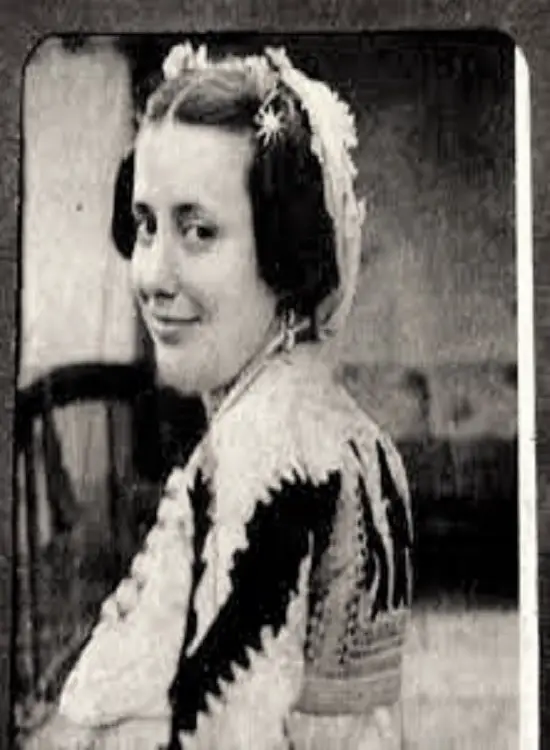
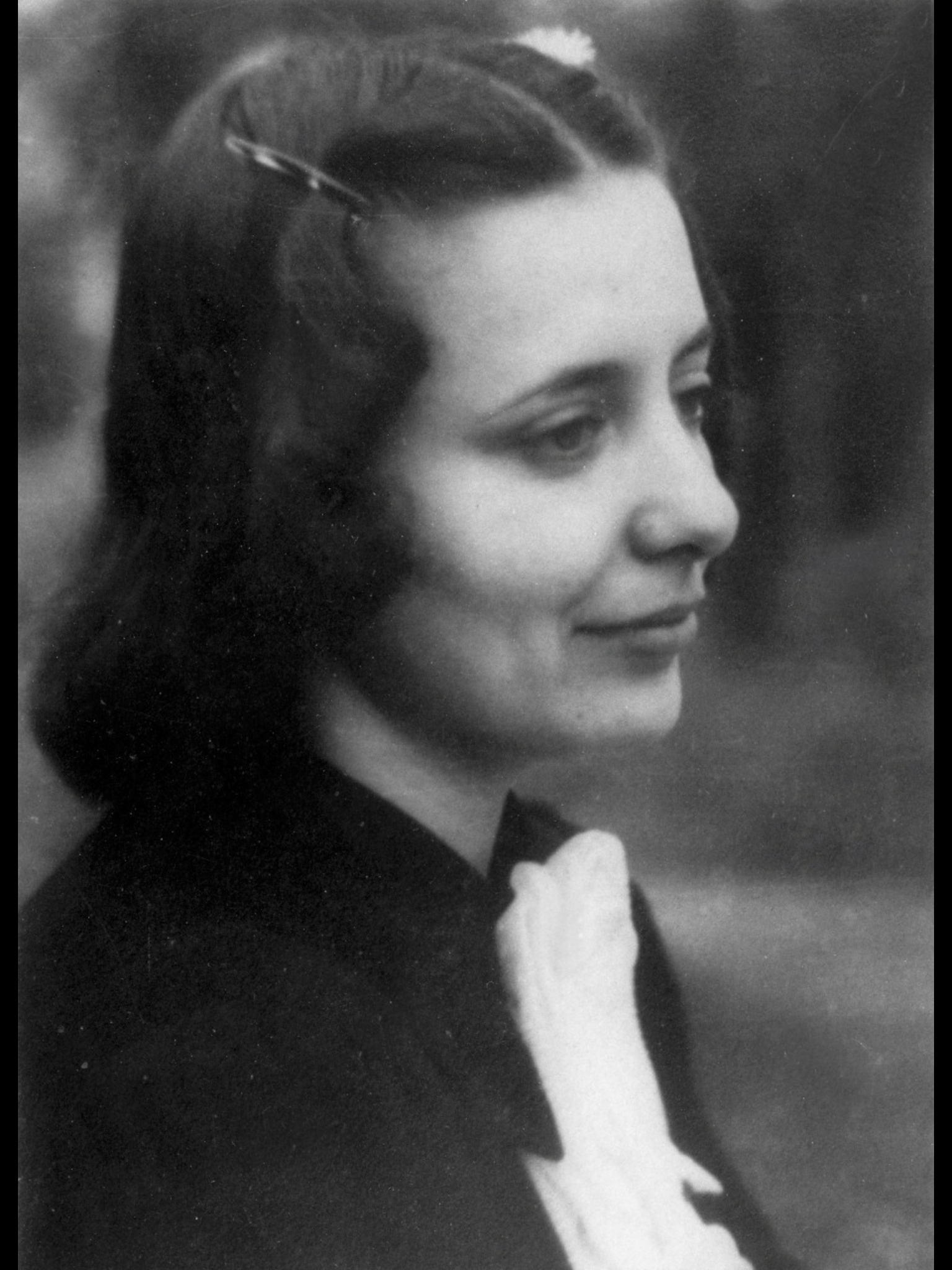
Today, when all the statues of the dictator have been removed, dragged from the squares, smashed, and their marble has been turned into nude girls that were not allowed by him during the dictatorship, meanwhile, the beautiful, smiling Musine, the eternal student, the one in court who accuses even now, courageous, comes to mind. Marble plaques and memorials have been placed for her, not only in her birthplace; her complete works have been published; she has been awarded the high title “Honor of the Nation” as the first female writer in modern Albanian literature and as the first female dissident in the entire communist empire.
Her suffering, her resistance, and her dignity upon the general mud are the greatest poem. “If I were a flower and not a human,” she cried out. Man tired her out in the struggle to remain human. All of us. So that we might be free in a free homeland, together with the world. But she wanted to be a flower. She is. Now she is the beautiful flower of humanity, of mankind… /Memorie.al
Foreword to the book “My University Years” by Musine Kokalari,
published in Italy, publisher “Viella”, 2016