Memorie.al / The gates of the biblical displacement of Albanians from Montenegro opened in the late 1960s and have never closed since. Saying goodbye to one’s birthplace is a sorrowful act, especially for elderly men and women. Our relatively aged parents did not come to America for a better life, and certainly not to get rich, but to avoid being separated from their most beloved ones. This period of great migrations deserves extensive study and analysis by experts of Albanian society. The paths of displacement were not paved with flowers, but with tears and great pain. The history of exile was sometimes even tragic. Such was the case for the family of Kolë Miri of Hoti. Kolë’s two sons and his eldest daughter-in-law had emigrated from their homeland in 1971 and settled in Italy. While waiting to emigrate further, they were visited many times by their loved ones.
Their mother, Djellushë Lekja, visited them nine times within a single year, as she took their absence very hard. Before their departure for the United States, the parents traveled to Rome to wish them a safe journey. After this noble daughter of the renowned house of Zek Niku of Koja had embraced and said her goodbyes to her sons, she suffered a sudden heart attack (i ra pika në zemër) right then and there. She passed away a day later in a Rome hospital at the age of 43. While the sons arrived in New York, their mother lay deceased in a Rome morgue, waiting to be returned to Hoti in Malësia.
Once again, Kolë Miri was “between two fires,” as the Albanian rhapsodist Sali Mani would have sung. Kolë was left utterly alone in the streets of Rome. He immediately notified his loyal cousin, Father Daniel Gjeçaj, of his wife’s death. This highly respected Albanian Franciscan priest stayed by his side until the day Kolë and his deceased wife departed for their homeland.
This death caused Kolë Miri a disruption he had never imagined. One of the consequences was the decision to leave Malësia once and for all. Kolë had never envisioned leaving that land, but after his wife’s death, his family plans changed. He saw no other way but family reunification. A year later, along with his four children, he immigrated to the United States.
As was their tradition, they worked day and night, and after a few years, they became very well-established economically. Kolë Miri enjoyed great respect among Albanian highlanders, and his name was a guarantee for many successes of the family and society. He campaigned for the establishment of religious and social centers in New York and Detroit. He took an active part in various meetings and ceremonies, acting as a missionary for peace and reconciliation among highlanders everywhere.
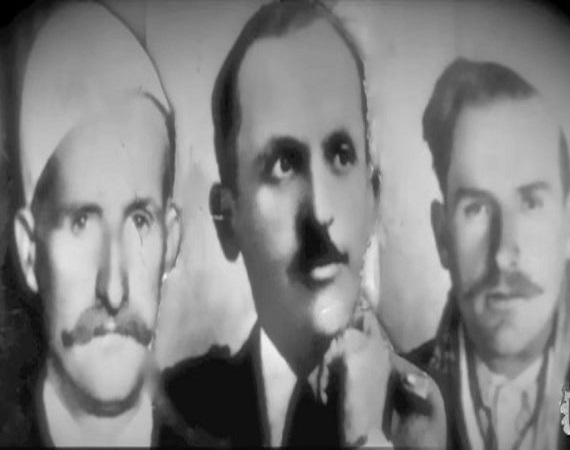
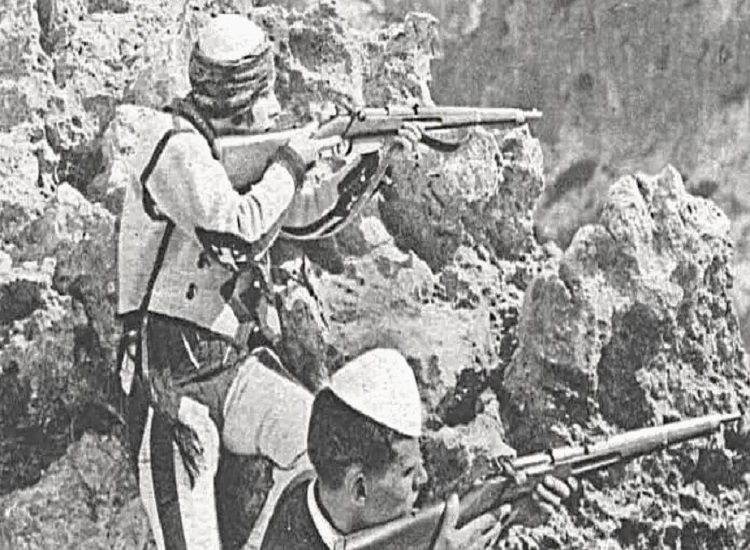
Kolë Miri and Mark Miri had a glorious past because they had been crucified in the “Calvary of Hoti” by the communist criminal gangs of Toger Baba and Bajo Stanku. Mark and Kolë had suffered the “Agony of Christ” to save Captain Gjelosh Luli from Stalinist barbaric atrocities. Their legendary resistance is still spoken of to this day.
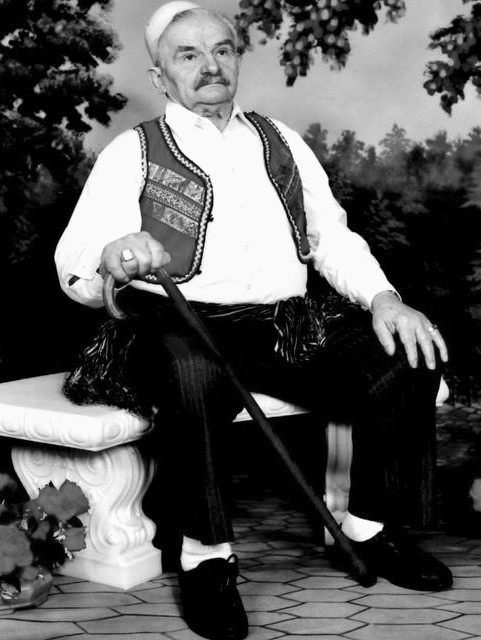
Kolë Miri was exceptionally sincere and modest. He was naturally wise, speaking from personal experience and trials. He had no inclination for vanity or seeking the “head of the table.” He was inherently good and loyal. Upon his passing 23 years ago, I wrote that Kolë Miri’s word of honor (besa) was stronger than Mount Veleçik. Remarkably, Kolë had memorized the neighborhoods of New York where the highlanders lived. He could neither read nor write, but in the “camera of his memory,” the main landmarks were photographed. When Kolë decided to visit someone, he didn’t ask for help; he simply took his cane and set off toward his friends and well-wishers. Despite being uneducated, Kolë Miri was the most respected Albanian highlander in this country.
He participated in the great social sorrows, especially in funerals, whether in the United States or in Malësia. From 1975 to 1990, Kolë Miri had crossed the Atlantic back and forth perhaps 100 times—all for funerals in his homeland. He held the “championship title” for travels of this nature. No Albanian or American, nor any other foreigner, could have made so many trips for deaths outside of America. Many times the highlanders would ask, “Why aren’t we closing this ceremony, what are we waiting for?” Someone further away would answer: “We are waiting for Kolë Miri from America.” During these trips, Kolë experienced various episodes because he spoke no language other than Albanian. On one occasion in London, he missed his connection to New York. The airport authorities brought an Albanian-to-Serbian translator, but Kolë did not understand Serbian. Then they brought an Albanian translator, but he couldn’t understand him either, because the translator spoke the Tosk dialect. His advanced age and communication difficulties were great obstacles during these journeys.
Before World War II, Kolë had lived in Albania, in Hot i Ri, in Shtoj of Mbishkodra. He lived there for a quarter of a century with his brothers and sisters. He kept wonderful memories of life in Albania. Kolë Miri told many stories about the Albania of that time; he had seen and met high-ranking personalities of Albanian society. He had greatly liked the era of King Zog. Although he did not participate in political party meetings, Kolë was a true Zogist. In 1944, he returned permanently to his birthplace in Traboin of Hoti in Montenegro, where he lived until 1973. Kolë Miri died on May 21, 1992, at the age of 82. While he was hospitalized, I visited him several times, offering words of encouragement, but in those days, he was not optimistic at all.
He passed away a day later at Lawrence Hospital in Bronxville, New York – a city where many famous American families had lived, including the Kennedy family. The honors and funeral ceremonies were held for two consecutive days during Memorial Day Weekend.
For Kolë Miri, like for no other Albanian, three funeral ceremonies were held: one in New York; one in Hot i Ri in Shtoj of Mbishkodra, Albania, among his nephews and nieces where he had lived for 25 years; and the final honors and burial were held in Vuksanlekaj of Hoti, Montenegro. American historians say that for Abraham Lincoln, funeral ceremonies were held in several American cities before the burial in his hometown in Illinois. The Albanian Mission to the UN in New York granted the visa to the deceased Kolë and 32 other highlanders for his burial in his homeland. He was the first deceased highlander to pass through the territory of Albania after the fall of the dictatorship. It was a grand and ceremonial funeral, the likes of which had never been seen before, featuring many orators, professional mourners (vajtore), and chanters (gjëmtarë).
But a tragedy many times greater than this was repeated in Kolë Miri’s house in New York on September 11, 2001, when his grandson, Simon Dedvukaj, perished in the Twin Towers (World Trade Center) in Manhattan. This showed that their paths of exile had been paved with thorns and not flowers. Yet this noble family endured it all with honor and dignity (faqe të bardhë). We all learned from Kolë Miri. He was our best teacher of life because he spoke from personal experience. I have never seen any Albanian like Kolë Miri, who applied the norms of the Kanun of Lekë Dukagjini and the Ten Commandments of God so convincingly. His brother, Mark Miri, was the same. But I met Mark only once during a visit to New York. Mark Miri and Kolë Miri had their own special moral code, and for this, they deserve a monument on Albanian soil. They were the honor of the nation and must be respected as such, today and forever./ Memorie.al