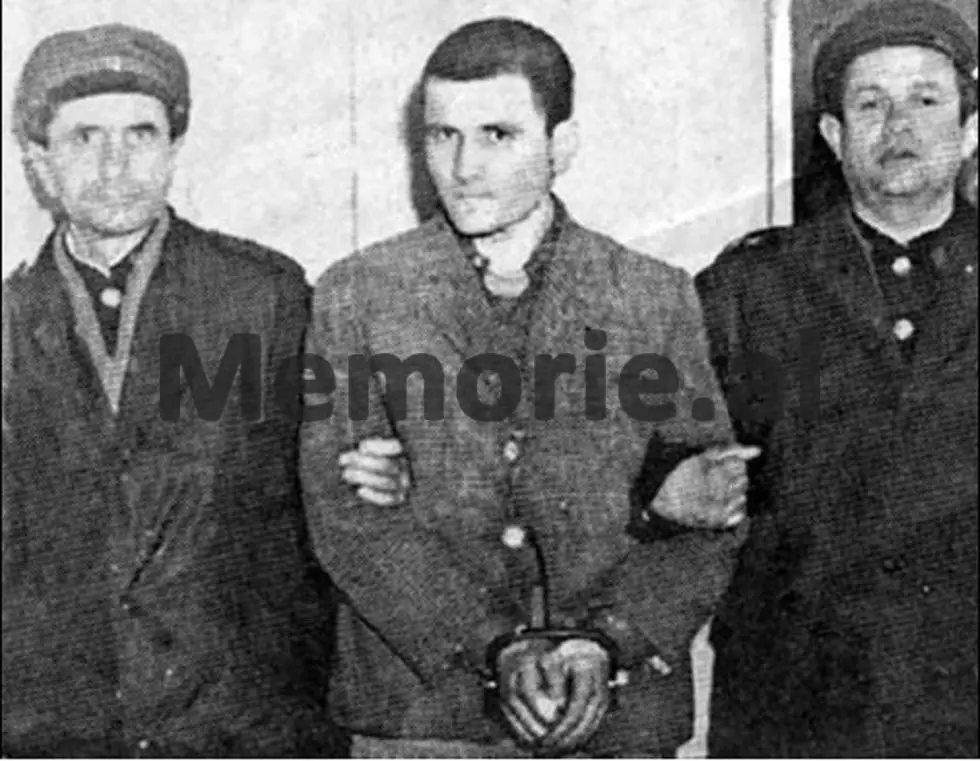
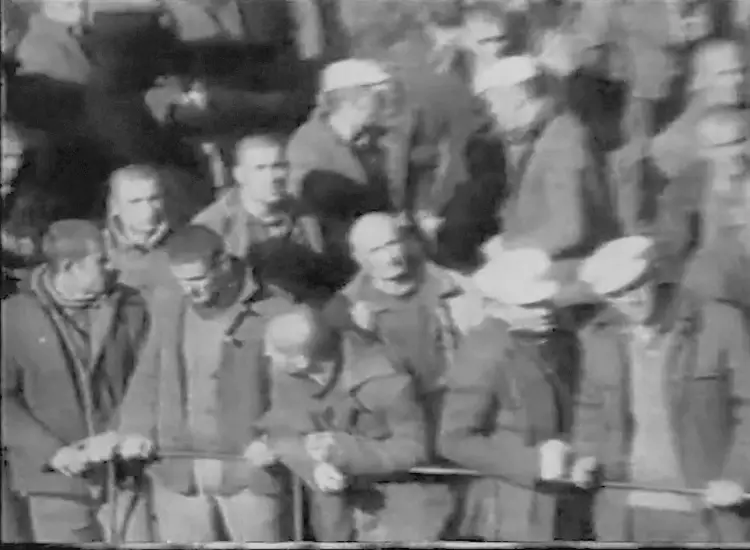

Memorie.al / Kola had been dead for a week, and from the corner of the terrace where the appeal was held, we could see Kola’s people who had come for the meeting. They didn’t know that we had been working for days to get him out and the command didn’t tell them that Kola was dead. They told them to go home, that Kola was not allowed to meet because he was sentenced to prison. They lied to them. The poor families members left, and came back again at the end of the week and still didn’t tell him how it was. They found out about it later, from the families of other prisoners. The car-prison, when you entered it, resembled a box of sardines. Just at the top of the cabin there was a small hole for air. How much air could you take? … with a pair of irons, two people were tied together, and when one rolled over, the other tied to him also rolled over”, this is how Agim Akcani, sentenced to 21 years in prison during the dictatorship, remembers the trip to Spaçi prison.
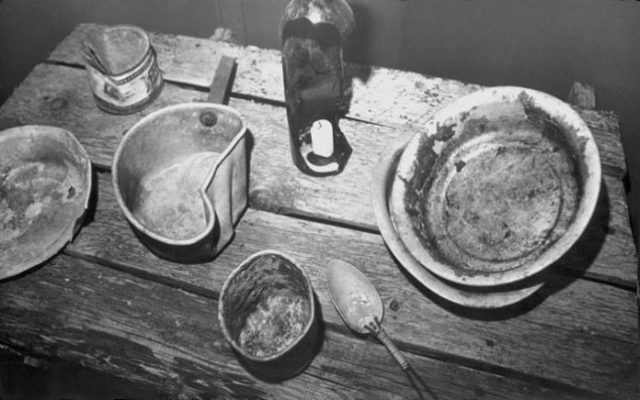
He recounts the hell he experienced in the prison of Spaç, suffering from hunger and forced labor in the mine as well as the violence of the executioners in the notorious prison.
“We have traveled a long time. I only know that when we entered the iron gate of Spaci, the car was checked by the police, and then they allowed it to enter the yard. Then they took us into custody. When I came down, I saw such a sight that, I said to myself that even God has made a compromise there. An artificial prison, a vision that went beyond the senses, that only a strange mind could find such a place.
And the strange thing is that those who built such prisons, the first, fell in themselves, and then the others. I saw that, on the other side, where the auto-prison stopped, the old prisoners were getting out and seeing who had come. I remember Bajram Dervishi, who today I have as a friend, since when we went, he saw us and laughed. With my mind I was saying: “After this desert has ended”! But no, he wasn’t mad; he laughed that he was used to it. Even today he laughs even though he is over seventy years old; he is a very good man and has served 28 years in prison. The day after we went to Spaç, we were assigned to work, in the mine”, confesses Akçani, who below gives important details about life in Spaç prison, and what his eyes saw in the death throes…!
Mr. Akçani, was it summer or winter when you went?
It was October; the cold had not yet begun. But I remember that I was very pleased at that time, that we read the Chinese theory of the three worlds in the “Voice of the People” newspaper, and like every new thing that came out, we commented and analyzed it with our friends. This was the way we shortened the years of the regime, because otherwise, we would have died. So we had hope. And with the predictions we made at that time, we were not very wrong; we may have been wrong by months, but not by years.
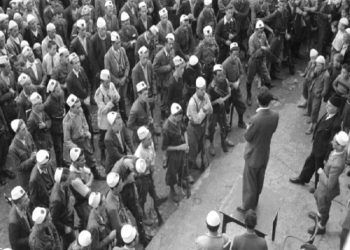
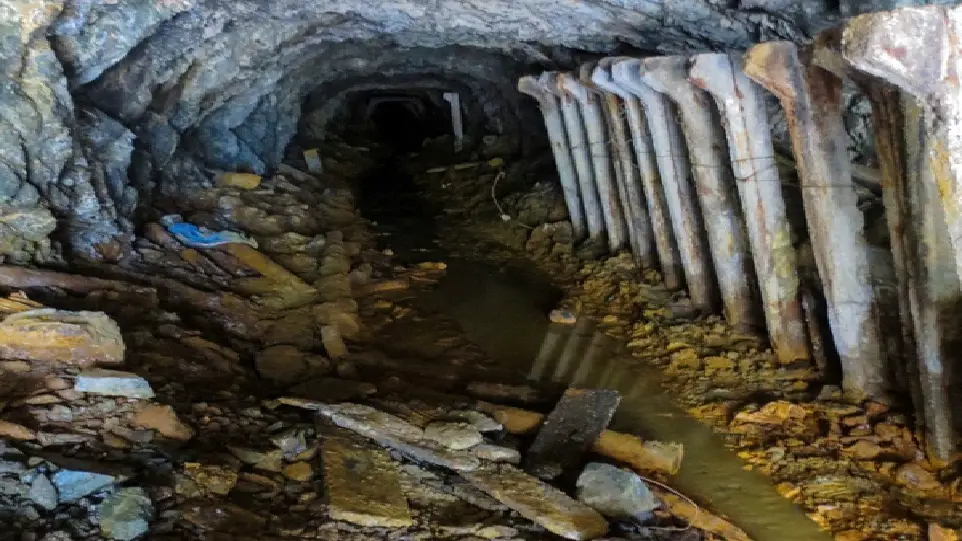
So, upon landing, they registered us in the Technical Office, and took us to work in the mine. In the mine, they gave you some work clothes, coveralls, and a pair of boots, but the boots were worthless because, when you got into the gallery, you were all mush. In all the years I’ve worked in the mine, I don’t remember ever being dry.
Inside, the temperature was 40 degrees. It was a tunnel, four five kilometers deep. Then, they would go up 3-4 floors, and then go horizontally again. The entire Mountain of Munella was a gallery with nine floors. If you could stand, it wouldn’t be bad, but there, you had to sit all the time, hunched over.
The difficulties were colossal. There were times when you melted like a candle, always wet. Fortunately, the acid constantly falling on your body and head didn’t hurt you. The boots were full; we took them off and put them on again. So the boot had no value, just to protect you from the stones, so you wouldn’t get killed.
Where did the acid drip from?
With curls from the ceiling of the gallery. We filled the wagons with shovels. If you worked the first shift and didn’t do the norm, you went to the camp and they took you out again, so you could continue working in the next shift. Each person had four standard wagons to fill. A wagon was one ton. But the problem was that with copper and pyrite, and especially pyrite, you could not fill the shovel full, because the mineral was very heavy; fill only the tip of the shovel, to lift it, because you could not lift it.
So it took hours to fill a wagon. But you had other jobs besides filling the wagons; you would make beer with a hammer, to leave the material for the next shift. The bodies that were made of wood or concrete will also come. But the biggest evil, of all, was the smell of dynamite, which had nowhere to go, because the air was piped in there.
Did you have breathing problems?
What breathing?! We were dead and done. There were also people who fell asleep, and if they didn’t have friends nearby, you were dead. Death in sleep, from gas.
There was gas in the gallery, so you had to be awake all the time. And there were times in the winter, when from a temperature of 40 degrees inside, we came out wet, where the temperature could be minus 16 degrees.
And we survived, we defied nature. But paradoxically, today, they don’t even recognize our years of work in the mine, and they tell us that we don’t have documents. We live in the land of absurdities.
Were there moments of rebellion in Spaç?
There was, but you had nothing to hold on to, because it was impossible. There were people, who drilled a hole and got out, but they also managed to go to the border, but they stayed there, because they were not prepared for a long journey; you would starve. Plus, since you didn’t know the road, and they had the “soldier” people, you couldn’t escape them.
Do you remember incidents due to working conditions in the mine?
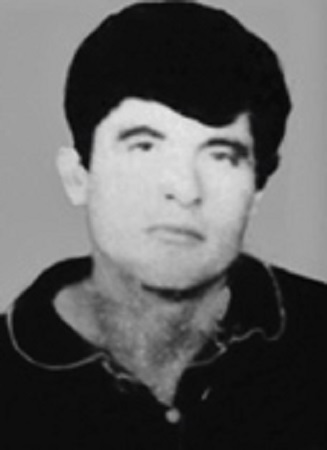
Not one, but several. In the gallery, there were up to three or four incidents a day. Sometimes even two to three dead a day. Not a week went by without someone dying, or someone being captured. I am telling the case of a young boy from the Highlands of Shkodra: his name was Kolë Mani. He was 28 years old.
Worked on a pyrite front. Pyrite is like a type of sand. A collapse occurred and took him inside. We worked for two weeks to get that man out; we removed the material and took out the body. And I remember we found him standing. Dead but standing.
And look what happened: Kola had been dead for a week, and from the corner of the terrace where the appeal was held, we could see Kola’s people, who had come for the meeting. They didn’t know that we had been working for days to get him out and the command didn’t tell them that Kola was dead.
They told him to return home, that Kola was not allowed to meet, that he was sentenced to prison. They lied to them. The poor families members left, and came back again at the end of the week and still didn’t tell him how it was. They found out about it from the family members of other prisoners.
Didn’t they return the body to the family?
Of course not. According to the rule, even when dead, the prisoner had to serve the sentence, and then the body was returned to the family.
So every day in zrip! You yourself, were you afraid at first when you entered the mine?
Man is a self-adapting being and is destined to submit to fate. All the more so when, in a tenth of a second, you could do a simple calculation: I was one of the last prisoners, from 1975, when the imprisonments and sufferings of others had started very early, people were rotten, starting in 1944, when the communists came to power.
I was lucky compared to them. And not only genocide, but also democide has been perpetrated on the Albanian nation. Even dead, they have violated people. Memorie.al