
From Arqile Semini
Part Two
Memorie.al / On the holiday of November 29, 1984, those of us who happened to be near the main grandstand, very close by, saw and understood that Enver Hoxha’s days were numbered. None of us, colleagues from the Foreign Directorate of the apparatus of the Central Committee of the PPSH, dared to mention this ominous thought in front of others, not even to an office mate. In the apparatus, we saw, heard, and understood some signals about comrade Enver’s health, but no one commented. Some out of fear or caution to protect themselves from harmful things, some out of despair for the great misfortune that awaited our Party and state, others out of habit, to mind their own work. In time, even when we understood a clear signal, for instance when we noticed for whole days and weeks that Nexhmije Hoxha did not come to the office, we became accustomed to not thinking that Enver Hoxha was ill.
Continued from the previous issue
Ismail Kadare’s departure from Albania
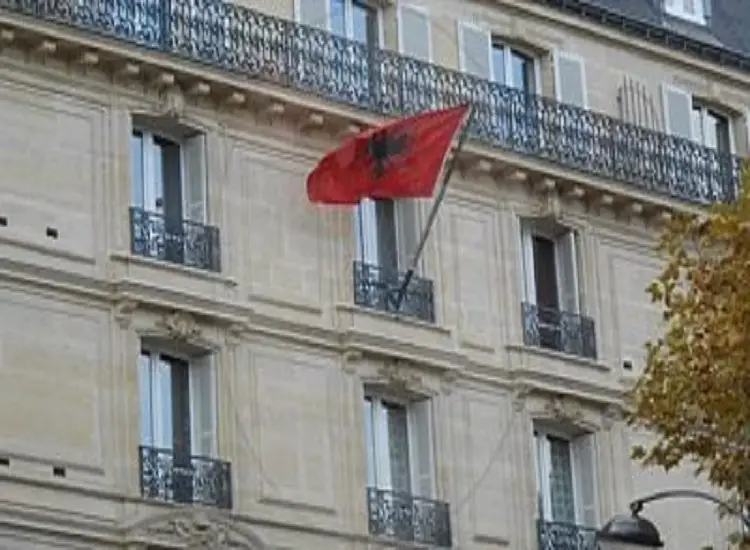
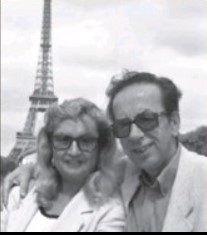
The mission of Albanian diplomats in Paris has been a difficult task. True, there have been skilled diplomats, such as Kahreman Ylli, Javer Malo, or Misto Treska, but especially the one who had the most success in wider French opinion was the “Ambassador without credentials – Ismail Kadare”. I have known Ismail since October 1953. We met for the first time at the home of the writer Mark Ndoja, in Tirana. He was then a kind of Maecenas for young literati. Ismail had come out in public with his first book of youthful poetry.
I had taken a novel to the Writers’ Union that was never published. Mark, knowing Kadare’s talent, naively (perhaps?) thought that I too would be one of the future writers who would make a name. He invited us both (without us guests knowing anything) to lunch at his home. I remember as if it were yesterday, Ismail as a youth, a high school student, who had just begun to take his first steps on the path of literature, but with the confidence of his talent, which would later resonate around the world.
After October 1953, we rarely happened to be together. Our paths had diverged. Ismail was flying in the skies of glory and world fame. While I was caught by the political witch by the throat! Nevertheless, between us there remained a memory, a kind of silent social feeling, which I for my part called an “old friendship,” faithful from the time of early youth. In my mind and words, I was always on Ismail’s side, because I valued his talent. When he was attacked behind the scenes or publicly, I took his side, because I said that his talent and name were needed by Albania. I had no kind of power to improve Ismail’s position when he was in a tight spot. I only had a good word for him!
We felt somewhat closer when Ismail married Elena, with whom I was a classmate in university and later at the Central Committee of Youth, where we had offices next to each other for a long time. Over forty years, I went to Ismail’s house twice. Once when he lived on “21 Dhjetori” Street. I had given him a novel of mine to read, which I wrote under the influence of Albert Camus. As far as I remember, Ismail and Elena liked my novel, but he told me that it would not be accepted for publication. And so it happened…! Another time, when Ismail started publishing a literary magazine in French, he expected me to go and work with him. That also did not materialize!
Only when I went to work in Paris did I have the opportunity to meet with Ismail whenever he came there for matters related to books he published in France, or for some literary activity. Ismail no longer liked coming to the embassy. He had told me this several times. But now that “he had me” at the embassy, he found some reason to drop by. At least, that’s how it seemed to me. But I had many other proofs that made me understand that Ismail was not annoyed by my company. He would come without hesitation to the apartment where I lived, in the 15th arrondissement of Paris. One time I found him sitting there with nothing in front of him. I signaled to my wife to put something out.
But Ismail, who seemed very upset, waved his hand that he didn’t want anything and asked my wife’s permission to go out with me to have dinner outside. We went to a restaurant, not far from the hotel where Ismail was staying…! He was to return to Tirana the next day. He was upset because when he recalled the inspection at the Tirana customs and the humiliating way they conducted that inspection there, Ismail’s hair stood on end from spite…! “Tomorrow I will fight, I will make a scene! It’s despicable,” he said. “Some little squirt passes through, and no one bothers her, because she’s the daughter of a Political Bureau member?! While they turn my suitcase inside out…?!”
I told him not to make a scene, because he wouldn’t gain anything! But indeed, he made a scene at Tirana customs (at Rinas Airport), and that time he complained to Foto Çami, who intervened. It was not the first time that he had intervened on Ismail’s behalf; it was known to some that Ismail Kadare, for years, suffered a kind of ‘persecution’ from the Ministry of Foreign Affairs, which created obstacles for him regarding passports and visas for travel abroad.
I did not understand this action, and I could not believe that such a denigrating attitude towards Kadare was due to the bureaucracy of the Ministry of Foreign Affairs. Someone from above, from the Central Committee of the Party, some powerful person, was acting in the shadows. And Foto Çami solved this mess that irritated Kadare immensely. From that moment on, Kadare no longer had to deal with the Ministry of Foreign Affairs, but directly with Foto.
Ismail and I often talked about the situation in Albania. He spoke with a certain enthusiasm when he saw signs of softening in domestic politics and hoped that Ramiz Alia and Foto Çami would do something. There was a period when, every time he came to Paris from Albania, Ismail would bring me some good news. Ismail hoped, and I hoped too, because I trusted him!
Ismail and I often had “dangerous” (or forbidden) conversations about everything that had happened in Albania: about religion, wage equalization, the closure of Albania, the herding of livestock, and the life of the Bllok in Tirana. With open disgust, Ismail spoke about “the fools that Enver Hoxha gathered around himself”! I was afraid, not for myself, but for him, because he was hot-headed and his mouth might not refrain from speaking so openly, even when he returned to Tirana!
Being close to him at meetings, lunches, or dinners, in Kadare’s conversations with various French personalities, I got to know better not only Kadare as a great talent of world dimensions, i.e., Kadare as a writer, but also Kadare as an erudite, a man with original thoughts, not only in the field of literature, but also of linguistics and history. I have in mind Kadare’s meeting at the University of Saint-Étienne with professors and students of philosophy, where with scientific arguments he spoke about the expressive abilities of the Albanian language…!
I have listened to Kadare at the home of Claude Durand, director of Fayard, where he published his books in French; at the home of Hoggart, in conversation with the academics Doterive and Juvé on painting or French literature; at lunch with Michel Piccoli and Jacques Attali; at receptions at the embassy or elsewhere, with André Fontaine, with Alain Bosquet or Costa-Gavras, and on other occasions…!
On the occasion of the truly magnificent celebrations held in Paris for the 200th anniversary of the French Revolution, Ismail Kadare was among the few writers in the world personally invited by the President of the French Republic, François Mitterrand…! The last time I met Ismail in Paris, I noticed a certain irritation in his complexion. I did not dare to ask what was wrong. A fatal premonition was tearing me away from him. A certain premonition!
I was caught in a whirlwind because of my position at the embassy. The first signal I received came from Claude Durand, director of Fayard. It was the end of August 1990. Durand’s secretary, without giving any explanation, told me that Mr. Durand requested an urgent meeting with me. I saw him immediately. He presented the matter simply: he requested a visa to go alone to Tirana as soon as possible, because that’s what he had agreed with Kadare. I promised that I would do my utmost to fulfill his wish.
In fact, Claude Durand and Jacques Attali had been on the list of those who could go to Tirana for a year already. They had not been able to realize this visit. In such cases, I was authorized by the ‘Center’ that within the first half of the following year, I could give visas to French friends…! Durand called every day. Finally, on the day I told him to send his secretary to pick up the visa, he still had not received the authorization from Tirana…!
Two weeks later, while I was at the airport to receive people, on orders from Tirana, I found myself face to face with Claude Durand, who was returning from Tirana. Behind him came a young girl, a bit shy. Durand asked me if I knew her, and without waiting for an answer from me, he told me that she was Kadare’s younger daughter. I recognized her immediately, although I had not seen her for many years. Shortly after this, I was informed by Fayard that Ismail was coming to Paris with his wife (the family would be complete, because the older daughter was already there studying).
I said that, as usual, I would book a place at his preferred hotel. Durand’s secretary neither said no nor yes! When I went to the “Derby” hotel, they told me that places had already been reserved. I don’t know why that day I was not at the airport to receive him when Ismail arrived? I waited for him to call me the next day. He called me a day later about an ordinary matter. From his voice, he did not seem calm. I told him to let me know himself, when he had time, at least to have a coffee…! Fine! he said, and with that, my last conversation with Ismail Kadare in Paris ended.
My suspicions that something was happening with the great writer I churned in my head, without speaking to anyone. While in the apartments where the wives of the two bloc members were staying, in front of my wife, they talked about Kadare: one said that he would not return to Albania, the other contested it with a bit of jealousy, that she knew less than the first. And then, one afternoon, in the last days of October 1990, the service colleague calls me on the phone from the embassy and tells me to go there immediately.
The letter was handed to me – a large envelope that the courier from Fayard had brought on behalf of Kadare. I figured it out, and without opening the envelope, I said to myself: “Looks like Ismail has left his shoes behind”! In the office, two or three diplomats who happened to be there were waiting for me out of curiosity…! It was the letter that Ismail Kadare sent to Ramiz Alia, informing him of his decision to stay with his whole family in France. The fatal premonition had come true…!
I found a way for the letter to reach Reis Malile’s hands the next day. The Balkan Conference had opened in Tirana. Someone there interpreted this coincidence as being done on purpose by Kadare! Tirana’s reaction was not long in coming. A harsh statement from ATSH was very stale, written with nervousness. It remained in my office without being distributed, at least the copies I kept for myself. A few days later, I watched in amazement a turn in Tirana’s stance. The Minister himself, by closed telegram, instructed me with measured words on how to handle “the Kadare issue”?
It was the known method: leave a document “within the line”, so that whatever happens tomorrow, the blame would be offloaded onto the embassy. And these were the same people at the Ministry who, a few weeks later, did not respond to my proposal for a meeting with Ismail Kadare! I even proposed the variant of meeting Kadare on a personal, non-official level, as the Chargé d’Affaires of the embassy. Finally, a negative answer…!
Meanwhile, a counterpart from a Western country had promised me that he could arrange a private meeting with Kadare at his house on the outskirts of Paris. I did not write this in the telegram I sent to the Center regarding the issue of meeting Kadare. Who knew how things were going in Albania, one could expect anything from people from whose hands power was slipping…! The shadow of the old nomenclature had not yet left the embassy in Paris! Memorie.al
(*Former diplomat in Paris, from 1985-1991)