-Albania, the Country with the Highest Density of Mercedes-Benz-!
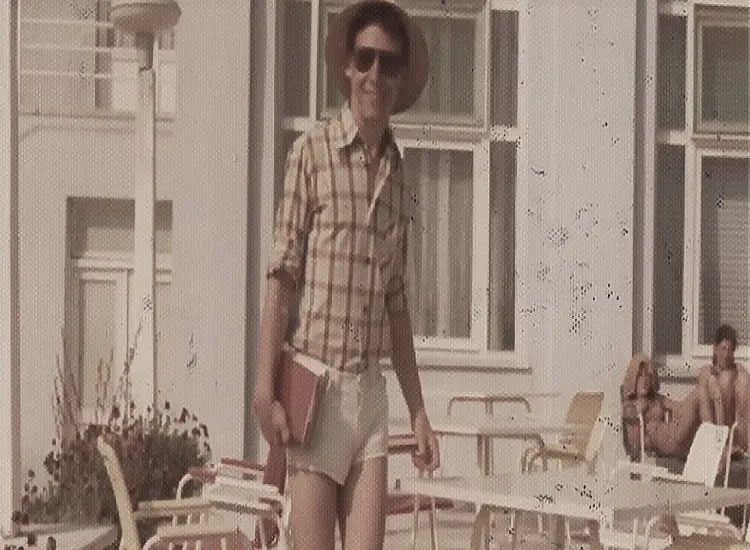
Memorie.al / In 1975, the author traveled to Tirana and the Adriatic Sea as a young man, with Maoist convictions and ideals. 37 years later, he returned as a tourist and was amazed at how quickly the Stalinist dictatorship had been transformed into a capitalist boom! When we land in Tirana, on a direct flight from Berlin-Schönefeld airport, it is noticeable that not all guests are treated equally. The Chinese are allowed to disembark first. Then us, the friendship delegation from the Federal Republic of Germany. And finally, the East German engineers.
Welcome to Albania
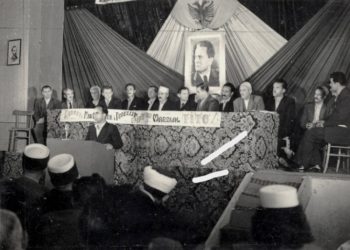
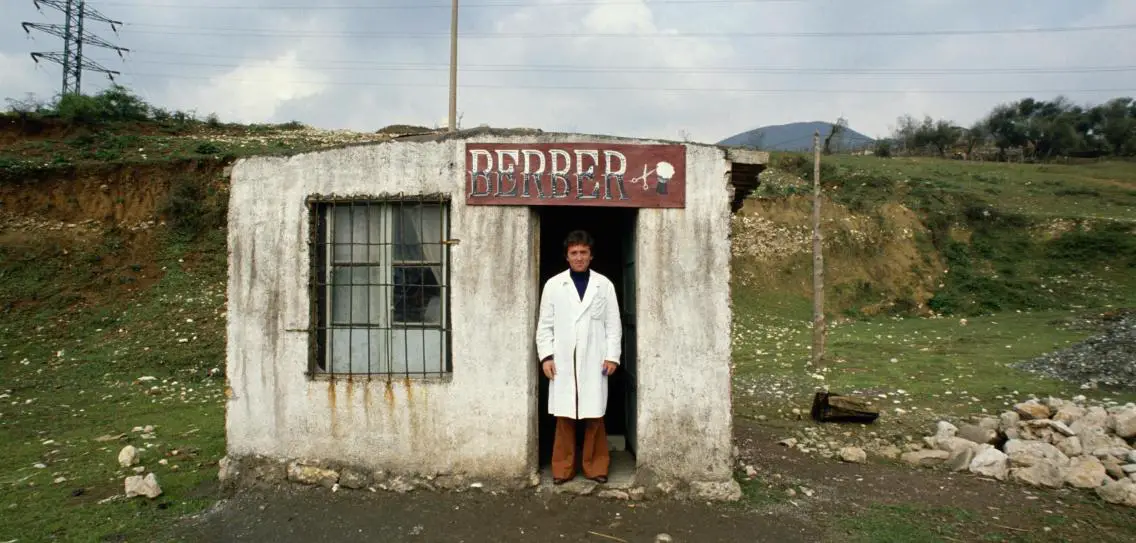
The airport building is barely larger than a two-family house; above the entrance, there is a poster showing Enver Hoxha and Joseph Stalin shaking hands. Before we are allowed to collect our luggage, we are thoroughly searched. I have to go to the barbershop. This is despite the fact that I had cut my hair short to match the required length before the trip. The airport barber gleefully takes the electric clippers.
The Airport is named after Mother Teresa
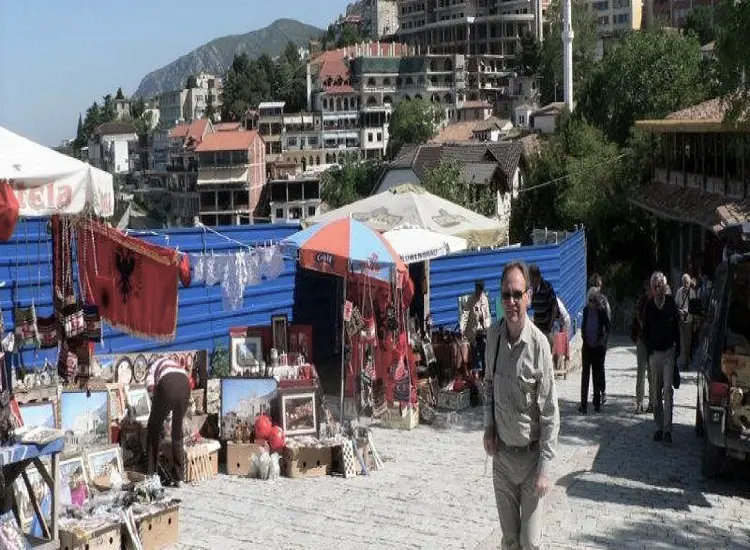
37 years later, I end up in Tirana again. A direct flight from Munich and on board are Albanian businessmen, German vacationers, and a bearded cleric of the Bektashi order. The airport is named after Mother Teresa, the most famous woman of the Albanian people. I joined a study tour group. Let’s see what has changed in the meantime.
The Highest Density of “Mercedes” in the World…!
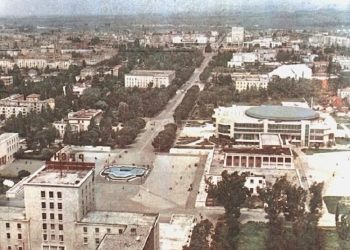
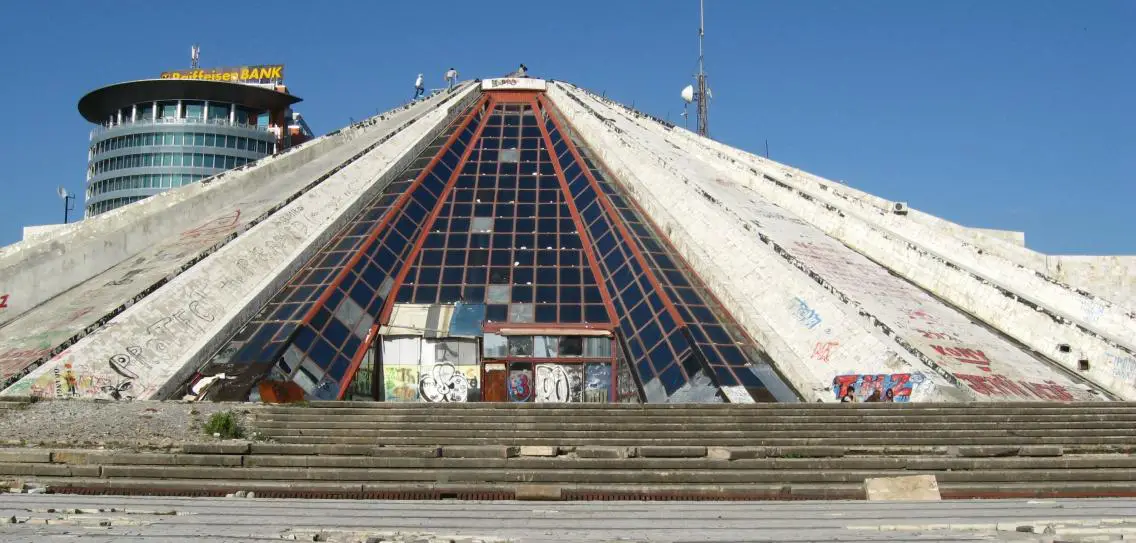
At first glance, almost everything has changed. At that time, there were no private cars. Today, Albania has the highest density of “Benz-Mercedes” in the world. Back then, Albania was a one-party communist state in which all religions were banned, except for the cult of the party leader, Enver Hoxha. Today it is a country of a capitalist boom, where new high-rise buildings tower over church steeples and minarets.
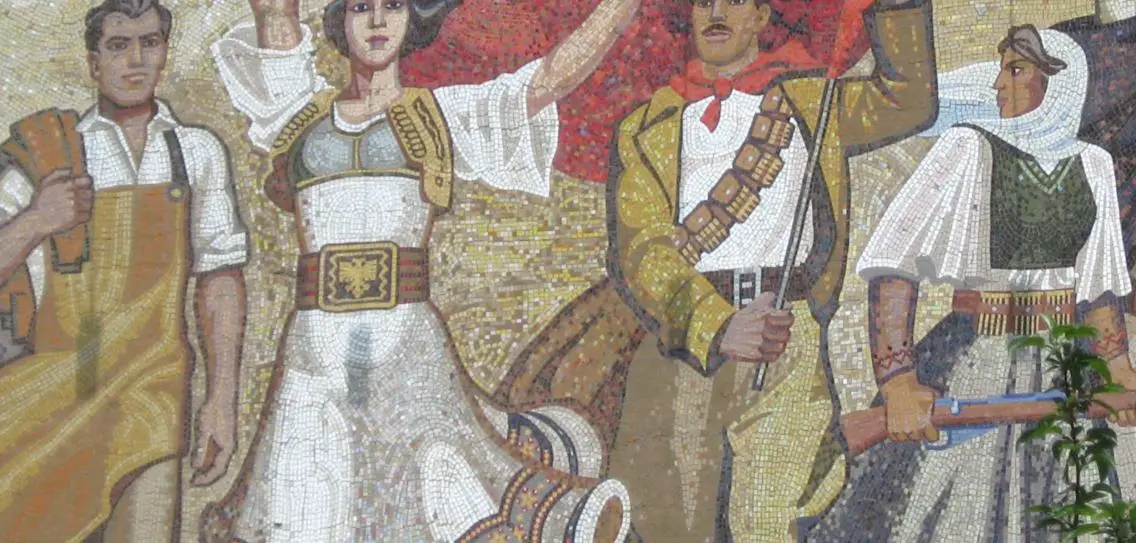
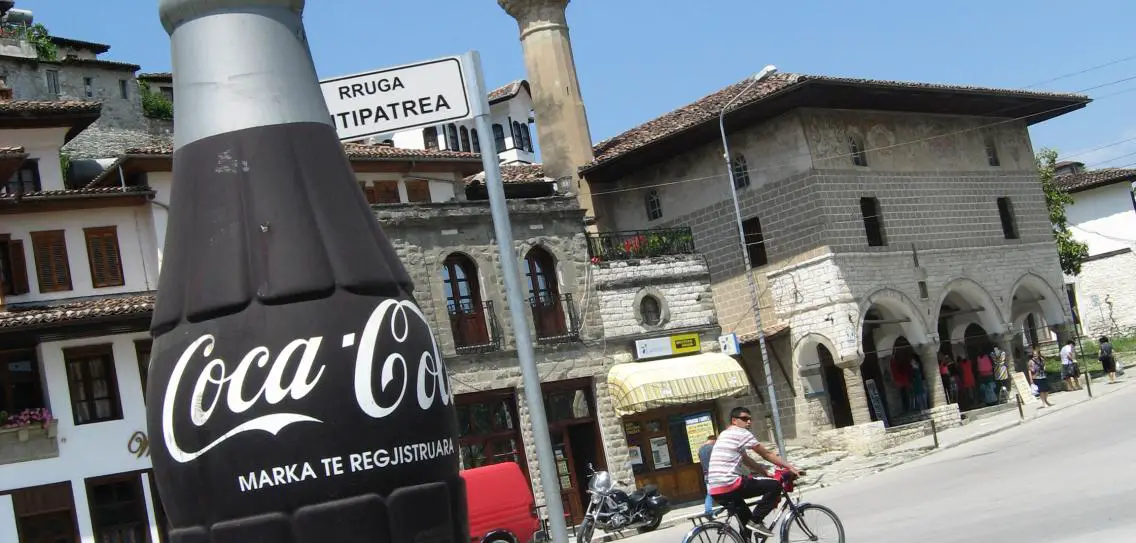
Back then, young people wore uniforms with red pioneer scarves; today, they stroll down “George W. Bush” Street in Tirana in jeans and miniskirts. At that time, they proudly showed us the “Steel of the Party” Combine in Elbasan, the “Mao Zedong” sock and jersey factory in Berat, an agricultural cooperative, the Museum of Atheism in Shkodër, and a mosque (or was it a Cathedral?) turned into a… gymnasium, which had been transformed.
Wine Tasting Instead of Labor
We were amazed and looked forward to a subotnik – unpaid voluntary labor – alongside young pioneers building the railway or terracing mountains for olive and fruit trees. Today, the Steel Combine is closed, and a Turkish company uses a small portion of the site and the workforce to melt down scrap metal. In a part of the textile combine for sock production, also unused, we visit a “cantina” and do a wine tasting.
During the tour, our group is shown lovingly restored churches and mosques, the museum of the icon painter Onufri, and picturesque beauties. The terraces are overcrowded, the fruit trees have disappeared, and along with them, a large part of the rural population: moved to the cities, especially Tirana, or to Italy, Greece, Germany, or the USA.
Back Then, Nowhere Without an Observer!
At that time, I was a devoted Maoist and I liked the presentation offered to us: happy farmers, a conscious working class, and youth waiting for the future, despite some concerns. Once, we saw a closed window from which semi-starved and mentally distressed children were reaching out their arms.
And when we made unplanned stops, we were surrounded – not by champions of the conscious communist class, but by poor people and their children, who looked at us as if we were creatures from another planet…!
That was when we understood why our handlers asked us never to go anywhere alone. Fortunately, today you can go anywhere. But the participants of our tour group – mostly older – were worried. We have heard much about crime in Albania. But we are reassured. The right of hospitality is sacred to Albanians, and nothing happens to anyone here.
A Young Country
In fact, on the last night in Tirana, I go from bar to bar watching the Champions League final between Bayern Munich and Chelsea; nowhere do I feel uncomfortable, nowhere do I seem to stand out – until I have to ask for directions in English. Anyone under 30 can answer in English. And most of them are under 30. Albania is a young country.
Construction Boom on the Coast
Today, as back then, our first stop is Durrës, Tirana’s “bathtub” on the Adriatic Sea. The stretch of beach, which once had half a dozen hotels and rest homes, has been transformed into a concrete desert of bunk beds (apartments). The situation is similar further south in Vlorë and Sarandë, where the Ionian Sea begins, opposite the island of Corfu. In an unprecedented construction boom – some of it illegal – the Albanians have ruined the most beautiful cities on their coast.
It is hard to assume that those who bathe in Western or Central Europe will feel at home here; those who like such things will find it easier to go to the “Teutonic grill” of Italy. But even the Albanians are not speculating on that.
In the summer, it is said, the hotels from Durrës to Sarandë are full of Kosovar Albanians. Perhaps they like the colorfulness, the loud music, the cramped and cheap houses; perhaps they just want to eat a lot, drink a lot, and sunbathe a lot, like the Germans once did in Lido di Jesolo, Costa Brava, or Malta.
There are also Hidden Bays
Away from the cities, Albania’s coast is extraordinarily beautiful. Steep slopes over the blue sea. Hidden, deserted bays. Fortunately, the roads are poor, which has slowed down construction activity. Himara, for example, has preserved the charm of a small town. A Greek flag flies in front of a beach restaurant; inside, a band with bouzouki, clarinet, and tambourine plays Greek music, while guests dance in a circle, eat “Souvlaki,” and drink ouzo.
They are members of the Greek minority, who – like the members of various religious communities (Sunnis, Bektashi Shiites, Orthodox, and Catholics) – have been able to celebrate their identity since the fall of communism, even if the formation of political parties on an ethnic or religious basis is prohibited. Perhaps a wise rule.
In Search of National Identity
Albania, like everywhere in the Balkans, national identity in Albania is a romantic construct. So many conquerors passed through here: Romans, Normans, Serbs, Bulgarians, Byzantines, Venetians, Ottomans, Italians, Germans – to name only the most important – and all of them left their genetic, linguistic, cultural, and architectural traces: Roman amphitheaters, Byzantine churches, Venetian fortresses, Ottoman mosques, Italian bridges, and government buildings.
In the former port city of Butrint, which was allegedly founded by refugees from Troy, one can admire archaeological evidence of different eras side by side and on top of one another. Far from commercial and administrative centers, in the difficult-to-access mountain regions, life was defined neither by religion nor politics, but by loyalty and the laws of clan structures – including blood feuds. Karl May, who obviously never visited this country, describes it in his adventurous travel book: “Through the Land of the Skipetars.”
The National Myth
Only in the 19th century did academics fighting for independence from the Ottoman Empire invent the national myth of Albania: as descendants of the Illyrians, they sought to preserve their independence and national individuality against all conquerors. The great hero of this history is Gjergj Kastrioti, called Skanderbeg, who united the Albanian tribes in the 15th century to defend against the Turks (and after whom a Waffen-SS division, recruited from supposedly “Aryan” Albanians, was named).
The Uncritical Skanderbeg Museum
In Kruja, we visit its mountain fortress, which was turned into a place of pilgrimage during the time of Enver Hoxha. The Skanderbeg Museum was designed by Hoxha’s daughter; with its monumental muscular sculptures and the complete exclusion of any critical view of the hero, it seems to have survived the change of system undamaged.
The Museum of Independence
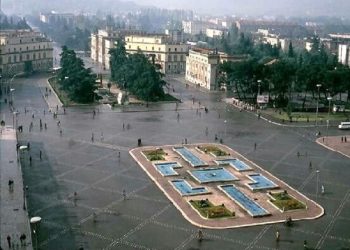
Naturally, such questions are asked neither in Kruja nor in the National Museum in Skanderbeg Square in Tirana, which celebrates the national myth just as it did in Hoxha’s time – except that the final pavilion, which celebrated communist achievements until 1991, now reflects communist terror as if it had come upon people unexpectedly. And in the Museum of Independence in Vlorë, where the modern state of Albania was founded exactly one hundred years ago.
The Dictator’s Statues Were Removed
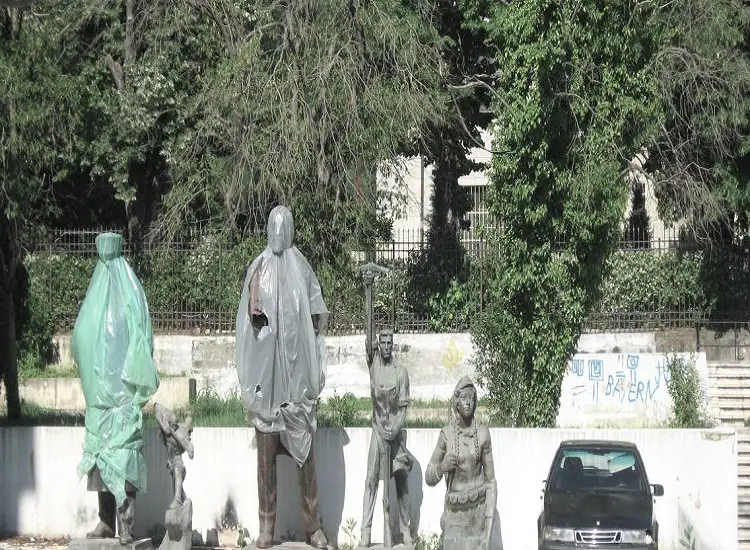
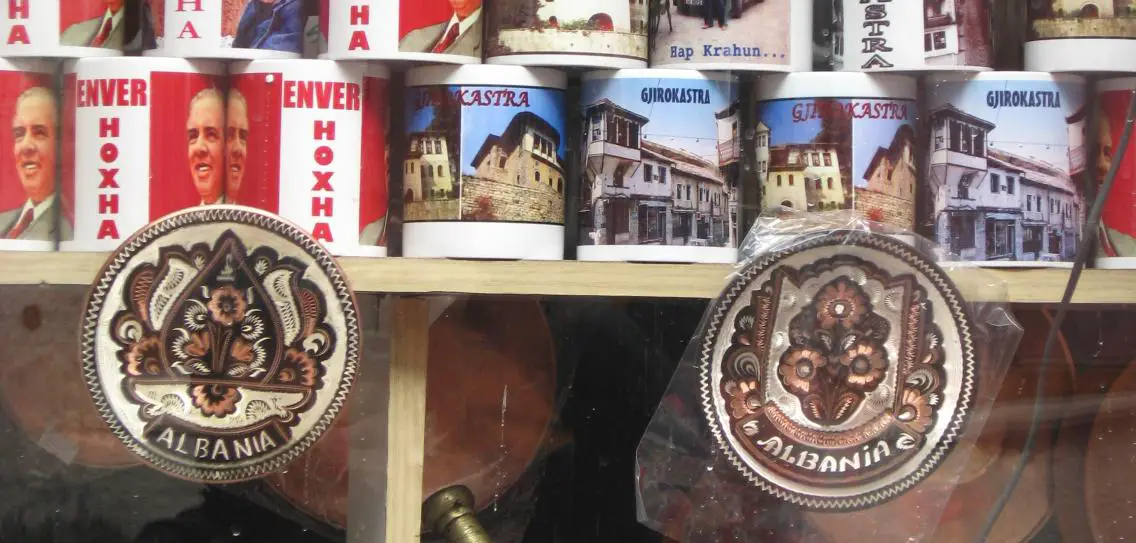
Continuities in commemoration are sometimes quite absurd. In beautiful Gjirokastra, the larger-than-life statue of Enver Hoxha in the background was removed, but his birthplace, which was once a place of pilgrimage was simply re-declared an “ethnological museum.” Tour groups still enter the dictator’s birth room, half-frightened and half-ashamed.
If you look in the attic or the basement, you can still find old exhibits: faded photographs of communist partisans and collected piles of Hoxha’s works, which are slowly becoming “retro.”
400 Years under Ottoman Rule
The 400 years of Ottoman rule are still dismissed in a few sentences as a “dark time,” even though the country probably experienced the longest period of peace in its history during that era, and despite the fact that today’s relaxed coexistence between Muslims and Christians is a legacy of that generally tolerant empire. At that time, men as heads of households often converted to Islam to avoid paying the “protection tax” imposed on Christians and Jews, while the women remained Christian.
Mixed marriages were not, and are not today, anything unusual. In Kreuzberg, you see more headscarves than in the picturesque streets and markets of Korça or Berat, not to mention sophisticated Tirana. “When two young people meet, they certainly don’t start by talking about what religion they belong to,” says a female student.
Albania’s Chance
Xhentila and her colleague, Dardan – an Albanian from Montenegro – clearly see their future in the European Union. Perhaps it will work out, despite the Euro crisis and Germany’s fatigue with expansion. Because Albania does not only bring as a “dowry” to the European Union a wonderful landscape, which is still largely undiscovered by tourists, but also a young population with new homes, new cars, new private universities, and a hunger to learn.
Albania will have much to learn from Europe, from the fight against corruption to waste management and challenging its own legends and prejudices. But Europe can also learn from Albania: a predominantly Muslim society in which tolerance toward other religions and atheism is paramount. Albania is not a place for people who simply want to see their prejudices confirmed abroad. It was good to be back. /Memorie.al