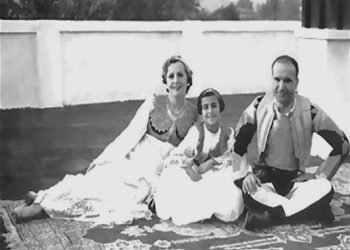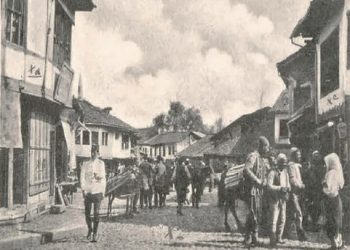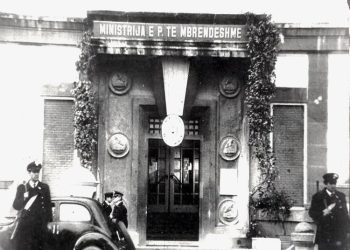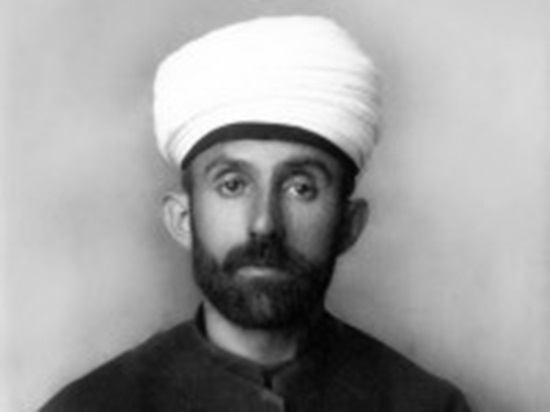
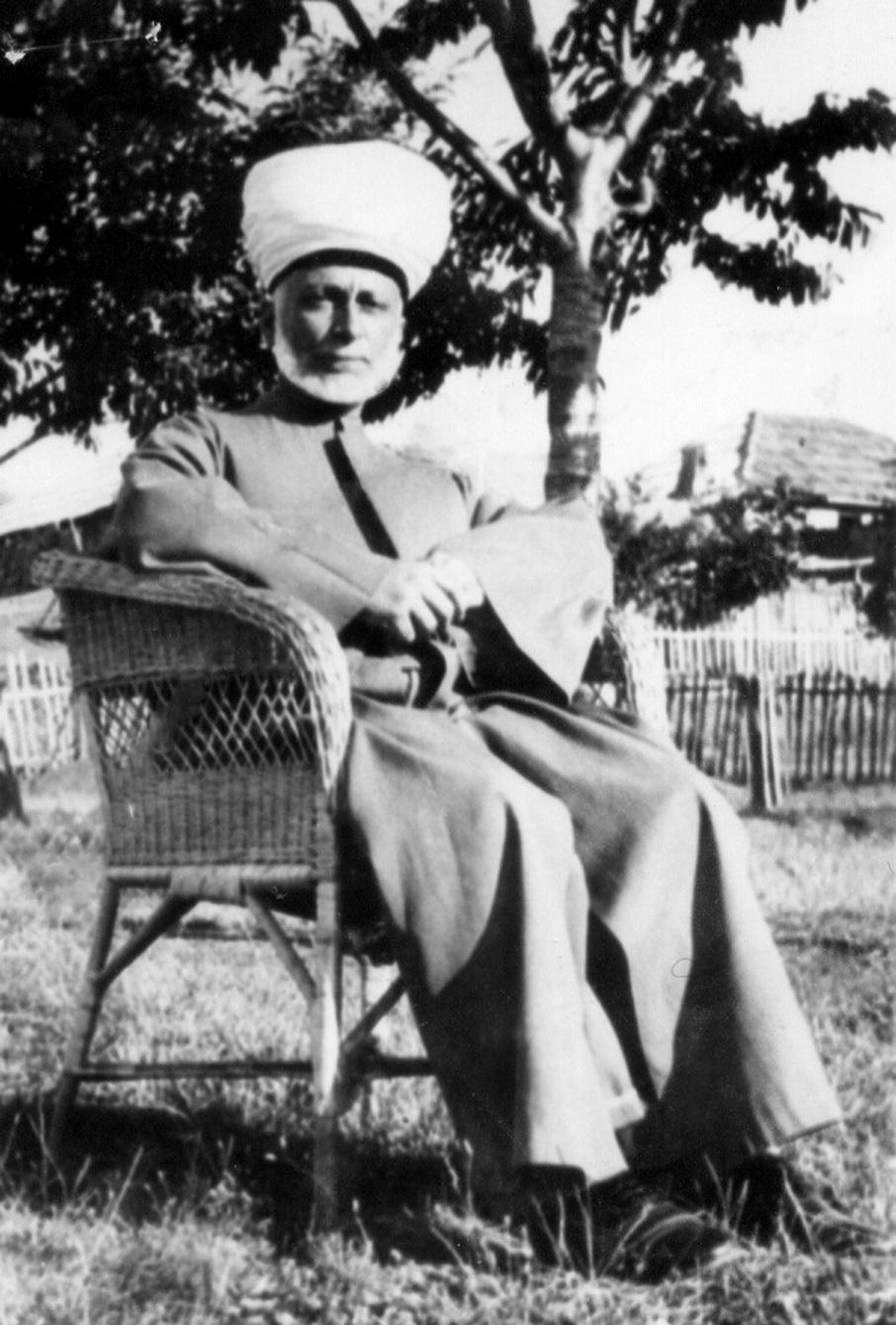
Memorie.al / Among the outstanding religious and patriotic intellectuals, Xhemal Naipi is without a doubt listed, who for several decades, from the declaration of Independence until the end of the Second World War, was among the protagonists of these events on a national scale . Xhemal Naipi was born in 1887, in the city of Shkodra, in an old and well-known citizen family, mentioned for exercising the duty of kadis (judges). He received his primary and secondary education in his hometown, while his higher studies, he followed and completed in Istanbul in two branches, in theology and in jurisprudence, appreciated for the time and in continuation of the family tradition.
Popular memory has preserved and transmitted that Xhemali, during his school life as a pupil and student, was always among the most distinguished, among those who honored themselves and the country, who learned systematically, who had a constant thirst for knowledge, for general culture, for religious education and for professional preparation.
Student life has given him the opportunity to be in contact not only with the university environment, with the rich libraries, with the mentioned architectural, artistic and historical monuments of the Ottoman Empire, but also with the patriotic and cultural societies of the Albanian diaspora, as well as with the culture of east and west, experienced in Istanbul, which together influenced its overall formation.
The young intellectual was equipped with versatile culture, with a wide horizon, with many foreign languages, such as; Ottoman, Arabic, French and Italian, with a progressive mentality, with a clear vision for work, as a senior specialist.
After completing his studies, Xhemal Naipi was a well-received cadre in his homeland, where he made a successful career, performing important religious and state duties. He has been a kadi, (judge), chairman of the education commission for Shkodra, mufti, general director of Waqefe, (Committee of Cults), senator, deputy, one of the main participants of the Legality Movement, activist in cultural associations, etc.
Xhemal Naipi made a significant contribution to education through his duties as general director of Endowments, since 1916. As the first national religious organization, the Directorate of Endowments laid the foundations for the inventory of wealth, for its administration from the center, to use it directly for its own financial needs, for the maintenance of institutions, for staff salaries, for the operation of madrassas, etc.
The General Directorate of Endowments, with the initial good work of its leader, with the positive tradition created, made it possible to collect suitable funds for the construction of the new building of the General Madrasah of Tirana, which is magnificent, still and today. In 1922, he was among the most active supporters of the opening of the State Gymnasium in Shkodër.
Until 1925, there were two madrasahs in Shkodër, the one of Pazar and the New Madrasah. With the care of Xhemal Naipi, they were united in one, the plans and teaching programs were reformed, capable directors were appointed, such as Haxhi Ibrahim Kaduku, Hafiz Sali Muftia and other trained teachers.
As a mufti, Xhemal Naipi, was a worthy successor of the previous muftis heard in the Shkodra area, from Jusuf Efendi Tabaku, Hafiz Adem Muftia, Hafiz Tahir Muftia, etc., and his work, based on the documents of the Muslim Community, was characterized by competence, by professionalism, by knowledge, by culture, by the effort to move forward, the Islamic faith.
In his duties as a kadi and mufti in Shkodër, Xhemal Naipi, in a period of changes and the creation of new state and religious relations, in a city with different influences and interests, with foreign interventions, with conservative and liberal mentalities, worked himself together with the religious cadres he had under him, for ensuring an atmosphere of inter-religious understanding, tolerance and natural cooperation, for mutual respect, for the creation and strengthening of a sincere friendship between the leaders and believers of the three faiths , who lived together in this city.
In addition to his duties as a kadi, the mufti and general director of the Foundations, Xhemal Naipi also provided his help in the cultural aspect. He supported the “Society of Talebs of the New Madrasa”, for religious-cultural activities and for special publications with a propagandistic character, aimed at the youth population.
On March 3, 1936, the “Divine Light” Organization was established. Later, on October 21, 1938, in its assembly, Xhemal Naipi was elected a member of its Permanent Council.
Xhemal Naip’s patriotic activity is rich and continuous, just like the religious one, often closely related to each other and coordinated according to the circumstances of the time. Xhemal Naipi’s patriotic activity is always growing. On November 7, 1918, the “National Defense of Kosovo” Committee was formed! Based in Shkodër, which started operating illegally.
This committee had set itself two tasks: to protect the independent Albanian state, as well as to fight for the salvation of Kosovo and the Dukagjin Plain and for their union with Albania…! Xhemal Naipi was one of those personalities who did not spare his popularity and his functions, to give a valuable help in the activity for the Kosovo issue. The letter that Hoxha Kadria sent from Tirana on February 22, 1920, to the “National Defense of Kosovo” Committee in Shkodër clearly speaks of this: “We expect a lot of services from the patriotic kadi Mr. Xhemal Effendi. Everyone is pleased with him. We ask you to offer our apologies.”
Xhemal Naipi became very active for national problems with the holding of the Congress of Lushnja and its decision. In a meeting, it was decided that Shkodra would be represented by four senators in the National Council (Senate). One of them was Xhemal Naipi. At the first meeting of the National Council, which was held on 27.3.1920 in Tirana, he was elected to the five-person committee for its direction, and at the second meeting on March 29, 1920, he was elected vice-president of the National Council.
He won 20 votes out of 24 participants, for the chairman of the National Council and Hilë Mosi was elected as secretary, with whom he cooperated closely and amicably, for the success of the works of the first Legislature. They played an important role for the functioning of this legislative body. Xhemal Naipi was the chairman of the first Albanian pluralist parliament, since different political currents were represented in it.
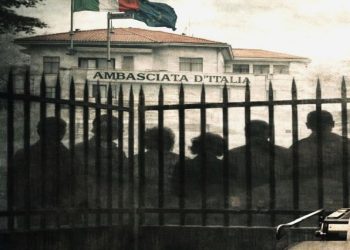
Xhemal Naip’s patriotic activity was clearly and courageously expressed even on the occasion of April 7, 1939. As a member of the parliament, he stood on the side of the people of the homeland, against the Italian fascist occupation, he refused to become a tool of the Italians, he did not he was lied to by his promises, he didn’t even bend to the pressures, but he remained as a patriotic Albanian.
Numerous archival sources prove that Xhemal Naipi was not a participant in the Constitutional Assembly, which considered the regime “low”, which created the new government and “decided” to offer the crown of Albania to Victor Emanuel III.
Fascism wanted to compromise the patriotic deputies, including them in the Constituent Assembly. Many of them did not appear and, as a result, the decisions were not approved. One of them was Xhemal Naipi. For this he was imprisoned and exiled. The deputy of that time, Zoi Xoxe, director of the newspaper “Drita”, in the manuscript “Memories of a journalist”, which was hidden on the occasion of April 7, wrote, among other things:
“…After some 10 days, I thought I could go home, always staying hidden for some time. But one early morning, an Albanian captain came to my house and with great nobility, told me that they wanted me in command…! (Imprisonment). In the room where they pierced me, I found Xhemal Naip, Shefqet Mukë, Rrustem Ymeri…! The Italians had divided the MPs into pro-Italian and anti-Italian. Those who were on this second list were imprisoned, while those who were on the pro-Italian list were given important offices”.
As a result of his right patriotic stance, Xhemal Naipi, along with many other anti-fascist patriots, was imprisoned and exiled in Italy. In the Municipality of Shkodra, there is a list of names of those interned in Italy, during the Italian occupation, from April 7, 1939 to September 14, 1943. Xhemal Naip’s name also appears in it. He was exiled to Ceresara in Mantua, Italy. In fact, he stayed there in exile until 1942.
The situation was serious, that’s why Xhemal Naipi went illegal at this time and took an active part in the legalist squads, commanded by Major Abaz Kupi. In November 1943, at the meeting of Zall-Herri, he was elected chairman of the Legality Movement. He remained hidden until 1946. During the years 1945-1946, his property was confiscated and his family, his wife and children, were exiled to Berat, “for political issues”. When the amnesty came, he surrendered.
During the trial, Xhemal Naipi was initially sentenced to death by firing squad, but later, he was sentenced to life imprisonment. By decision no. 218 dated 23.6.1947, of the Shkodër Military Court, he was sentenced “for participation in the organization Legaliteti, which carried out an activity against the popular government, carried out agitation and propaganda against the government, with deprivation of liberty for life, with forced labor, the loss of civil and political rights for life, confiscation of movable and immovable property”.
Thus began for him the endless series of indescribable suffering. He got to know all the forced labor camps all over the country and ended up in the infamous Burrell prison. There was no penalty deduction, because it was and was considered; “incorrigible”.
Even in prison, he did not stop learning and educating young and old, unschooled and schooled, giving them religious knowledge, patriotic lessons, advice on patience and courage to face the difficulties of hunger, forced labor, mistreatment physical, moral and civic.
He died in 1955, at the age of 77, without his family even knowing about his grave. Sons and daughters, grandsons and granddaughters, were persecuted by the communist regime; they did not enjoy the right to education and suitable jobs, but only heavy physical jobs. They were followed by the class struggle, the biography of the father and grandfather.
The development of democratic processes in Albania has made it possible for local and national personalities, events and historical phenomena to be reflected correctly, away from ideological criteria, on the basis of documents, giving them the right place and value.
Dr. Fejzi Domni from the USA, the son of Isa Domni, one of the participants of the founder of the Albanian Muslim Community, under the chairmanship of Haxhi Vehbi Dibra, general secretary of this Community, and one of the first leaders of the magazine “Zani i Naltë”, writes about Xhemal Naipin:
“At this time (year 1916), the first files compiled in the Albanian language with Latin letters were registered and at this time, the Albanian Endowment Office was also established, with director Xhemal Naipin, a well-known Shkodran theologian and patriot. The Muslim community is enriched by the return of lands and properties, inherited by the will and desire of the Albanian people, which I hope will be returned to them by today’s Democratic Government”.
Studies on the history of education, on the opening of schools and on the role of their principals, have also pointed out the contribution of Xhemal Naip in this field. The well-known researcher Islam Dizdari has highlighted, among other things: “In 1913, the Education Commission of the Municipality, headed by Xhemal Naipi, the kadi of Shkodra at that time, opened three state schools, the People’s School, with director Gasper Mikeli, from Russia, with director Molla Medo Sukniqi and of Parruca, with director Haxhi Hafiz Abaz Golem”.
The evaluations are numerous, but they were concluded with the decorations made in recent years that express his valuable patriotic and democratic assistance. The President of the Republic, Prof. Dr. Sali Berisha, on the occasion of the celebration of the 75th anniversary of the Lushnja Congress, decorated Xhemal Naip with the Order; “For patriotic activity of the First Class” and later, on the occasion of the decoration of a group of patriotic and democratic clerics, with the medal; “Torch of democracy”. Memorie.al