
By KASTRIOT DERVISHI
Memorie.al / Prompted by the systematic misinformation and misinterpretation being provided to the public regarding individuals who lost their lives during the communist regime, as well as the figure of “6,000 missing persons,” I deemed it appropriate to clarify this matter for those interested. First, one must distinguish between the concept of persons who lost their lives at the hands of the communists and those whose remains have not been found, because they are not the same thing.
Second, it should be clarified that we are talking about killings carried out by the communists during the war and during their exercise of power. As I note with regret, officials of state institutions, incorrigible novices in these matters, who childishly think that when they learn two or three things, history is just beginning, cannot distinguish between these concepts.
The approximate figure of 6,000 persons who lost their lives at the hands of the communists – and not only under their regime (that is, before and after the war)—was made known by me in the context of a meeting held on July 28, 2011, at the Ministry of Internal Affairs with Ms. Kathryne Bomberger – Director General of the International Commission on Missing Persons, based in Bosnia-Herzegovina.
This figure was derived on the basis of a survey, i.e., from collected data, and also taking into account the gaps observed in the list compiled in 1996. Given the fact that even today an accurate list of those killed by the communists has not been compiled, I have articulated the approximate figure of 6,000 persons, without ever adding that the remains of all of them have not been found.
Officials, who, as it appear, are copycats and plagiarists, reflecting amateurism at every turn, do not hesitate to take someone else’s statement or study, but misrepresent the figure of “6,000 bodies,” as if the killed are frozen in a refrigerator and are patiently waiting for these saviors of the situation to “thaw” them.
What is the truth? During the years 1992–1997, a great deal of work was done – though incomplete (the effect of knowledge-time) – toward identifying persons executed by the communists during the years 1941–1944 and 1944–1991.
For this reason, a state commission, based on documentary evidence and self-declarations from family members, managed to compile a list dated April 17, 1996, which includes 5,157 persons killed with or without trial. In this list, arranged in alphabetical order, are listed those killed from 1941 through 1991.
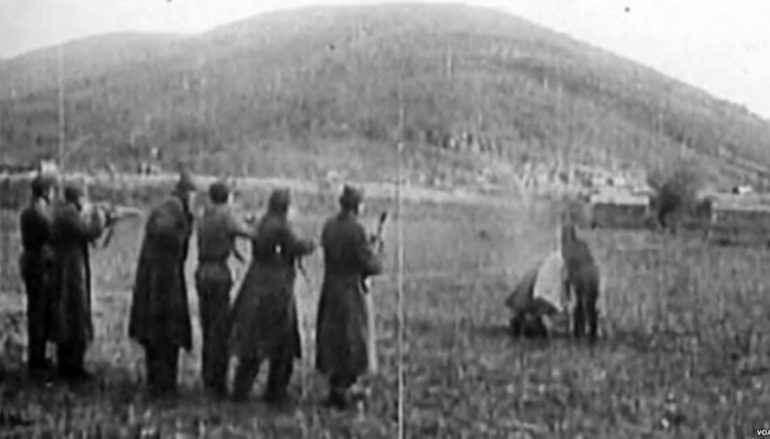
The executions were carried out by the communists in the following cases:
– During the civil war in the years 1941–1944
– By final court decision
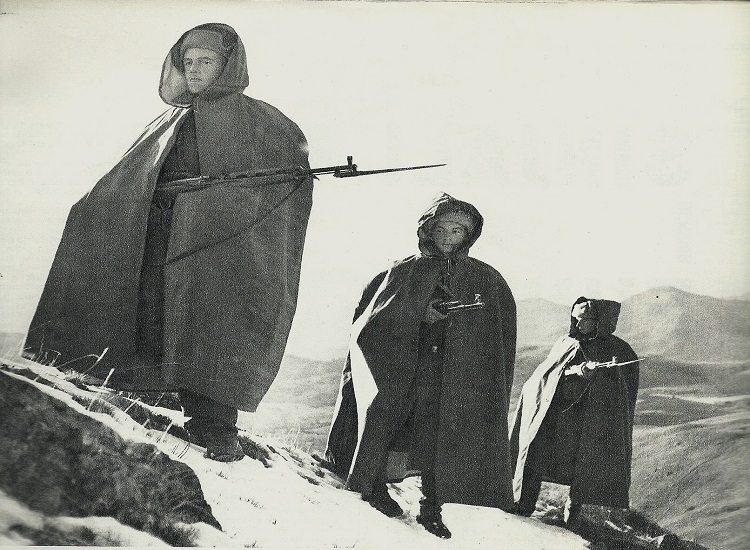
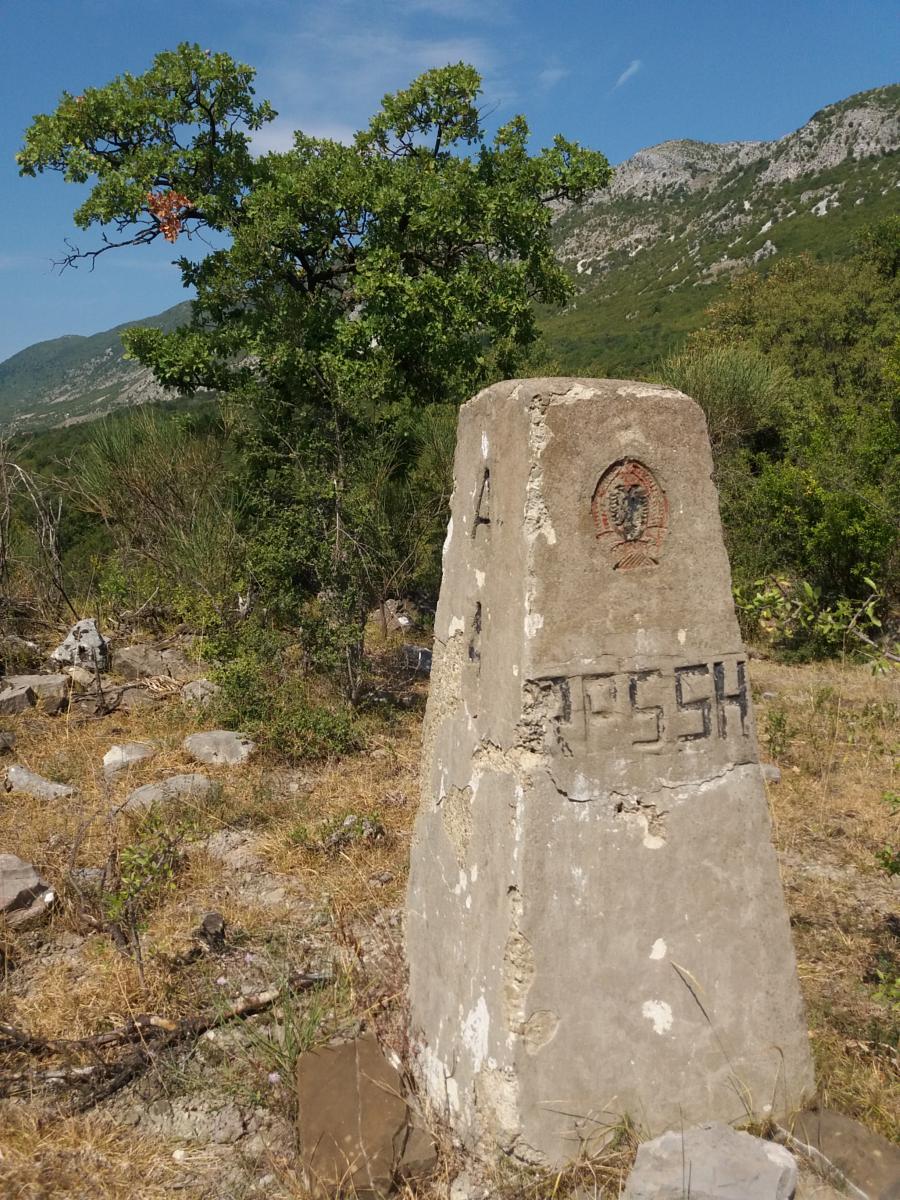
– At the border while attempting to escape
– As paratroopers/agents coming from abroad
– As fugitives from within the country
However, loss of life has also been calculated under these circumstances:
– Barbed-wire camps
– Prisons and forced-labor camps
– Under interrogation, in conditions of physical and psychological torture
– In the prison hospital
About 2,000 persons from this list belong to those killed during the years 1941–1943, who were buried at that time and are not considered missing, because they were never such. Likewise, during the years 1992–1997, it became possible to locate many burial sites and special ceremonies were organized for persons who were reburied, etc.
Another part of the deceased – those who died during interrogation or in prisons – were buried without markers in cemeteries that no longer exist, such as in Tirana (“Varri i Bamit” – “Bami’s Grave”), Elbasan (“City Park”), etc., becoming permanently lost.
In most areas where shootings took place, such as the riverbank in Tirana, the area below Mount Dajt, Pusi i Mezinit in Vlorë, Spitalla in Durrës, etc., extensive construction has taken place, and these cases are considered permanently lost.
In this way, the number of persons whose remains have not been found is much smaller than what is claimed in activities of a parochial nature, or done “just to show off.”
The documentary evidence inherited is very scant and the information very limited. Nevertheless, all the information found has been made available to researchers whenever requested, and nothing has been left undisclosed regarding this matter. No investigative-judicial file contains burial sketches. Such records were maintained by the Police, not the Sigurimi (State Security).
No file of the State Security contains burial-site data, because these files are strictly of an agent-operational nature. Likewise, there is no data on “missing persons,” according to definitions that you will find – without fantasy and mechanically – in a law that violates several laws, but which do not exist anywhere in reality.
The first burial sketch inherited dates from 1984. There exist a few separate sketches from the years 1984–1991 for cases involving political and ordinary convicts, as well as a sketch of the cemetery of the village of Panahor in Ballsh (Camp No. 309 for prisoners), where the convicts there were buried. / Memorie.al